
Every year, millions of Australians take antibiotics at home. Maybe it’s for a sinus infection, a urinary tract infection, or a skin sore that won’t heal. You start feeling better after a few days, so you stop taking the pills. Or you find an old bottle in the medicine cabinet and use it for a new cough. Sounds harmless, right? It’s not. This is how superbugs are born.
Why Finishing the Full Course Isn’t Optional
You’ve heard it before: “Finish your antibiotics, even if you feel better.” But most people don’t know why. It’s not about being obedient to doctors. It’s about survival-of your body, and the people around you. When you take an antibiotic, it doesn’t kill every single bacterium right away. The strongest ones die first. The weaker ones hang on. If you stop early, those survivors multiply. They pass on their resistance genes. Soon, the same antibiotic won’t work at all-not for you, not for your child, not for your elderly parent. The CDC says stopping antibiotics early increases the risk of drug-resistant infections by 23% to 37%. That’s not a small number. In Australia, antibiotic resistance is already causing longer hospital stays, more complications, and higher death rates. The World Health Organization lists antimicrobial resistance as one of the top 10 global public health threats. For seniors, this is even more dangerous. Nearly one in three home antibiotic users in Australia is over 65. They often juggle multiple medications. A missed dose here, a skipped one there-because they felt fine-can turn a simple infection into a life-threatening one. Studies show that people who don’t finish their course are 18.7% more likely to need to go back to the doctor with the same infection. So what does “finishing the course” really mean? It means taking every single pill, capsule, or spoonful at the exact time prescribed-even if you’ve been symptom-free for two days. If the script says “take every 8 hours,” that means 7 a.m., 3 p.m., and 11 p.m. No skipping bedtime doses because you’re tired. No doubling up because you forgot one. Consistency matters more than you think.How to Actually Remember to Take Your Antibiotics
Knowing you should finish the course is one thing. Actually doing it, especially when you’re juggling work, kids, or caring for an aging parent, is another. The easiest fix? Use a pill organizer with alarms. Simple ones cost under $20 at any pharmacy. Look for ones with separate compartments for morning, afternoon, evening, and night. Set your phone alarms to match the schedule. Name them something clear: “Amoxicillin 8am,” “Cephalexin 8pm.” Apps like Medisafe or Hero work well too. Medisafe has a 4.7-star rating on the App Store with over 14,000 reviews. It sends reminders, tracks what you’ve taken, and even alerts family members if a dose is missed. Hero is a smart dispenser that automatically releases the right dose at the right time. It costs around $299 with a $25 monthly fee-but for someone with dementia or complex meds, it’s worth every cent. For caregivers: write the schedule on a whiteboard next to the fridge. Put a sticky note on the bathroom mirror. Tell a neighbor to call and check in. Don’t rely on memory. Antibiotic schedules are not something you wing.What to Do With Leftover Antibiotics
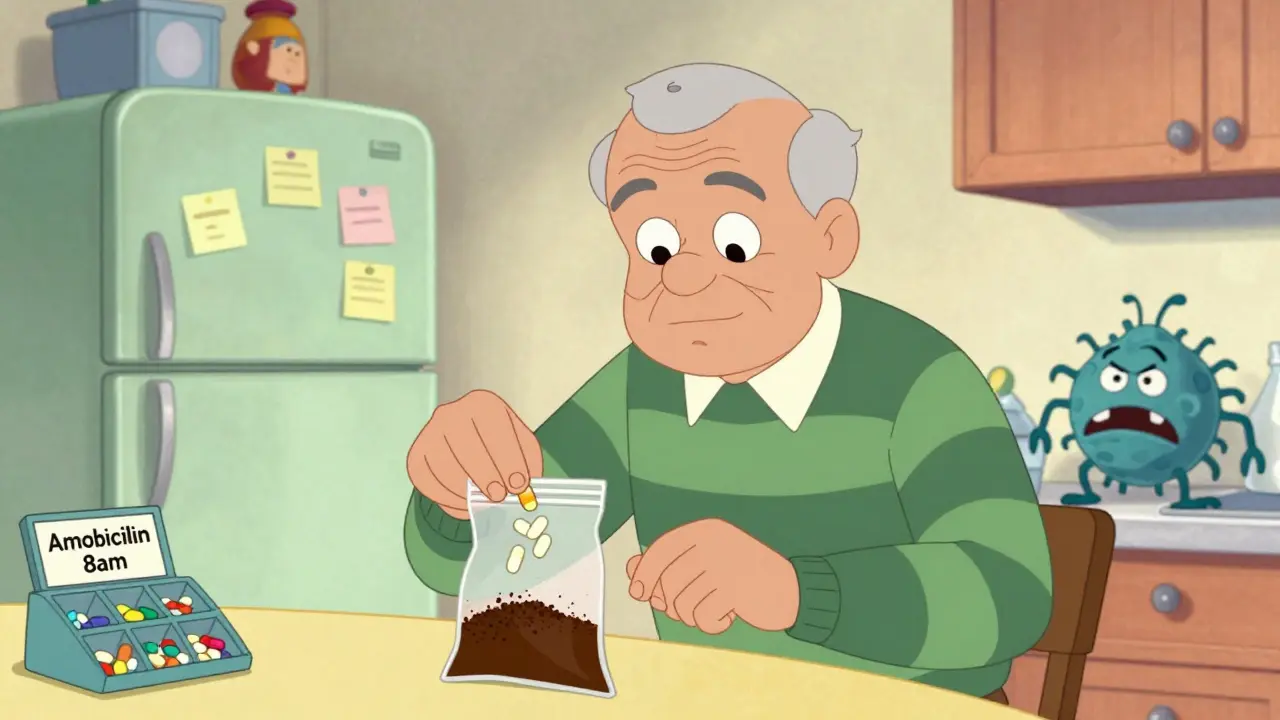
You’ve finished your course. There are still pills left. What now? Don’t keep them. Don’t give them to a friend with a sore throat. Don’t flush them down the toilet. Don’t toss them in the trash loose. The safest way? Mix them with something unappetizing-used coffee grounds, cat litter, or dirt. Put them in a sealed plastic bag. Then throw them in the general waste bin. This stops kids or pets from finding them, and it makes them less attractive to people who might misuse them. In Australia, some pharmacies run take-back programs. Check with your local chemist. Melbourne’s City Pharmacy and some Woolworths Pharmacies accept unused medicines for safe disposal. You can also drop them off at your local council’s hazardous waste collection day. Why does this matter? Because antibiotics don’t just disappear. When flushed, they end up in rivers and groundwater. A 2022 study found antibiotic residues in 63% of U.S. waterways near cities. Australia’s waterways aren’t immune. These traces help bacteria evolve resistance in the environment-before they even reach a human host. And here’s the scary part: 61% of home users admit to keeping leftover antibiotics for “next time.” That’s a dangerous habit. Antibiotics are not like painkillers. They’re targeted. The wrong one, the wrong dose, the wrong infection-it can do more harm than good. A 2023 CDC report found that home settings account for 55% of all inappropriate antibiotic use. Keeping leftovers is a big part of that.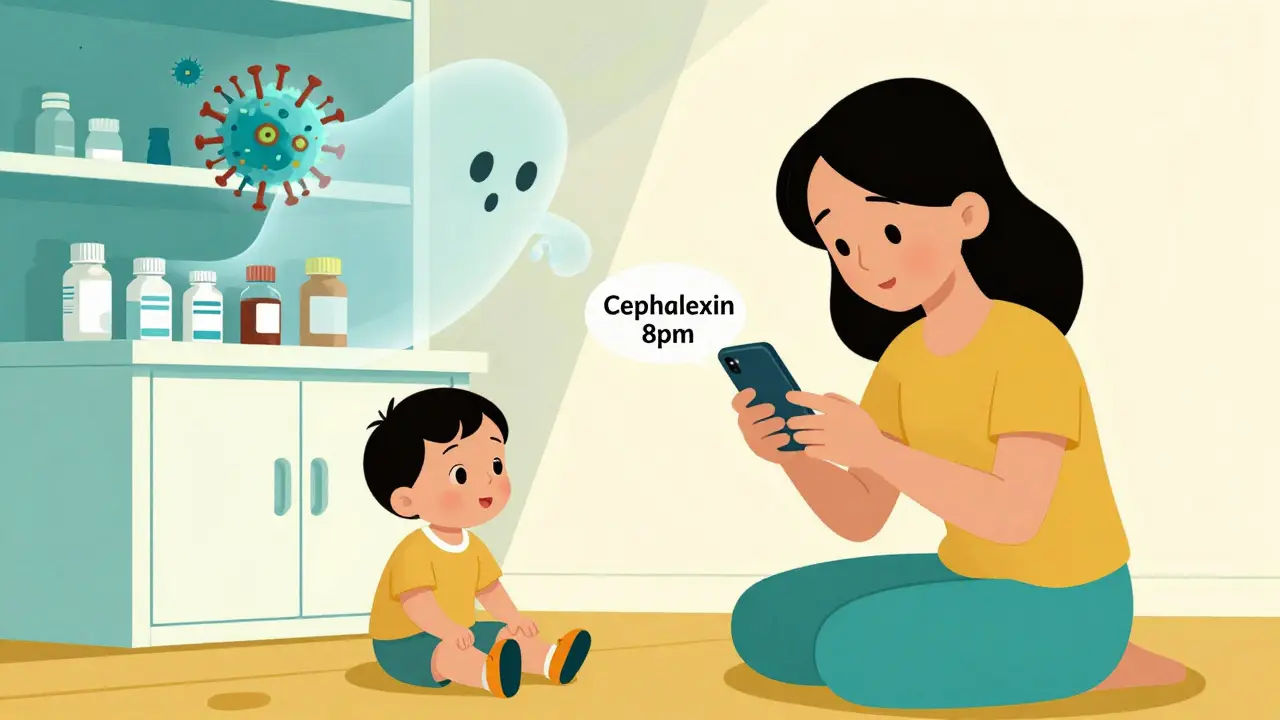
When to Call Your Doctor-Even If You’re Doing Everything Right
You’re taking your meds on time. You’re not saving leftovers. You’re disposing of them safely. But something still feels off. That’s when you need an “antibiotic timeout.” That’s a fancy term for this: after 48 to 72 hours, ask yourself-am I really getting better? Or just less sick? Signs you should call your doctor:- Fever comes back after it was gone
- Pain or swelling gets worse, not better
- You develop diarrhea, rash, or vomiting
- You feel dizzy, confused, or unusually tired
Why This Isn’t Just Your Problem
Antibiotic resistance doesn’t care if you’re careful. If your neighbor stops their course early, or flushes pills down the toilet, it affects you. Resistant bacteria spread through touch, air, food, and water. They don’t respect house boundaries. Think of it like this: every time you misuse antibiotics, you’re helping create a monster. That monster doesn’t just threaten you. It threatens your grandchild, your neighbor’s newborn, your friend with cancer who needs chemo. Australia’s health system is already feeling the strain. More patients are getting infections that won’t respond to standard drugs. More surgeries are being delayed. More people are dying from infections that used to be easily treatable. Your actions at home-finishing your course, disposing of leftovers, not sharing pills-are not small. They’re the frontline defense against a global crisis.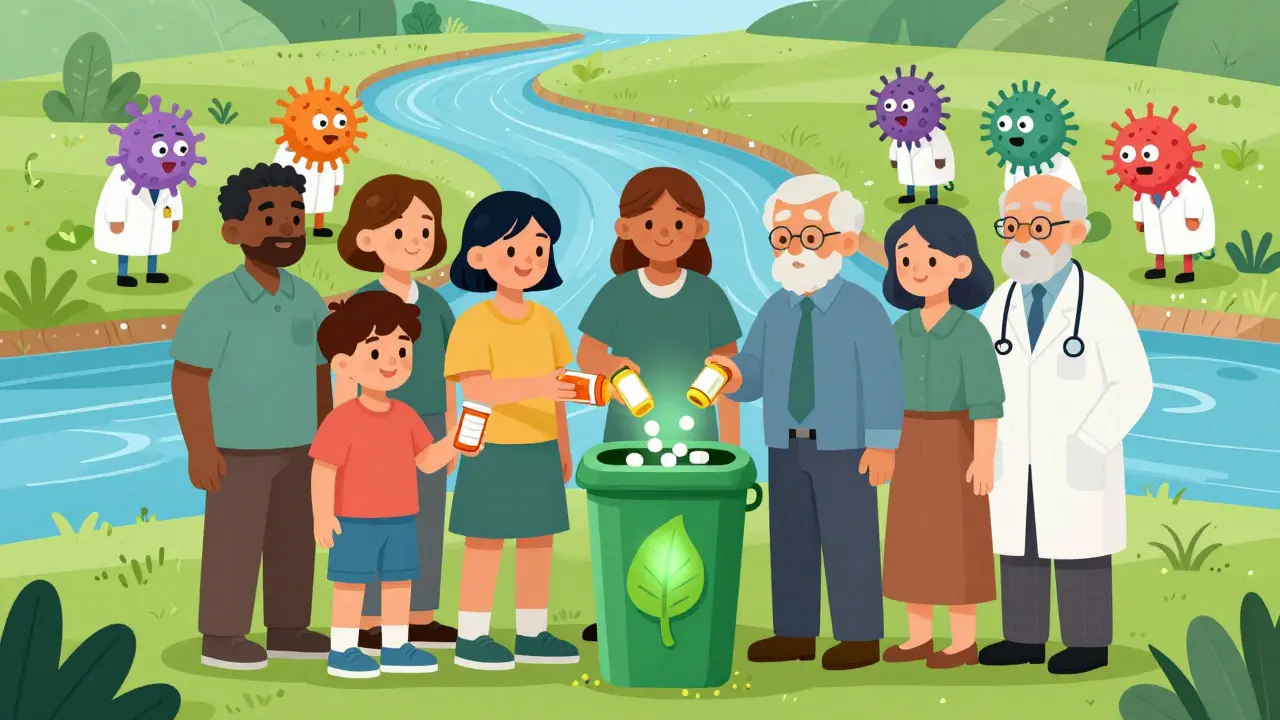
What’s Changing-And What’s Coming
The good news? Awareness is growing. In late 2024, AALLCare released new guidelines specifically for seniors and caregivers in home settings. They stress: “No doses missed. No early stops. No saving for later.” The CDC is preparing to release its first-ever Home Care Antibiotic Stewardship Core Elements in late 2025. That means clearer rules, better tools, and more support for families. Meanwhile, telehealth is helping. Some clinics now offer video check-ins after 48 hours to see how you’re doing. If you’re on antibiotics, ask your doctor if they offer this. It’s free, fast, and saves lives. The message is simple: antibiotics are powerful. But they’re not magic. They’re tools. And like any tool, they need to be used correctly-or they become dangerous.What You Can Do Today
- Check your medicine cabinet. If you have old antibiotics, dispose of them safely today.
- Set up reminders for your next antibiotic prescription-use an app, a pill box, or a family member.
- Ask your pharmacist: “Do you take back unused meds?”
- Teach your kids or elderly parents: “Antibiotics aren’t for every cold.”
- If you’re caring for someone, write down their meds, times, and symptoms. Keep it visible.
What happens if I stop my antibiotics early?
Stopping early leaves behind the strongest bacteria, which can multiply and become resistant to the antibiotic. This increases your risk of a relapse and makes future infections harder to treat. Studies show incomplete courses raise the chance of drug-resistant infections by 23-37%.
Can I give my leftover antibiotics to someone else?
Never. Antibiotics are prescribed for a specific infection, at a specific dose, for a specific person. What works for you might not work for them-and could cause serious side effects or make their infection worse. It’s also illegal in Australia to share prescription medications.
Is it safe to flush antibiotics down the toilet?
No. Flushing antibiotics pollutes waterways and contributes to environmental resistance. Bacteria in rivers and sewage systems can absorb these drugs and evolve into superbugs. The safest method is to mix them with coffee grounds or cat litter, seal them in a bag, and throw them in the trash.
How do I know if my antibiotic is working?
You should start feeling better within 48-72 hours. If your fever returns, pain worsens, or you develop new symptoms like rash or diarrhea, contact your doctor. Don’t wait until the course is finished-early intervention can prevent complications.
Are there free tools to help me remember my doses?
Yes. Free smartphone apps like Medisafe send reminders and track your doses. You can also use a simple pill organizer with alarms from your local pharmacy. Some councils offer free medication safety kits for seniors-ask your local health service.
Where can I safely dispose of unused antibiotics in Australia?
Many pharmacies, including those in Woolworths and major city chemists, offer free medicine take-back programs. You can also drop off unused medications at your local council’s hazardous waste collection day. If no program is available, mix the pills with coffee grounds or cat litter, seal them in a plastic bag, and place them in your general household bin.




Comments (8)