
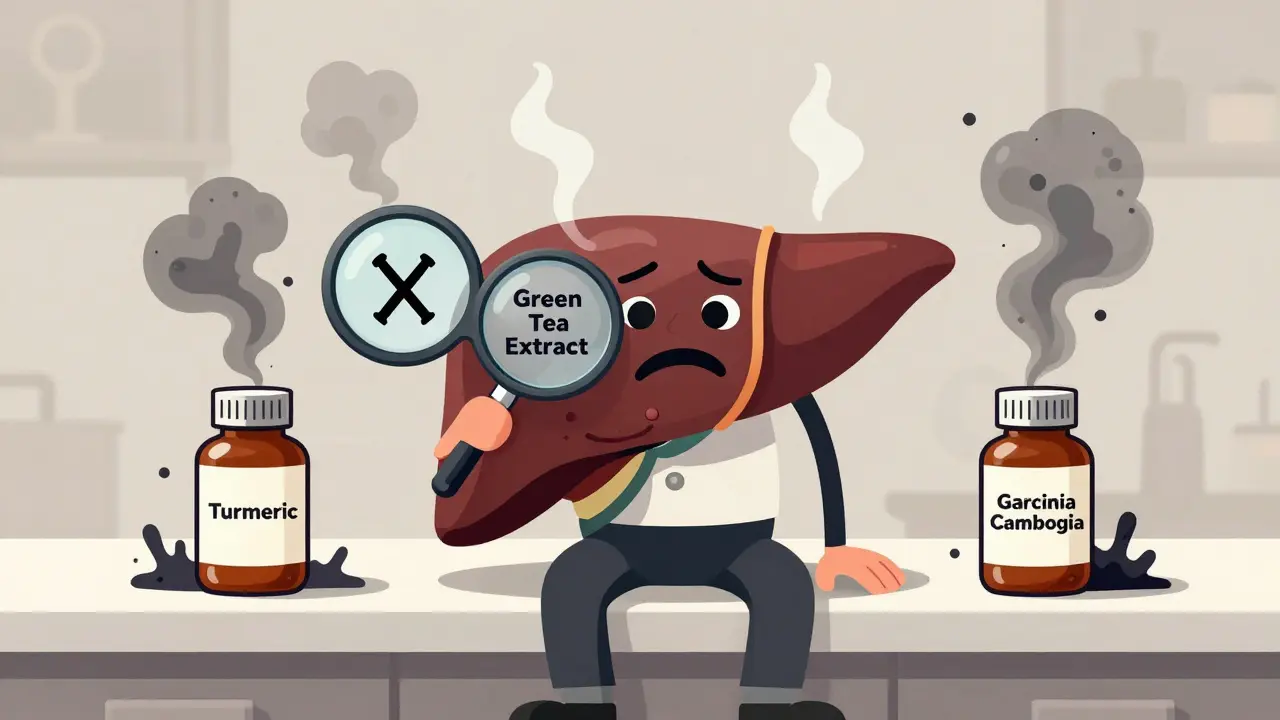
Every year, millions of people take herbal supplements thinking they’re making a safe, natural choice for their health. But what if those pills, powders, and teas are quietly damaging your liver? The truth is, herbal and supplement liver toxicity is no longer a rare exception-it’s a growing public health problem. And many people have no idea they’re at risk.
What’s Really in Your Supplement?
You might think a product labeled "100% natural" or "herbal blend" is harmless. But that’s not always true. A 2023 Consumer Reports study found that 30% of turmeric supplements contained lead levels above California’s safety limit. Another 25% of green tea extract products had more EGCG-the active compound-than the recommended daily amount. That’s not a typo. These aren’t outliers. They’re common.Even worse, up to 60% of herbal supplements tested by the NIH’s LiverTox database don’t match what’s on the label. Some contain ingredients that aren’t listed at all. Others are laced with hidden drugs. In sexual enhancement supplements, 22% were found to have sildenafil (the active ingredient in Viagra). Pain relief products had NSAIDs like ibuprofen. Anti-inflammatory formulas contained corticosteroids. These aren’t mistakes. They’re deliberate adulterations. And they’re designed to make the product "work faster"-at the cost of your liver.
The Top 6 Supplements That Can Hurt Your Liver
According to a 2024 JAMA Network Open study analyzing over 1,000 cases of liver injury, six herbal supplements stand out as the most dangerous:- Turmeric (curcumin): Often promoted for its anti-inflammatory effects, high-dose turmeric supplements have caused hospitalizations. One study found that people taking more than 1,000 mg daily for months had significantly elevated liver enzymes.
- Green tea extract: While drinking green tea is safe, concentrated extracts in pill form can overload the liver. The compound EGCG, which is beneficial in tea, becomes toxic in high doses. Cases of acute hepatitis from green tea extract are now well-documented.
- Garcinia cambogia: Marketed as a weight-loss aid, this supplement has been linked to severe liver injury, including cases requiring transplant. The FDA has issued multiple warnings about it.
- Black cohosh: Used for menopause symptoms, this herb has caused liver damage in dozens of reported cases. Some patients developed jaundice and liver failure within weeks of use.
- Red yeast rice: Sold as a "natural statin," it contains monacolin K-the same compound as the prescription drug lovastatin. But without dosage control, it can cause muscle damage and liver stress.
- Ashwagandha: Popular for stress and sleep, this adaptogen has triggered liver inflammation in multiple case reports. The risk increases with long-term use or high doses.
These aren’t just rare cases. They’re repeated patterns. The same ingredients, the same outcomes: fatigue, nausea, dark urine, abdominal pain, and jaundice.
How Your Liver Gets Damaged
Your liver is your body’s main detoxifier. It breaks down everything you swallow-food, medicine, supplements. But some substances overwhelm it. Herbal compounds can interfere with liver enzymes, block bile flow, or trigger immune attacks on liver cells. In some people, even a small amount of turmeric or green tea extract can cause damage. Why? Because of genetics.Research from 2022 suggests that people with a specific gene variant-HLA-B*35:01-are more likely to develop liver injury from certain herbs. It’s like an allergy, but for your liver. You might take a supplement for months with no problem. Then, one day, your liver just... stops. There’s no warning. No gradual decline. Just sudden illness.
And here’s the scary part: the damage looks exactly like what you’d see from alcohol abuse or acetaminophen overdose. No one can tell the difference just by looking at test results. That’s why doctors now routinely ask patients: "Are you taking any herbs or supplements?"
The Regulatory Gap
Unlike prescription drugs, herbal supplements don’t need FDA approval before they hit the market. No clinical trials. No safety testing. No required labeling of active ingredients. The FDA only steps in after people get sick. That’s backward.Pharmaceutical companies must prove a drug is safe before selling it. Supplement makers don’t. They only need to say it’s "not a drug." That loophole lets them sell anything-from powdered roots to synthetic chemicals-without oversight. And they often do. A 2017 study found that 18% of supplements contained lead, 12% had mercury, and 9% had arsenic. These aren’t trace amounts. They’re levels that can build up over time and poison your liver.
Social Media Is Making It Worse
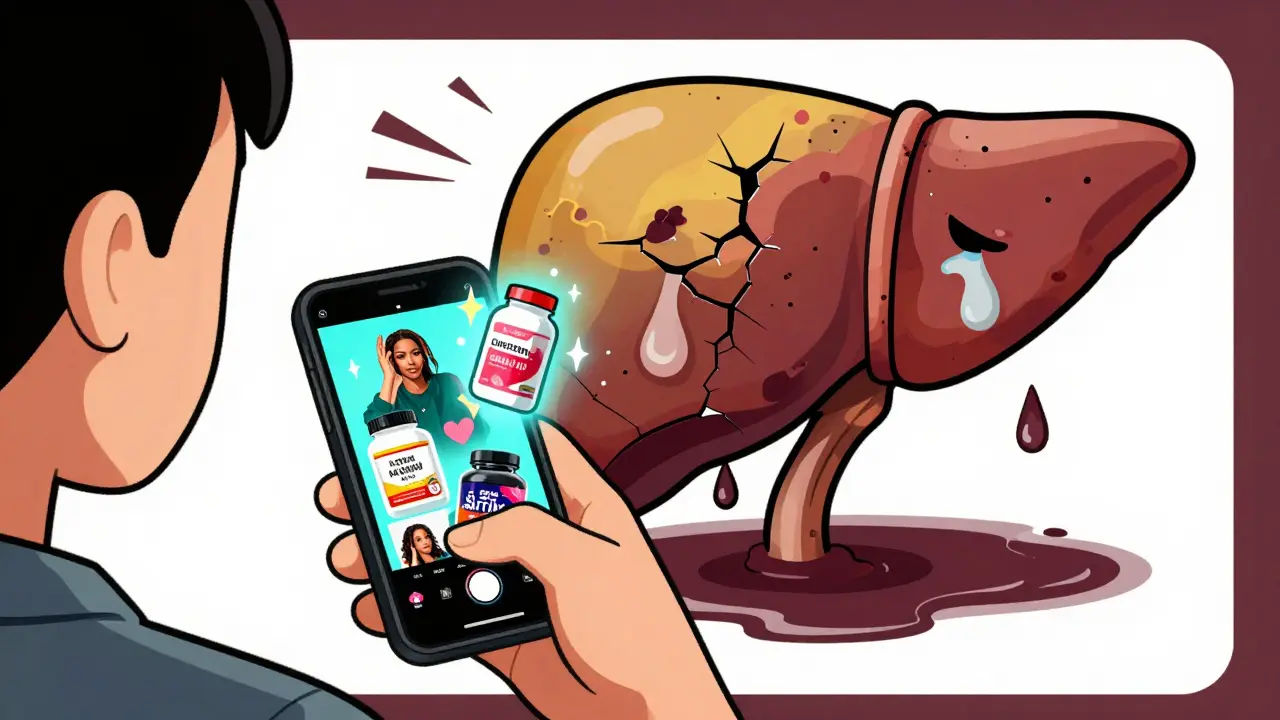
TikTok, Instagram, and YouTube are flooded with influencers promoting "miracle" supplements. "This turmeric pill helped me lose 20 pounds in a month!" "I took ashwagandha and my anxiety vanished!" No one mentions the liver. No one talks about the 76% of users who experience abdominal pain. No one warns that 87% feel extreme fatigue before they even realize something’s wrong.These videos target young adults-millennials and Gen Z-who trust influencers more than doctors. And they’re buying. Sales of herbal supplements have jumped 40% since 2020. Meanwhile, cases of supplement-induced liver injury have doubled in the same period.
What to Do Instead
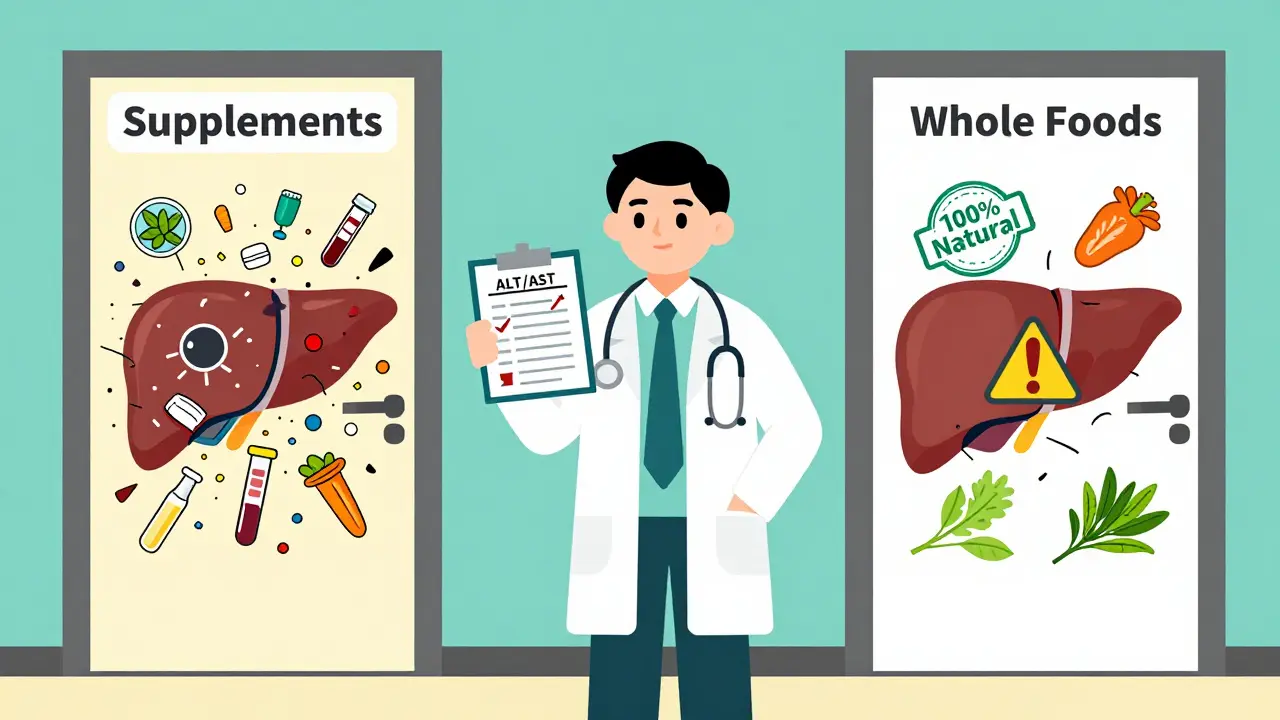
If you’re taking supplements for health, here’s what to do:- Stop taking anything you can’t name. If the label says "proprietary blend," walk away. You have no idea what’s inside.
- Check the dose. If a supplement says "1,000 mg per capsule," look up whether that’s safe. For green tea extract, the safe upper limit is 800 mg of EGCG per day. Many pills contain 500 mg per capsule-meaning two pills already cross the line.
- Get a liver test. If you’ve been taking supplements for more than three months, ask your doctor for a simple blood test: ALT and AST. These enzymes rise when your liver is damaged. If they’re elevated, stop the supplements immediately.
- Don’t assume "natural" means safe. Poison ivy is natural. Belladonna is natural. Both can kill you.
- Talk to your doctor. Even if you think it’s harmless, your doctor needs to know what you’re taking. Many cases of liver failure are missed because no one asked.
When to Seek Help
If you’re taking any of the six high-risk supplements and you notice:- Unexplained fatigue
- Dark urine or pale stools
- Yellowing of the skin or eyes
- Persistent nausea or abdominal pain
Stop the supplement and see a doctor immediately. Don’t wait. Liver damage can progress silently. By the time symptoms appear, it may already be severe.
There’s no magic pill. No shortcut. Your liver doesn’t care if something is "natural." It only cares if it can process it. And some supplements? It can’t.
Can drinking green tea hurt my liver?
Drinking brewed green tea is generally safe and unlikely to cause liver damage. The risk comes from concentrated extracts in pill or powder form. These supplements deliver far more EGCG (epigallocatechin gallate) than you’d get from tea-sometimes 10 to 20 times more. That overload can trigger hepatitis. Stick to tea if you want the benefits without the risk.
Is turmeric safe if I use it in cooking?
Yes. Using turmeric as a spice in food-like in curries or smoothies-is safe. The problem is with high-dose supplements, especially those with added piperine (black pepper extract) to boost absorption. When taken in capsules daily over months, these can overwhelm the liver. Cooking with turmeric doesn’t come close to the dosage found in supplements.
Do all herbal supplements have heavy metals?
No, but many do. Testing shows that 18% of supplements contain lead, 12% have mercury, and 9% contain arsenic. These contaminants come from polluted soil, poor farming practices, or intentional adulteration. There’s no way to tell by looking at the product. That’s why third-party testing (like USP or NSF certification) matters-look for those seals on the bottle.
Can liver damage from supplements be reversed?
In many cases, yes-if caught early. Stopping the supplement and avoiding alcohol can allow the liver to heal over weeks or months. But if the damage is severe-like acute hepatitis or liver failure-it may require hospitalization or even a transplant. The sooner you stop, the better your chances.
Why don’t supplement companies have to test for safety?
Under the Dietary Supplement Health and Education Act of 1994 (DSHEA), supplement makers don’t need FDA approval before selling their products. They only need to report serious side effects after people get hurt. This means dangerous products can stay on shelves for years while people get sick. The FDA can only act after a pattern of harm is clear-and by then, it’s often too late.





Comments (15)