
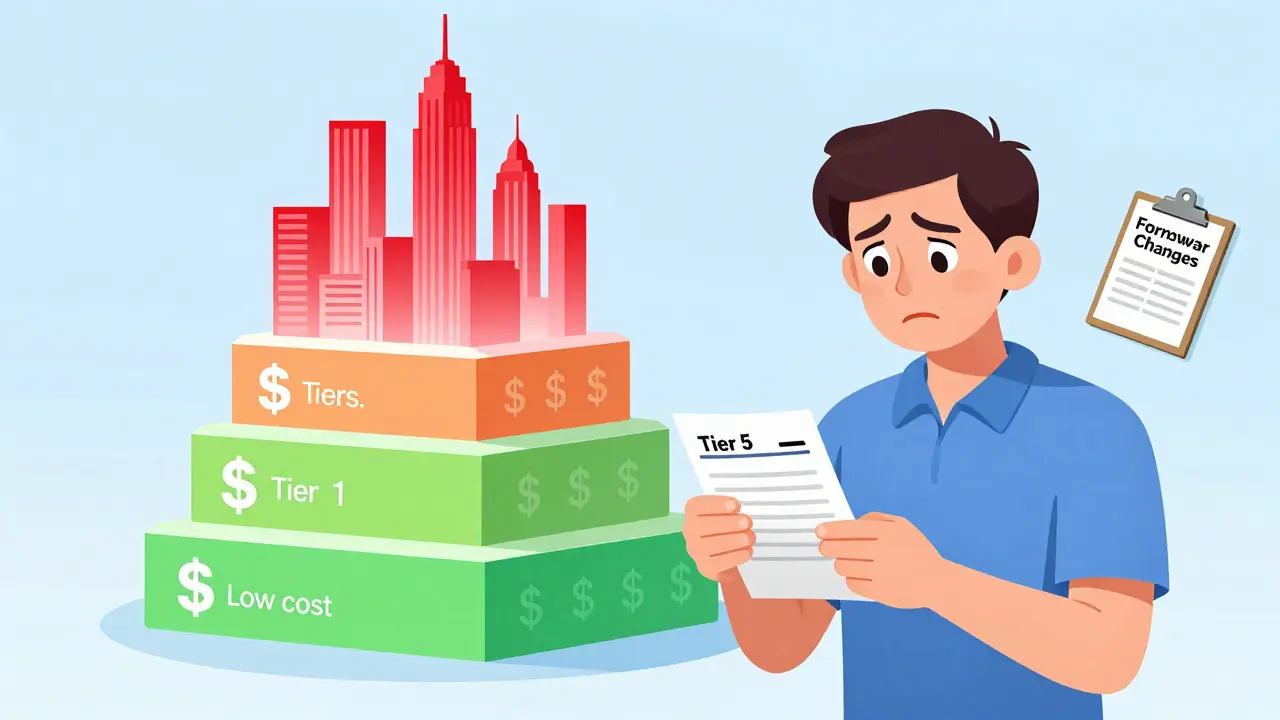
A drug formulary is basically a list of medications your health insurance will help pay for. It’s not just a random catalog - it’s a carefully managed tool that decides which drugs are covered, how much you’ll pay for them, and sometimes even which ones you have to try first before getting another. If you’ve ever been surprised by a high copay or found out your prescription isn’t covered, chances are it had to do with your plan’s formulary.
How Drug Formularies Work
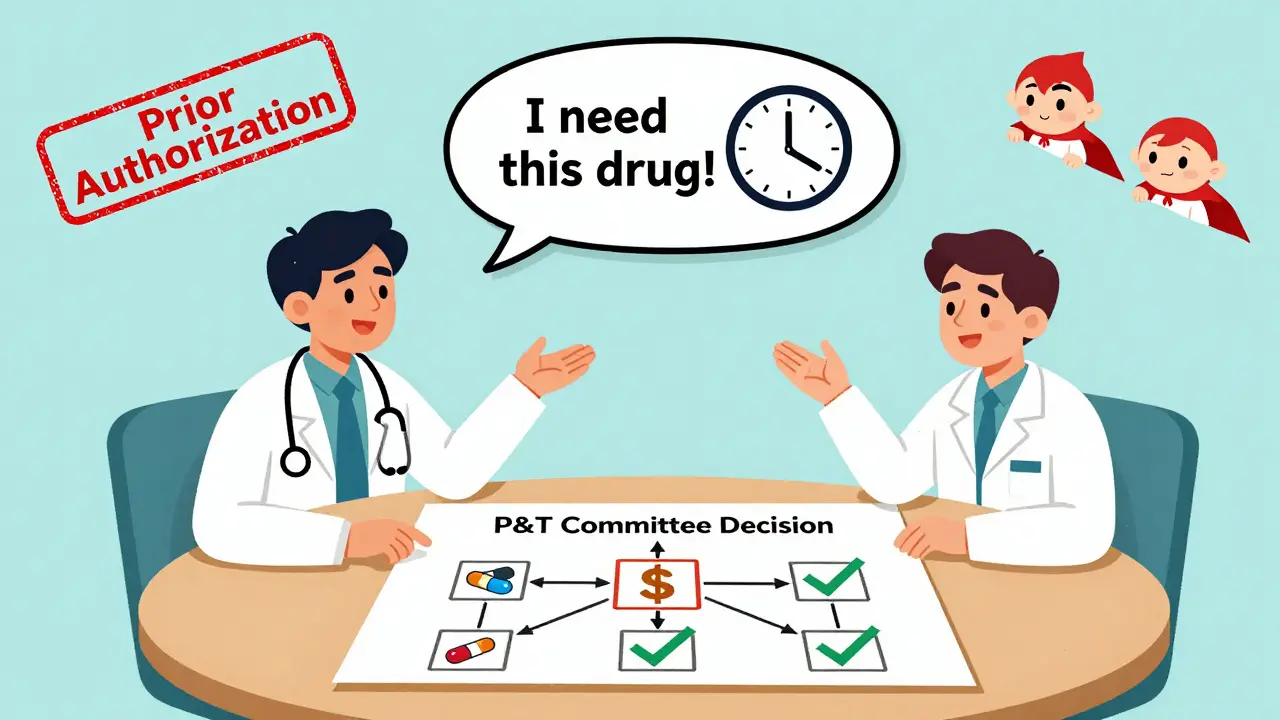
Every health plan - whether it’s through your employer, Medicare, or Medicaid - uses a formulary to control costs and make sure patients get medications that work well and are worth the price. These lists are created and updated by teams of doctors, pharmacists, and other experts called Pharmacy and Therapeutics (P&T) committees. They look at real-world data: how well a drug works, how safe it is, and how much it costs compared to similar options. They don’t just pick the cheapest drugs; they pick the ones that give the best value.
Formularies aren’t static. They change throughout the year. A drug might move from one tier to another, get removed entirely, or have new restrictions added - like requiring your doctor to get approval before the plan will cover it. That’s why checking your formulary before filling a prescription isn’t just smart - it’s necessary.
The Tier System: What You Pay Depends on the Tier
Most formularies use a tier system to show you how much you’ll pay out of pocket. The higher the tier, the more you pay. Here’s how it typically breaks down:
- Tier 1: Generic Drugs - These are the cheapest. They’re exact copies of brand-name drugs, approved by the FDA to work the same way. Most plans charge $0 to $10 for a 30-day supply. Examples include metformin for diabetes or lisinopril for high blood pressure.
- Tier 2: Preferred Brand-Name Drugs - These are brand-name medications that your plan has negotiated a good deal on. You’ll usually pay $25 to $50 per prescription, or 15-25% coinsurance. Think of drugs like Lipitor or Advair.
- Tier 3: Non-Preferred Brand-Name Drugs - These are brand-name drugs without special pricing deals. Your cost jumps to $50-$100 or 25-35% coinsurance. This is where patients often get hit with surprise bills.
- Tier 4: Specialty Drugs - These are high-cost medications for serious conditions like cancer, rheumatoid arthritis, or multiple sclerosis. Copays can be $100 or more, and coinsurance might be 30-50%. A single dose of some of these drugs can cost thousands.
- Tier 5 (if applicable): Ultra-Specialty Drugs - Some plans have this top tier for the most expensive treatments - sometimes over $10,000 per month. You’ll pay a large percentage of the cost unless you qualify for financial aid.
Here’s the catch: a drug that’s on Tier 2 in one plan might be on Tier 3 in another. That’s why two people on different plans can pay completely different amounts for the same medicine.
What Happens When Your Drug Isn’t on the List?
If your doctor prescribes a medication that’s not on your formulary, you’re in a tough spot. The plan won’t cover it - or will charge you the full retail price. That can mean paying hundreds or even thousands of dollars out of pocket.
But there’s a way around it: formulary exceptions. If your doctor says you absolutely need that specific drug - because others didn’t work, caused side effects, or aren’t safe for you - they can submit a request. The plan has to review it. For urgent cases, like a life-threatening condition, the decision can come back in as little as 24 hours. For non-urgent cases, it usually takes about 72 hours. In 2023, about 67% of these requests were approved for Medicare Part D plans.
Don’t assume your request will be denied. Many patients successfully get coverage for medications not on the formulary, especially when their doctor provides clear clinical reasons.
Why Formularies Change - And What It Means for You
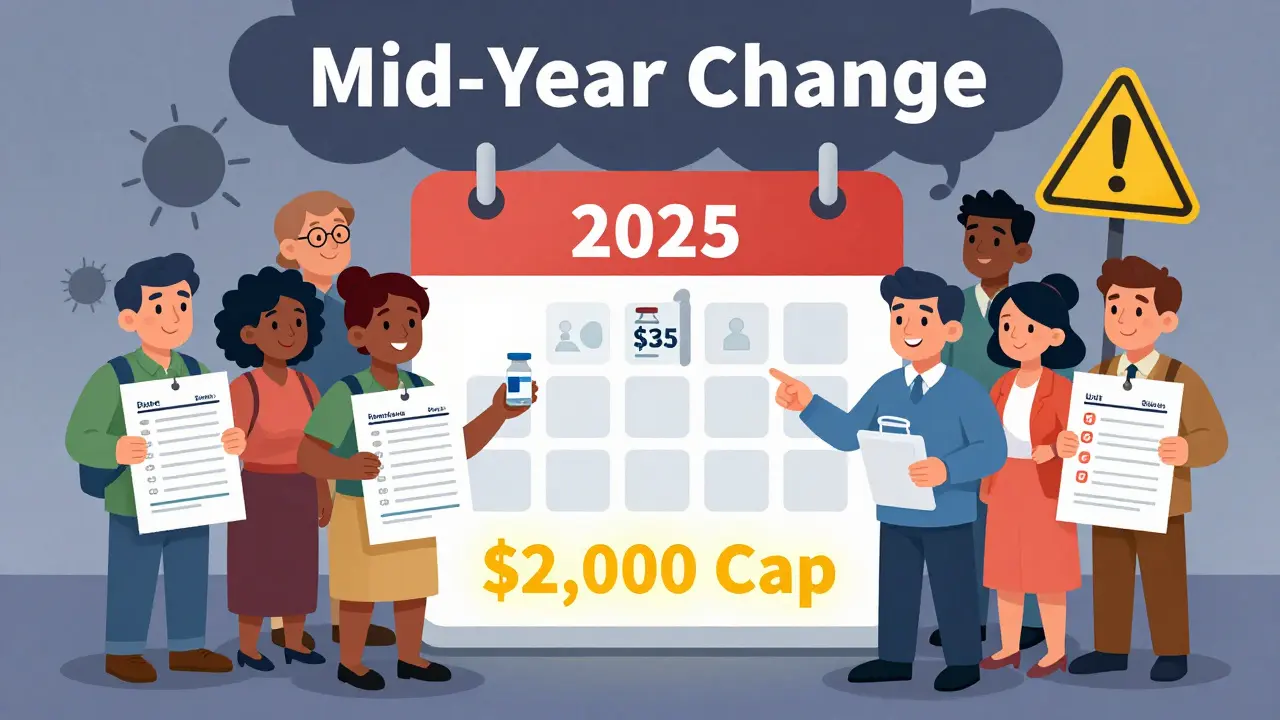
Formularies are updated regularly - sometimes mid-year. A drug might be moved to a higher tier because its price went up. Or a new generic version came out, so the plan wants you to switch. A drug might be removed entirely if safety concerns arise or if the manufacturer didn’t agree to a discount.
This is why you can’t just check your formulary once and forget it. A 2023 Kaiser Family Foundation survey found that 28% of formulary changes happen outside the annual enrollment period. That means a medication you paid $10 for in January could cost $85 by June.
One patient on Reddit shared: “My diabetes drug moved from Tier 2 to Tier 3. My monthly cost jumped from $35 to $85. I had to switch - I couldn’t afford it.” That’s not rare. In fact, 42% of insured adults have switched medications because of formulary changes.
How to Find and Use Your Formulary
You don’t have to guess what’s covered. Every insurance plan is required to make its full formulary list available online - usually under “Member Resources” or “Prescription Drug Coverage.” Medicare Part D plans have a special tool called the Medicare Plan Finder, updated every October for the next year’s coverage. You can type in your exact medications and see which plans cover them and at what cost.
Here’s what to do:
- Find your plan’s formulary online before open enrollment (October 15 to December 7 for Medicare).
- Search for every medication you take - including over-the-counter drugs your doctor recommends.
- Check the tier and any restrictions (like prior authorization or step therapy).
- Compare plans if you’re choosing or switching coverage.
- Recheck your formulary every few months, especially if you start a new medication.
Many pharmacies also check your formulary when you hand them a prescription. But don’t rely on them - they might not catch changes until after you’ve paid.
Step Therapy and Prior Authorization: What They Mean
Two common rules you’ll see on formularies are step therapy and prior authorization.
Step therapy means you have to try cheaper drugs first before the plan will cover the one your doctor prescribed. For example, if your doctor wants to put you on a new arthritis drug, the plan might require you to try two older, less expensive ones first. This can delay treatment - and sometimes cause more suffering.
Prior authorization means your doctor has to call or submit paperwork to prove you need the drug. The plan reviews it and decides whether to approve it. This can take days. If denied, you can appeal.
These rules exist to keep costs down - but they can be frustrating. A 2024 GoodRx report found that 31% of patients had a medication denied because of these restrictions.
Recent Changes in 2024-2025
Things are changing fast. Starting in 2023, Medicare Part D capped insulin at $35 per month. In 2025, all covered drugs will have a $2,000 annual out-of-pocket cap. That’s a big deal for people on expensive medications.
Also, more biosimilars - cheaper versions of biologic drugs - are hitting the market. As of June 2024, the FDA had approved 43 biosimilars, up from 28 in 2022. Formularies are starting to favor these because they save money without sacrificing effectiveness.
By 2027, AI tools may help formularies become more personalized, recommending drugs based on your medical history, not just cost. That could mean better outcomes and fewer surprises.
Real Patient Stories
Not all stories are negative. One patient on the Patient Advocate Foundation’s Facebook page wrote: “My immunotherapy drug was on Tier 4 - $95 copay instead of $5,000. It saved my life financially.”
Another said: “I checked my formulary before switching plans. My asthma inhaler was covered on Tier 1. I saved $120 a month.”
These stories show that when you understand your formulary, you can save money, avoid surprises, and still get the care you need.
What You Should Do Now
- If you take prescription drugs, find your plan’s current formulary online - today.
- Write down the tier and any restrictions for each medication.
- Call your insurer if anything looks wrong or unclear.
- Ask your doctor: “Is this drug on my formulary? If not, is there a similar one that is?”
- Check your formulary every time you refill a prescription - changes happen without warning.
Drug formularies aren’t perfect. But they’re here to stay. The more you know about them, the more control you have over your health and your wallet.
What is a drug formulary?
A drug formulary is a list of prescription medications that a health insurance plan covers. It’s organized into tiers that determine how much you pay out of pocket. The list is managed by a team of doctors and pharmacists who choose drugs based on effectiveness, safety, and cost.
Why do some drugs cost more than others on my formulary?
Drugs are placed into tiers based on cost and negotiation deals between your insurer and drug manufacturers. Generic drugs are usually in Tier 1 because they’re cheaper. Brand-name drugs without discounts are in higher tiers. Specialty drugs for complex conditions cost more and are placed in the highest tiers.
Can I get a drug that’s not on my formulary?
Yes, through a formulary exception. Your doctor can request coverage if you’ve tried other drugs that didn’t work, had side effects, or if your condition requires a specific medication. Approval rates for these requests are around 67% for Medicare Part D plans.
How often do formularies change?
Formularies are updated annually, but changes can happen anytime. About 28% of changes occur outside the yearly enrollment period. A drug can move tiers, get restricted, or be removed entirely - even mid-year. Always check before filling a prescription.
What is step therapy?
Step therapy means you have to try one or more lower-cost medications before your plan will cover the one your doctor prescribed. It’s designed to save money but can delay treatment. If it doesn’t work for you, you can appeal.
Are there any new rules affecting formularies in 2025?
Yes. Starting in 2025, Medicare Part D will cap out-of-pocket drug costs at $2,000 per year. Also, insulin has been capped at $35 per month since 2023. More biosimilars are entering formularies, and AI tools are expected to help personalize drug choices by 2027.






Comments (12)