
Drug Safety Monitoring Calculator
How Many Side Effects Are Missing?
Enter how many people are taking this medication to see how many adverse reactions are missed by traditional reporting systems.
Estimated Reported Reactions
0 reported reactions
(Based on 5-10% reporting rate)
Estimated Social Media Coverage
reported reactions
(With 85% AI accuracy after human review)
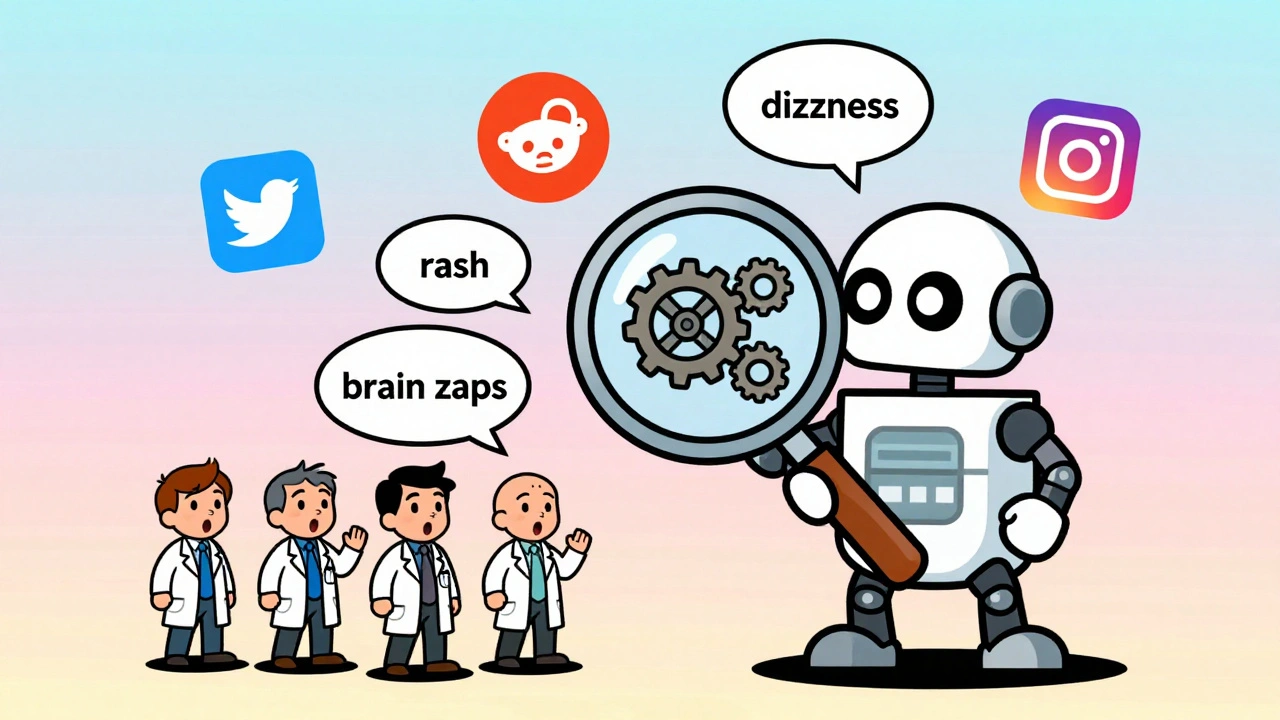
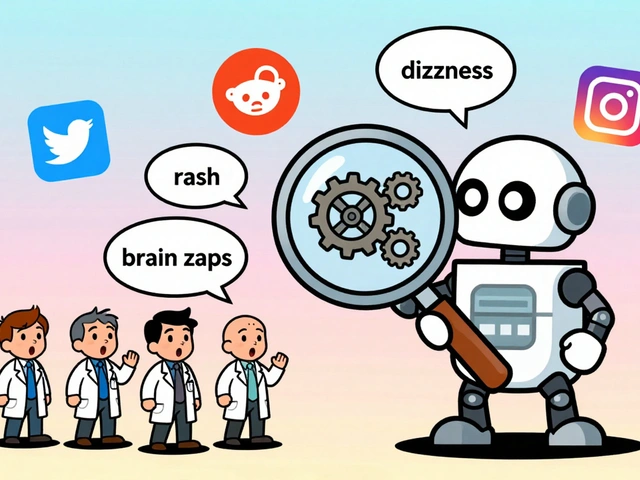
Every day, millions of people share how they feel after taking a new medication. They post about dizziness on Twitter, describe rashes on Instagram, or warn others about strange side effects on Reddit. These aren’t just casual complaints-they’re potential clues that could save lives. For decades, drug safety has relied on doctors and patients filling out forms to report side effects. But those forms miss most problems. Now, social media is stepping in as a real-time radar for drug risks. It’s not perfect. But it’s changing how we track what medicines do in the real world.
Why Traditional Reporting Falls Short
For years, the gold standard for spotting bad drug reactions was the formal adverse drug reaction (ADR) report. Doctors file them. Patients sometimes do, if they remember to. But here’s the problem: only 5 to 10% of actual side effects ever make it into official databases. That’s not a glitch-it’s the norm. People forget. They don’t connect the dots. Or they think, "It’s probably just me." Meanwhile, on social media, people are talking. Right now. About that new pill that made them nauseous at 3 a.m. Or the antidepressant that caused brain zaps. Or the blood pressure med that made their skin turn red. These posts aren’t filtered by medical jargon or hospital forms. They’re raw. Real. And they’re happening faster than any report can be filed.How Social Media Is Being Used for Drug Safety
Pharmaceutical companies and regulators aren’t ignoring this. They’ve started using AI tools to scan Twitter, Facebook, Reddit, and health forums for mentions of drugs and symptoms. The process looks like this:- Tools pull in thousands of posts daily from major platforms.
- AI identifies drug names, symptoms, and dosages using techniques like Named Entity Recognition (NER).
- Topic modeling finds patterns-even when users don’t use medical terms. Someone says, "I feel like my head’s full of static," and the system flags it as a possible neurological side effect.
- Human reviewers then check the top candidates to see if they’re real reports or just noise.
A Real-World Win: The Antihistamine That Almost Got Missed
In early 2022, Venus Remedies launched a new antihistamine. Within weeks, a cluster of posts started popping up on Reddit and Facebook. Users described rare, severe skin reactions-blistering, peeling, intense itching. At first, it looked like isolated complaints. But when the company’s pharmacovigilance team dug into the data, they saw a pattern: all users had taken the drug within the last 14 days. None had mentioned it in formal reports. They flagged it. Within 112 days, the product label was updated to include the warning. Without social media, that signal might have taken over a year to surface through traditional reporting. That’s the power of real-time monitoring.The Dark Side: Noise, Bias, and Privacy Risks
But here’s the catch: 68% of social media mentions flagged by AI turn out to be false alarms. People joke. Misunderstand side effects. Or confuse one drug for another. One post might say, "This pill made me feel like I was on fire," but they meant spicy food. Then there’s the data gap. 92% of social media posts lack critical info: medical history, dosage, other meds taken, or lab results. Without that, you can’t confirm if the drug even caused the reaction. And what about privacy? Patients don’t know their posts are being monitored. They’re sharing personal health details in public spaces-sometimes without realizing it. One Reddit user wrote: "I told everyone about my panic attacks after the new pill. Now I find out a drug company is tracking me. I didn’t consent to that." There’s also bias. People with smartphones, internet access, and digital literacy are overrepresented. Older adults, low-income groups, and non-English speakers are underreported. That means we might miss side effects that hit certain populations harder.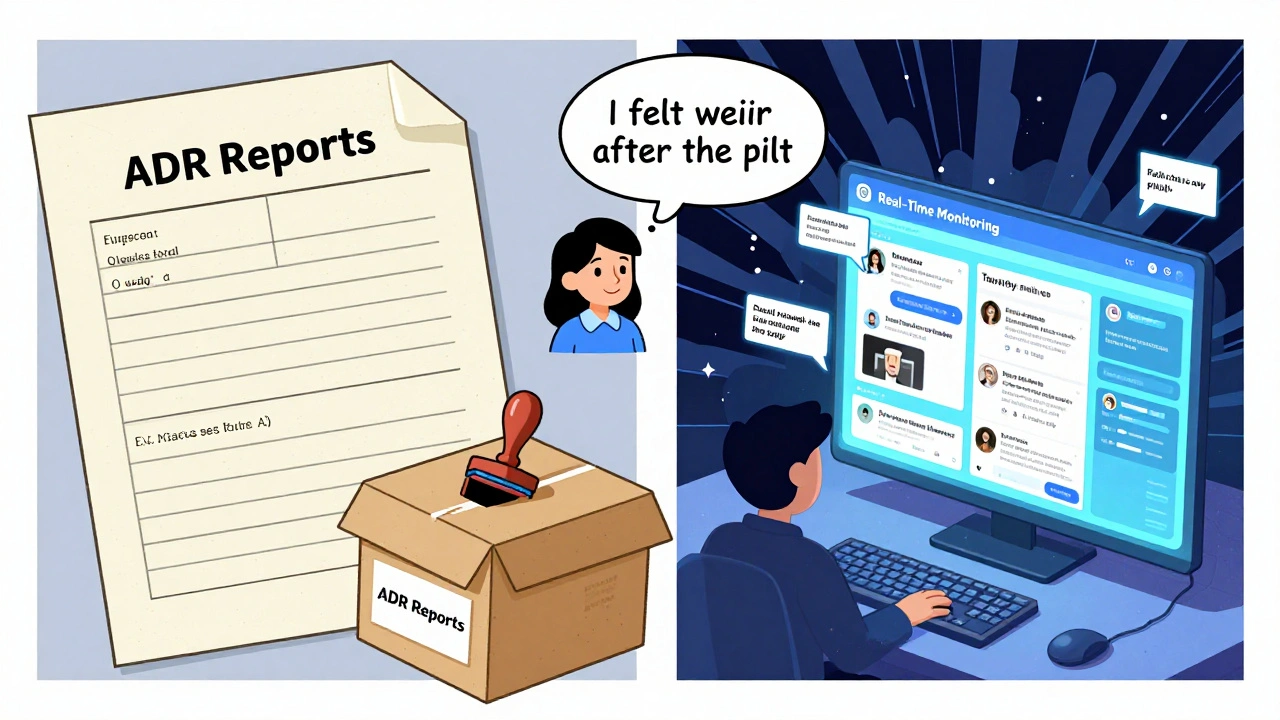
When Social Media Doesn’t Work
Social media shines for popular drugs with millions of users. But for rare medications-say, a treatment for a disease that affects fewer than 10,000 people a year-it’s nearly useless. In a 2018 FDA case study, false positives hit 97% for these niche drugs. Why? Because the signal is too weak. Too few people are talking about it. The noise drowns out the warning. And even when a signal is detected, it doesn’t mean it’s real. The WEB-RADR project, a major EU-led study, found that social media had "limited value" in confirming safety signals for most drugs over a two-year period. That’s why regulators still treat these reports as leads-not proof.Regulators Are Taking Notice
The FDA and EMA aren’t sitting back. In 2022, the FDA issued formal guidance saying companies must validate social media data before using it in safety assessments. In April 2024, the EMA updated its rules to require companies to document their social media monitoring methods in their regular safety reports. The FDA even launched a pilot program in March 2024 with six big drugmakers. The goal? Cut false positives below 15%. That’s ambitious. But with better AI, clearer rules, and more human review, it’s possible.Who’s Doing It Right?
Companies that succeed with social media pharmacovigilance don’t just throw AI at the problem. They build teams. They train staff. The average pharmacovigilance professional needs 87 hours of specialized training to handle these systems. That includes learning how to spot fake reports, understand slang, and navigate privacy laws across countries. They also integrate social data into their existing systems. Not as a standalone tool, but as a supplement. When a social media alert pops up, it triggers a deeper investigation: check clinical trial data, review medical records, talk to prescribing doctors. Only then do they decide if it’s worth reporting to regulators.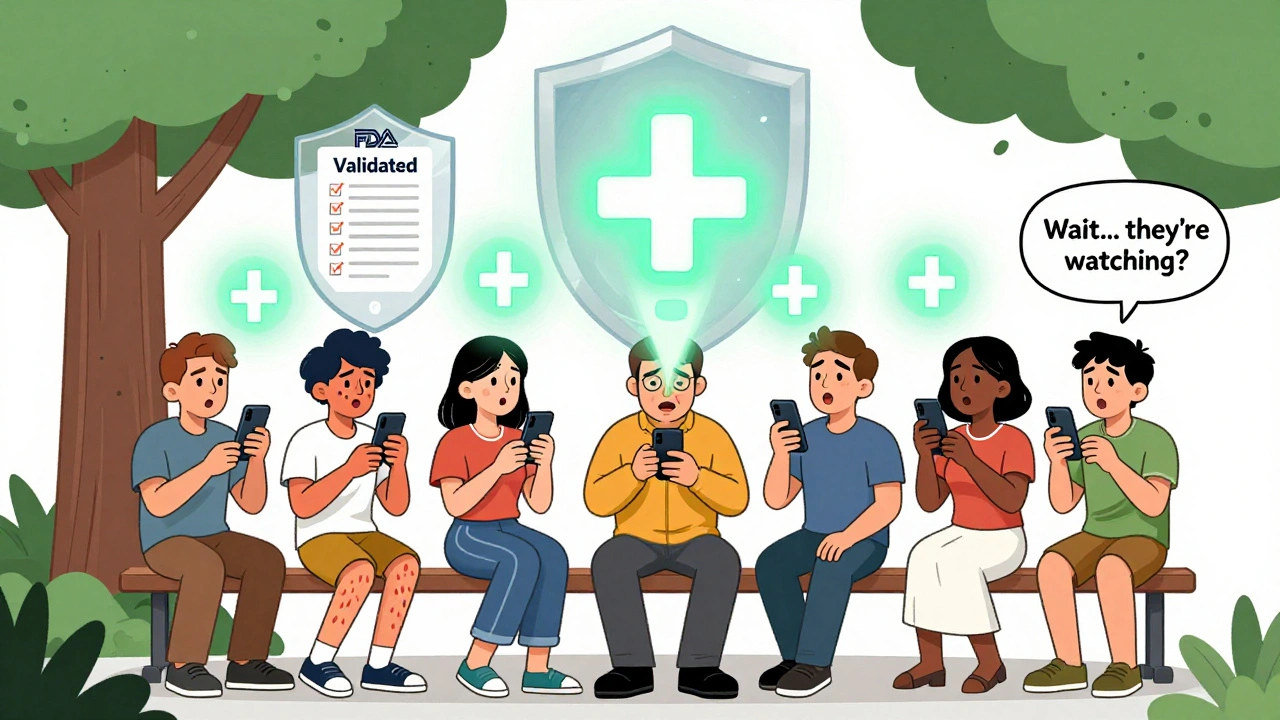
The Future: AI, Integration, and Trust
The market for social media pharmacovigilance is growing fast-projected to hit $892 million by 2028. But adoption varies wildly. Europe leads with 63% of companies using it. North America is at 48%. Asia-Pacific? Just 29%. Why? Privacy laws. Regulatory uncertainty. Fear of backlash. The future isn’t about replacing traditional reporting. It’s about blending it. AI will keep getting better at filtering noise. Regulators will tighten standards. Patients might even be asked to opt in-giving consent for their public health posts to be used for safety monitoring. The goal? To catch dangerous side effects faster. To protect more people. To turn scattered whispers into clear warnings.What This Means for Patients
If you’re taking a new drug, know this: your posts might be seen. Not by your doctor. Not by your family. But by a team of analysts working for a pharmaceutical company. That’s not scary-it’s protective. Your voice could help prevent someone else’s harm. But also be smart. Don’t overshare. Avoid posting detailed medical histories in public threads. Use pseudonyms. And if you notice a pattern of side effects with a drug-don’t just post about it. Tell your doctor. File a formal report. Social media is a tool. But human judgment still matters most.Can social media replace traditional adverse drug reaction reporting?
No. Social media is a supplement, not a replacement. Traditional reports still provide verified, structured data with medical context that social media lacks. Social media helps spot signals faster, but those signals must be confirmed through clinical review, medical records, and formal reporting systems before any action is taken.
Are my social media posts being monitored without my permission?
Yes, in most cases. If you post about a drug and its side effects on a public platform like Twitter, Facebook, or Reddit, pharmaceutical companies and regulators can legally collect and analyze that data. There’s no requirement for consent because the posts are public. However, ethical guidelines urge companies to anonymize data and avoid targeting private accounts. Some companies now include opt-out options in their privacy policies, but this isn’t standard yet.
How accurate are AI systems at detecting real side effects from social media?
Current AI systems correctly identify real adverse events about 85% of the time. But that doesn’t mean 85% of all posts are real. In fact, only about 3.2% of all flagged social media posts meet the criteria for validation as a true safety signal. The rest are noise-jokes, misunderstandings, unrelated symptoms, or duplicate reports. Human review is still essential to confirm any potential signal.
Why do some drugs show more side effects on social media than others?
Drugs with large user bases-like common antidepressants, blood pressure meds, or diabetes drugs-generate more social media chatter. That means more data to analyze. Rare drugs, used by only a few thousand people, don’t generate enough posts to create a clear signal. For those, the noise-to-signal ratio is too high, making social media monitoring ineffective. In fact, the FDA found a 97% false positive rate for drugs with fewer than 10,000 annual prescriptions.
What’s the biggest challenge in using social media for pharmacovigilance?
The biggest challenge is data quality. Most posts lack critical medical details: dosage, duration, other medications, pre-existing conditions. Without this, it’s impossible to confirm if the drug caused the reaction. Even with advanced AI, you can’t fix missing information. That’s why human experts are still needed to interpret the data and connect the dots with clinical evidence.



Comments (12)