
QT Interval Risk Checker
Enter your measured QT interval (in milliseconds) to determine if it falls within the safe range. Based on FDA guidelines, a QT interval over 500 ms indicates high risk of dangerous arrhythmias.
Why QT Interval Monitoring Matters More Than You Think
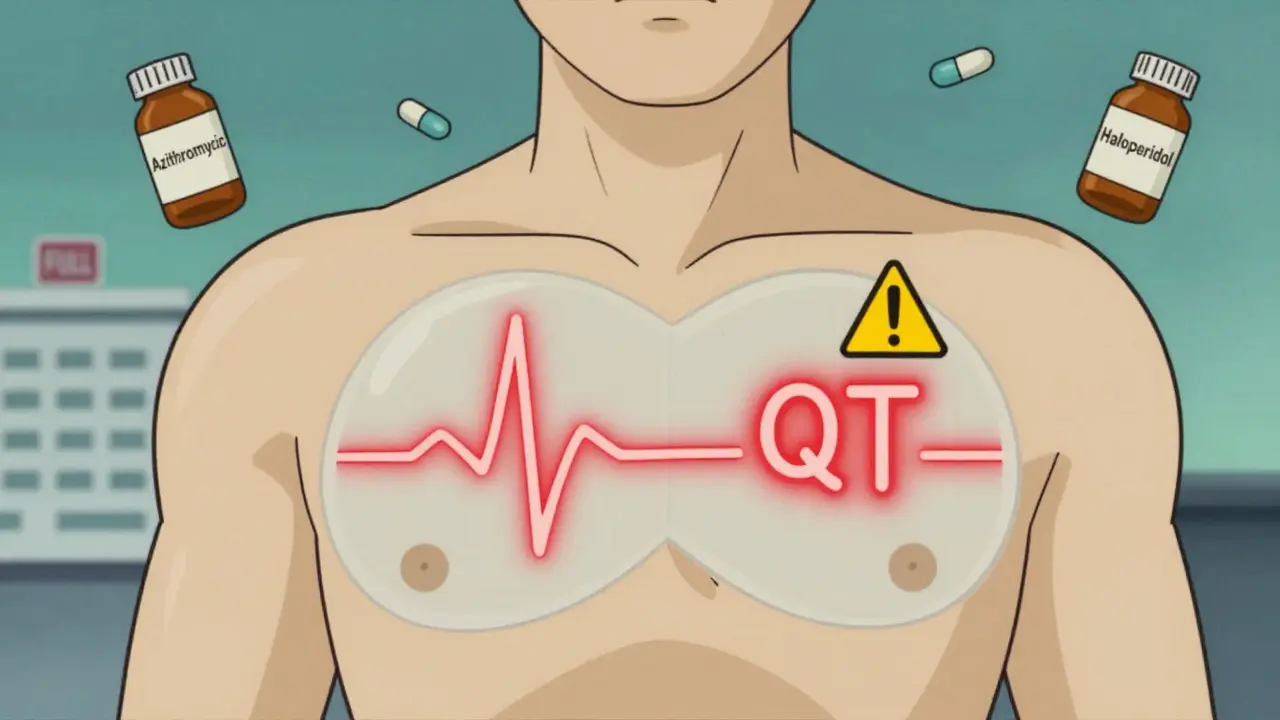
Every heartbeat has a rhythm - not just in how it feels, but in how it looks on an ECG. The QT interval is that silent countdown between the start of the Q wave and the end of the T wave. It’s not something most people know about, but if it stretches too long, it can trigger a dangerous heart rhythm called torsades de pointes - a type of arrhythmia that can lead to sudden cardiac death. This isn’t rare. About 1 in 2,000 people taking certain medications like antibiotics, antipsychotics, or antiarrhythmics face this risk. And until recently, checking your QT interval meant visiting a clinic, lying still on a table, and waiting days for results.
Now, you can monitor it from your wrist.
How Wearable ECGs Detect QT Prolongation
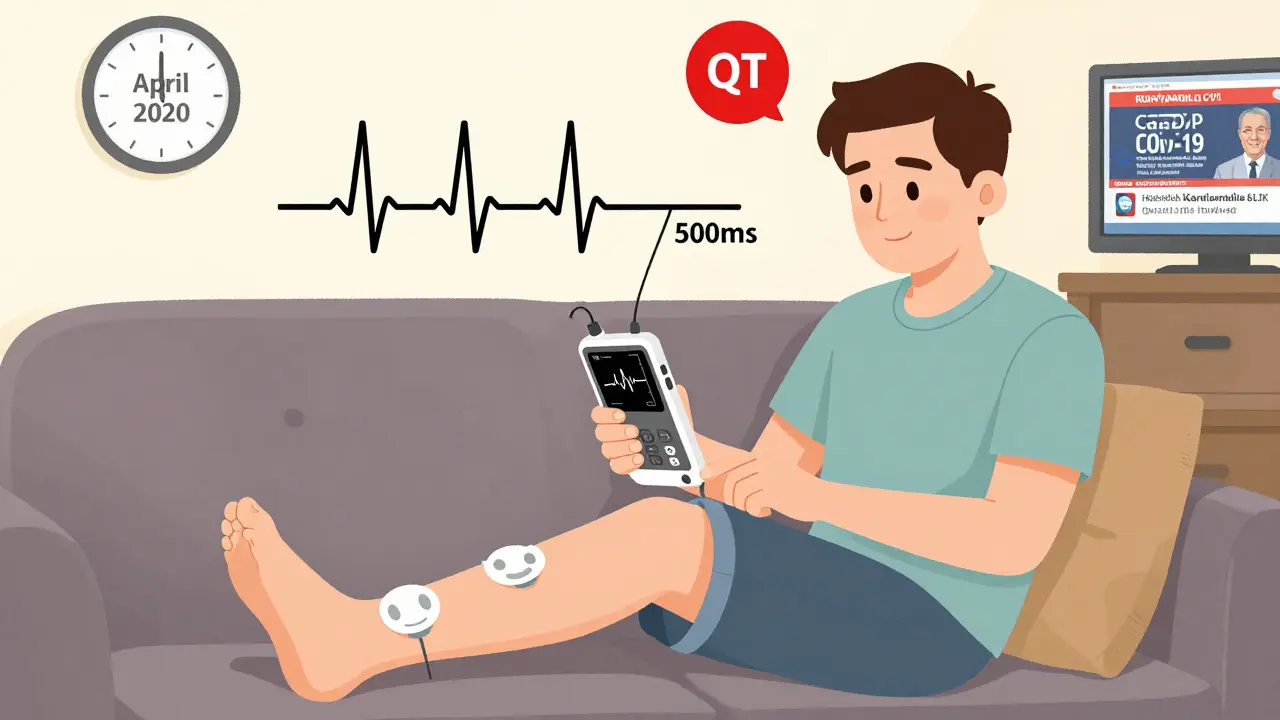
Devices like the Apple Watch Series 4 and later, and the KardiaMobile 6L, don’t just count steps or track sleep. They record your heart’s electrical signals - the same ones doctors use in hospitals. The Apple Watch uses a single-lead ECG by asking you to touch the digital crown for 30 seconds. The KardiaMobile 6L is a small, credit-card-sized device with electrodes on both sides. You place your thumbs on top and your left ankle on bottom, creating a 6-lead circuit that mimics a hospital-grade ECG.
These devices don’t guess. They measure. Studies show the Apple Watch’s QT interval readings correlate with standard 12-lead ECGs at 0.88 to 0.91 accuracy. That’s not perfect, but it’s close enough to catch dangerous spikes. The KardiaMobile 6L, with its six leads, matches standard ECG results within ±20 milliseconds - well within the clinical safety margin.
What makes this powerful isn’t just the hardware. It’s the timing. Instead of waiting for symptoms, you get real-time feedback. If your QT interval climbs past 500 milliseconds - the danger zone - you’re alerted before things go critical.
The Pandemic That Changed Cardiac Monitoring Forever
In early 2020, hospitals were overwhelmed. COVID-19 patients were being given hydroxychloroquine and azithromycin - drugs known to prolong the QT interval. But with ERs full and staff stretched thin, how do you monitor hundreds of patients remotely?
The answer came from wearables. In April 2020, the FDA gave emergency clearance for the KardiaMobile 6L to be used for QT interval measurement in COVID-19 patients. It was the first time a consumer-grade device was officially approved for this purpose. Suddenly, patients could check their own heart rhythm at home, send data to their doctors, and avoid unnecessary hospital visits.
One case report from 2020 showed an Apple Watch catching QT prolongation in a patient on these drugs. Without the watch, the warning signs might have been missed until it was too late. That moment changed everything. It proved these devices weren’t just gadgets - they were lifesaving tools.
What Works - and What Doesn’t
Not all wearables are equal. The Apple Watch and KardiaMobile 6L are backed by peer-reviewed studies. But many smart rings, fitness bands, and clothing sensors claim heart monitoring - and most can’t measure QT intervals at all.
Here’s what you need to know:
- Apple Watch (Series 4+): FDA-cleared for single-lead ECG and atrial fibrillation detection. QT measurement is possible but not automated - you need to manually review the trace.
- KardiaMobile 6L: FDA-cleared for 16 indications, including QT interval measurement. Six leads = more accurate than single-lead devices.
- Other smartwatches (Samsung, Fitbit, Garmin): No FDA clearance for QT monitoring. They track heart rate, not electrical intervals.
- Smart rings and clothing sensors: Still experimental. No validated data for QT detection as of 2026.
Also, don’t assume accuracy equals reliability. A 2023 study found consumer wearables had only a 20.6% sensitivity for detecting pathologic Q waves - meaning they miss most structural heart issues. But for QT prolongation? That’s a different story. The data is solid.
AI Is Making QT Monitoring Smarter
Right now, you still need a doctor to interpret the ECG trace. That’s a bottleneck. What if a machine could do it?
In 2024, researchers at Stanford developed a deep learning model using a Residual Neural Network to analyze single-lead ECGs from wearable devices. The model looked at just two heartbeats from Lead I and Lead II and predicted whether the QT interval was dangerously prolonged (above 500 ms). It worked with 92% accuracy in a group of 686 patients with genetic heart conditions.
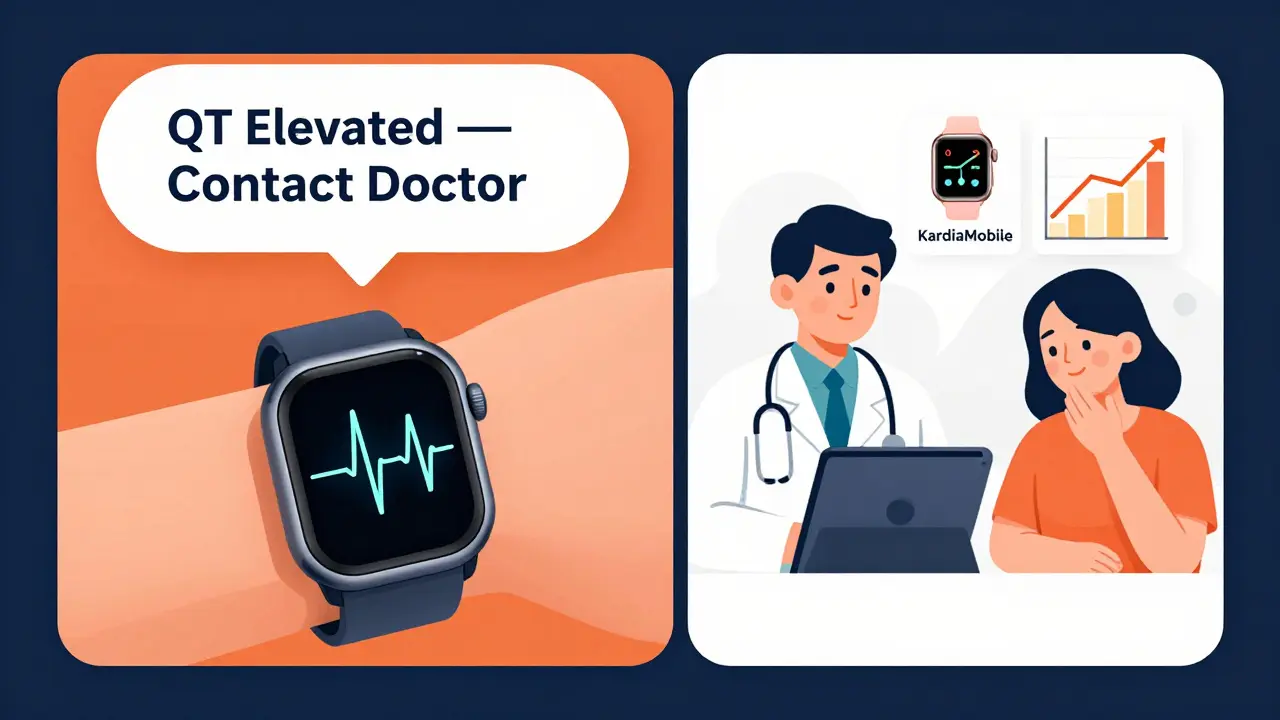
This isn’t science fiction. It’s the next step. Soon, your watch won’t just show you a waveform - it’ll say, “Your QT is elevated. Contact your doctor.” No waiting. No delays. No human error.
Who Should Use This Technology?
Wearable ECGs for QT monitoring aren’t for everyone. But if any of these apply to you, you’re a strong candidate:
- You’re taking medications known to prolong QT (e.g., azithromycin, ciprofloxacin, haloperidol, amiodarone)
- You have a personal or family history of long QT syndrome
- You’re enrolled in a clinical trial testing a new drug with cardiac risk
- You’ve had unexplained fainting or palpitations
- You’re on multiple medications that interact
Even if you’re healthy, if you’re starting a new medication, a baseline QT check with a KardiaMobile 6L or Apple Watch can give you peace of mind. It’s not a replacement for your doctor - it’s your early warning system.
How to Use It Right
Getting accurate readings isn’t automatic. You need to follow the rules:
- Wash and dry your hands and feet before using the device. Sweat or lotion can mess with the signal.
- For Apple Watch: Sit still. Place your finger firmly on the digital crown. Don’t move for 30 seconds.
- For KardiaMobile 6L: Place thumbs on top electrodes. Rest your left ankle on the bottom electrodes. Keep your leg relaxed.
- Don’t use the device right after exercise. Wait 10-15 minutes for your heart to settle.
- Take multiple readings over time. One reading isn’t enough - look for trends.
Also, don’t ignore the app. Both devices connect to apps that store your data. Share those reports with your cardiologist. Don’t wait for symptoms to flare up.
The Future Is Already Here
By 2026, wearable ECGs for QT monitoring aren’t just for high-risk patients. They’re becoming part of routine care. Pharmaceutical companies are using them in clinical trials to track cardiac safety in real time - cutting trial costs and speeding up approvals. Hospitals are starting to prescribe them for patients on long-term QT-prolonging drugs.
The technology is getting better. Algorithms are learning. Sensors are becoming more precise. And the FDA is approving more use cases every year.
This isn’t about replacing doctors. It’s about giving them better tools - and giving you control. You don’t need to be a tech expert. You just need to care enough to check.
What’s Next?
If you’re on a medication that affects your heart rhythm, talk to your doctor about wearable ECG monitoring. Ask if your device is FDA-cleared for QT measurement. Ask if your insurance covers it. Ask if you can get a baseline reading before starting treatment.
And if you’re not on any risky meds? Keep an eye on this space. The next time you get a new smartwatch, check the fine print. If it says “FDA-cleared for ECG,” it might be doing more than you think.



Comments (8)