
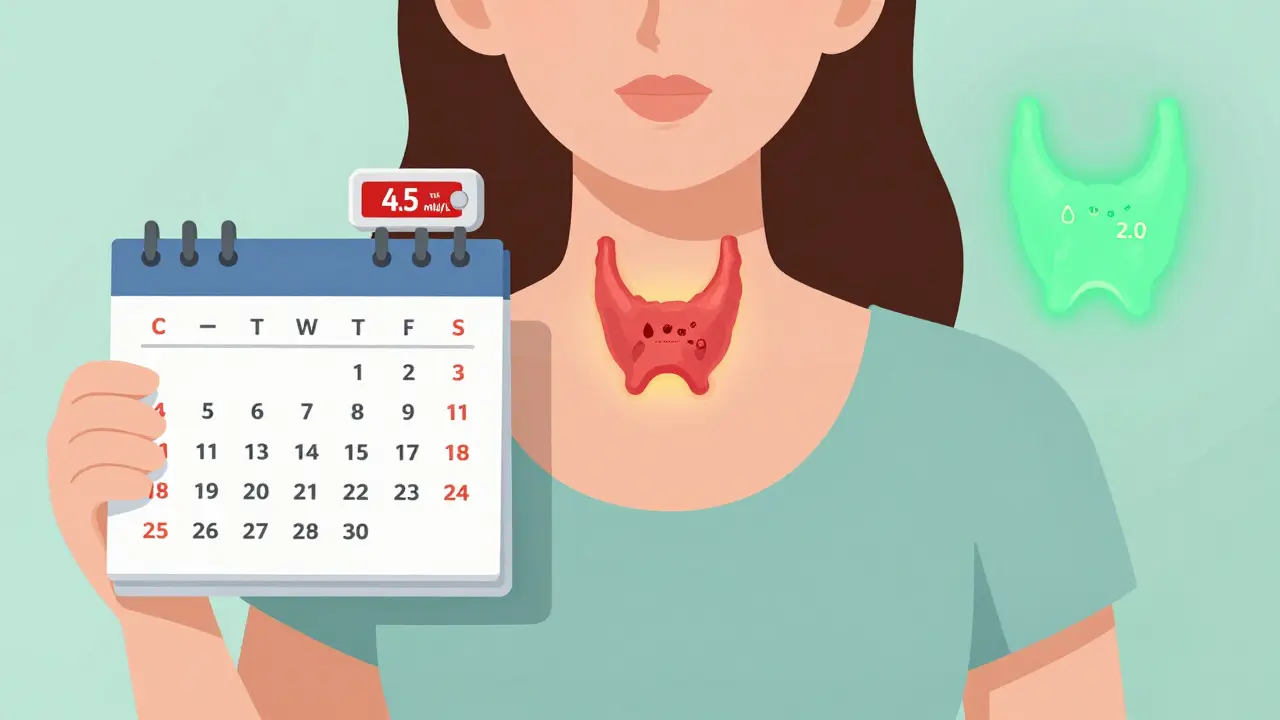
When you’re trying to get pregnant, most people focus on ovulation calendars, sperm health, or when to have sex. But there’s one hidden factor that can quietly sabotage your chances - your thyroid. Specifically, your TSH levels. If your thyroid isn’t working just right before conception, it can make it harder to get pregnant, increase your risk of miscarriage, and even affect your baby’s brain development. And here’s the thing: most doctors don’t check it unless you’re already showing symptoms.
Why TSH Matters More Than You Think
TSH stands for Thyroid-Stimulating Hormone. It’s made by your brain and tells your thyroid gland how much hormone to produce. If your TSH is too high, your thyroid isn’t making enough. That’s hypothyroidism. Even if your levels are just a little above normal - not enough to be called full-blown disease - it can still mess with your fertility. Studies show that women with unexplained infertility are nearly twice as likely to have TSH levels above 2.5 mIU/L compared to women who conceive easily. That’s not a fluke. Thyroid hormones control ovulation. If your levels are off, your body might not release an egg at all, or the egg might not be healthy enough to implant. And if you do get pregnant, low thyroid hormone in early pregnancy can mean your baby doesn’t get enough to build its brain properly - especially in the first 12 weeks, when the fetus can’t make its own thyroid hormone yet.The Magic Number: Why 2.5 mIU/L Is the Target
The American Thyroid Association says women planning pregnancy should aim for a TSH level under 2.5 mIU/L. That’s lower than the normal range you’d see on a standard lab report, which often goes up to 4.5 mIU/L. Why the difference? Because pregnancy changes everything. Your body needs more thyroid hormone from day one. If you’re already borderline when you start trying, you’ll fall behind fast. This isn’t just theory. A study of over 180,000 women found that those with TSH levels between 2.5 and 4.5 mIU/L had a 15% higher risk of miscarriage than women under 2.5. Another study showed that women with TSH above 2.5 had lower pregnancy rates even when they were otherwise healthy. But here’s where it gets messy. Some research, like a 2017 study of women undergoing IUI, found no difference in pregnancy rates between women with TSH under 2.5 and those between 2.5 and 4.5. So why do experts still push for 2.5? Because the risks aren’t just about getting pregnant - they’re about staying pregnant. And for women with thyroid antibodies (like Hashimoto’s), the stakes are even higher.Hashimoto’s? You Need Even Lower
If you have Hashimoto’s thyroiditis - the most common cause of hypothyroidism - your body is already attacking your thyroid. Pregnancy puts extra stress on it. Your hormone needs jump 30-50% in the first trimester. That means if your TSH is at 2.5 before pregnancy, it could easily climb to 4.0 or higher once you conceive - and that’s too late. Experts now recommend women with Hashimoto’s aim for TSH between 1.25 and 1.75 mIU/L before conception. This gives you a buffer. Once pregnant, your dose will likely need to increase by 25-50%, and starting from a lower baseline makes that adjustment smoother and safer.What About Thyroid Antibodies?
You can have normal TSH levels and still have problems. About 10-15% of women trying to conceive have thyroid antibodies - even if their TSH is perfectly normal. These antibodies mean your immune system is targeting your thyroid. It’s not causing symptoms yet, but it’s a warning sign. Research shows that women with antibodies but normal TSH still have a higher risk of miscarriage - about double the chance. The good news? If you’re taking levothyroxine, studies show it cuts miscarriage risk by 45% and boosts live birth rates by 36%. So even if your TSH is fine, if you have antibodies, talk to your doctor about whether treatment makes sense.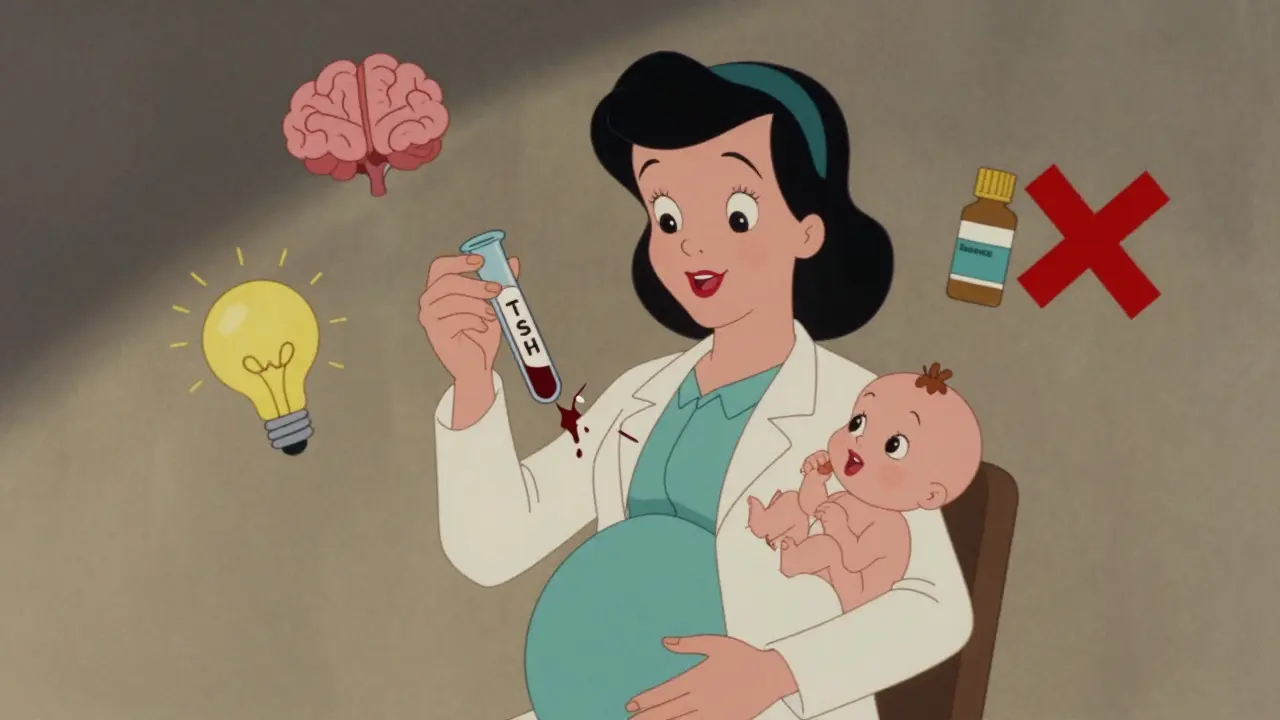
What About Screening? Should Everyone Get Tested?
The American College of Obstetricians and Gynecologists (ACOG) doesn’t recommend universal TSH screening for all women trying to conceive. They say the evidence isn’t strong enough. But the American Thyroid Association, the Endocrine Society, and the American Society for Reproductive Medicine all do - especially if you have any risk factors. Risk factors include: a family history of thyroid disease, previous miscarriage, type 1 diabetes, polycystic ovary syndrome (PCOS), unexplained infertility, or symptoms like fatigue, weight gain, dry skin, or heavy periods. If any of these sound familiar, ask for a TSH test. It’s a simple blood draw. Cost? Around $20-$50 out-of-pocket. The payoff? A much better chance of a healthy pregnancy.How to Fix It: Levothyroxine Is the Only Safe Option
If your TSH is too high, you’ll likely be prescribed levothyroxine - a synthetic version of the thyroid hormone your body should be making. It’s safe, effective, and the only form of thyroid medication recommended before and during pregnancy. Avoid desiccated thyroid products like Armour Thyroid. They’re made from pig thyroid glands and contain both T3 and T4. But during pregnancy, your body needs precise control of T4 - and these products can cause unstable hormone levels. They’re not approved for use in pregnancy, and fertility centers like InVia Fertility Center specifically warn against them. Dosing starts low and is adjusted based on your TSH levels. Most women need to increase their dose by 25-50% as soon as they find out they’re pregnant. But here’s the scary part: a 2019 study found that only 37% of women actually got their dose adjusted on time. Many didn’t get any adjustment at all. That’s why you need to be proactive. Don’t wait for your OB to notice. Tell your endocrinologist as soon as you get a positive test.How Often Should You Test?
If you’re trying to conceive and have thyroid issues, test your TSH every 4 to 6 weeks until your level is stable under 2.5 mIU/L. Once you’re pregnant, test every 4 weeks through the first half of pregnancy. Thyroid hormone levels change fast during pregnancy, and your dose needs to keep up. Don’t forget to check your free T4 levels too. TSH alone doesn’t tell the whole story. Your body needs enough T4 - the active hormone - to support your baby’s brain development. In early pregnancy, your total T4 rises naturally, but if your thyroid can’t keep up, your free T4 might drop. That’s when problems start.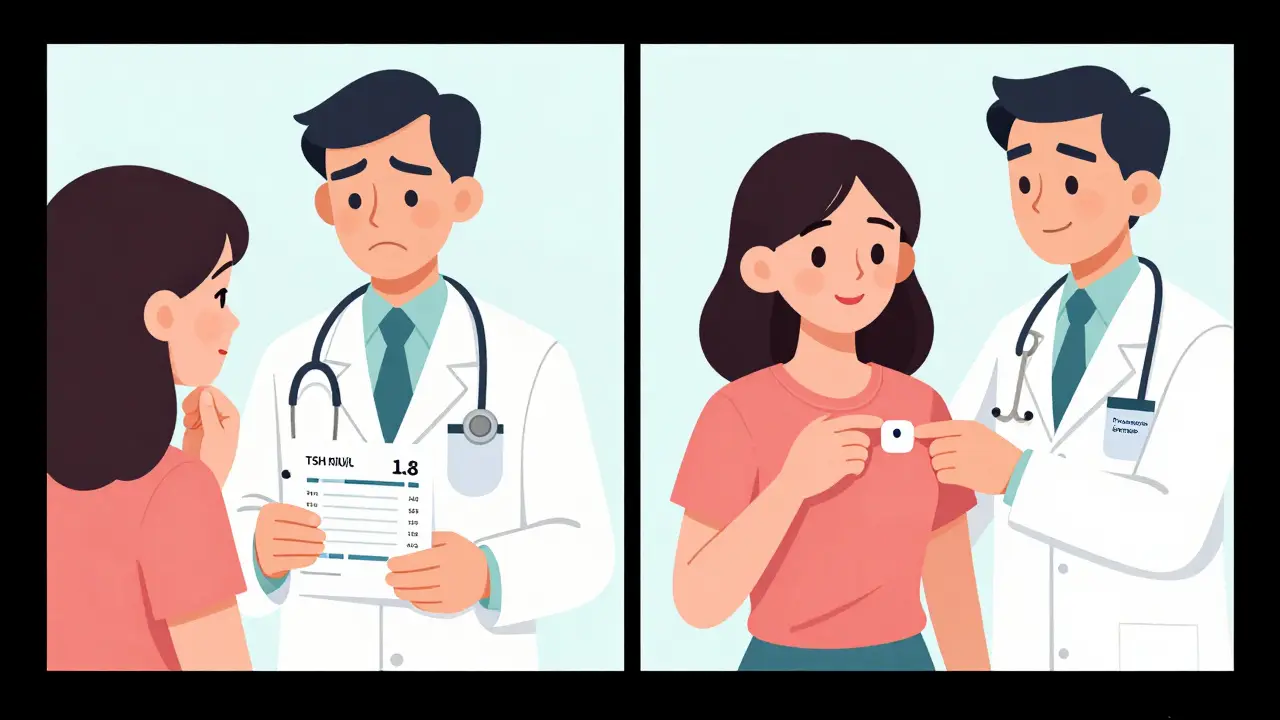
How to Take Your Medication Right
Levothyroxine works best when taken on an empty stomach. Take it first thing in the morning with a full glass of water. Wait at least 30 minutes before eating or drinking anything else - even coffee. Calcium, iron, and antacids can block absorption. If you take vitamins or supplements with iron or calcium, take them at least 4 hours apart from your thyroid pill. Consistency matters. Take it at the same time every day. Missing a dose or switching brands can throw off your levels. Stick with the same generic or brand name unless your doctor says otherwise.What’s Next? The Future of TSH Targets
New research is changing the game. The European Thyroid Association now recommends even lower targets in early pregnancy: under 1.8 mIU/L in the first 4 weeks, then gradually relaxing to 2.8 by week 12. Why? Because the embryo’s brain is developing at lightning speed in those first weeks. Every hour counts. A major NIH-funded trial (NCT03856002) is currently testing whether personalized TSH targets - based on your antibody status and thyroid reserve - lead to better outcomes than the one-size-fits-all 2.5 mIU/L goal. Results are expected in late 2024. But until then, the safest bet is still aiming for under 2.5 before conception - and under 1.75 if you have Hashimoto’s.Cost and Impact: It’s Worth It
Levothyroxine costs between $4 and $10 a month. A single miscarriage can cost over $7,000 in medical care. Preconception thyroid optimization saves an average of $1,850 to $2,400 per pregnancy by reducing miscarriages and preterm births. That’s not just money - it’s heartache avoided. The Global Thyroid Health Initiative estimates that if every woman trying to conceive got screened, we could prevent 65,000 to 80,000 miscarriages in the U.S. alone each year. That’s not a small number. It’s one of the most cost-effective, low-risk interventions in reproductive medicine.What You Should Do Now
If you’re trying to get pregnant:- Ask your doctor for a TSH test - don’t wait for symptoms.
- If you have a history of thyroid disease, miscarriage, or autoimmune conditions, push for it.
- If your TSH is above 2.5, talk to an endocrinologist. Don’t settle for "it’s still in range."
- If you have Hashimoto’s, aim for TSH under 1.75 before conception.
- If you’re already on levothyroxine, get tested before you stop birth control - and tell your doctor you’re trying to conceive.
- Once pregnant, schedule your next TSH test for 4 weeks after your positive result.
What is the ideal TSH level before conception?
The American Thyroid Association recommends a TSH level below 2.5 mIU/L for women planning pregnancy. For women with Hashimoto’s thyroiditis, experts suggest aiming even lower - between 1.25 and 1.75 mIU/L - to account for increased hormone demands during early pregnancy.
Can high TSH cause infertility?
Yes. Even mild thyroid dysfunction can interfere with ovulation and reduce the chances of embryo implantation. Studies show women with unexplained infertility are nearly twice as likely to have TSH levels above 2.5 mIU/L compared to fertile women. Correcting thyroid levels often restores normal ovulation and improves pregnancy rates.
Should I get tested for thyroid antibodies if I’m trying to conceive?
If you have a history of miscarriage, autoimmune disease, or unexplained infertility, yes. Thyroid antibodies (like TPOAb) indicate immune activity against the thyroid. Even with normal TSH, these antibodies increase miscarriage risk. Levothyroxine treatment can reduce that risk by nearly half.
Is Armour Thyroid safe to take before pregnancy?
No. Desiccated thyroid products like Armour Thyroid contain both T3 and T4 and can cause unstable hormone levels during pregnancy. Fertility centers and endocrinologists recommend levothyroxine (T4 only) because it’s predictable, safe, and better controlled. Avoid these alternatives before and during pregnancy.
How often should TSH be checked when trying to conceive?
Test every 4 to 6 weeks while optimizing your dose. Once your TSH is stable under 2.5 mIU/L, you can wait until you’re pregnant to retest - but get it checked again as soon as you get a positive result. Thyroid needs change rapidly in early pregnancy, and delays in adjusting medication can be risky.
Can I stop taking levothyroxine if I feel fine?
No. Even if you feel fine, stopping levothyroxine during preconception or pregnancy can cause your TSH to rise, which increases miscarriage risk and harms fetal brain development. Thyroid hormone needs are higher during pregnancy, and your body can’t always compensate on its own. Always follow your doctor’s guidance.
Does taking levothyroxine guarantee I’ll get pregnant?
No. Levothyroxine fixes one specific issue - low thyroid hormone. It won’t help if infertility is caused by blocked tubes, low sperm count, or other hormonal problems. But if thyroid dysfunction is part of the puzzle, correcting it can significantly improve your odds. It’s not a magic bullet, but it’s one of the most effective steps you can take.




Comments (9)