
Renal Dosing Calculator
Renal Dosing Calculator
Calculated Creatinine Clearance
Normal: >50 mL/min | Mild impairment: 31-50 mL/min | Moderate: 10-30 mL/min | Severe: <10 mL/min
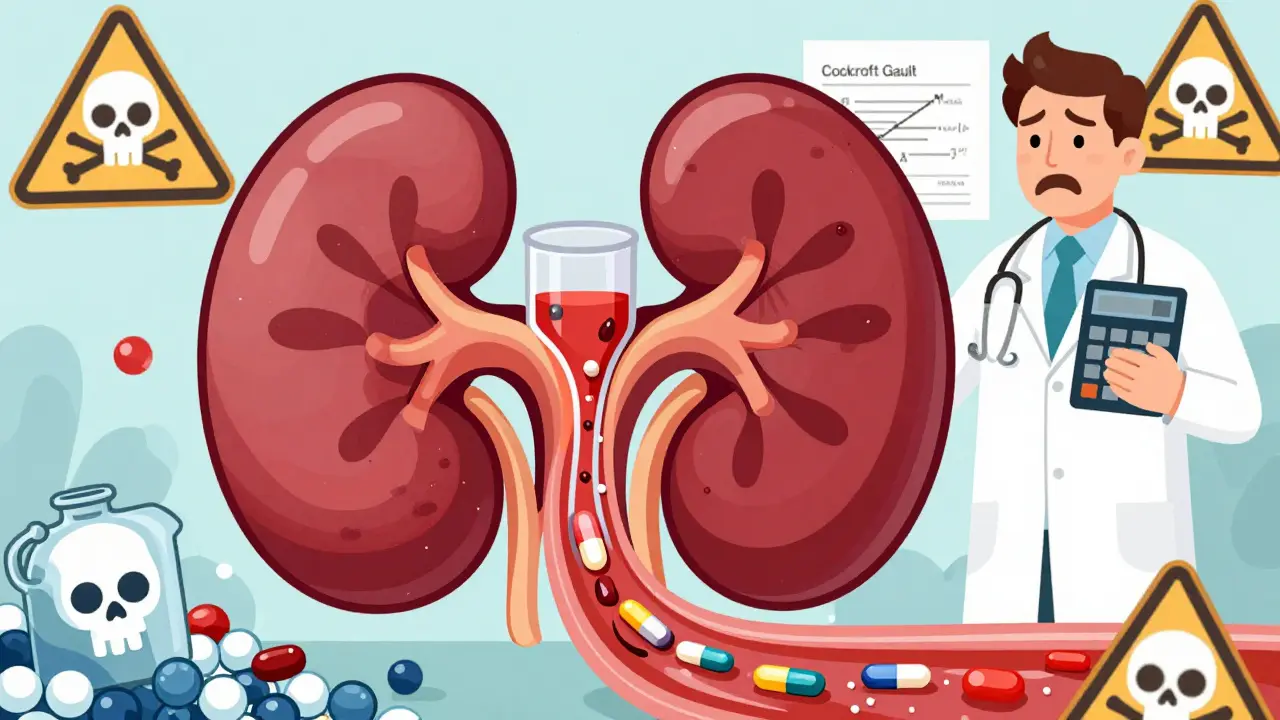
When someone has kidney disease, giving them the same dose of antibiotics as a healthy person isn’t just risky-it can be deadly. Antibiotics like ampicillin, cefazolin, and vancomycin are cleared by the kidneys. If those kidneys aren’t working right, the drugs build up. That buildup doesn’t just cause nausea or dizziness-it can lead to seizures, hearing loss, or even death. The good news? This isn’t random. We know exactly how to adjust doses. The problem? Many clinicians still get it wrong.
Why Renal Dosing Matters More Than You Think
About 15% of American adults have chronic kidney disease (CKD). That’s 37 million people. Globally, it’s over 850 million. And nearly 60% of commonly used antibiotics are cleared primarily by the kidneys. If you’re treating an infection in someone with CKD and you don’t adjust the dose, you’re playing Russian roulette with their life. A 2019 review in Clinical Infectious Diseases found that wrong dosing increases death risk by up to 27% in pneumonia, 20% in UTIs, and nearly 10% in skin infections. These aren’t theoretical numbers. These are real patients in hospital beds. And in many cases, the error isn’t because doctors are careless-it’s because the guidelines are confusing, outdated, or conflicting.How Kidney Function Is Measured: CrCl vs. eGFR
The gold standard for calculating how well kidneys are working is creatinine clearance (CrCl), calculated using the Cockcroft-Gault equation:CrCl = [(140 − age) × weight (kg)] / [72 × serum creatinine (mg/dL)] × 0.85 (if female)
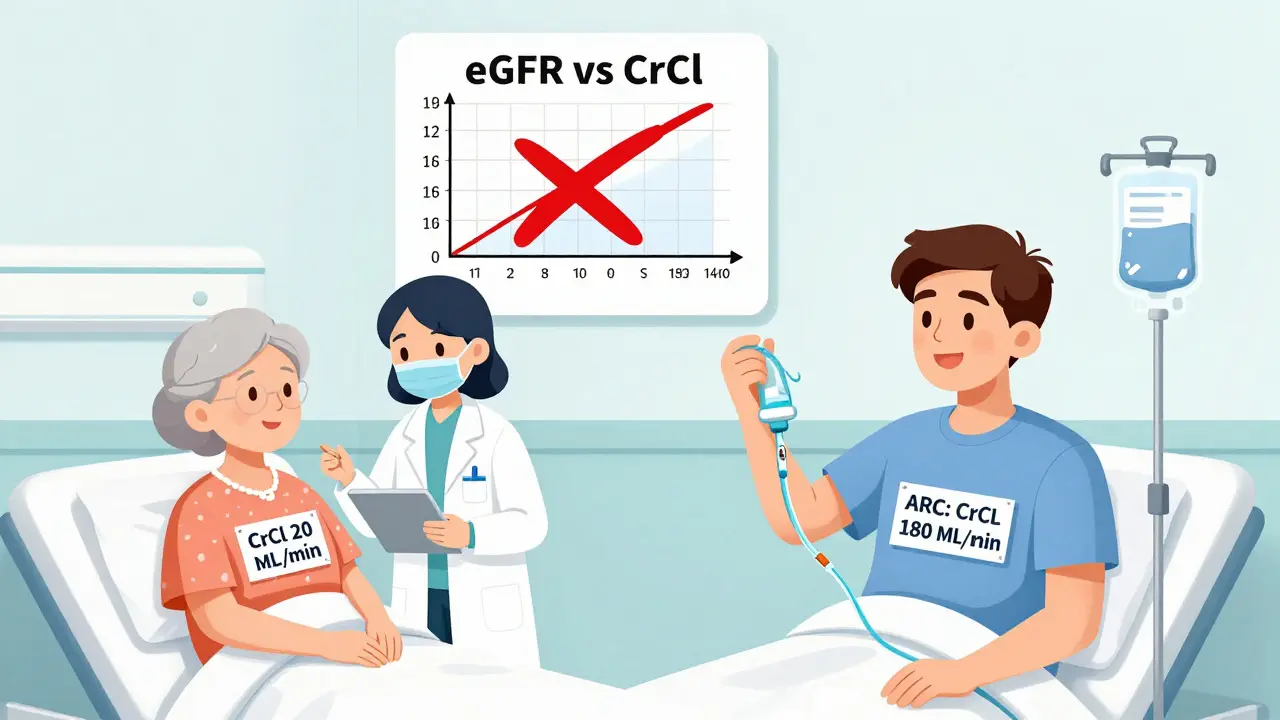
This formula isn’t perfect, but it’s the one used in nearly all antibiotic dosing guidelines. Why? Because it includes weight and sex-factors that matter when drugs are being filtered out. Many hospitals now use eGFR (estimated glomerular filtration rate) from the MDRD or CKD-EPI equations. But eGFR was designed for tracking long-term kidney disease progression, not for dosing antibiotics. Using eGFR for dosing can lead to underdosing, especially in older or thinner patients.
Here’s how CrCl levels are broken down:
- Normal: >50 mL/min
- Mild impairment: 31-50 mL/min
- Moderate impairment: 10-30 mL/min
- Severe impairment or dialysis: <10 mL/min
Don’t assume a patient’s CrCl is normal just because their serum creatinine looks okay. Older adults, people with low muscle mass, or those with malnutrition can have normal creatinine levels but very low kidney function. Always calculate CrCl-don’t guess.
Key Antibiotics and Their Renal Dosing Rules
Not all antibiotics behave the same. Some are forgiving. Others aren’t. Here’s what you need to know for the most common ones.Ampicillin/sulbactam - Standard dose: 1.5-3 g IV every 6 hours. For CrCl 15-29 mL/min: reduce to 2 g every 12 hours. For CrCl <15 mL/min: 2 g every 24 hours. This one’s tricky because some hospitals still use outdated protocols that cut the dose too far, leading to treatment failure.
Cefazolin - Standard: 1-2 g IV every 8 hours. For CrCl <10 mL/min: 500 mg-1 g every 12-24 hours. Cefazolin has a wide therapeutic index, meaning it’s less likely to cause toxicity. But here’s the catch: in acute kidney injury (AKI), many providers reduce the dose too early. If the kidneys start recovering within 48 hours, that underdose can lead to treatment failure. Don’t reduce until you’re sure the injury is persistent.
Vancomycin - Always give a loading dose of 25-30 mg/kg (max 2,500 mg) even in severe kidney disease. Then adjust maintenance doses based on CrCl. For CrCl <10 mL/min, give 15-20 mg/kg every 48-72 hours. Therapeutic drug monitoring is essential here. Target troughs of 15-20 mcg/mL for serious infections. Don’t rely on fixed schedules.
Ciprofloxacin - Oral dosing errors are the most common. Standard: 500 mg every 12 hours. For CrCl 10-30 mL/min: reduce to 250 mg every 12 hours. For CrCl <10 mL/min: 250 mg every 24 hours. Many prescribers forget to adjust oral doses because they think IV rules apply. They don’t.
Ceftriaxone - No dose adjustment needed at any CrCl level. This is one of the few antibiotics that doesn’t require renal dosing changes, even in dialysis. It’s eliminated through both kidneys and liver. Use it wisely when you can.
Clarithromycin - Standard: 500 mg every 12 hours. For CrCl <30 mL/min: reduce to 500 mg every 24 hours. But here’s the twist: Northwestern Medicine says no change needed below 50 mL/min. UNMC says reduce below 30. This kind of inconsistency is why 41% of pharmacists say they struggle to apply guidelines.
Acute vs. Chronic Kidney Disease: The Biggest Mistake
Most dosing guidelines were written for patients with stable, long-term kidney disease. But a huge portion of patients in hospitals have acute kidney injury (AKI)-a sudden drop in function, often from infection, sepsis, or dehydration. About 57% of AKI cases resolve within 48 hours. Here’s the problem: if you reduce the antibiotic dose right away because creatinine spiked, you might be starving the infection of the drug it needs. A 2019 study showed that underdosing in AKI increases treatment failure by 34%. But if you wait too long to reduce the dose after kidneys start recovering, you risk toxicity. The solution? Don’t adjust doses immediately for AKI unless the patient is anuric (not making urine) or in severe shock. Reassess kidney function every 24-48 hours. If CrCl improves, increase the dose. If it worsens, reduce it. This dynamic approach is missing from most institutional protocols.Augmented Renal Clearance: The Overlooked Problem
Not everyone with kidney issues has low function. Some patients-especially young, healthy, critically ill people with sepsis-have augmented renal clearance (ARC). Their CrCl can be over 130 mL/min. This isn’t normal. It’s a hyper-filtering state caused by inflammation and high cardiac output. For antibiotics like piperacillin/tazobactam, standard dosing (3.375 g every 6 hours) is often too low in these patients. UNMC recommends 2 g IV every 4 hours for CrCl >130 mL/min. Most guidelines don’t even mention ARC. That’s a gap. Patients with ARC are at high risk of treatment failure because the drug gets cleared too fast. If you’re treating a 28-year-old with sepsis and their creatinine is normal but they’re crashing, check their CrCl. It might be 180 mL/min.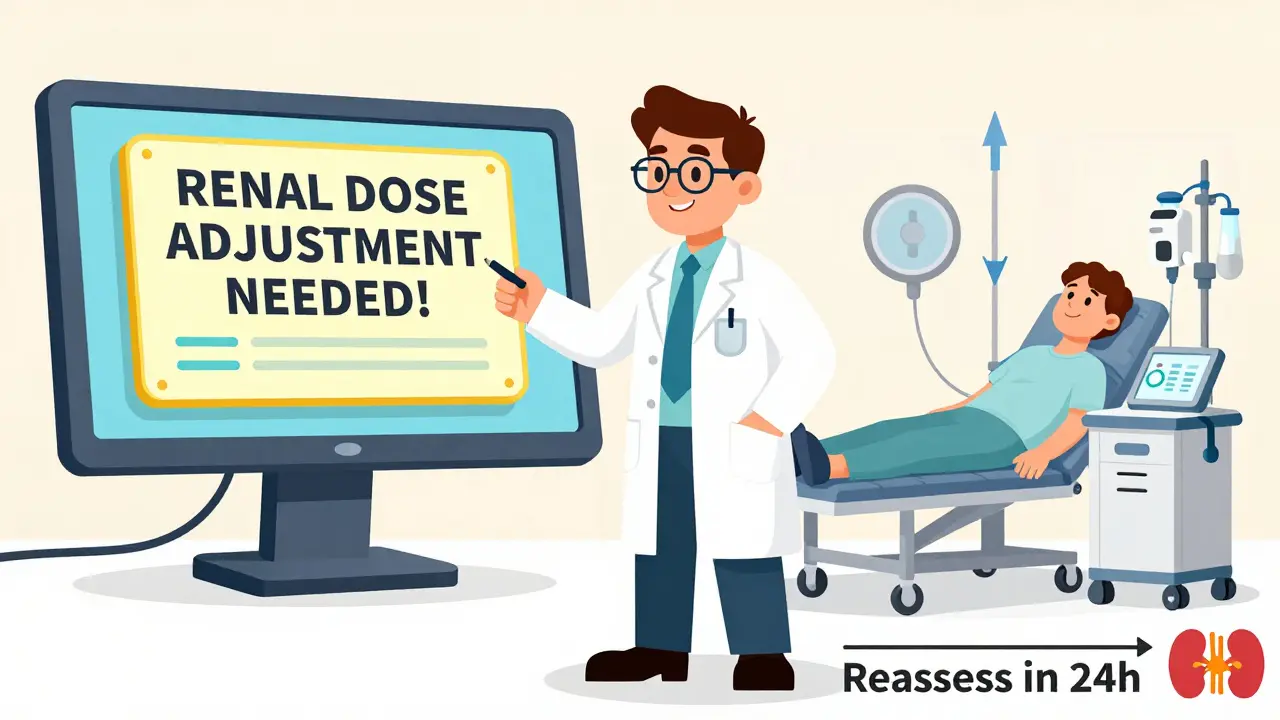
How to Avoid Mistakes in Practice
Here’s what actually works in hospitals:- Use one guideline source - 72% of academic hospitals standardize on KDIGO. Pick one and stick to it. Don’t let your team mix UNMC, Northwestern, and local protocols.
- Use EHR alerts - 89% of U.S. hospitals have electronic alerts that pop up when a renal dose adjustment is needed. Make sure yours is turned on and configured correctly.
- Involve pharmacists - Pharmacist-led dosing reviews reduce antibiotic-related adverse events by 37%. Don’t wait for them to be called in. Bring them in early.
- Double-check oral antibiotics - 78% of dosing errors happen with oral meds. Ciprofloxacin, levofloxacin, and trimethoprim-sulfamethoxazole are common culprits.
- Never skip the loading dose - For time-dependent antibiotics like vancomycin or piperacillin/tazobactam, the first dose matters as much as the rest. Even in dialysis, give the full loading dose.
The Future: AI, Monitoring, and Personalization
The field is changing. By 2027, 65% of academic hospitals expect to use therapeutic drug monitoring (TDM) for antibiotics like vancomycin and linezolid. TDM means drawing blood levels and adjusting doses based on real-time data-not estimates. Some hospitals are piloting AI tools that pull together CrCl, weight, age, infection type, and antibiotic to suggest a dose. At 17% of U.S. teaching hospitals, these tools are already in use. They’re not perfect, but they reduce human error. Long-term, researchers are looking at urinary biomarkers that show when kidney function is recovering-so we can adjust doses in real time, not every 24 hours. That’s the future. But today, the best tool you have is the Cockcroft-Gault equation, a calculator, and a willingness to question assumptions.Bottom Line: Don’t Guess. Calculate. Reassess.
Renal dosing isn’t about memorizing tables. It’s about understanding the patient, the drug, and the kidney’s role in clearing it. A 75-year-old woman with diabetes and a UTI? Calculate her CrCl. A 30-year-old man with sepsis and a normal creatinine? Check if he has ARC. A patient on dialysis? Don’t assume all antibiotics need the same adjustment. The data is clear: getting renal dosing right cuts adverse events by 43%. Getting it wrong kills people. You don’t need a fancy algorithm. You just need to stop guessing and start calculating.Do all antibiotics need renal dose adjustments?
No. About 60% of commonly used antibiotics require adjustment, but some, like ceftriaxone and linezolid, are eliminated through multiple pathways and don’t need dose changes even in severe kidney disease. Always check the specific drug’s profile.
Can I use eGFR instead of CrCl for dosing antibiotics?
It’s not recommended. eGFR was designed to track chronic kidney disease progression, not to guide antibiotic dosing. The Cockcroft-Gault equation, which uses weight and sex, gives a more accurate estimate of actual drug clearance. Stick with CrCl for dosing decisions.
What should I do if a patient has acute kidney injury (AKI)?
Don’t automatically reduce the dose. Many AKI cases resolve in 48 hours. Delay adjustment unless the patient is anuric or in shock. Reassess kidney function daily. If CrCl improves, increase the dose. If it worsens, reduce it. This dynamic approach prevents both underdosing and toxicity.
Is it safe to give a loading dose to someone on dialysis?
Yes. For time-dependent antibiotics like vancomycin or piperacillin/tazobactam, a full loading dose is critical to reach therapeutic levels quickly. Dialysis removes the drug after administration, so the loading dose ensures adequate initial exposure. Give the full dose before dialysis if possible.
Why do oral antibiotics cause more dosing errors than IV ones?
Oral antibiotics are often overlooked because clinicians assume IV dosing rules apply. But absorption and clearance differ. For example, ciprofloxacin is commonly underdosed in CKD because providers forget to cut the oral dose from 500 mg every 12 hours to 250 mg every 12 hours when CrCl is 10-30 mL/min. Always check oral-specific guidelines.






Comments (8)