
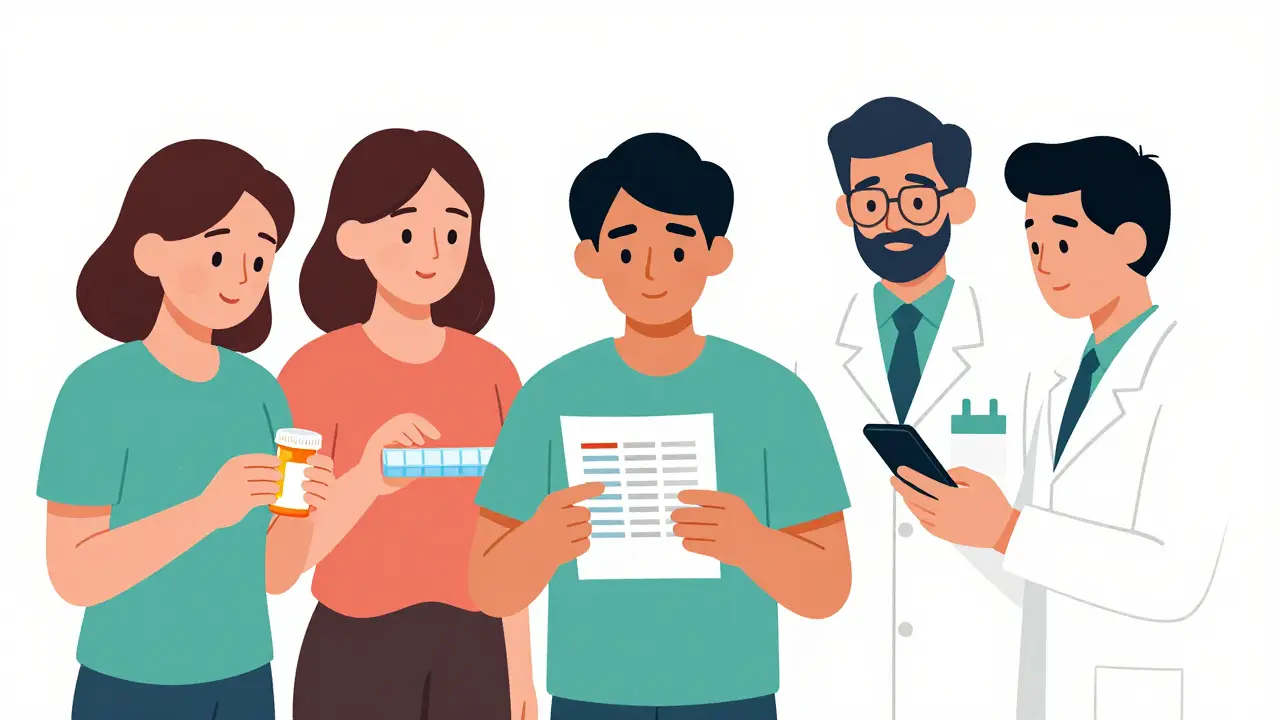
Every year, over 1.3 million people in the U.S. end up in the emergency room because of problems with their medications. Many of these cases aren’t accidents-they’re preventable. You’re not alone if you’ve ever looked at a prescription bottle and wondered: Do I take this before or after food? What happens if I miss a dose? Is this the same pill I got last month? Medication safety isn’t just for hospitals or pharmacists. It’s something you need to know, every single day.
Know Exactly What You’re Taking
Before you swallow any pill, ask yourself: What is this for? Too many people take medications without understanding why. The FDA says you should be able to answer eight key questions about each drug: its name, active ingredients, purpose, how to take it, how it looks, when it expires, possible side effects, and what to avoid while using it. For example, if you’re prescribed warfarin, you need to know it’s a blood thinner. Taking it with certain painkillers or even large amounts of leafy greens can be dangerous. If you’re on insulin, you need to know the difference between your long-acting and rapid-acting pens. Mistaking one for the other can send your blood sugar crashing. Keep a written list of every medication you take-prescription, over-the-counter, vitamins, and supplements. Update it every time you see a doctor or pick up a new prescription. Bring this list to every appointment. Studies show that when patients do this, medication errors drop by up to 45%.Follow the 5 Rights of Medication Safety
Healthcare workers use a simple rule called the 5 Rights to avoid mistakes:- Right patient - Is this medicine for you? Double-check your name on the bottle.
- Right drug - Does the pill look the same as your last refill? If it’s a different color, shape, or size, ask the pharmacist.
- Right dose - Is it 5 mg or 50 mg? Don’t guess. Read the label twice.
- Right route - Is it meant to be swallowed, injected, or applied to the skin?
- Right time - Should you take it with breakfast, at bedtime, or every 6 hours?
Watch Out for Look-Alike, Sound-Alike Drugs
Some medications are named so similarly that even doctors mix them up. Glimepiride and glyburide are both diabetes pills. Prednisone and prednisolone sound almost the same. One wrong pill can mean a trip to the ER. Pharmacies use a trick called Tall Man Lettering to help: they write predniSONE and predniSOLONE to highlight the difference. You can do the same. When you get a new prescription, write the full name in big letters on your medication list. If you’re unsure, ask the pharmacist: Is this the same as last time? A 2023 study found that using this method reduced dispensing errors by 28%. It’s simple, but it works.Never Skip or Stop Without Talking to Your Doctor
It’s tempting to stop taking antibiotics when you start feeling better. Or to skip your blood pressure pill because you feel fine. But that’s how problems start. The CDC reports that 23% of antibiotic treatment failures happen because people quit early. Stopping blood pressure or heart medications suddenly can cause heart attacks or strokes. If you’re having side effects, don’t just quit. Call your doctor. There might be a better option. Same goes for supplements. Just because something’s sold over the counter doesn’t mean it’s safe with your other meds. St. John’s Wort, for example, can make birth control, antidepressants, and even chemotherapy drugs less effective.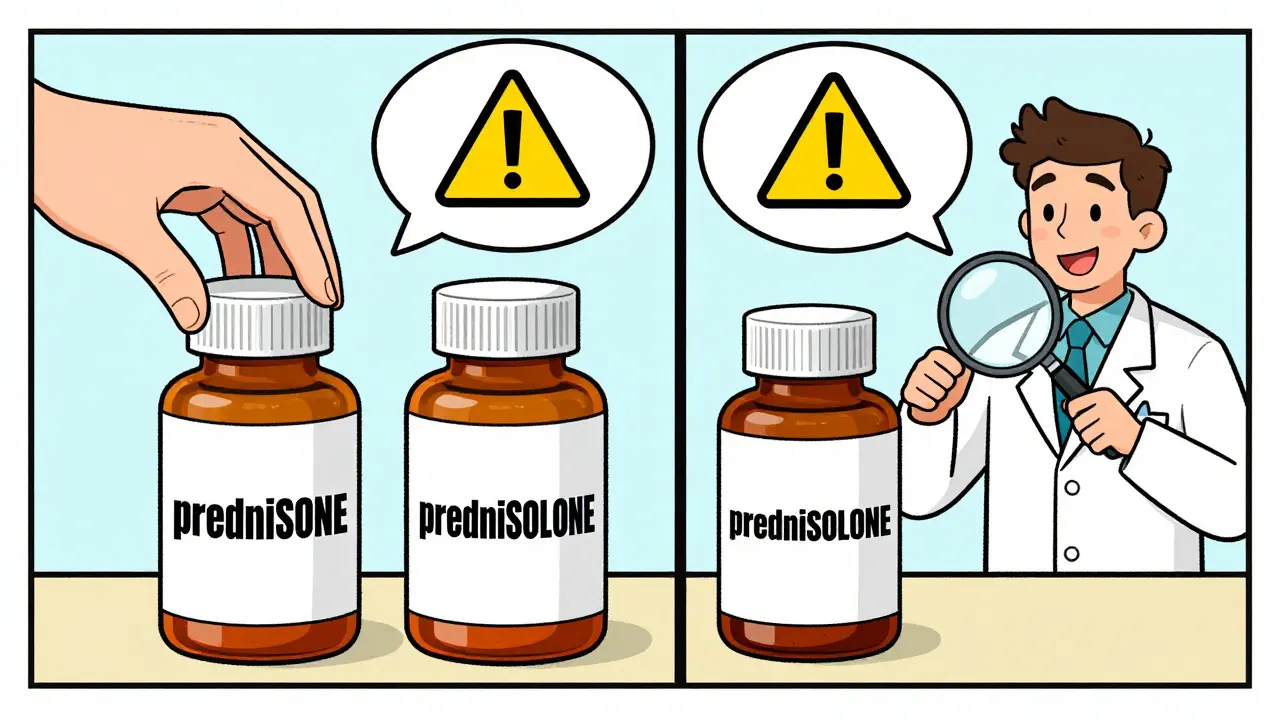
Use Tools to Stay on Track
If you’re taking five or more medications, you’re at higher risk for errors. Pfizer’s 2022 survey found people on 5+ drugs make 3.2 times more mistakes than those on one or two. Here’s what helps:- Pill organizers - Weekly or monthly boxes with compartments for morning, afternoon, evening. They cut errors by 35% in older adults.
- Smartphone alarms - Set multiple reminders. Label them clearly: “AM: Blood pressure pill,” “PM: Glucosamine.”
- Medication apps - The CDC’s free Medication Safety Checklist app (launched Jan 2024) lets you scan barcodes, set alerts, and share your list with family.
- Pharmacist consultations - Most pharmacies offer free 10-minute med reviews. Use them. Patients who do this make 27% fewer mistakes.
Check Expiration Dates and Clean Out Your Medicine Cabinet
Old medications are a hidden danger. The Illinois Department of Public Health found that 38% of accidental poisonings in children happen because of expired or unused pills left in cabinets. Do a medicine cabinet clean-out twice a year. Toss anything that’s expired, discolored, or smells weird. Don’t flush pills down the toilet-many communities have drug take-back programs. Hospitals, pharmacies, or police stations often have drop boxes. Also, never share your prescriptions. A pill that helps you might harm someone else. Even aspirin can be risky for people with ulcers or asthma.Ask for the Teach-Back Method
When your doctor or pharmacist explains how to take your meds, don’t just nod. Ask them to use the teach-back method. That means they explain it, then ask you to repeat it in your own words. A 2021 study in JAMA Network Open found that patients who used this method had 40% better adherence to their meds. It’s not about being tested-it’s about making sure you really understand. Try saying: “So if I’m taking this, I should take it with food, right? And if I feel dizzy, I should call you?” If they can’t explain it simply, ask for someone else.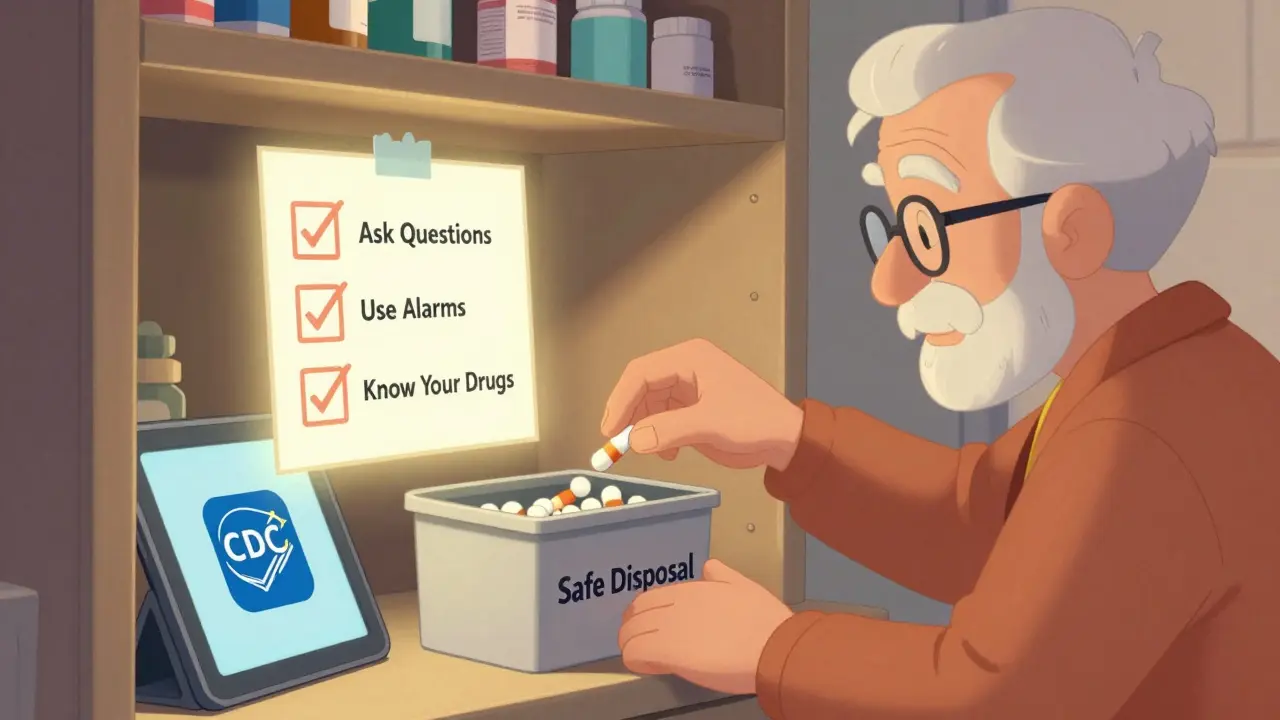
Be Extra Careful During Care Transitions
One of the biggest times for medication errors is when you move between settings: leaving the hospital, going to rehab, switching doctors. The Joint Commission found that 28% of hospitals still lack standard protocols for handing off medication info during transitions. That’s why you need to be your own advocate. Before you leave the hospital, ask for a written list of all your medications-what you’re taking now, what you’ve stopped, and what’s new. If you’re seeing a new doctor, bring that list. Don’t assume they’ll have it.Know the High-Risk Medications
Some drugs are more dangerous if used wrong. These are called high-alert medications. They include:- Insulin
- Warfarin
- Heparin
- Intravenous oxytocin
When in Doubt, Ask
There’s no such thing as a dumb question when it comes to your health. If you’re unsure about anything-dose, timing, side effects, interactions-ask. Pharmacists are trained for this. They’re the last line of defense. You don’t need to be an expert. You just need to be careful. Medication safety isn’t about memorizing every drug in the world. It’s about being curious, asking questions, and staying organized. The good news? Most errors are preventable. You don’t need fancy tech or a medical degree. You just need to pay attention-and speak up when something doesn’t feel right.What should I do if I miss a dose of my medication?
Don’t double up unless your doctor says to. Check the label or call your pharmacist. For some meds, like antibiotics, missing a dose can reduce effectiveness. For others, like blood pressure pills, skipping one dose might not be dangerous-but doing it often can be. Always ask for guidance instead of guessing.
Can I take my medications with alcohol?
It depends on the drug. Alcohol can dangerously interact with painkillers, sleep aids, antidepressants, and blood thinners. For example, mixing alcohol with warfarin increases bleeding risk. With opioids, it can cause breathing problems. If you drink, always ask your pharmacist or doctor if it’s safe with your meds.
Why does my pill look different this time?
It’s common for pills to change color or shape when you refill a prescription. That’s usually because a different manufacturer made it. But you should still check the name and dose on the label. If the name or strength changed, or if you’re unsure, call your pharmacy. Never assume it’s the same pill just because it treats the same condition.
Are over-the-counter meds safe to take with prescriptions?
Not always. Common OTC drugs like ibuprofen, antacids, and cold medicines can interfere with prescriptions. For example, ibuprofen can raise blood pressure and reduce the effect of heart meds. Antacids can block absorption of antibiotics. Always tell your pharmacist about everything you’re taking-even aspirin or vitamin D.
How do I know if I’m having a bad reaction?
Watch for sudden changes: rash, swelling, trouble breathing, severe dizziness, confusion, or unusual bleeding. These can be signs of an allergic reaction or overdose. If you’re unsure, call your doctor or go to the nearest emergency room. Don’t wait to see if it gets better. Some reactions can turn deadly in hours.
Should I keep all my meds in the original bottles?
Yes. Original bottles have the pharmacy label with your name, the drug name, dosage, and expiration date. If you transfer pills to a pill organizer, keep the original bottles in a safe place. You’ll need them if you’re admitted to the hospital or need to show proof of your meds to a doctor.
Can I use someone else’s prescription if it’s the same as mine?
Never. Even if two people have the same diagnosis, their dosages, allergies, or other medications may be different. A pill that’s safe for your friend could be dangerous for you. Sharing prescriptions is illegal and risky.
What’s the best way to dispose of old or expired meds?
Don’t flush them or throw them in the trash. Most communities have drug take-back programs at pharmacies, police stations, or hospitals. If none are available, mix pills with coffee grounds or cat litter in a sealed bag before throwing them away. This makes them unappealing and unsafe for pets or kids to find.




Comments (15)