
When you pick up a prescription and see a generic version on the shelf, you might assume it’s just a cheaper copy. But here’s the truth: ANDA process is one of the most tightly regulated, scientifically rigorous systems in modern medicine. It’s not about cutting corners-it’s about proving, down to the last molecule, that a generic drug works exactly like the brand-name version. And it’s how 9 out of 10 prescriptions in the U.S. end up being generic drugs, saving the healthcare system over $370 billion a year.
What Exactly Is an ANDA?
The Abbreviated New Drug Application (ANDA) is the official pathway the U.S. Food and Drug Administration (FDA) uses to approve generic drugs. Unlike brand-name drugs, which go through a full New Drug Application (NDA) requiring years of clinical trials to prove safety and effectiveness, generic drugs don’t need to repeat those studies. Why? Because the original drug-the Reference Listed Drug (RLD)-has already been proven safe and effective by the FDA. The ANDA process skips the heavy lifting and focuses on one critical question: Is this generic version the same in every way that matters?The term "abbreviated" doesn’t mean less thorough. It means smarter. Instead of starting from scratch, the FDA uses its own past findings. The applicant must prove four things: the active ingredient matches the brand drug exactly, the strength and dosage form are identical, the route of administration is the same (like oral tablet or injection), and the labeling is consistent (with minor exceptions). But the real make-or-break? Bioequivalence.
Bioequivalence: The Core of Generic Approval
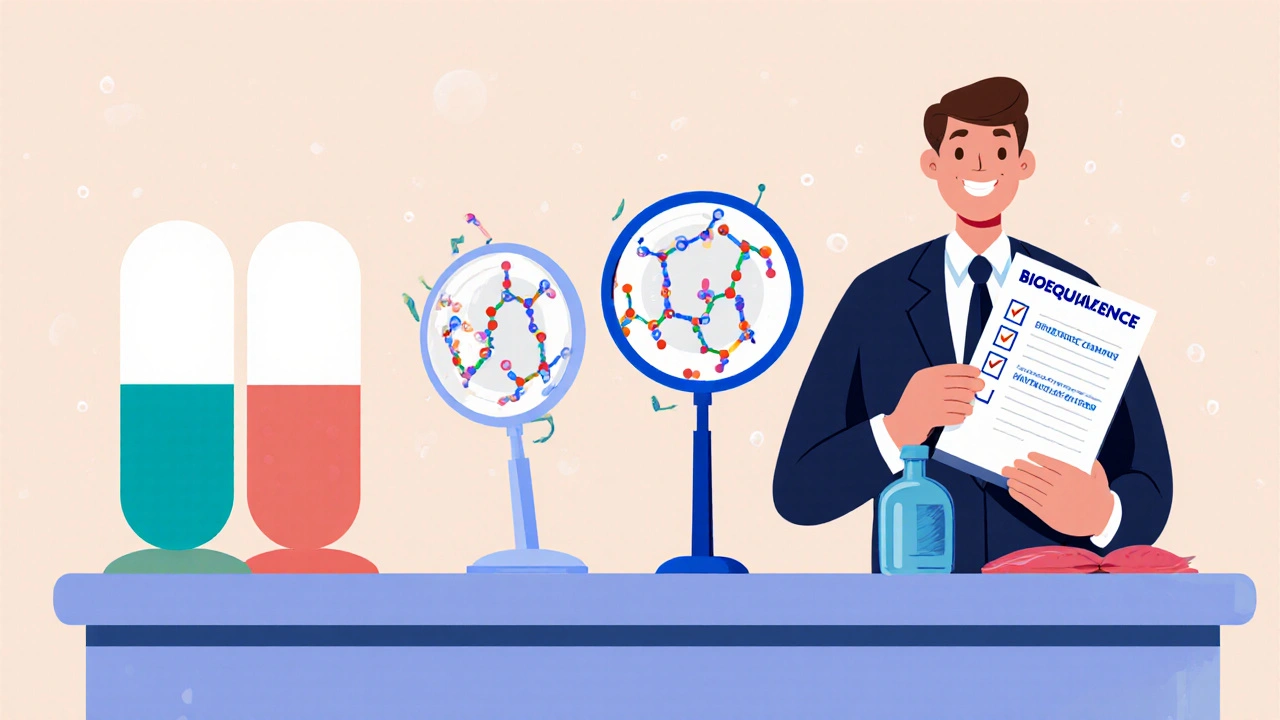
Bioequivalence is the golden rule of the ANDA process. It means the generic drug must deliver the same amount of active ingredient into your bloodstream at the same rate as the brand drug. No more, no less. If it doesn’t, it won’t work the same way in your body.Manufacturers prove this with controlled studies-usually in healthy volunteers. They measure blood levels over time and compare the results to the brand drug. The data must show that the generic’s absorption falls within 80% to 125% of the brand’s. That’s not a wide margin. It’s a narrow window designed to ensure clinical equivalence. For simple pills, this is straightforward. But for complex products-like inhalers, topical creams, or injectables-bioequivalence gets messy. These require advanced testing, sometimes multiple studies, and years of development. That’s why 35% of Complete Response Letters from the FDA cite inadequate bioequivalence protocols.
The ANDA Submission Process: From Paperwork to Approval
Getting an ANDA approved isn’t a quick sprint-it’s a multi-stage marathon. Here’s how it works:- Submission: The application must be filed electronically through the FDA’s Electronic Submission Gateway. It includes FDA-356h (the main form) and FDA-3674 (financial disclosure). The entire package must follow the FDA’s 2020 guidance on content and format.
- Filing Review (60 days): The FDA checks if the application is complete enough to review. If it’s missing key documents, it gets refused without being evaluated.
- Discipline Reviews: Teams of scientists-chemistry, manufacturing, microbiology, labeling, and bioequivalence-each dig into their area. This is where most problems show up. One team might flag a manufacturing defect. Another might say the labeling doesn’t match the RLD exactly.
- Information Requests (IRs): If something’s unclear or incomplete, the FDA sends an IR. On average, applicants get 10-15 of these. Responding takes time, often months. One manufacturer reported 17 IRs delaying their approval by 14 months.
- Final Decision: If everything checks out and there are no patent or exclusivity blocks, the FDA grants Final Approval. If there’s a patent or exclusivity still active, they issue a Tentative Approval. The drug can’t be sold yet, but once those protections expire, approval kicks in automatically.
Under GDUFA III (effective 2022), the FDA aims to complete its review of original ANDAs within 10 months. But the real timeline? Most take 30 months from submission to market. Delays usually come from facility inspections, incomplete responses, or complex products.
Why Some Generics Take Longer Than Others
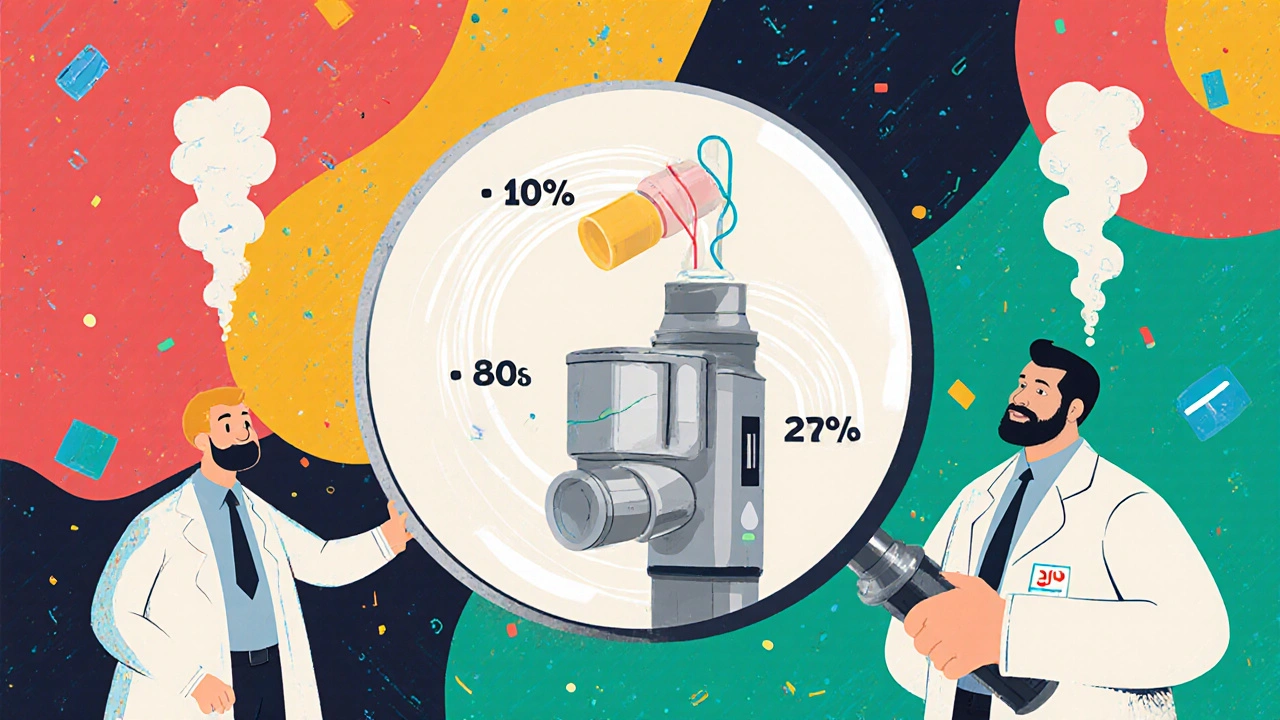
Not all generics are created equal. Simple tablets? Easy. Inhalers that deliver medicine deep into the lungs? Hard. Topical creams that need to penetrate skin layers? Even harder. These are called complex generics, and they now make up 35% of pending ANDAs.For these, proving bioequivalence isn’t just about blood levels. It’s about how the drug behaves in the body-particle size, viscosity, spray pattern, skin absorption. These require specialized testing equipment and expertise. Many companies spend over $1 million just on bioequivalence studies for a single topical product. That’s why only a handful of manufacturers can handle complex generics. Companies like Teva, Viatris, and Sandoz dominate this space because they’ve invested in the science and the infrastructure.
Costs and Savings: The Real Impact
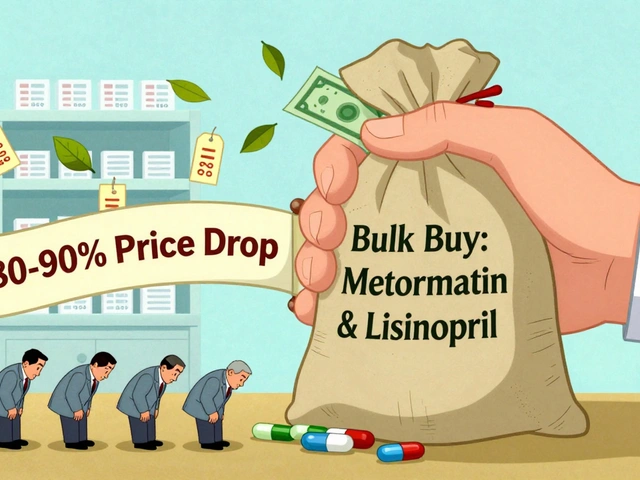
Developing a brand-name drug costs about $2.3 billion and takes 10-15 years. An ANDA? Between $1 million and $5 million-and it takes 1-3 years. That’s why generic drugs cost, on average, 85% less than their brand-name counterparts. Within a year of a generic entering the market, prices drop to 15% of the original.These savings aren’t theoretical. In 2021 alone, generics saved the U.S. healthcare system $373 billion. That’s money that goes back into patient care, lower insurance premiums, and more accessible treatment. The FDA estimates that 90% of prescriptions filled in the U.S. are generics. Without the ANDA process, that number would be closer to 20%.

Common Pitfalls and How Companies Avoid Them
The biggest reasons ANDAs get rejected? Three things: bioequivalence studies that don’t meet standards, manufacturing issues, and labeling errors.- Bioequivalence: 35% of Complete Response Letters cite flawed study design. The fix? Use FDA product-specific guidances-there are over 2,000-and run pilot studies before the full trial.
- Manufacturing: 28% of rejections come from cGMP (current Good Manufacturing Practices) violations. Companies now use Quality by Design (QbD) principles to build quality into the process from day one. Over 68% of top generic manufacturers use this approach.
- Labeling: 22% of issues are about wording mismatches. Even a small difference in dosage instructions can trigger a rejection. The solution? Copy the RLD’s labeling word-for-word, then flag any necessary changes with FDA guidance.
Successful companies don’t wait until submission to talk to the FDA. Nearly 80% of those who get approved on the first try hold pre-ANDA meetings. These are informal chats where applicants present their plan and get feedback before spending millions on studies.
The Future of the ANDA Process
The FDA is adapting. With more complex generics on the horizon, they’re investing in new tools. AI is now used in 78% of chemistry reviews to spot inconsistencies faster. Real-world data from electronic health records is being explored to support bioequivalence claims for hard-to-test products. International standards through the ICH are helping align global requirements.But challenges remain. Patent thickets-where brand companies layer multiple patents to block generics-still delay entry. REMS (Risk Evaluation and Mitigation Strategies) programs sometimes restrict access to brand drugs needed for testing. And while the FDA is hitting its 10-month review goal for simpler drugs, complex ones still take years.
Still, the system works. It’s not perfect, but it’s designed to balance innovation with access. Generics aren’t cheap because they’re low quality. They’re affordable because the system removes unnecessary duplication-not safety.
What This Means for Patients
You don’t need to worry about your generic drug being less effective. The FDA doesn’t approve a generic unless it’s therapeutically equivalent. If your doctor prescribes a brand drug and you’re given a generic, you’re getting the same medicine, just at a fraction of the cost. And if you notice a change in how you feel after switching? Talk to your pharmacist. Rarely, inactive ingredients (like fillers or dyes) can cause reactions in sensitive patients. But that’s not a failure of the ANDA process-it’s an individual response.The ANDA system isn’t just a regulatory step. It’s the engine behind affordable healthcare. Every time you fill a prescription for a generic drug, you’re benefiting from a process that’s been refined over 40 years to deliver safe, effective, and affordable medicine to millions.
Is a generic drug the same as the brand-name drug?
Yes, by FDA standards. A generic drug must have the same active ingredient, strength, dosage form, route of administration, and labeling as the brand-name drug. It must also be bioequivalent-meaning it delivers the same amount of medicine into your bloodstream at the same rate. The only differences are in inactive ingredients (like color or flavor) and cost.
Why do some generic drugs look different from the brand?
By law, generics can’t look identical to brand drugs to avoid trademark infringement. That’s why color, shape, or packaging might differ. But the active ingredient and how it works in your body are exactly the same. The FDA requires this difference so patients and pharmacists can tell them apart, but it has no effect on safety or effectiveness.
Are generic drugs tested as thoroughly as brand-name drugs?
They’re tested differently, not less thoroughly. Brand drugs go through full clinical trials to prove safety and effectiveness. Generics skip those because the brand drug already did. Instead, generics must prove bioequivalence through precise pharmacokinetic studies. The FDA inspects manufacturing facilities for both types equally. Over 90% of generic manufacturing sites pass FDA inspections-same as brand-name plants.
What’s the difference between ANDA, NDA, and 505(b)(2)?
An NDA (505(b)(1)) is for brand-new drugs and requires full clinical data. A 505(b)(2) NDA is for modified versions of existing drugs-like a new dose or delivery method-and allows partial reliance on prior data. An ANDA (505(j)) is only for exact copies of approved brand drugs and relies entirely on the FDA’s prior findings. ANDAs are the fastest and cheapest route to market for generic versions.
Can I trust a generic drug if it’s much cheaper?
Absolutely. The price difference comes from lower development costs, not lower quality. Generic manufacturers don’t need to repeat expensive clinical trials or pay for marketing campaigns. The FDA holds them to the same manufacturing standards as brand-name companies. In fact, many brand-name companies make their own generics under different labels. Price doesn’t indicate quality in generic drugs-it indicates efficiency.
How long does it take to get a generic drug approved?
The FDA aims to review an original ANDA within 10 months under GDUFA III. But the full process-from starting development to market release-typically takes 2-3 years. Complex generics can take longer. Delays often come from facility inspections, incomplete responses to FDA questions, or patent exclusivity blocks. Tentative Approval can happen sooner, but the drug can’t be sold until legal barriers expire.
Are there any risks in switching from brand to generic?
For most people, no. The FDA requires generics to be therapeutically equivalent. But in rare cases, people with sensitivities to inactive ingredients (like dyes or fillers) may react differently. Also, for drugs with a narrow therapeutic index-like warfarin or thyroid meds-some doctors prefer to keep patients on the same version. Always talk to your doctor or pharmacist if you notice changes in how you feel after switching.
Why do some generic drugs still have patent delays?
Brand-name companies can extend market exclusivity through patents, even on minor changes like packaging or dosing schedules. The Hatch-Waxman Act allows generic makers to challenge these patents, but legal battles can delay approval for years. The FDA can’t approve a generic if a patent is still active-unless the generic company certifies the patent is invalid or won’t be infringed. This is why some generics sit in "tentative approval" for years.



Comments (16)