
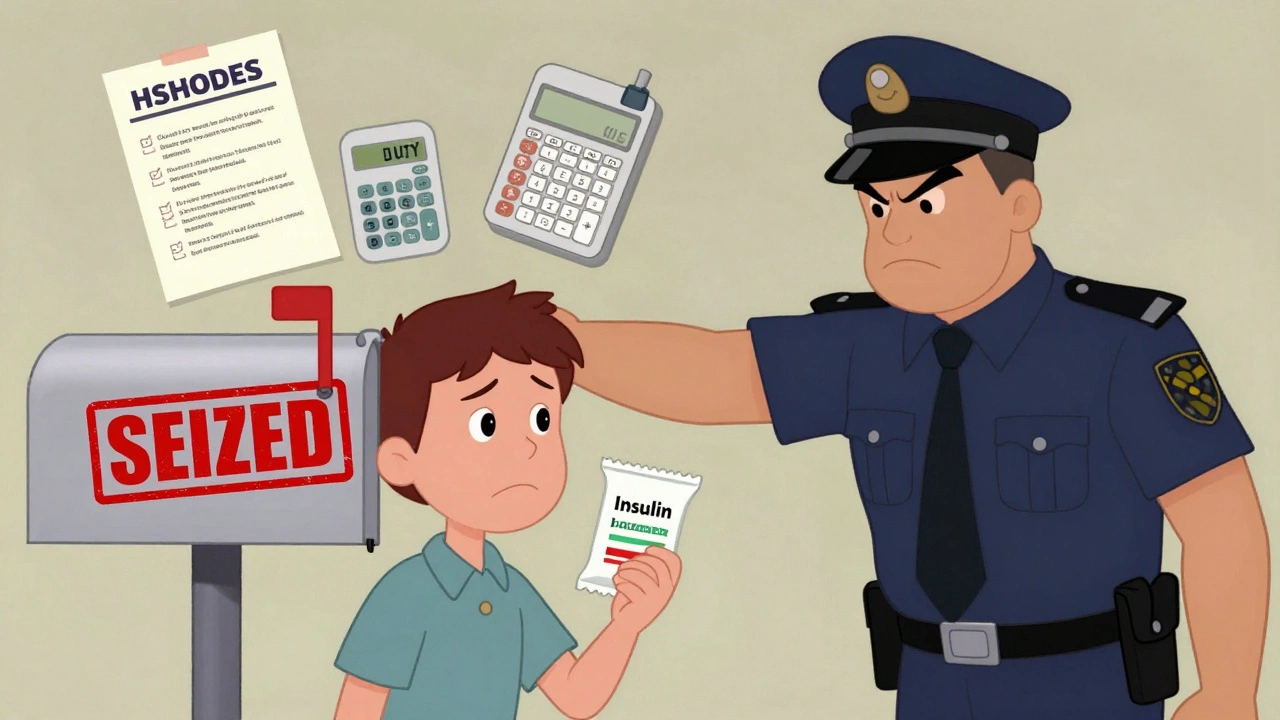
Buying medications from overseas used to be simple. You found a pharmacy abroad, paid with a credit card, and waited for a small package to show up in your mailbox. But as of August 29, 2025, that’s no longer true - not in the U.S., and not for most other countries following similar rules. The old $800 duty-free threshold is gone. Now, even a $30 bottle of blood pressure pills from Canada or India could trigger a $80 customs fee, a seized package, or worse - a legal notice from customs. If you’re still thinking about ordering meds internationally, you need to know exactly how to do it safely and legally - or you risk losing money, medication, or even facing fines.
Why the Rules Changed in 2025
The big shift started with Executive Order 14324, signed in July 2025 and enforced in August. Before this, the U.S. allowed any package under $800 to enter without paying duties. That meant millions of small shipments - including prescription meds, supplements, and over-the-counter drugs - slipped through without being taxed or inspected. It was convenient, but it also created a loophole that drug manufacturers, counterfeiters, and unregulated sellers exploited. Now, every commercial shipment entering the U.S. via postal mail must pay duties. The only exception? Private gifts under $100. That means if you’re ordering insulin, statins, or antibiotics from a foreign pharmacy, it’s no longer a "gift." It’s a commercial import. And that triggers a whole new set of rules.What’s Legal? What’s Not
It’s not illegal to import medication for personal use - but it’s heavily restricted. The FDA allows it only under three conditions:- The drug is for a serious condition where no comparable drug is available in the U.S.
- The medication is not for resale.
- You’re bringing in no more than a three-month supply.
The New Customs Process: HS Codes, Duties, and Paperwork
Starting September 1, 2025, every international shipment - even a single pill bottle - must include a six-digit Harmonized System (HS) code. This isn’t optional. If you don’t provide it, your package will be held or returned. For medications, the most common HS codes are:- 3004.90 - Medicaments containing antibiotics or hormones
- 3004.20 - Insulin and other hormones
- 3004.30 - Cardiovascular drugs
- Method 1 (Ad valorem): Pay a percentage of the item’s declared value. This is based on the International Emergency Economic Powers Act (IEEPA) tariff rate - which varies by country. For example, a $50 medication from Germany might carry a 5% duty ($2.50), while the same from India could be 18% ($9).
- Method 2 (Flat rate): Pay a fixed fee: $80 for countries with IEEPA rates under 16%, $160 for 16-25%, and $200 for over 25%. This sounds worse, but for high-tariff countries, it can be cheaper than ad valorem.
Who Pays? Who’s Responsible?
This is the biggest source of confusion. Who pays the duty? The sender? The receiver? The carrier? The answer: it depends on who’s handling the customs clearance. If you’re using a standard postal service like Canada Post or Australia Post, they usually don’t pay duties for you. They’ll hold your package until the recipient pays - often with a surprise fee on top. Many people get stuck with a $120 bill for a $45 medicine because they didn’t realize the carrier would add a $75 processing fee. The best option? Use a carrier that handles customs clearance upfront - like DHL Express, FedEx, or UPS. These companies act as customs brokers. They calculate duties, pay them on your behalf, and bill you directly. You’ll know the total cost before you pay for the order. No surprises. No holds. No extra fees. But here’s the trade-off: express carriers charge more for shipping. A $45 medication might cost $15 to ship via standard mail - but $50 via DHL. You’re paying more for reliability and compliance.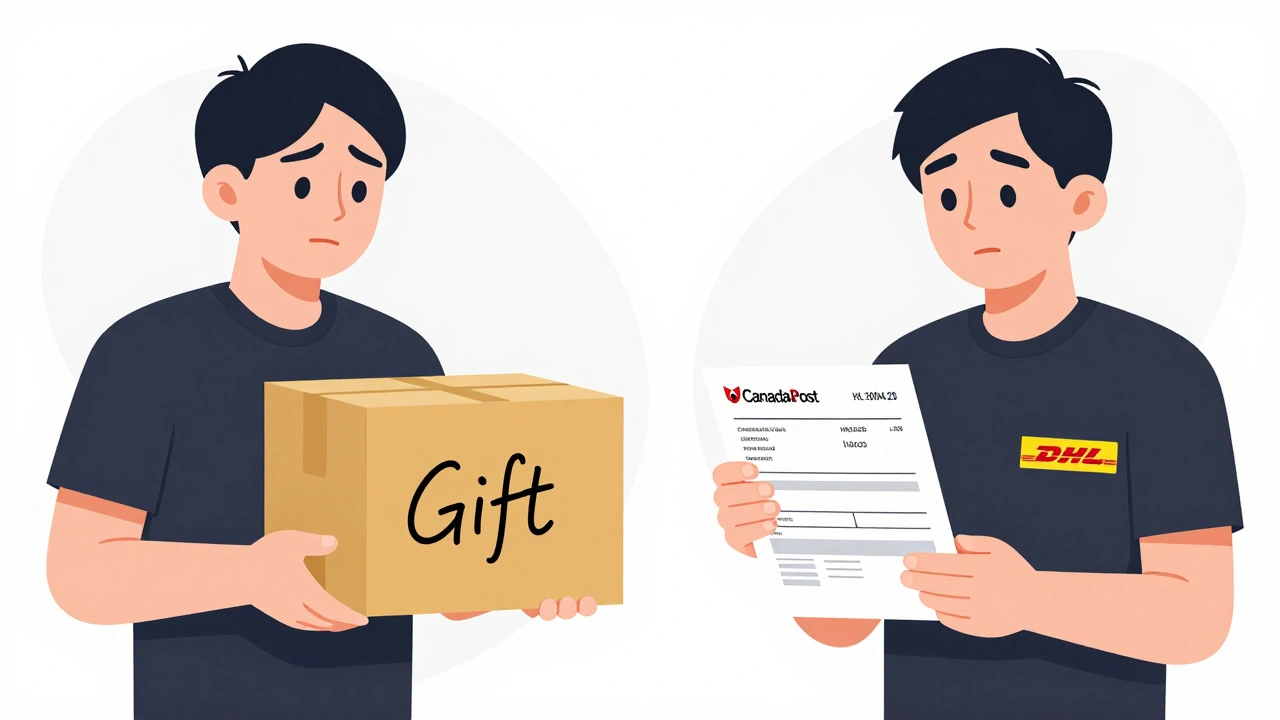
What Documents You Need (And What You Shouldn’t Send)
Forget writing "gift" or "sample" on the customs form. That’s a red flag. Customs now requires:- Commercial invoice with full product description (e.g., "Atorvastatin 20mg tablets, 30-count, manufactured by Sun Pharma, India")
- Proof of prescription (even if it’s from a foreign doctor)
- Packing list matching the invoice
- Optional but recommended: Certificate of Origin
- Controlled substances (opioids, benzodiazepines, stimulants) - these are almost always blocked
- Medications without a clear manufacturer or batch number
- Supplements that claim to be "FDA-approved" - they’re not
How to Find a Reliable International Pharmacy
Not all foreign pharmacies are the same. Some are licensed, regulated, and safe. Others are scams. Look for these signs:- They require a valid prescription - no "no prescription needed" claims
- They list a physical address and phone number - not just a website
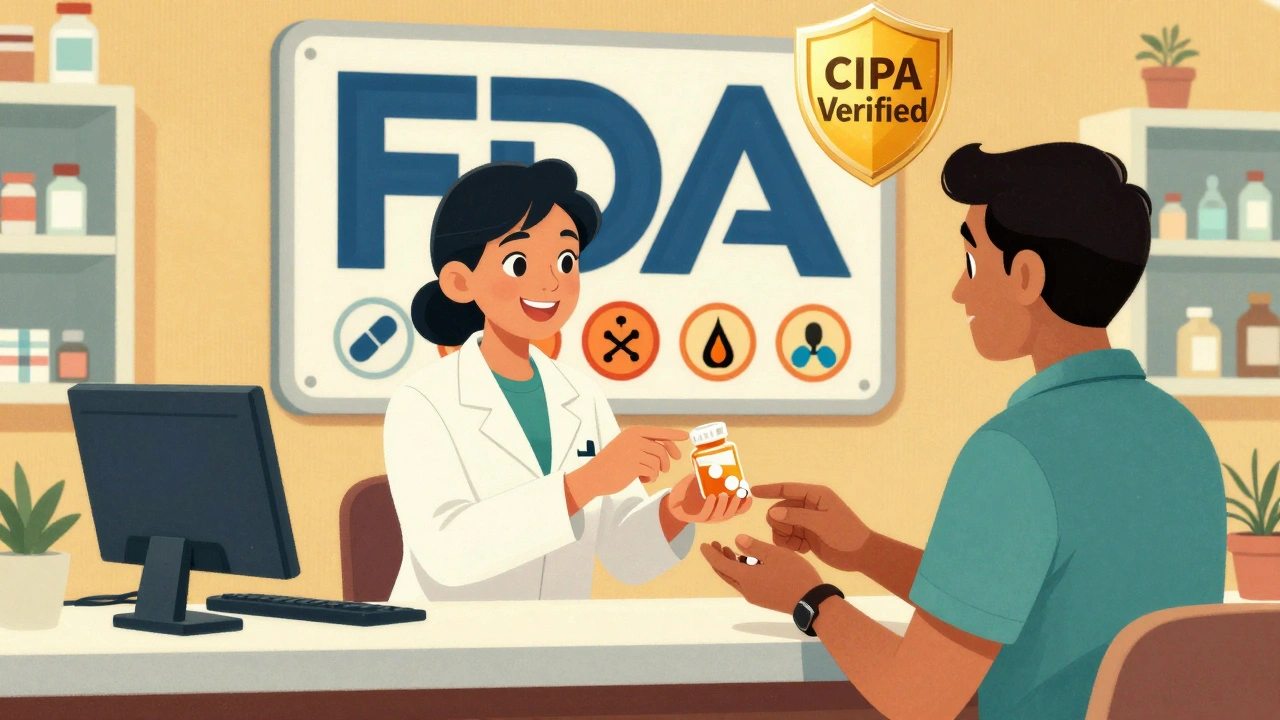
- They’re verified by a third party like the Canadian International Pharmacy Association (CIPA) or Verified Internet Pharmacy Practice Sites (VIPPS) - yes, some U.S. programs accept foreign partners
- They offer a licensed pharmacist for consultation
- Offer prices that are 70% cheaper than U.S. pharmacies
- Use .xyz or .ru domains
- Have no contact information
- Don’t accept credit cards (only cryptocurrency or wire transfers)
What to Do If Your Package Gets Seized
If your medication is held by customs, you’ll get a notice - usually within 10-14 days. Don’t ignore it. Step 1: Read the notice carefully. It will say why the package was held - wrong HS code? Missing prescription? Undeclared value? Step 2: Contact the carrier or CBP’s International Mail Branch. Ask for the case number and the exact reason for seizure. Step 3: Submit documentation. You can usually appeal if you provide:- A copy of your prescription
- Proof of personal use (a letter from your U.S. doctor confirming you need the drug)
- Receipt from the pharmacy showing the purchase
Alternatives to International Mail-Order
If the cost, hassle, and risk of international shipping are too high, consider these alternatives:- Canadian pharmacies: Many U.S. residents still use licensed Canadian pharmacies that ship via express carriers. They’re regulated, and prices are often 40-60% lower than U.S. pharmacies.
- U.S. prescription savings programs: GoodRx, SingleCare, and RxSaver offer discounts on brand-name drugs - sometimes lower than international prices after duties.
- Pharmaceutical patient assistance programs: Most major drug manufacturers (Pfizer, Merck, Novo Nordisk) offer free or low-cost meds to low-income patients. Apply directly on their websites.
- Regional fulfillment hubs: Some companies now warehouse meds in Mexico or Canada and ship them as domestic orders to avoid U.S. customs entirely. This is legal if the shipment is properly declared and taxed.
Final Checklist: Are You Ready?
Before you hit "buy," ask yourself:- Is the medication legally allowed for personal import into the U.S.?
- Do I have a valid prescription?
- Have I confirmed the HS code for this exact drug?
- Am I using a carrier that handles customs clearance (DHL/FedEx/UPS)?
- Have I calculated the total cost - including duties, shipping, and processing fees?
- Is the pharmacy verified by CIPA, VIPPS, or a government health authority?
What’s Next for International Medication Shipping?
The 2025 changes aren’t temporary. They’re the new normal. Experts predict that by 2027, 70% of low-cost international medication orders will disappear from postal systems. The market will shift to express carriers, regional warehousing, and U.S.-based discount programs. For consumers, the message is clear: convenience is over. Safety and compliance are now the price of entry. If you still want to buy meds overseas, you’ll need to treat it like a legal transaction - not a bargain hunt. Don’t risk your health on a cheap pill. Do the work. Know the rules. Choose wisely.Can I still order prescription meds from Canada or India in 2025?
Yes - but only if you follow the new rules. You must use an express carrier like DHL or FedEx, provide a valid prescription, declare the correct HS code, and pay any applicable duties. Standard postal services like USPS or Canada Post no longer accept commercial medication shipments under the new 2025 customs rules.
Why did my $45 medication get charged $120 in duties?
You likely used a standard postal service that doesn’t handle customs clearance. They held your package and charged you a $75 processing fee on top of the $45 duty. Express carriers like DHL calculate duties upfront and bill you directly - no surprise fees. Always choose a carrier that acts as a customs broker.
Is it safe to buy meds from websites that don’t require a prescription?
No. The FDA and WHO warn that over 90% of online pharmacies selling without prescriptions are illegal. These sites often sell counterfeit, expired, or contaminated drugs. Even if the pill looks right, it could contain toxic fillers or incorrect dosages. Always require a prescription - even from foreign pharmacies.
What happens if I lie about the value of my medication on the customs form?
Customs uses automated systems to cross-check declared values with global pricing databases. If you declare a $10 bottle of insulin as $5, you’ll trigger a red flag. Your package will be seized, and you may face fines up to $100,000 under 19 C.F.R. § 113.62. It’s not worth the risk.
Can I import insulin or other controlled drugs from abroad?
Insulin and non-controlled medications like blood pressure pills are generally allowed if for personal use and under a three-month supply. But controlled substances - including opioids, benzodiazepines, and stimulants - are almost always blocked. Even with a prescription, these drugs are prohibited from international mail-order under U.S. law.



Comments (11)