Every year, the FDA issues over 1,200 safety notices about prescription drugs, over-the-counter medicines, and medical devices. Some are minor. Others mean the difference between staying safe and ending up in the hospital. If you’re a patient, caregiver, pharmacist, or healthcare provider, subscribing to FDA drug safety alerts isn’t optional-it’s essential. The system is free, reliable, and updated constantly. But most people don’t use it. And that’s a problem.
What the FDA Alerts Actually Cover
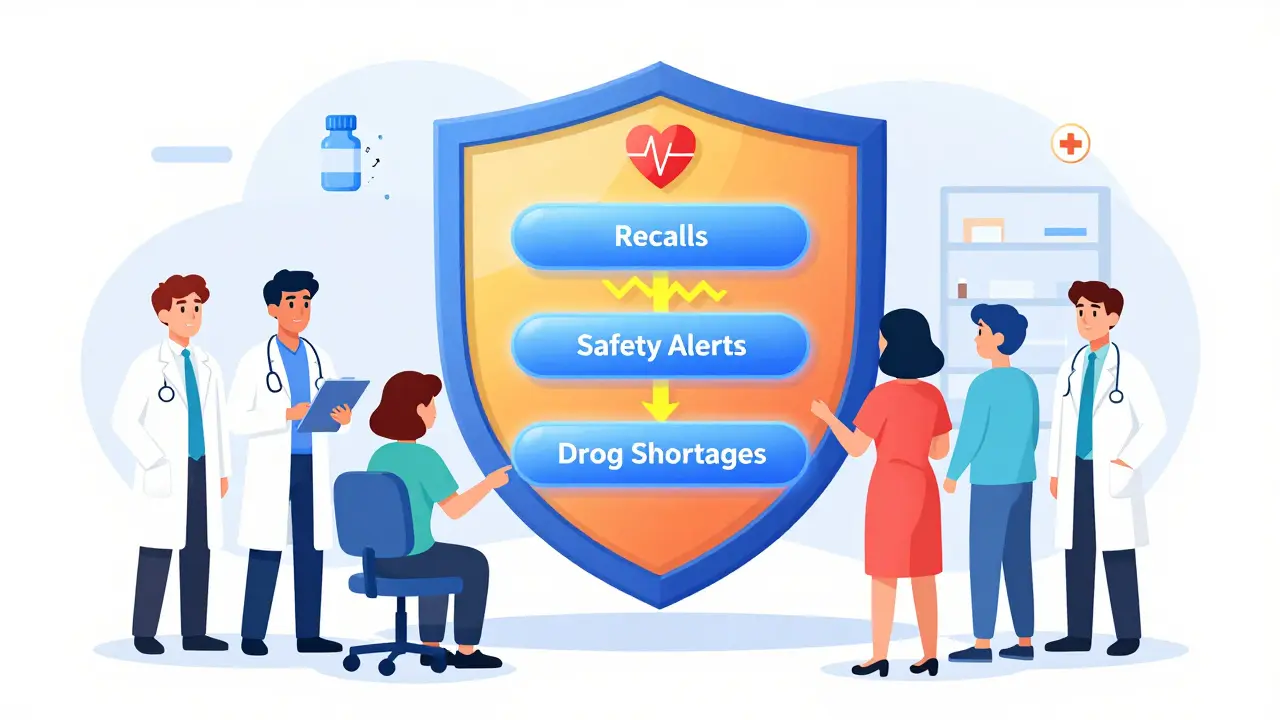
The FDA doesn’t just warn you about recalls. Their alerts cover three main types of drug safety issues:
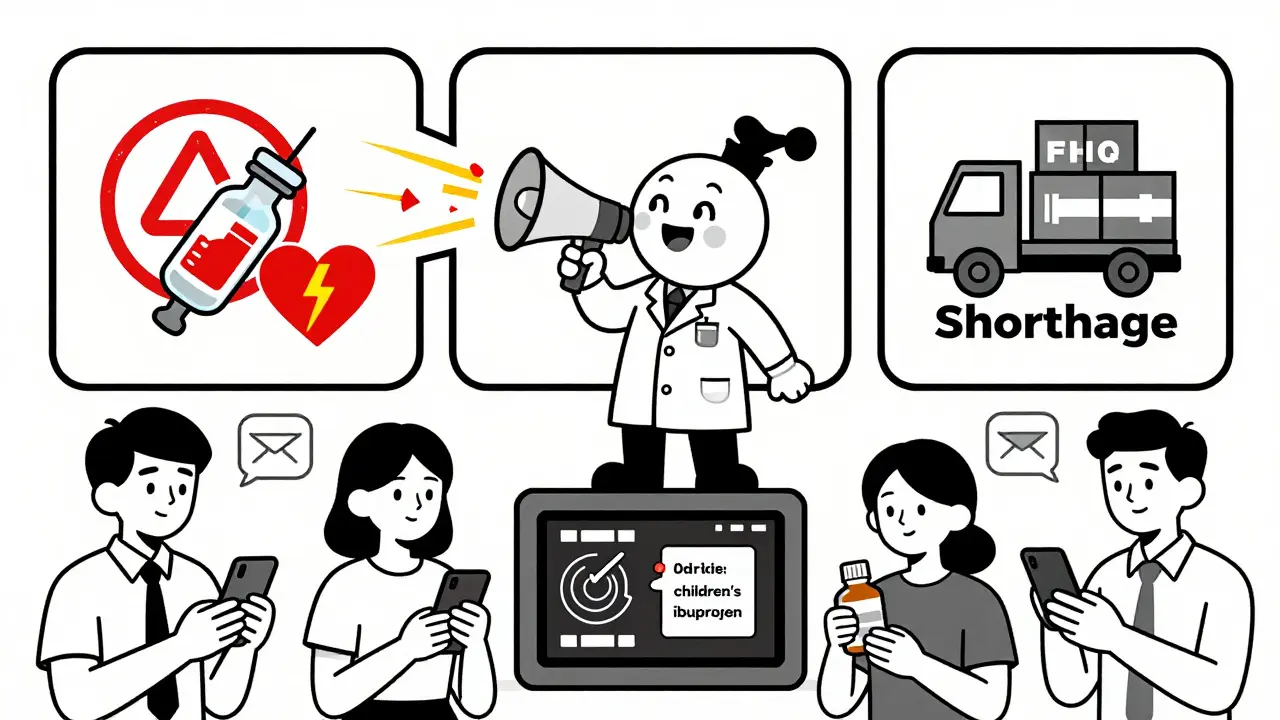
- Recalls: When a batch of medication is contaminated, mislabeled, or defective. Think insulin with wrong dosage or blood pressure pills with cancer-causing chemicals.
- Safety Communications: Warnings about side effects, drug interactions, or new risks discovered after approval. For example, a new link between a common painkiller and heart rhythm problems.
- Drug Shortages: When a medicine becomes hard to find because of manufacturing issues or supply chain disruptions.
These aren’t vague rumors. Each alert is backed by data from the FDA’s own adverse event database, which collects reports from doctors, pharmacists, and patients. If a pattern emerges-say, 50 people report liver damage after taking a specific generic drug-the FDA investigates and issues a formal alert within days.
The Three Ways to Subscribe (And What Each One Does)
You don’t need to sign up for everything. But you should pick at least one. Here’s how each system works:
1. Enforcement Report Subscription Service
This is your go-to for recalls. Launched in 2021 and upgraded in 2022, it lets you get email alerts when the FDA announces a recall. You can choose Drugs, Medical Devices, or Food. You can even set up to five custom keywords. If you take insulin, type in “insulin.” If you have a peanut allergy, type in “peanut.” The system will only send you alerts that match those words. No spam. No noise.
Over 87% of new subscribers in 2023 chose “Drugs” as their category. That’s because most people care about medications first. You can sign up here: fda.gov/enforcement-report-subscription. Takes less than 90 seconds.
2. MedWatch Safety Alerts
This has been around since 1993, but now it’s digital. MedWatch covers serious safety issues that might not rise to the level of a recall-like a new warning about seizures linked to a common antidepressant. You can subscribe three ways:
- Email: The MedWatch E-list sends out updates every few days. You sign up at fda.gov/medwatch-email-list.
- Twitter: Follow @FDAMedWatch. They post alerts as soon as they’re issued. Over 285,000 people follow them.
- RSS feed: If you use a news reader, the feed is at fda.gov/medwatch/rss.xml.
Doctors and pharmacists use this one the most. It’s the first place they check when a patient reports a weird side effect.
3. Drug Safety Communications
This is the most targeted option. It sends alerts about specific drug classes-like all statins, all NSAIDs, or all diabetes medications. If you manage a clinic or take multiple drugs, this is the one that gives you the most value. Go to fda.gov/drugs/drug-safety-communications, scroll to the bottom, and click “Sign up for email alerts.” You’ll get one email per week, maybe less. No keyword options here, but the content is highly relevant.
Why Most People Miss the Point
A 2022 government report found only 38% of healthcare workers even knew all three systems existed. That’s shocking. But here’s the real problem: people think alerts are for “someone else.”
Let’s say you take metformin for diabetes. You’ve been on it for years. You don’t think anything could go wrong. Then, in February 2025, the FDA issues a safety alert: a newly discovered interaction between metformin and a common heart medication increases the risk of lactic acidosis. If you’re not subscribed, you won’t know. Your doctor might not know. Your pharmacist might not know. That’s not hypothetical. It happened.
One hospital pharmacist in Ohio told the FDA’s 2023 survey: “The insulin alert last year saved us. We had two patients scheduled for a new batch. We checked the recall list, canceled the order, and switched to a safe lot. No one got hurt.” That’s the power of this system.
What’s Missing-and What’s Coming
The system isn’t perfect. People complain about alert overload. One Reddit user said, “I got 17 emails last week. Half were about cough syrup.” That’s because the FDA hasn’t prioritized alerts yet. A high-risk warning about a cancer drug gets the same treatment as a minor labeling error.
That’s changing. In late 2023, the FDA announced they’re merging all three systems into one platform by 2025. They’re testing machine learning to rank alerts by urgency. Early results? A 32% drop in alert fatigue among testers. That means fewer emails-but the important ones will stand out.
Also coming: a mobile app (Q2 2025), support for Spanish-language alerts (Q3 2025), and the ability to set 10 keywords instead of 5. Right now, you’re limited. Soon, you’ll be able to track your exact meds, allergies, and conditions all in one place.
Who Should Subscribe?
You don’t have to be a doctor to benefit.
- Patients: If you take more than one prescription, you’re at risk for interactions. Subscribe to Drug Safety Communications.
- Parents: Kids’ medications get recalled too. Set a keyword like “children’s ibuprofen” or “amoxicillin.”
- Pharmacists: You’re the last line of defense. Use Enforcement Report + MedWatch. You’ll catch recalls before they hit the shelf.
- Caregivers: If you manage meds for an elderly parent or someone with dementia, this is your safety net.
- Healthcare providers: If you don’t subscribe to all three, you’re not doing your job.
Even if you’re healthy, you might be taking something you don’t realize is risky. Over 60% of Americans take at least one prescription drug. That’s over 200 million people. If one of those drugs has a hidden danger, you need to know.
How to Set It Up Right
Here’s a simple checklist:
- Go to fda.gov/enforcement-report-subscription and sign up for recalls. Pick “Drugs” and add keywords for your meds.
- Go to fda.gov/drugs/drug-safety-communications and sign up for email alerts.
- Follow @FDAMedWatch on Twitter for real-time updates.
- Check your inbox weekly. If you get an alert, read it. Don’t delete it.
- Share the info. If you’re a caregiver, show your family. If you’re a pharmacist, post it on your bulletin board.
It takes 5 minutes. The payoff? Peace of mind. And maybe your life-or someone else’s.
What Happens If You Don’t Subscribe?
You might not notice anything. Until you do.
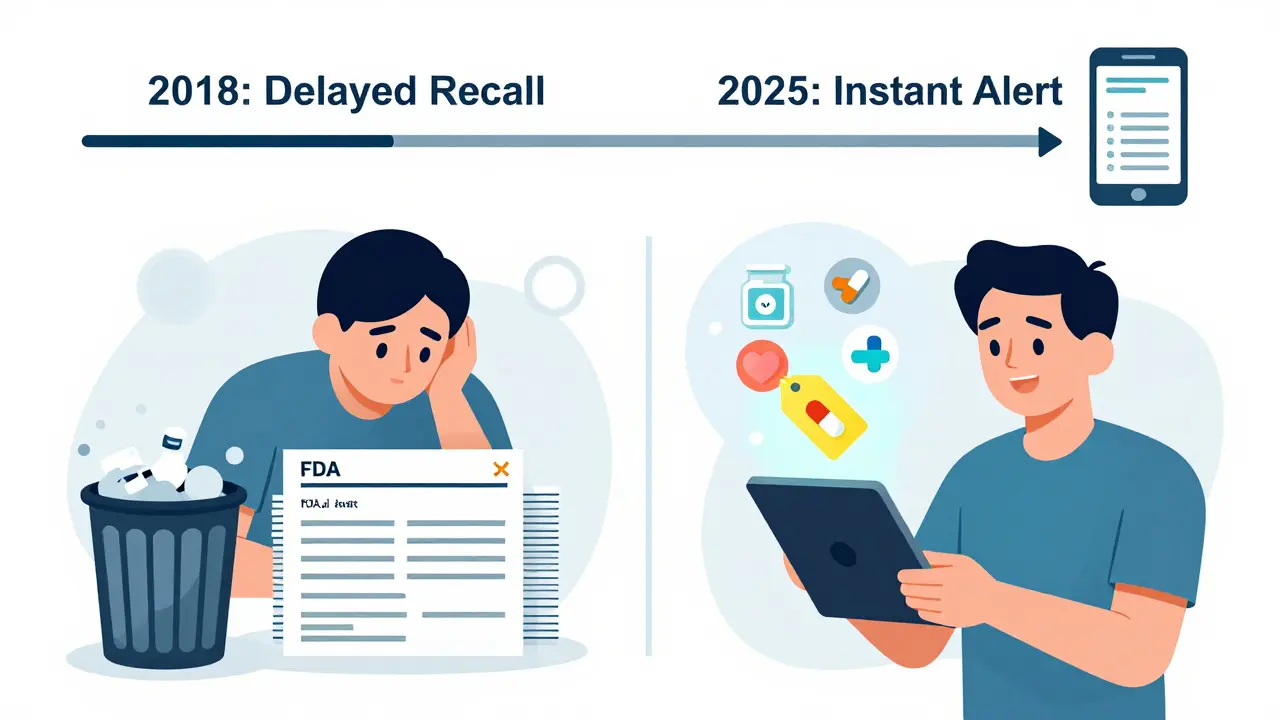
Remember the valsartan contamination in 2018? Thousands of people took blood pressure pills laced with a carcinogen for months. No one knew. No one warned them. The FDA didn’t issue a recall until 14 days after the problem was found. That’s because back then, they didn’t have fast alerts.
Today, that delay is gone. The FDA now issues alerts within 48 hours. But only if you’re signed up.
If you’re not getting these alerts, you’re relying on luck. And luck isn’t a safety plan.
Are FDA drug safety alerts free?
Yes. All FDA alert systems-Enforcement Report, MedWatch, and Drug Safety Communications-are completely free. You only need an email address. No subscriptions, no credit card, no hidden fees.
How often will I get alerts?
It depends on what you subscribe to. The Enforcement Report sends daily or weekly updates based on your choice. Drug Safety Communications sends about one email per week. MedWatch emails arrive every few days. If you set custom keywords, you’ll get fewer alerts because you’re filtering out unrelated recalls.
Can I get alerts in Spanish?
Not yet, but it’s coming. The FDA plans to launch Spanish-language versions of all alert systems in Q3 2025. Until then, you can use browser translation tools on their websites, but email alerts will remain in English.
What’s the difference between Enforcement Report and Drug Safety Communications?
Enforcement Report is for recalls-when a product is pulled because it’s contaminated, mislabeled, or defective. Drug Safety Communications is for safety issues that may not involve a recall, like new side effects, dangerous interactions, or changes to how a drug should be used. You need both.
Do I need to subscribe if I’m not a doctor?
Yes-if you take any prescription or over-the-counter medicine. Even if you’re healthy, you might be on a drug that’s later found to have risks. Patients who subscribe are 72% more likely to avoid harm than those who don’t, according to a 2022 AMA survey.