
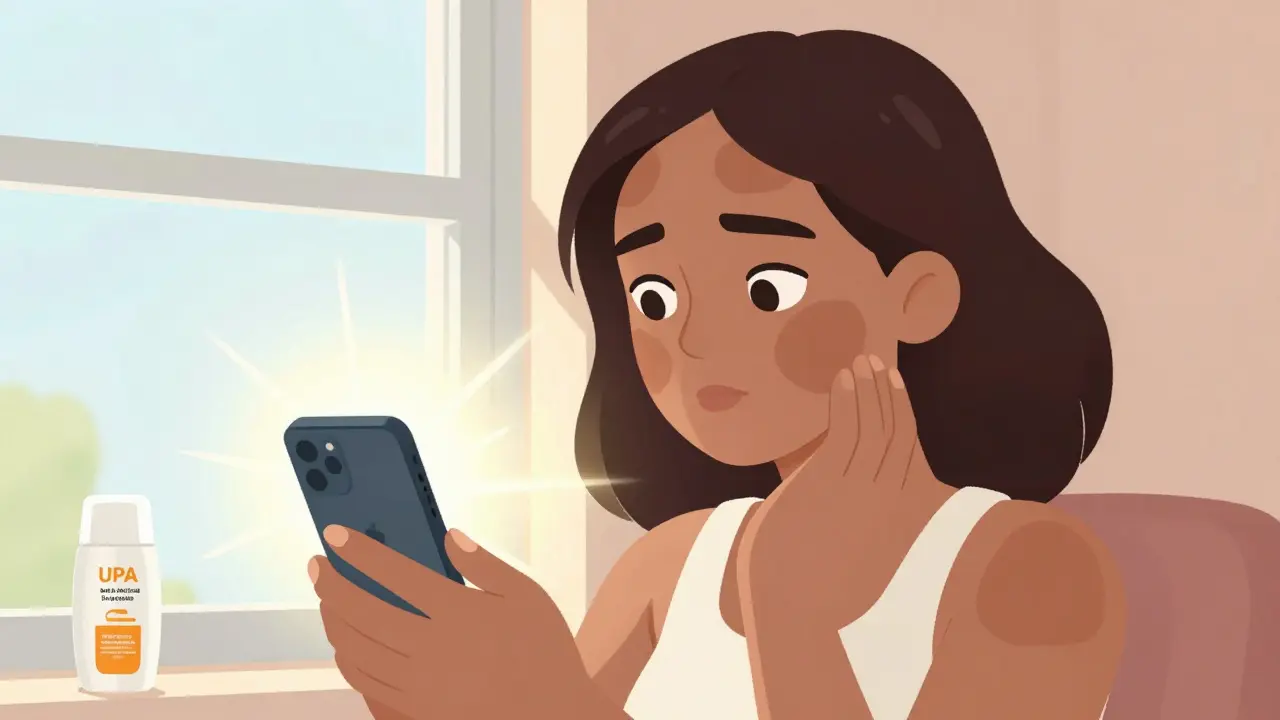
When your skin starts to darken in patches, it’s easy to assume it’s just a tan that won’t fade. But if those spots keep coming back-even after you stop the sun-there’s something deeper going on. Two of the most common causes of hyperpigmentation are melasma and sun damage. They look similar, but they’re not the same. And treating them the same way? That’s where most people go wrong.
What’s Really Going On With Your Skin?
Hyperpigmentation happens when too much melanin gets made in one spot. Melanin is your skin’s natural pigment, and when it’s overproduced, it creates dark patches. But why does it happen in some places and not others? The answer lies in the trigger.Melasma isn’t just from the sun. It’s hormonal. Think pregnancy, birth control pills, or even just your body’s natural hormone shifts. It shows up as large, blotchy patches-usually on the cheeks, forehead, upper lip, or chin. It’s more common in women with medium to dark skin tones, and studies show Black, Asian, and Hispanic women are 3 to 5 times more likely to get it than Caucasian women. Even after the hormonal trigger is gone, the patches stick around.
Sun damage, or solar lentigines, is different. These are the small, flat, brown spots you see on your hands, shoulders, or face. They don’t appear suddenly. They build up over years of sun exposure. By age 60, about 90% of fair-skinned people have them. Unlike melasma, they’re not tied to hormones. They’re tied to UV rays breaking down skin cells and triggering melanin clusters in specific spots.
Why Sunscreen Isn’t Enough (And What You Actually Need)
Most people think SPF 30 is enough. It’s not. Not if you have melasma.Standard sunscreens block UVB and UVA rays. But melasma doesn’t just react to UV. Visible light-like the kind that comes through your window or from your phone screen-also triggers it. Infrared heat from the sun or even a hot shower can make it worse. That’s why dermatologists now say you need more than just zinc oxide or titanium dioxide.
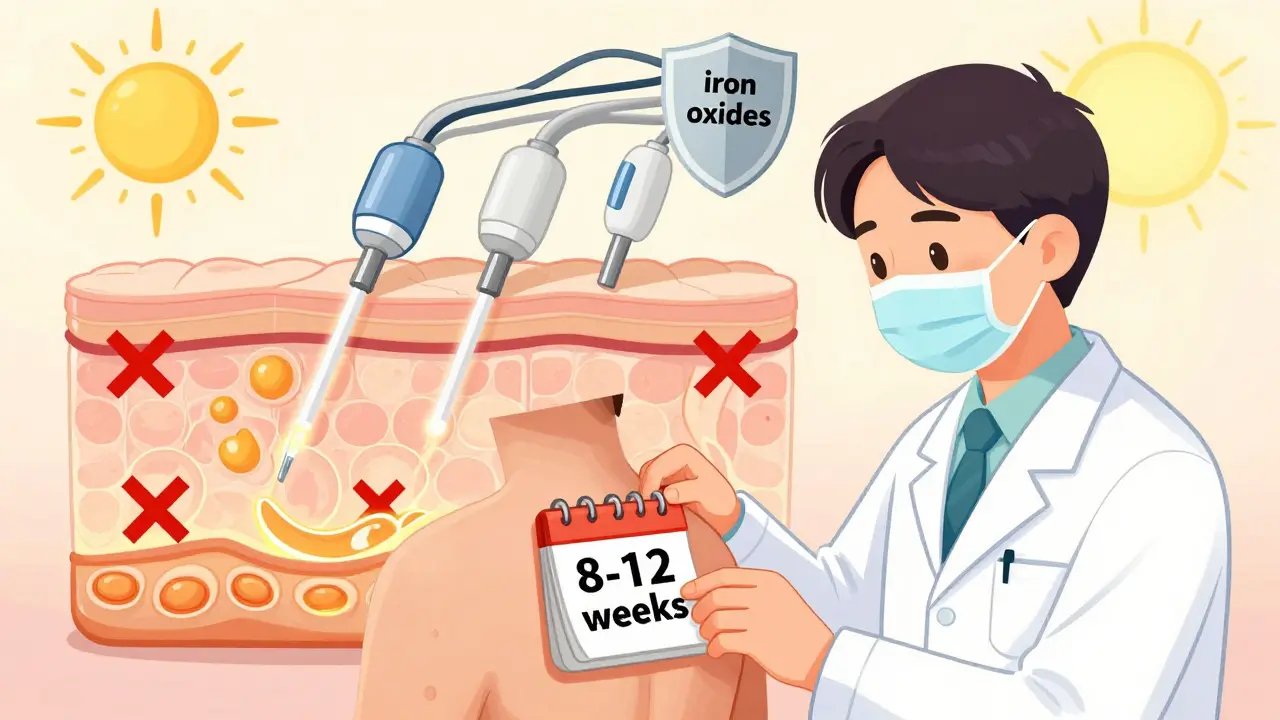
You need iron oxides. These tiny particles block visible light. Look for sunscreens labeled "broad-spectrum" with iron oxides in the ingredients. Studies show they reduce melasma flare-ups by up to 30%. And yes, you still need to wear it indoors. Visible light penetrates glass. If you sit by a window all day, your skin is still being hit.
The American Academy of Dermatology says daily SPF 30+ is non-negotiable. For melasma? Go with SPF 50+, reapply every two hours if you’re outside, and never skip it-even on cloudy days.
Topical Treatments: What Actually Works
There are dozens of creams, serums, and lotions claiming to fade dark spots. But only a few have real science behind them.- Hydroquinone (4%): This is the gold standard. It blocks the enzyme tyrosinase, which makes melanin. Used alone, it works for about half of melasma cases. But when combined with tretinoin and a corticosteroid (called a triple therapy), success jumps to 70%. The catch? You can’t use it forever. Long-term use carries a 2-5% risk of ochronosis-a paradoxical darkening of the skin. Limit use to 3 months at a time, then take a break.
- Tretinoin (0.025-0.1%): This retinoid speeds up skin cell turnover. It doesn’t lighten pigment directly, but it helps push the dark cells to the surface faster so they flake off. Used daily, it can take 8-12 weeks to show results. It also makes your skin more sensitive to the sun, so sunscreen is even more critical.
- Vitamin C (L-ascorbic acid, 10-20%): This antioxidant doesn’t just fight free radicals. It also reduces existing melanin and blocks tyrosinase. Apply it in the morning under sunscreen. Studies show 15% concentration works best. It’s gentle, so it’s great for sensitive skin or as a maintenance option after hydroquinone.
- Tranexamic acid (5%): This is newer but promising. Originally used for heavy periods, it was found to reduce melanin production when applied topically. In a 12-week study, it improved melasma in 45% of users with no major side effects. It’s now being used in serums and creams, especially for people who can’t tolerate hydroquinone.
- Kojic acid, niacinamide, azelaic acid: These are gentler alternatives. Niacinamide (5%) reduces melanin transfer to skin cells. Azelaic acid (15-20%) works well for both melasma and acne-related dark spots. They’re slower, but safer for long-term use.
Laser and Light Treatments: When to Use Them (and When Not To)
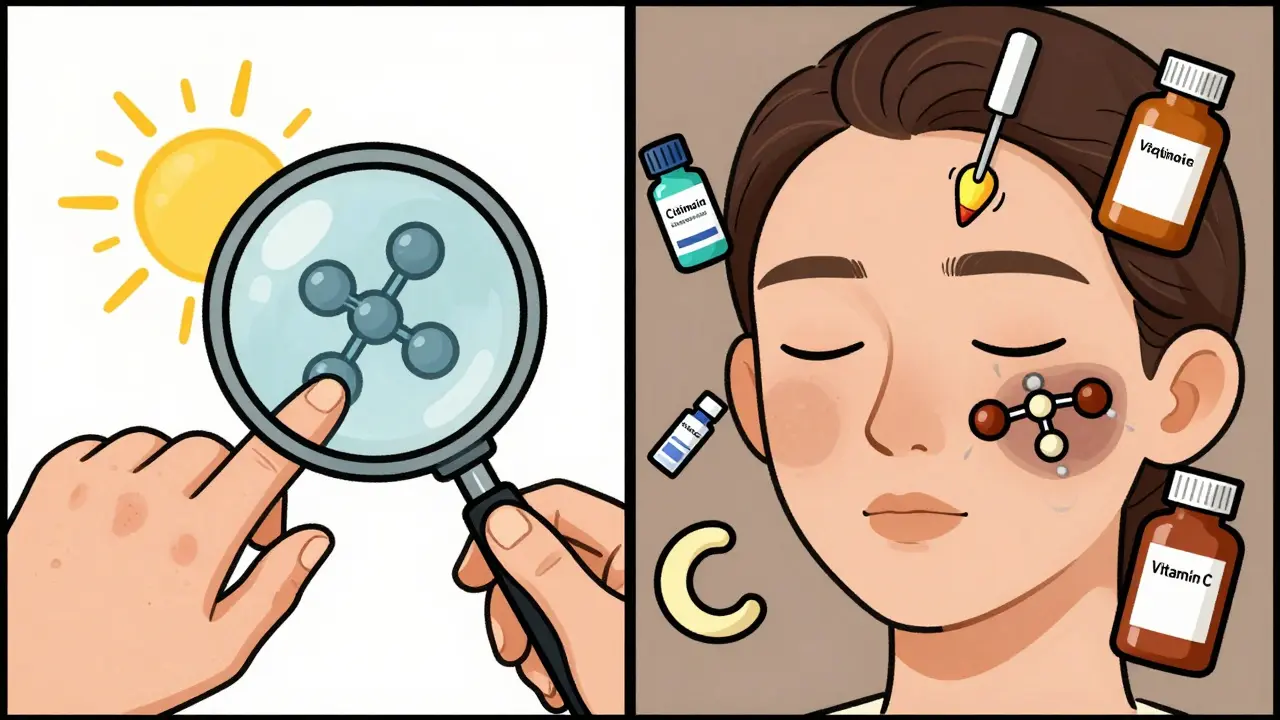
Laser and IPL (intense pulsed light) sound like quick fixes. But for melasma? They can make things worse.IPL works by heating the dark pigment. It’s great for sun damage-you’ll see spots darken and flake off in 3-5 days. Success rate? 75-90% in 1-2 sessions. But for melasma? A 30-40% chance of making it darker. Why? Because heat wakes up the melanocytes. If they’re already overactive from hormones or light exposure, the laser just fuels the fire.
Dermatologists now recommend a "melanocyte rest" protocol before any light therapy for melasma. That means 8-12 weeks of topical treatment first-no lasers, no peels, no heat. Only when the pigment has faded enough and the skin is calm should you even consider it.
Chemical peels (like glycolic or lactic acid) are safer. They gently remove the top layer of skin. Done every 4-6 weeks, they can boost topical treatments by 35-50%. But again, only if your skin is stable. If you’re still getting flare-ups from heat or sun, peels can trigger post-inflammatory hyperpigmentation (PIH), especially in darker skin.
The Biggest Mistake People Make
It’s not using the wrong cream. It’s not skipping sunscreen. It’s not even trying too many products at once.The biggest mistake? Stopping treatment too soon.
Most people start a regimen, see some improvement in 6-8 weeks, and think they’re done. Then, when the spots come back, they get frustrated. But melasma isn’t cured-it’s managed. Studies show 95% of people see it return within 6 months of stopping treatment. Sun damage? You might need one or two sessions and be done. Melasma? You need to treat it like a chronic condition.
And here’s the hard truth: 65% of patients don’t use their prescribed creams consistently. Some find the irritation too much. Others forget. Some think they’re "not that dark" anymore. But even a single day of sun exposure without protection can undo weeks of progress.
What’s New and What’s Coming
The field is changing fast. In 2022, the FDA proposed reclassifying hydroquinone from prescription-only to over-the-counter-but with strict safety labeling. That could make it more accessible, but also risk misuse.New treatments are on the horizon. Cysteamine cream (10%) showed 60% improvement in melasma after 16 weeks with almost no irritation. Tranexamic acid is becoming more common in dermatology clinics. And research is moving toward personalized treatment: genetic testing to identify which melanin pathways are overactive in your skin. Within five years, your treatment might be tailored based on your DNA.
For now, the best approach is simple: protect, treat, repeat.
What to Do Right Now
If you’re dealing with dark patches:- Get a dermatologist to confirm if it’s melasma or sun damage. They look similar, but the treatment path is totally different.
- Start using a mineral sunscreen with iron oxides every morning. No exceptions.
- Use a combination of vitamin C in the morning and tretinoin at night. Wait 30 minutes between products.
- If you’re not seeing improvement after 8 weeks, ask about hydroquinone or tranexamic acid.
- Never rush into laser or peel treatments without 3 months of topical therapy first.
- Track your progress. Take photos every 4 weeks. Changes are slow, but they happen.
Hyperpigmentation doesn’t disappear overnight. But with the right plan-and the right protection-it can fade. And more importantly, it can stay faded.





Comments (11)