
What Are FDA Import Alerts and Why Do They Matter?
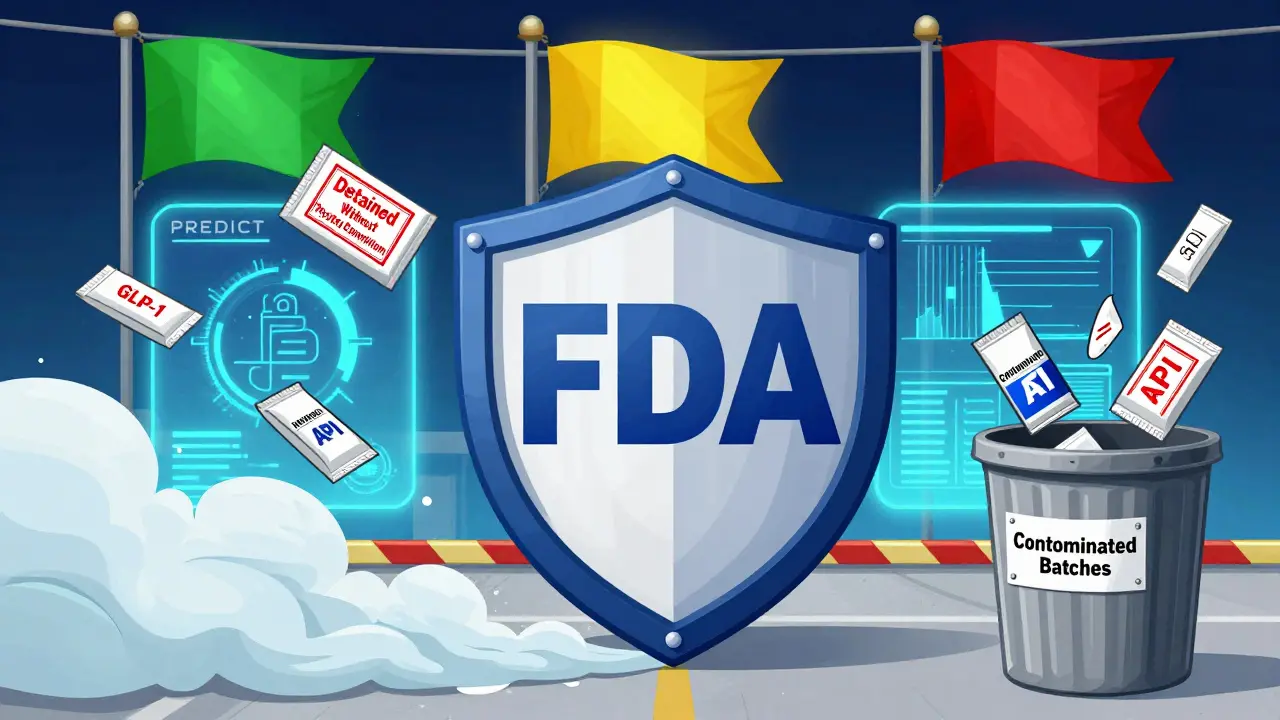
The U.S. Food and Drug Administration (FDA) doesn’t wait for dangerous drugs to reach pharmacy shelves before acting. Instead, it uses a powerful tool called Import Alerts to stop non-compliant drugs at the border. These aren’t random inspections-they’re automated blocks. If a manufacturer has a history of poor quality, contaminated batches, or fake documentation, the FDA flags them. Every future shipment from that facility gets detained without even being opened. This system, called Detention Without Physical Examination (DWPE), is how the FDA stopped over $1.8 billion in illegal GLP-1 drug shipments in just two months in late 2025.
Before 2025, many companies thought they could cut corners on quality and still slip drugs into the U.S. market. That’s no longer true. The FDA’s Import Alert system now works like a digital blacklist with three tiers: Green, Yellow, and Red. Only manufacturers on the Green List-those who’ve passed strict audits and proven their quality controls-are guaranteed smooth entry. Everyone else? Their shipments get stuck at customs, often for months, unless they fix the problems.
The GLP-1 Crackdown: A Turning Point
The biggest shift happened in September 2025, when the FDA launched Import Alert 66-80 targeting active ingredients for weight-loss drugs like semaglutide and tirzepatide. These drugs had exploded in popularity, but so had counterfeit and poorly made versions flooding in from overseas. The FDA found that 68% of refused shipments contained impurities beyond safe limits. Some batches had the wrong dose-too little to work, too much to be safe. Others had unapproved solvents or even traces of heavy metals.
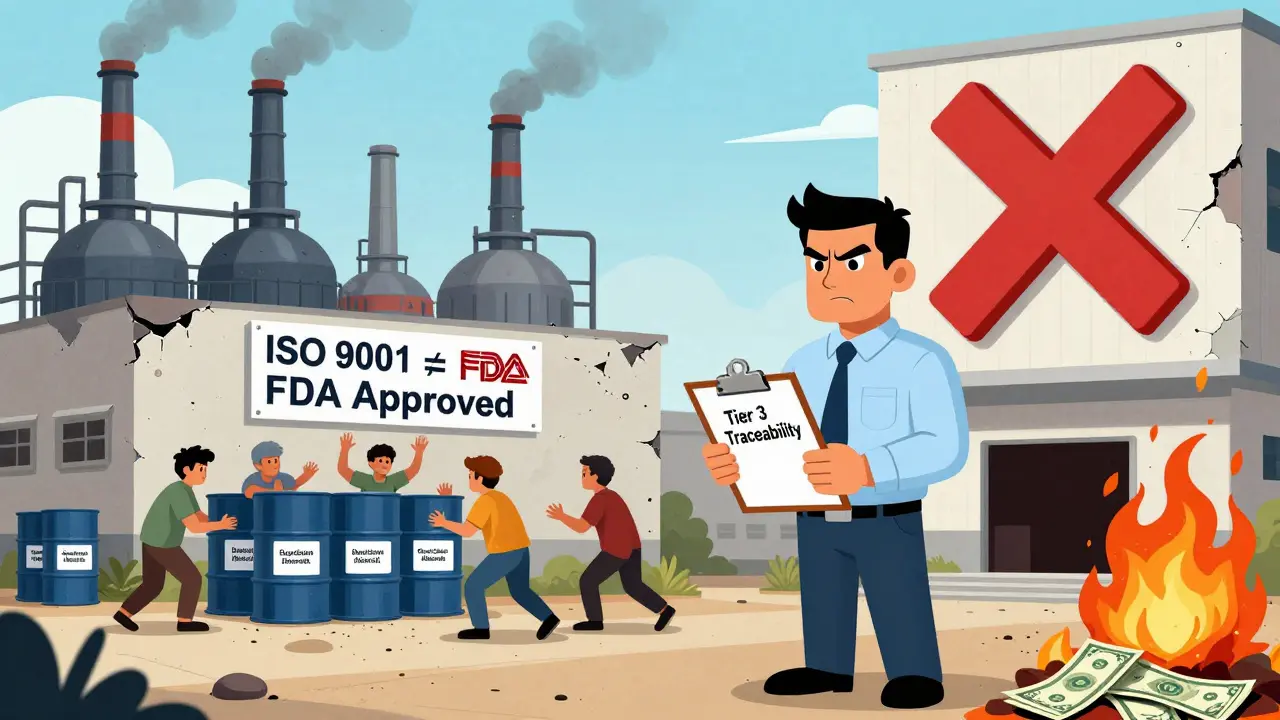
The agency didn’t just shut down imports. It created the Green List-a way out. Manufacturers could earn exemption from automatic detention by proving their quality systems met FDA standards. But getting on the list isn’t easy. It requires third-party audits approved by the FDA, stability testing across three temperature conditions, and full traceability of every raw material back to its source. Companies that skipped these steps saw their shipments instantly refused. One Indian supplier lost $1.2 million in just 72 hours because their auditor wasn’t on the FDA’s approved list-even though they had ISO 9001 certification.
How the System Works Behind the Scenes
The FDA doesn’t make these decisions manually. They use a system called PREDICT, which scans over 150 data points for every drug shipment entering the U.S. It looks at past inspection results, refusal rates, the type of drug, the manufacturer’s location, and even the importer’s history. If the algorithm flags a pattern of violations, the facility gets added to a Yellow or Red List. From that point on, every shipment is automatically detained.
Customs and Border Protection (CBP) handles the actual hold. Shipments can’t be released until the importer submits a full corrective action plan. That means:
- A Certificate of Analysis from an FDA-recognized lab
- Proof of facility inspections
- Documentation showing how raw materials are tracked
- Results from stability testing under real-world conditions
Most companies fail the first time. Registrar Corp found that 63% of affected firms didn’t even know what documents were required. Common mistakes? Missing batch records, incorrect CoA formats, or not verifying suppliers beyond the first tier. One company thought their Tier 2 supplier’s audit was enough. The FDA required proof from Tier 3-the actual chemical source.
Who’s Getting Hit the Hardest?
India is the epicenter of the crackdown. Of the 89 manufacturers caught in the GLP-1 Import Alert, 73 are based in India. China has 9, and Europe has 7. Why? Because India produces about 80% of the world’s generic APIs-active ingredients used in medicines. Many Indian factories operate on thin margins and cut corners to stay competitive. But the FDA’s new rules exposed how risky that strategy had become.
The impact is massive. The Indian Pharmaceutical Alliance estimates 28,500 jobs are now at risk. Some factories have shut down entirely. Others are scrambling to spend $500,000 to $2 million upgrading their labs, installing blockchain traceability systems, and hiring compliance staff. Pfizer, for example, spent over $1 million linking 17 suppliers to the MediLedger network. Their Green List acceptance rate jumped to 99.8%.
What Happens to Refused Shipments?
Once a shipment is detained, the clock starts ticking. The importer has 90 days to either export the drugs out of the U.S. or destroy them under FDA supervision. If they don’t act, the goods are seized and auctioned off-or incinerated. But there’s a darker side: some companies are paying brokers to falsify export paperwork. The FDA caught one Singapore-based intermediary doing this and issued a formal Warning Letter in October 2025.
Penalties can be brutal. Under U.S. law, companies can be fined up to three times the value of the shipment. For a $900,000 drug batch, that’s $2.7 million in fines. One generic manufacturer, Viatris, reported a $417 million revenue drop in Q3 2025 directly tied to the import alert. Their stock fell 18% in three weeks.
Green List vs. the Rest: The Real Divide
Here’s the cold truth: if you’re not on the Green List, your chances of getting a shipment through are near zero. CBP data shows a 98.7% refusal rate for non-listed manufacturers. Meanwhile, Green List facilities clear customs at a 99.2% rate. That’s not luck-it’s structure.
Unlike Europe, which randomly inspects 10-15% of high-risk shipments, the FDA’s system is all-or-nothing. It’s faster for compliant companies and brutal for those who aren’t. But it’s not perfect. A November 2025 study found that 22% of refused shipments actually met quality standards but failed because of paperwork errors. That’s not a safety issue-it’s a bureaucracy problem.
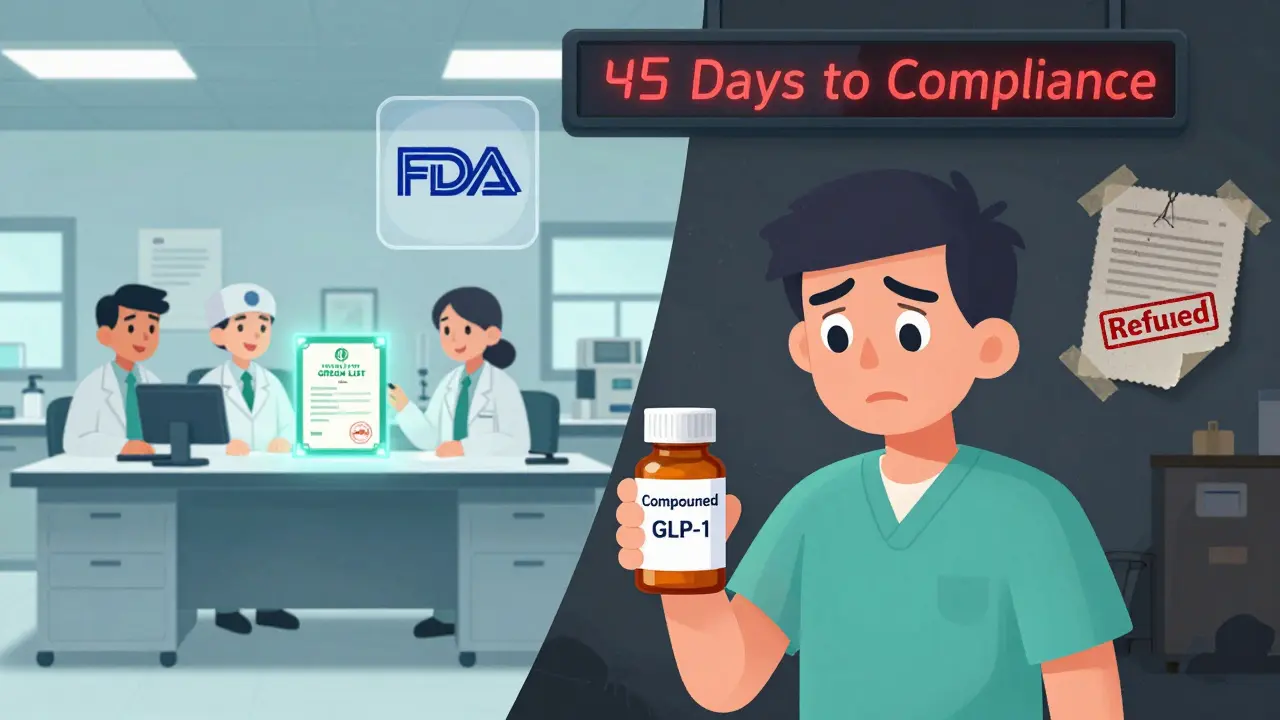
Some experts worry this creates artificial shortages. When legal supply drops, patients turn to unregulated online pharmacies. The FDA knows this. That’s why they’re speeding up Green List approvals-from 90 days down to 45-for companies using accredited auditors. They’re also launching the API Transparency Portal, where manufacturers can check their status in real time.
The Future: More Drugs, More Rules
This isn’t just about weight-loss drugs. FDA Commissioner Dr. Robert Califf announced in November 2025 that the same import alert framework will expand to all high-risk biologics starting in Q1 2026. That means monoclonal antibodies, cancer drugs, and insulin products will soon face the same scrutiny. By 2027, McKinsey predicts 65-75% of global API manufacturers will need to invest half a million to two million dollars to stay in the U.S. market.
Other countries are catching up. The European Medicines Agency plans to adopt similar API screening by mid-2026. China’s NMPA now requires all API exporters to meet FDA-equivalent standards as of January 1, 2026. This isn’t just an American rule anymore-it’s becoming the global standard.
What This Means for Patients and Providers
For patients, the short-term result is higher prices. Pharmacy benefit managers reported a 14.3% spike in compounded GLP-1 formulations by November 2025. For providers, it means more scrutiny when prescribing. If a patient’s medication suddenly becomes unavailable, it’s not a supply chain glitch-it’s likely a regulatory block.
But the long-term benefit is clear: safer drugs. The FDA’s system isn’t about punishing manufacturers. It’s about protecting people. A single contaminated batch can cause organ damage, allergic reactions, or death. The Green List isn’t a reward-it’s a minimum requirement. And if you’re not meeting it, you shouldn’t be selling in the U.S. market.
How to Avoid Getting Caught
If you’re a manufacturer or distributor dealing with U.S. imports, here’s what you need to do right now:
- Check the FDA’s Import Alert database. Is your facility listed? On which color tier?
- Review every supplier. Do you know where your raw materials come from? Can you prove it?
- Get an FDA-recognized third-party audit. Not just any auditor-only those on the approved list.
- Start documenting everything: batch records, stability tests, training logs, cleaning procedures.
- Don’t wait for a shipment to be refused. Act before it’s too late.
The window to fix things is closing. The FDA isn’t going to soften its stance. The question isn’t whether you can afford compliance-it’s whether you can afford not to comply.
What is an FDA Import Alert?
An FDA Import Alert is a public notice that authorizes customs officials to automatically detain shipments from manufacturers with a history of violating U.S. drug quality standards. These alerts allow the FDA to block products without physically inspecting each shipment, using historical data to flag high-risk sources. There are three tiers: Green (exempt from detention), Yellow (subject to inspection), and Red (automatic detention).
How does the Green List work?
The Green List is a pathway for manufacturers to avoid automatic detention under Import Alerts. To qualify, companies must prove their quality systems meet FDA standards through accredited third-party audits, full supply chain traceability, and stability testing under real-world conditions. Once approved, their shipments are cleared at a 99.2% rate, compared to under 2% for non-listed facilities.
Why are so many Indian manufacturers affected?
India produces about 80% of the world’s generic active pharmaceutical ingredients (APIs), making it a major supplier to the U.S. market. Many Indian factories operate on tight margins, leading to quality shortcuts. The FDA’s GLP-1 import alert exposed widespread issues like unverified raw materials, poor documentation, and contamination. Of the 89 manufacturers targeted, 73 are in India-82% of the total.
What happens if a shipment is refused?
Refused shipments must be either exported from the U.S. or destroyed within 90 days under FDA and Customs supervision. Failure to act results in seizure. Penalties can reach up to three times the commercial value of the goods-meaning a $900,000 shipment could cost over $2.7 million in fines. Some companies are falsifying export documents to avoid losses, which has led to new FDA enforcement actions.
Can a manufacturer get removed from an Import Alert?
Yes, but it’s difficult. To be removed, a manufacturer must complete a full facility inspection, submit a root cause analysis with corrective actions, prove three consecutive compliant shipments, and provide executive certification. The average time to removal is 11.7 months. Companies that include video evidence of improvements have an 87% approval rate on their petitions, compared to 42% for document-only submissions.
Will other drugs be added to the Import Alert system?
Yes. The FDA has confirmed that the GLP-1 import alert model will be expanded to all high-risk biologics starting in Q1 2026. This includes monoclonal antibodies, insulin, and other complex injectables. By 2027, most global API manufacturers will need to invest $500,000 to $2 million in compliance upgrades to continue exporting to the U.S.



Comments (14)