Black Box Risk Estimator
Your Personal Risk Assessment
Select your condition and age group to see your risk level.
When you pick up a prescription, you probably don’t think about the tiny black box on the label. But that box? It’s the FDA’s loudest alarm bell. If a drug has one, it means something serious could happen - maybe even death. And it’s not just a footnote. It’s the strongest safety alert the U.S. Food and Drug Administration can issue.
What Exactly Is a Black Box Warning?
A black box warning, also called a boxed warning, is a bold, black-bordered box placed right at the start of a drug’s official prescribing information. It’s not tucked away in fine print. It’s front and center. The FDA requires it when evidence shows a medication can cause serious, sometimes fatal, side effects. These aren’t rare glitches. They’re known, documented risks that can’t be ignored.Think of it this way: if a drug causes liver failure in 1 out of 50 people, or increases the risk of heart attack in people with certain conditions, that’s serious enough to warrant a black box. It doesn’t mean the drug is banned. It means doctors and patients need to pause, think, and talk before using it.
As of 2022, more than 400 prescription drugs carried this warning. That includes medications for diabetes, depression, epilepsy, pain, and even some antibiotics. The warning doesn’t say "don’t take this." It says, "understand the risk before you start."
Why Does the FDA Use Black Box Warnings?
The FDA doesn’t slap these on drugs lightly. They’re reserved for situations where the risk is clear, severe, and preventable. There are three main reasons a drug gets a black box:- The side effect is so dangerous it could outweigh the benefits for some patients.
- The harm can be reduced with careful use - like regular blood tests, avoiding other drugs, or not using it in certain age groups.
- Special rules must be followed, like requiring prescribers to be certified or limiting use to patients who’ve tried other treatments first.
For example, the diabetes drug rosiglitazone is a thiazolidinedione used to lower blood sugar, but carries a black box warning for increased risk of heart failure and heart attack was pulled from many formularies after its warning went public. In contrast, pioglitazone is a similar drug with a comparable warning, but didn’t see the same drop in prescriptions - likely because it got less media attention. This shows that warnings alone don’t always change behavior. Communication matters.
The system started with the Kefauver-Harris Amendments in 1962, but the black box format became standard later. Today, most black box warnings are added after a drug is already on the market. That’s because some dangers only show up when thousands of people use it for years. The FDA uses the FDA Adverse Event Reporting System (FAERS) is a database that collects reports of side effects from patients, doctors, and drug companies to monitor drug safety after approval to track these signals. If a pattern emerges - say, more cases of suicidal thoughts in young adults taking a certain antidepressant - the FDA can require a warning.
How Do These Warnings Compare to Other FDA Alerts?
The FDA issues many types of safety messages: safety alerts, drug recalls, label updates. But black box warnings sit at the top. They’re not just "caution" or "possible side effect." They’re "this could kill you if you’re not careful."Regular warnings appear in the "Warnings and Precautions" section. They’re important, but they’re not visually separated. A black box is designed to stop you in your tracks. It’s meant to be seen by doctors, pharmacists, and patients - even if they’re skimming the document.
Some drugs have multiple warnings. For instance, opioid painkillers are powerful pain relievers that carry black box warnings for addiction, abuse, and life-threatening respiratory depression also have other labels about dosing limits and risks in elderly patients. But only the black box carries the weight of life-threatening danger.
What Should You Do If Your Medication Has a Black Box Warning?
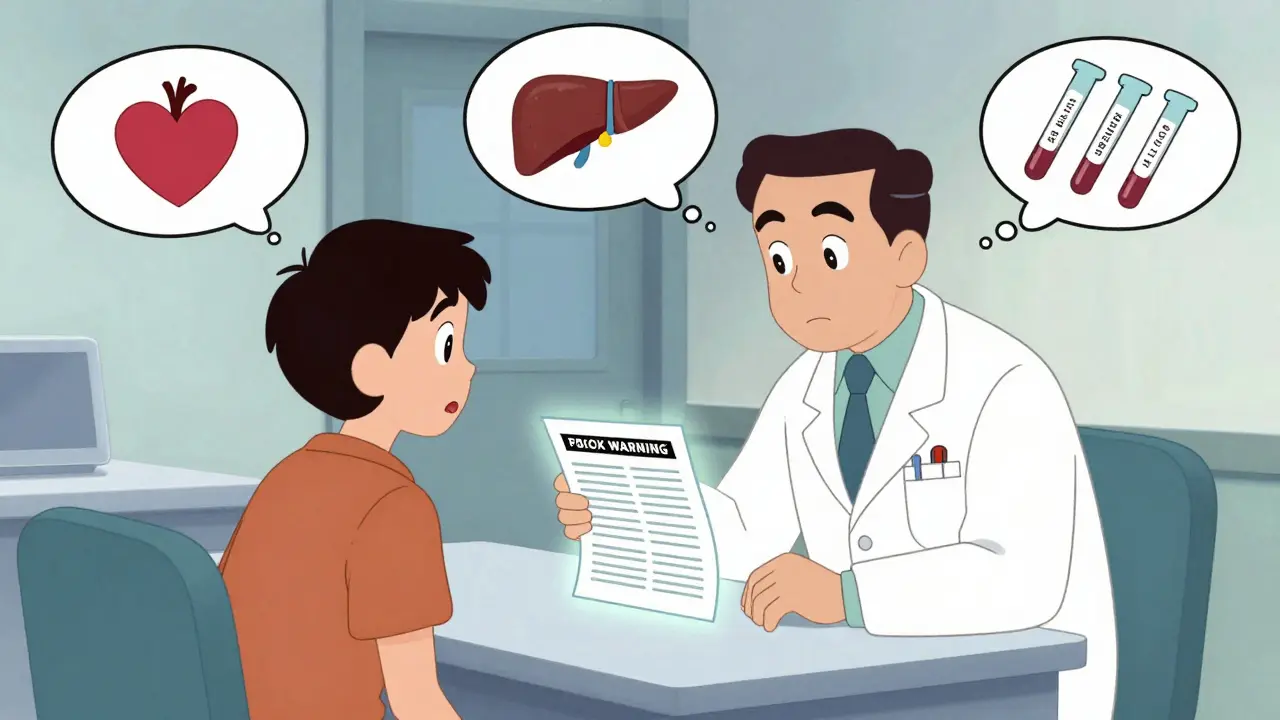
Don’t panic. Don’t stop taking it without talking to your doctor. But do ask questions.Here’s what to discuss:
- What’s the specific risk? (e.g., liver damage, suicidal thoughts, blood clots)
- How likely is it? (Is it 1 in 100? 1 in 1,000?)
- Are there tests I need? (Like monthly liver function checks)
- Are there safer alternatives?
- What symptoms should I watch for and call about immediately?
Dr. Meghan Lehmann, a pharmacist at Cleveland Clinic, puts it simply: "A black box doesn’t mean don’t take it. It means you need to know what you’re signing up for."
Patients who understand the warning are more likely to follow monitoring rules and report side effects early. That’s how these warnings work best - not by scaring people away, but by empowering them to use the drug safely.
How Do Doctors Decide to Prescribe a Drug With a Black Box?
It’s not a yes-or-no decision. It’s a risk-benefit calculation. A drug with a black box might be the only option for someone with severe depression that didn’t respond to anything else. Or the best choice for a patient with chronic pain who can’t tolerate other opioids.Doctors use tools like the STEPS approach a framework for evaluating medications based on Safety, Tolerability, Effectiveness, Price, and Simplicity - developed by the American Academy of Family Physicians - to weigh options. They look at:
- Safety: What’s the real risk for this patient?
- Tolerability: Will they be able to handle side effects?
- Effectiveness: Has it worked for others like them?
- Price: Is there a cheaper, equally safe option?
- Simplicity: How many pills? How often? Any special instructions?
They also check for drug interactions. A black box warning for liver damage means giving another drug that also stresses the liver could be dangerous. That’s why pharmacists are key - they’re the last line of defense before you get the pills.
Are Black Box Warnings Effective?
The answer is mixed. Some warnings change behavior dramatically. Others? Not so much.The rosiglitazone black box warning led to a 70% drop in prescriptions - but only after media coverage and scientific papers amplified the FDA’s message. Meanwhile, pioglitazone had a similar warning but didn’t see the same decline, showing that awareness and communication matter as much as the warning itself.
Studies show that many patients never even see the warning. It’s buried in paperwork. That’s why experts are pushing for clearer, more patient-friendly formats - like plain language summaries or visual risk charts.
The FDA admits the system isn’t perfect. But right now, it’s the best tool they have to flag life-threatening risks. And when used right - with open conversations between patients and providers - it saves lives.
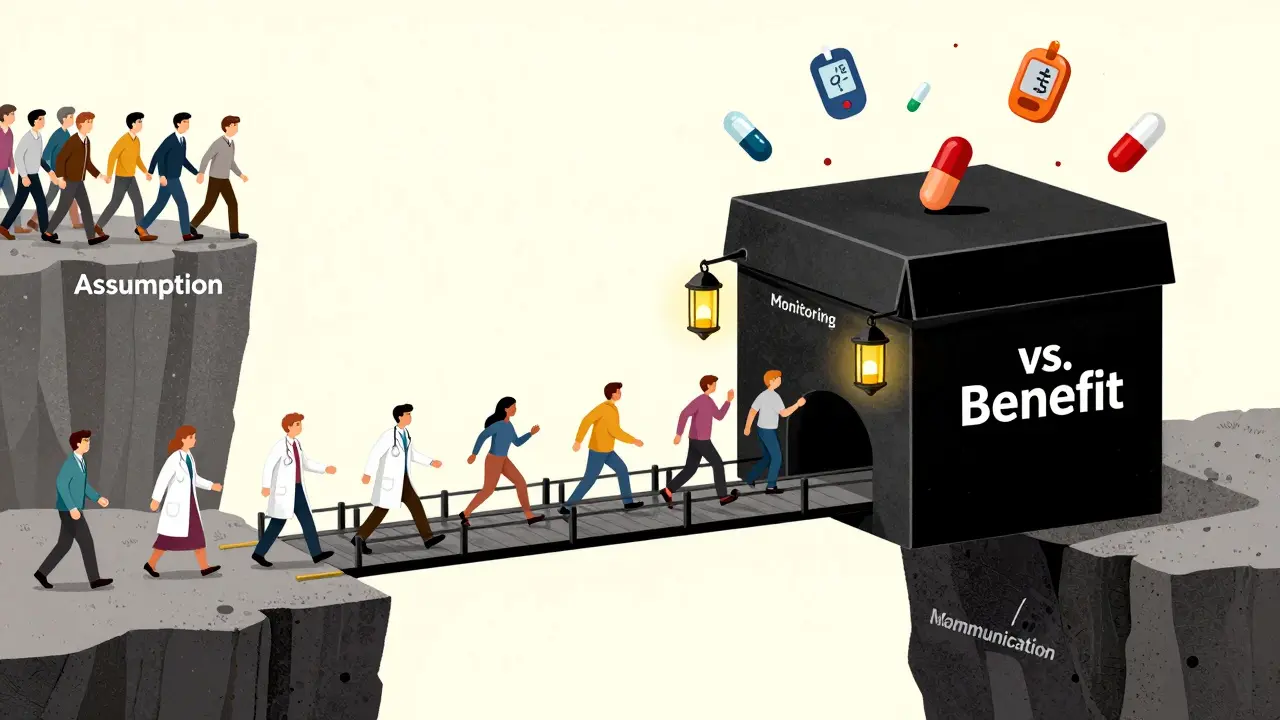
What Can You Do to Stay Safe?
If you’re on a drug with a black box warning:- Keep all follow-up appointments. Blood tests or check-ins aren’t optional.
- Report any new symptoms - even if they seem minor. That’s how the FDA finds new risks.
- Use the MedWatch the FDA’s program for reporting adverse drug reactions and safety concerns from patients and providers system if you notice something wrong. You don’t need to be a doctor to report.
- Ask for a printed copy of the drug’s full prescribing information. Read the black box section out loud with your doctor.
- Don’t assume a drug is safe just because it’s been on the market for years. New risks can appear anytime.
And if you’re worried? Talk to your pharmacist. They’re trained to spot interactions and explain warnings in plain terms. You don’t need to be an expert. You just need to ask.
What’s Next for Black Box Warnings?
The FDA is working on making these warnings more useful. Future versions may include:- Absolute risk numbers (e.g., "1 in 50 people") instead of vague terms like "risk of serious injury."
- Visual icons or color coding to help patients quickly understand severity.
- Direct links to patient education materials on the FDA website.
But the core idea won’t change: some drugs are powerful. They help. But they can also hurt. The black box is there to make sure no one misses that truth.
Do all drugs with black box warnings cause death?
No. A black box warning means there’s a serious risk of death or life-threatening injury - but only in some people under certain conditions. Many people take these drugs safely for years. The warning is there to help doctors and patients decide if the benefits outweigh the risks for their specific situation.
Can I still take a medication with a black box warning if I need it?
Yes - if your doctor believes it’s the best option for you. Many life-saving drugs, like certain antidepressants or epilepsy medications, carry black box warnings. The key is having an honest conversation about your health, your risks, and your alternatives. Never stop taking a prescribed medication without talking to your doctor first.
Are black box warnings only for prescription drugs?
Yes. Black box warnings apply only to prescription medications approved by the FDA. Over-the-counter drugs, supplements, and vitamins don’t have this type of warning - but that doesn’t mean they’re risk-free. Always read the labels and talk to your pharmacist about any medication you take.
How often does the FDA add new black box warnings?
The FDA adds new black box warnings regularly - usually after new safety data emerges from real-world use. Most warnings are added years after a drug is approved, because side effects often show up only after thousands of people have taken the drug for months or years. The FDA monitors this through the FAERS database, which collects over 1 million reports annually.
Do other countries have black box warnings?
Other countries have similar systems, but they’re not called "black box warnings." The European Medicines Agency uses "contraindications" and "serious adverse reactions" in their product information. Canada and Australia have strong safety alerts too. The format varies, but the goal is the same: to make serious risks impossible to miss.
Can a black box warning be removed?
Yes. If new evidence shows the risk is lower than originally thought, or if safer use practices are proven to eliminate the danger, the FDA can remove or modify the warning. For example, some warnings on older antidepressants were updated after better data showed the risk to adults was much lower than in teens. Changes like this take time - and solid research.