
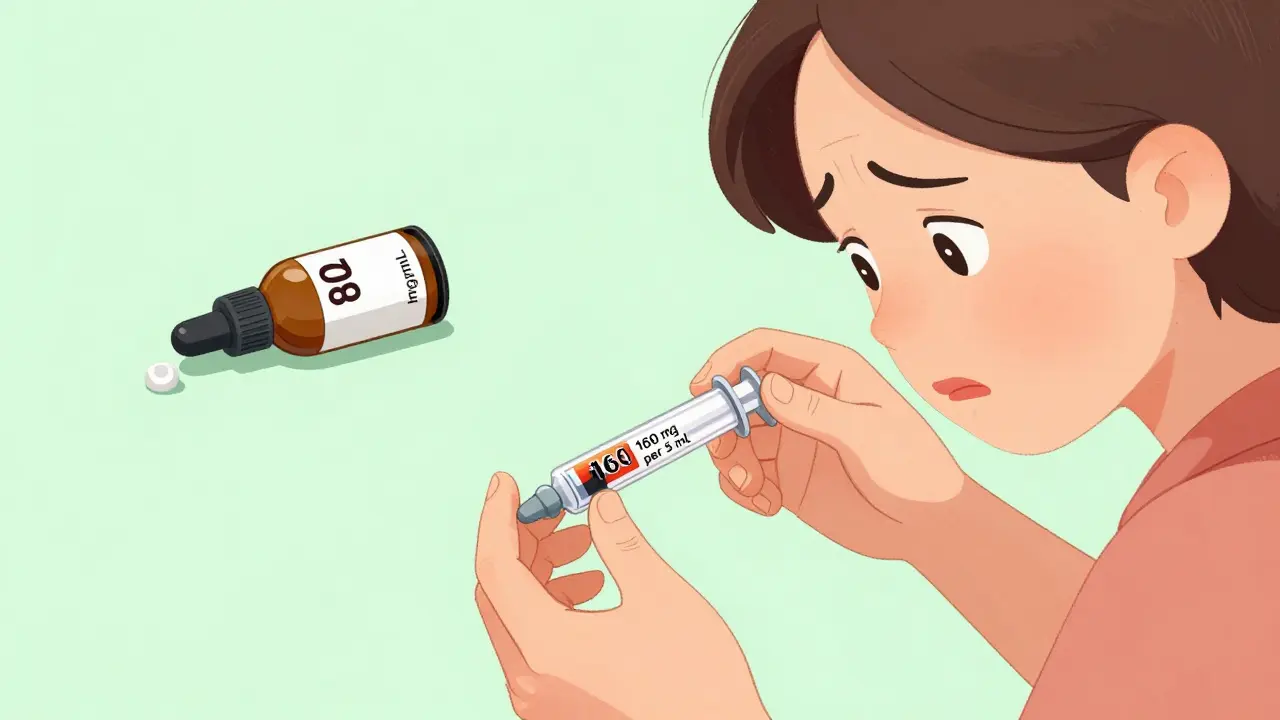
Getting the right dose of medicine to your baby isn’t just important-it’s life-or-death. A single wrong drop, a misread label, or a kitchen spoon used as a measuring tool can lead to an overdose that sends your infant to the emergency room. In 2022, over 50,000 children under five were treated for medication errors, and nearly a quarter of those were babies under one year old. Most of these incidents aren’t caused by negligence-they’re caused by confusion.
Why Concentration Matters More Than You Think
Not all infant medications are made the same. The biggest danger? Two bottles that look almost identical but contain wildly different amounts of active ingredient. For years, infant acetaminophen came in a concentrated form: 80 mg per 1 mL. That meant one tiny drop could pack a serious punch. Then, in 2011, the FDA stepped in and mandated that all infant acetaminophen must be labeled as 160 mg per 5 mL. That’s the same concentration as children’s acetaminophen. Sounds simple, right? But here’s the problem: many parents still have old bottles lying around. Or they grab the wrong one off the shelf because both say "acetaminophen" and look alike. One parent told me they gave their 4-month-old the "infant" drops thinking it was weaker-only to realize they’d accidentally used the children’s version, which was twice as concentrated. Their baby ended up in the hospital with liver damage. The same applies to ibuprofen. Infant ibuprofen is 50 mg per 1.25 mL. Children’s is 100 mg per 5 mL. Same ratio, right? Yes-but if you mix them up, you’re giving your baby 20% more than intended. That’s enough to cause stomach bleeding or kidney stress.Drops vs. Oral Syringes: The Real Difference
Many infant medications come with a dropper. It seems easy. Squeeze the bulb, fill to the line, drop it in. But droppers are terrible for accuracy. A 2018 study found that 74% of parents gave the wrong dose using droppers. Why? Because drops vary in size. One person’s "drop" is another’s "half-drop." Even the same dropper can drip differently depending on how you hold it. Oral syringes are the gold standard. They’re clear, marked in 0.1 mL increments, and let you push the medicine directly into your baby’s cheek-not down the throat, which can cause choking. A 2020 study showed parents using oral syringes got the dose right 89% of the time. With medicine cups or droppers? Only 62%. Don’t use the plastic dropper that came with the bottle. Swap it out for a syringe. Most pharmacies will give you one for free if you ask. If you’re buying meds online, request one with your order. Keep a few on hand. Treat them like diapers-something you always need.How to Calculate the Right Dose
Never guess. Never use age-based charts. Your baby’s weight is the only thing that matters. For acetaminophen, the safe range is 10-15 mg per kilogram of body weight, every 4 to 6 hours, no more than five times in 24 hours. Let’s say your baby weighs 6 kg. Multiply that by 10: you get 60 mg. Multiply by 15: you get 90 mg. So your dose should be between 60 and 90 mg. Now check the concentration on the bottle: 160 mg per 5 mL. That’s 32 mg per mL. So 60 mg = about 1.9 mL. 90 mg = about 2.8 mL. Use a syringe to measure exactly 2.0 mL or 2.8 mL. Don’t round up. Don’t eyeball it. If you’re unsure, use the CDC’s five-step verification method:- Confirm your baby’s weight in kilograms (not pounds).
- Calculate the dose using 10-15 mg/kg.
- Double-check the concentration on the label (160 mg/5 mL, not 80 mg/mL).
- Use only an oral syringe with metric markings.
- Have another adult verify the dose before giving it.
The Kitchen Spoon Trap
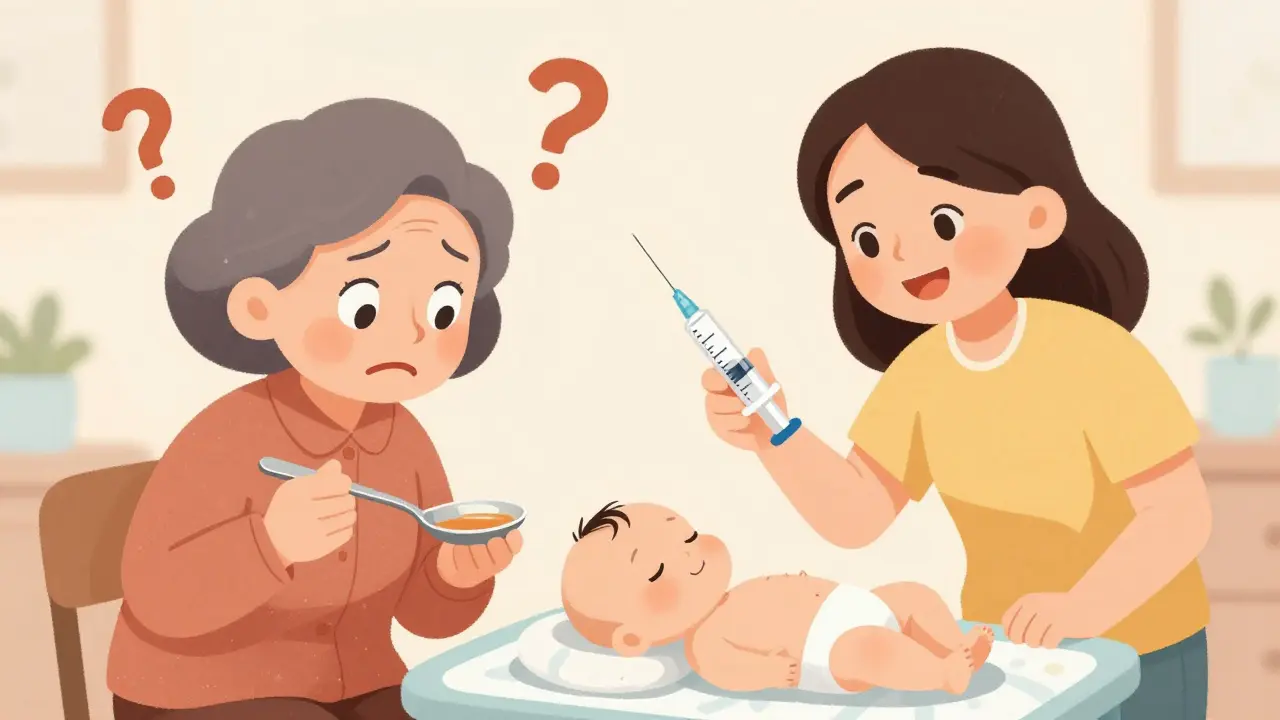
"I just used a teaspoon." How many times have you heard that? A 2021 survey found that 44% of parents still use kitchen spoons to measure liquid meds. And here’s the kicker: 57% of those spoons delivered doses that were more than 20% off from what was prescribed. A teaspoon is supposed to be 5 mL. But a real kitchen teaspoon? It’s often 4 mL. Or 7 mL. Or 10 mL. You can’t trust it. Even measuring spoons sold in stores aren’t always accurate. Only oral syringes are regulated to meet medical standards. If you’re tempted to use a spoon because you don’t have a syringe, wait. Don’t give the medicine. Call your pharmacy. Go to the store. Borrow one from a friend. Your baby’s safety isn’t worth the convenience.Who’s at Highest Risk?
It’s not just new parents. Grandparents are the most likely to make a dosing mistake. A 2023 study found that caregivers over 65 made over three times more errors than parents under 30. Why? Outdated knowledge. Poor eyesight. Confusion over old labels. Many remember when infant acetaminophen was 80 mg/mL. They don’t realize that’s gone. Also at risk: anyone giving medicine while tired, stressed, or distracted. A 2022 CDC report showed that 28% of errors happened because the caregiver was rushing or multitasking. If you’re caring for a baby and someone else is helping-like a grandparent or babysitter-take five minutes to walk them through the five-step method. Show them the syringe. Point to the concentration on the bottle. Let them measure the dose themselves under your watch.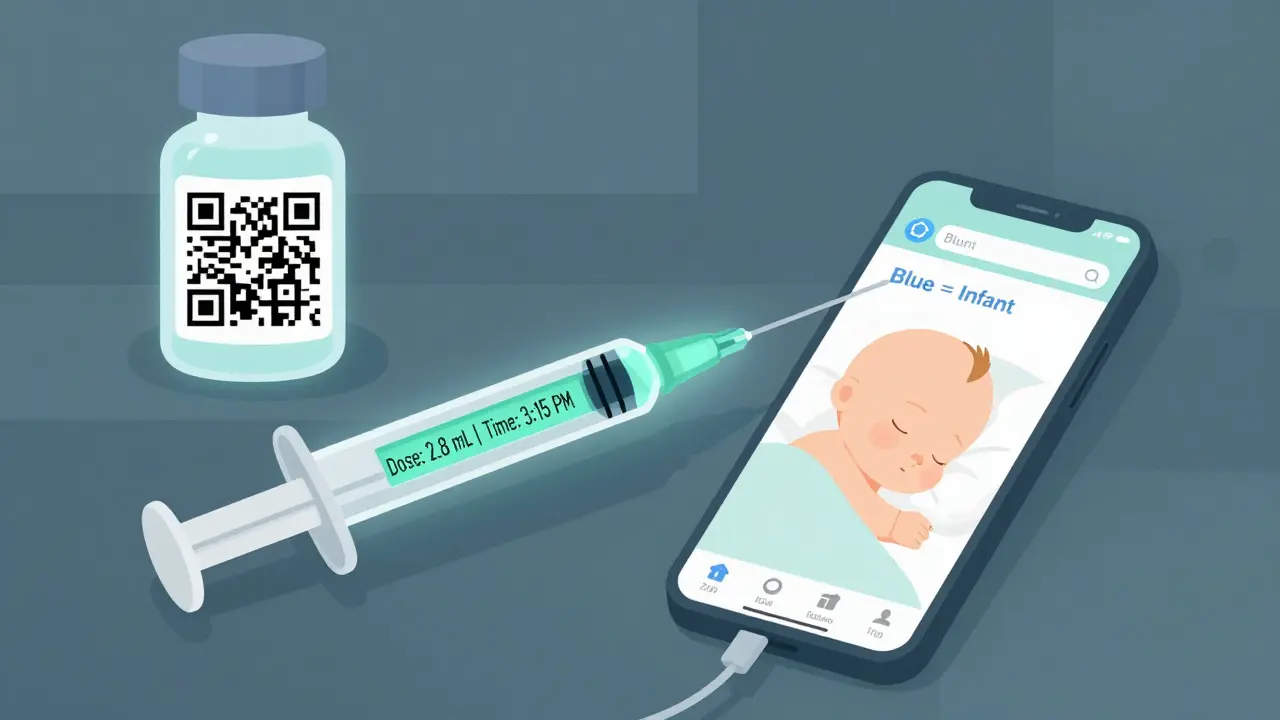
What About Cold and Cough Medicines?
Don’t give them. Not even a drop. The FDA banned over-the-counter cough and cold medicines for kids under 2 in 2008. In 2021, they extended that warning to children under 6. Why? Because these products often contain multiple active ingredients-antihistamines, decongestants, cough suppressants-and even tiny amounts can cause seizures, rapid heart rates, or breathing problems. A 2004-2005 study found over 7,000 emergency visits from kids under 2 due to these meds. Many were given by well-meaning grandparents who thought "it’s just a cold remedy." It’s not. It’s a chemical cocktail your baby’s body can’t handle. If your baby has a stuffy nose, use saline drops and a bulb syringe. For fever or discomfort, use acetaminophen or ibuprofen-but only if you’ve calculated the dose correctly.What’s New in 2025?
The FDA is testing color-coded labels: blue for infant meds, green for children’s. Some new bottles now have QR codes you can scan with your phone to verify dosage. There’s even a smart syringe approved in early 2023 that connects to an app. It beeps if you try to give too much, and logs the time and dose for you. But none of that matters if you don’t know how to use what you’ve got. The most advanced tech won’t fix a misunderstanding of concentration. The best app won’t help if you’re using a kitchen spoon.When in Doubt, Call
You don’t have to figure this out alone. The National Poison Control Center (1-800-222-1222) has a free tool called "Help Me Choose" that walks you through dosing in real time. In 2022, they handled over 14,000 infant medication calls and prevented nearly all of them from turning into ER visits. Your pediatrician’s office should also have a dosing chart. Ask for it. Print it. Tape it to the fridge. Keep it in your diaper bag. Medication safety isn’t about being perfect. It’s about being careful. It’s about double-checking. It’s about asking for help before you give the first drop.Can I use a regular teaspoon to measure baby medicine?
No. Kitchen teaspoons vary in size and are not accurate. Always use an oral syringe marked in milliliters (mL). A teaspoon equals 5 mL, but real spoons can hold anywhere from 4 to 10 mL. Using one can lead to a 20% or greater overdose, which can be dangerous for infants.
What’s the difference between infant and children’s acetaminophen?
Since 2011, both infant and children’s acetaminophen must be labeled at 160 mg per 5 mL. The difference used to be that infant drops were 80 mg per 1 mL-a much stronger concentration. That version was removed because it caused too many overdoses. Always check the label, even if the bottle says "infant." Never assume.
How do I know how much to give my baby?
Always base the dose on your baby’s weight in kilograms, not age. For acetaminophen, give 10-15 mg per kg of body weight, every 4-6 hours, no more than five times in 24 hours. Use a scale to weigh your baby, then calculate the dose using the concentration on the bottle. If you’re unsure, use the CDC’s five-step verification process or call Poison Control.
Is it safe to give my baby medicine if I’m breastfeeding?
Yes, most infant-safe medications are also safe while breastfeeding, but not all. Medications that are safe during pregnancy aren’t always safe while nursing. Always check with your doctor or pharmacist before taking any new medication. The LactMed database from the InfantRisk Center has up-to-date info on over 2,800 medications and their safety during breastfeeding.
What should I do if I think I gave my baby too much medicine?
Call Poison Control immediately at 1-800-222-1222. Do not wait for symptoms. Even if your baby seems fine, some overdoses (like acetaminophen) can damage the liver without showing signs for hours. Keep the medicine bottle handy so you can tell them the exact concentration and amount given.



Comments (13)