Thyroid After Pregnancy: What You Need to Know About Hormone Changes and Testing
When your body shifts back to its pre-pregnancy state after birth, your thyroid, a small gland in your neck that controls metabolism and energy levels can get out of sync. This isn’t rare—about 1 in 10 women develop some form of thyroid dysfunction in the year after giving birth. The most common issue is postpartum thyroiditis, an inflammation of the thyroid that often starts with overactivity, then drops into underactivity. It’s not an infection or a tumor—it’s your immune system reacting to hormonal chaos. Many women mistake the symptoms for just being tired from newborn care, but they’re often signs your thyroid is struggling to keep up.
After pregnancy, your body drops estrogen and progesterone fast. That sudden change can trigger an autoimmune response in women who already have a genetic risk. The thyroid function test, a simple blood test that measures TSH, T3, and T4 levels is the only way to know for sure if your thyroid is working right. If your TSH is high and your T4 is low, you likely have hypothyroidism after pregnancy, a condition where your thyroid doesn’t make enough hormone. Symptoms include fatigue, weight gain, dry skin, hair loss, depression, and feeling cold when others aren’t. Some women get better on their own within a year. Others need daily thyroid hormone replacement—simple pills that restore balance and energy.
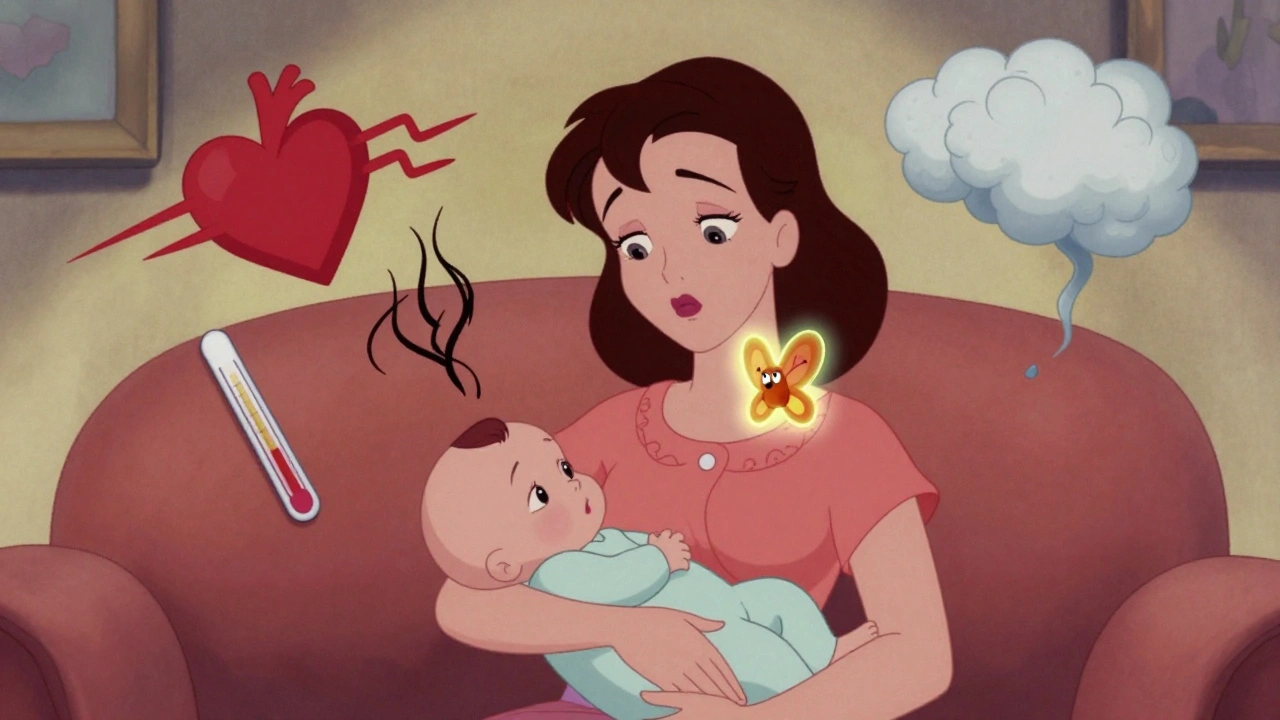
What’s tricky is that symptoms overlap with normal postpartum life. You’re sleep-deprived. You’re stressed. Your body is recovering. But if your symptoms stick around past six months, or get worse, don’t brush them off. The postpartum hormone changes that affect your thyroid can also impact your mood, heart rate, digestion, and even your ability to breastfeed. Left untreated, long-term hypothyroidism can raise your risk for high cholesterol, heart problems, and future miscarriages. The good news? Testing is quick, cheap, and covered by most insurance. Treatment is straightforward. And most women who get help go back to feeling like themselves.
Below, you’ll find real-world advice from people who’ve been through it—how to spot the warning signs, when to push for a test, what treatments actually work, and how to talk to your doctor without sounding paranoid. This isn’t guesswork. It’s science, paired with lived experience.