
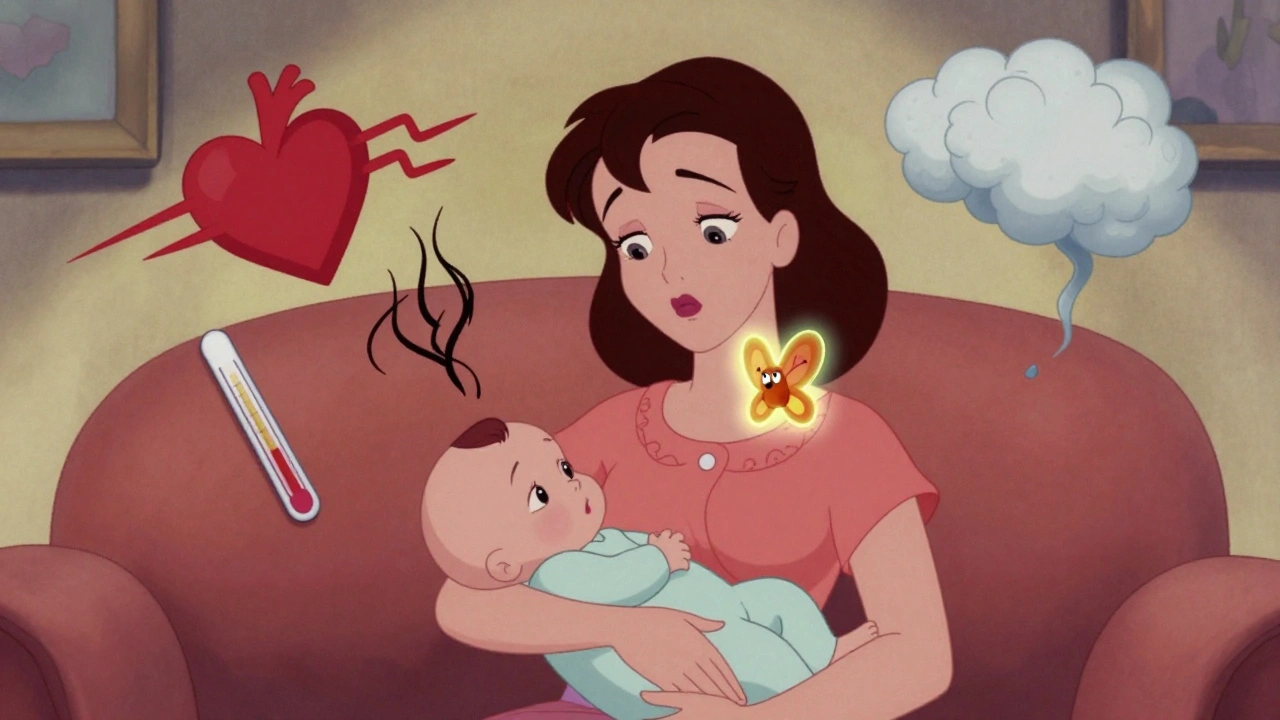
After having a baby, it’s normal to feel exhausted. Your body’s been through a major event, sleep is scarce, and everything feels overwhelming. But what if your fatigue isn’t just from sleepless nights? What if your heart races for no reason, you’re losing weight despite eating more, or you suddenly can’t stand the cold-even in summer? These aren’t just signs of being a new mom. They could be symptoms of postpartum thyroiditis, a hidden thyroid problem that affects 5 to 10% of women after childbirth.
It’s Not Just Fatigue-It’s Your Thyroid
Many new mothers are told they’re just tired. And yes, being up all night with a newborn is exhausting. But postpartum thyroiditis doesn’t just make you tired. It changes how your whole body works. In the first few months after birth, your immune system shifts dramatically. For some women, this shift triggers an autoimmune attack on the thyroid gland. The thyroid, a small butterfly-shaped gland in your neck, controls your metabolism, energy, temperature, and even your mood. When it gets inflamed, it leaks hormones at first-causing a hyperthyroid phase-then burns out, leading to hypothyroidism.This isn’t rare. It’s common enough that if you’ve had a baby in the last year and feel off in ways that don’t match typical exhaustion, it’s worth checking. The problem? Most doctors don’t test for it unless you specifically ask. A 2022 study from Baylor Scott & White found the average time to diagnosis is over five months. That’s five months of feeling like you’re drowning in fatigue, hair falling out, and your mind feeling foggy-while everyone around you says, "It’s just the baby."
The Two-Phase Pattern Most Women Don’t Know About
Postpartum thyroiditis doesn’t hit like a single wave. It comes in two phases, and many women only experience one-or mistake one for something else.Phase One: Hyperthyroidism (1 to 4 months postpartum)
This phase often flies under the radar. Your thyroid is damaged and leaking stored hormones into your bloodstream. You might feel:
- Heart racing or fluttering (tachycardia)
- Unexplained weight loss (4-7 pounds)
- Heat intolerance-sweating through clothes even in cool rooms
- Tremors in your hands
- Insomnia, even when you’re exhausted
Up to half of women don’t notice these symptoms. They blame stress, caffeine, or just being a new mom. But if you’re losing weight without trying and can’t sit still, it’s not normal.
Phase Two: Hypothyroidism (4 to 8 months postpartum)
This is the phase that hits hardest. The thyroid is now depleted. It can’t make enough hormones. Symptoms include:
- Overwhelming fatigue (89% of women report this)
- Feeling cold all the time
- Constipation
- Dry, flaky skin and brittle hair
- Weight gain (5-10 pounds) even with no change in diet
- Brain fog-trouble focusing, remembering names, or following conversations
And here’s the kicker: 10 to 25% of women skip the hyperthyroid phase entirely. They go straight into hypothyroidism. If you’re six months postpartum and suddenly feel like you’ve lost your energy forever, this could be why.
How It’s Different From Postpartum Depression
This is critical. Postpartum thyroiditis and postpartum depression share symptoms: fatigue, mood swings, brain fog, irritability. But they’re not the same. Depression is about mood. Thyroiditis is about your body’s chemistry.With thyroiditis, you’ll have physical signs that depression doesn’t cause:
- Heart rate over 100 bpm at rest
- Visible swelling in the neck (painless goiter)
- Changes in body temperature tolerance
- Hair thinning or shedding in clumps
- Constipation or dry skin
A 2021 Cleveland Clinic study found that 30% of women with thyroiditis were misdiagnosed with depression. Some were even prescribed antidepressants-while their real problem was a failing thyroid. That’s not just a mistake. It delays real treatment. And if your thyroid is underactive, no amount of therapy will fix that. You need thyroid hormone replacement.
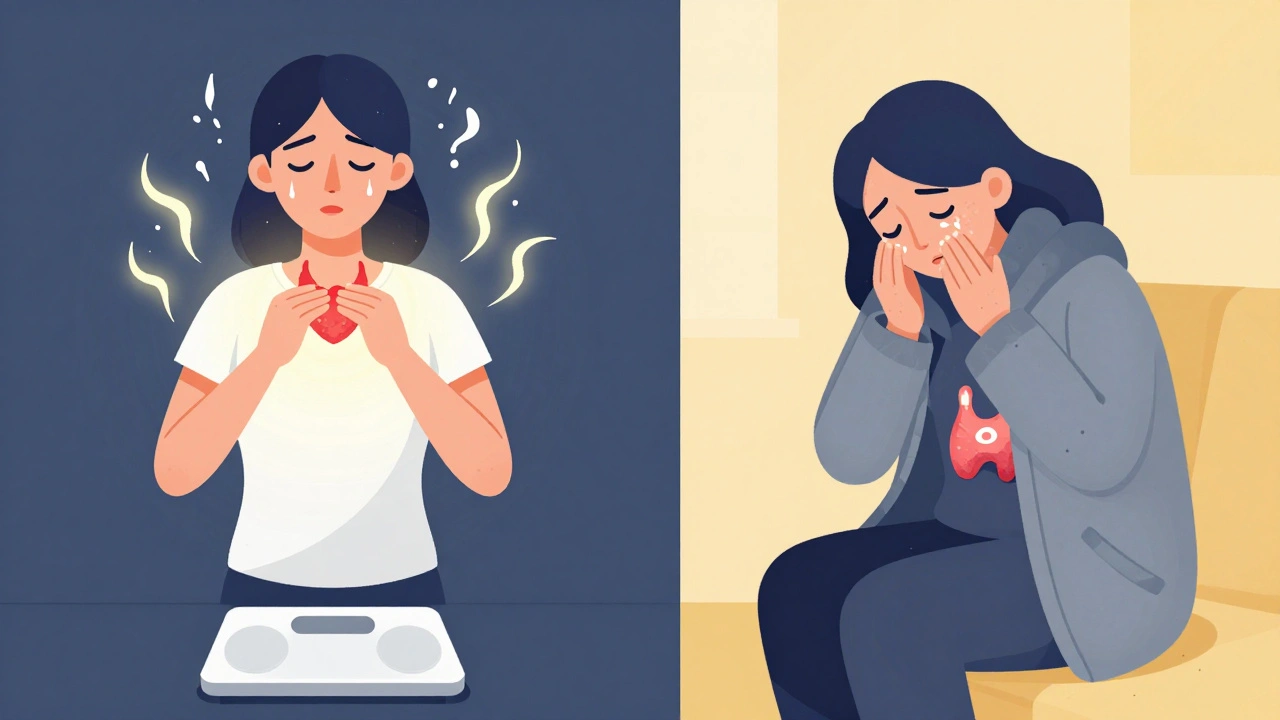
What Tests Actually Confirm It?
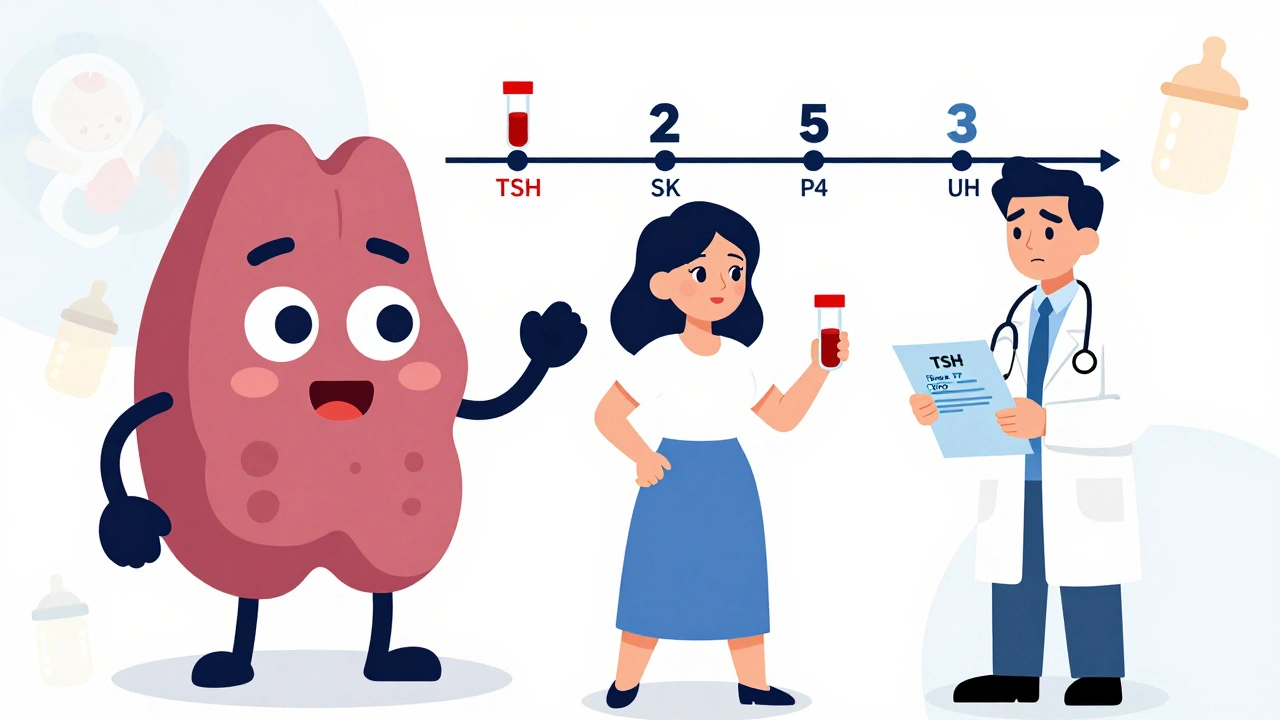
You can’t diagnose this with a feeling. You need blood tests.The key markers are:
- TSH (Thyroid Stimulating Hormone): Low in hyperthyroid phase, high in hypothyroid phase
- Free T4: High in hyperthyroid, low in hypothyroid
- TPO Antibodies: Positive in 80-90% of cases. This confirms it’s autoimmune.
Testing should happen between 6 and 12 weeks postpartum if you have any symptoms. If you have a history of autoimmune disease-like type 1 diabetes, lupus, or rheumatoid arthritis-or if you’ve had postpartum thyroiditis before, your doctor should test you even if you feel fine. The risk jumps to 25-30% if you have type 1 diabetes.
There’s one more test that’s not routine but gaining traction: checking TPO antibody levels during pregnancy. If they’re high, your chance of developing postpartum thyroiditis is 70%. Early detection means early intervention.
Will It Go Away? What Happens Long-Term?
The good news? For most women, it’s temporary. Between 70 and 80% return to normal thyroid function within 12 to 18 months. But here’s what you need to know: 20 to 30% end up with permanent hypothyroidism.If you’re in the hypothyroid phase and your TSH stays high after 12 months, you’ll likely need lifelong levothyroxine. It’s not a failure. It’s just your thyroid’s new normal. And it’s manageable. A daily pill, regular blood tests, and you’ll feel like yourself again.
But if you don’t get tested? You might think you’re just getting older, or your body never recovered from childbirth. You might struggle with depression, weight gain, or brain fog for years-without ever knowing why.
What About Breastfeeding?
If you’re nursing, you might worry about treatment. Good news: levothyroxine is safe during breastfeeding. Only tiny amounts pass into breast milk, and studies show no effect on the baby’s thyroid or development.Some women report a dip in milk supply during the hypothyroid phase. That’s because thyroid hormones help regulate prolactin. Once you start treatment, milk supply often improves. If you’re struggling to produce enough milk and have other symptoms of hypothyroidism, get tested.
Why Most Doctors Miss It
The American College of Obstetricians and Gynecologists (ACOG) doesn’t recommend routine thyroid screening for all postpartum women. Only 42% of OB-GYNs routinely test for it. Most wait until symptoms are severe.But here’s the problem: by the time symptoms are obvious, you’ve already suffered for months. A 2023 study from UR Medicine showed that women who got tested at 10 weeks had their diagnosis confirmed 3.4 months faster than those who waited for symptoms to worsen.
Endocrinologists and high-risk clinics are catching on. At places like Baylor Scott & White, dedicated postpartum thyroid clinics cut diagnosis time from over five months to under two. But in general practice? You have to be your own advocate.
What You Can Do Right Now
If you had a baby in the last year and feel off-really off-here’s what to do:- Write down your symptoms: fatigue, heart palpitations, weight changes, cold sensitivity, hair loss, brain fog.
- Ask your doctor for a TSH and free T4 blood test. Don’t wait for them to suggest it.
- If those are abnormal, ask for a TPO antibody test. That’s the key to confirming autoimmune thyroiditis.
- If you have type 1 diabetes, a history of thyroid issues, or autoimmune disease, push for testing even if you feel fine.
- If you’re diagnosed, ask about follow-up testing at 6 and 12 months. Thyroid function can change.
You don’t need to suffer in silence. This condition is treatable. And if you catch it early, you might avoid the worst of it.
What’s Changing in 2025?
The field is shifting. Experts are pushing for universal screening at 6 and 12 weeks postpartum. A 2023 study from UCLA found that screening saves $2,300 per case by preventing misdiagnosis, unnecessary antidepressants, and long-term complications.Some hospitals are already using digital symptom trackers that flag thyroid dysfunction based on self-reported data. In January 2024, the Cleveland Clinic launched a tool that reduced diagnostic delays by 40% in pilot groups.
And research is moving fast. Scientists have identified a new biomarker-interleukin-10-that may predict postpartum thyroiditis with 88% accuracy. Point-of-care tests for TPO antibodies are in development. In five years, a simple finger-prick test at your postpartum checkup could become standard.
For now, you don’t have to wait for the system to catch up. If something feels wrong, trust your gut. Your body is telling you something.






Comments (12)