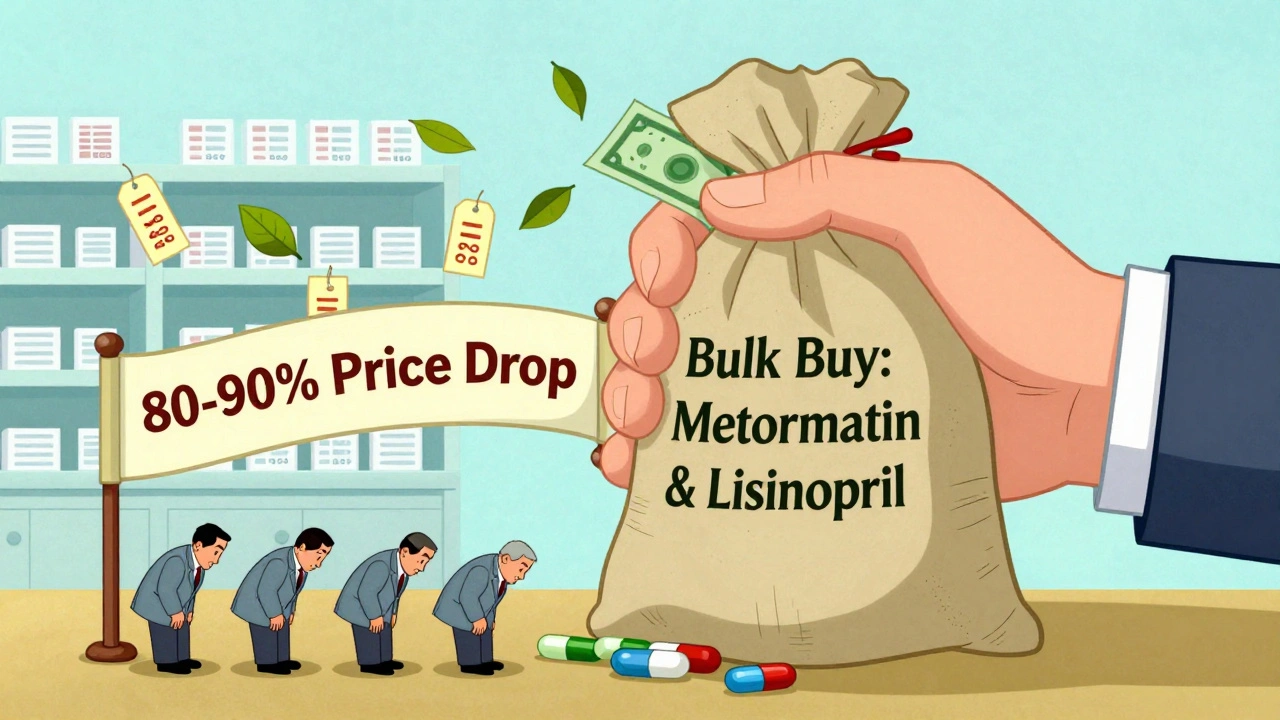
Tendering for Generics: How Generic Drug Procurement Works and Why It Matters
When you hear tendering for generics, the process by which public health systems competitively select low-cost generic drug suppliers. Also known as generic drug procurement, it’s how hospitals, pharmacies, and government programs like Medicare Part D get the cheapest, safest versions of brand-name drugs. This isn’t just paperwork—it’s the hidden engine behind why your insulin, blood pressure pill, or antibiotic costs $4 instead of $400.
Generic drugs, medications approved by the FDA as bioequivalent to brand-name versions. Also known as off-patent drugs, they make up over 90% of prescriptions in the U.S. But getting them into pharmacies isn’t automatic. Manufacturers compete in drug procurement, the structured bidding process where buyers choose suppliers based on price, reliability, and quality. The lowest bidder wins—but only if they meet FDA standards. That’s where FDA approval, the rigorous review process ensuring generics are as safe and effective as brand drugs. comes in. Without it, a cheap bid means nothing. The FDA doesn’t just sign off on the drug—it checks manufacturing sites, purity levels, and how fast the medicine enters your bloodstream.
Here’s the catch: companies don’t always play fair. Some delay competition with shady patent tricks or pay rivals to stay off the market—practices blocked by pharmaceutical competition, the legal and market forces that keep generic prices low. Antitrust laws step in to stop these tactics, but they’re not perfect. When competition falters, shortages happen. When procurement fails, patients go without. That’s why tendering isn’t just about cost—it’s about access, safety, and fairness.
What you’ll find in this collection are real stories behind the numbers: how a single FDA deficiency letter can delay a generic for months, why a pay-for-delay deal can spike prices overnight, and how a simple bidding error can leave hospitals without life-saving drugs. These aren’t abstract policies—they’re decisions that land on your pharmacy counter.