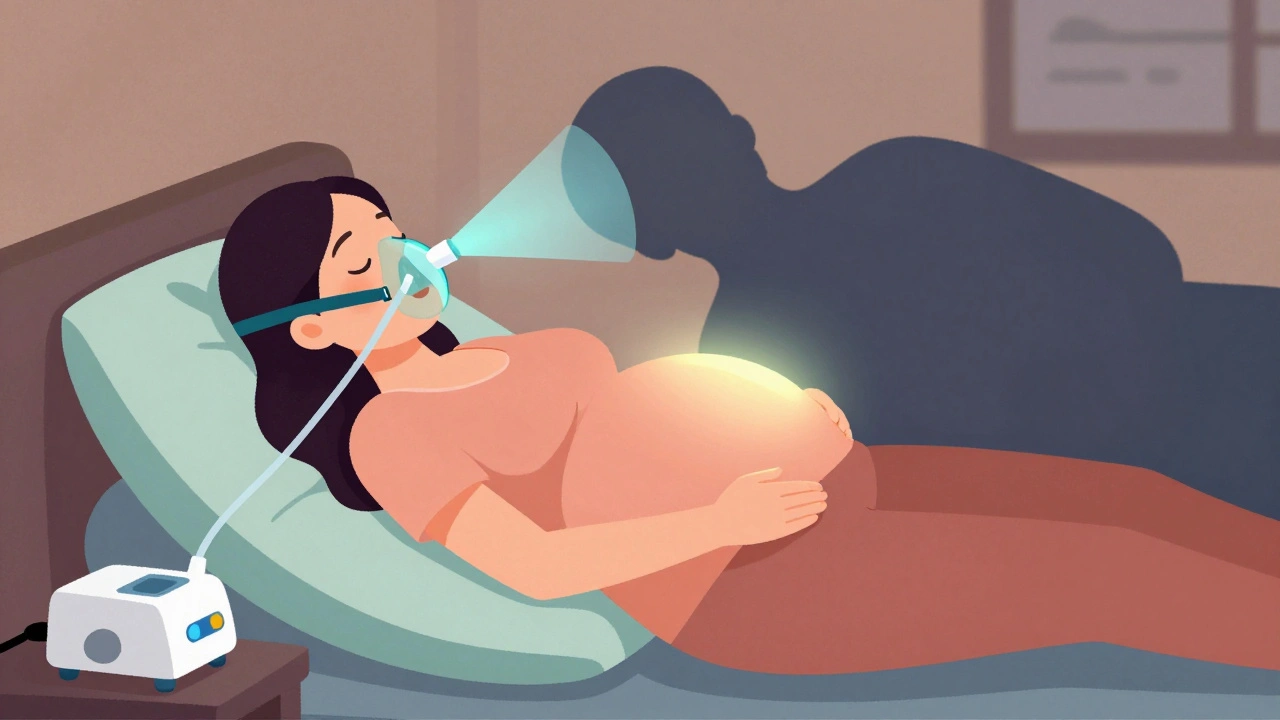
Pregnancy Sleep Apnea: Causes, Risks, and What You Can Do
When you’re pregnant, trouble sleeping isn’t just about heartburn or needing to pee every two hours—it could be pregnancy sleep apnea, a condition where breathing repeatedly stops and starts during sleep due to airway blockage or hormonal changes. It’s not rare, and it’s not just "being tired." Left unchecked, it raises risks for high blood pressure, preeclampsia, gestational diabetes, and even low birth weight. Many women assume their exhaustion is normal, but if you’re snoring loudly, waking up gasping, or feeling drained even after 8 hours, it’s worth asking about.
obstructive sleep apnea, the most common type during pregnancy, happens when throat muscles relax too much and block airflow. As your belly grows, pressure on your diaphragm makes breathing harder. Hormones like progesterone also relax airway muscles and increase nasal swelling. These changes turn a quiet night into a series of mini-breath-holding episodes, often missed because you don’t fully wake up. But your body does—your heart rate spikes, oxygen drops, and stress hormones rise. Over time, that adds up. It’s not just about how you feel at night. Studies show women with untreated sleep apnea during pregnancy are twice as likely to develop preeclampsia. And babies born to these mothers are more likely to need NICU care.
What helps? Weight gain, sleeping position, and nasal congestion all play roles. Sleeping on your side—not your back—can make a big difference. Nasal strips or saline sprays might help if your nose is stuffed. But if you’re waking up choking, your partner notices long pauses in your breathing, or you’re falling asleep during the day, talk to your provider. A simple sleep study can confirm if it’s sleep apnea. Treatment isn’t always CPAP—some women benefit from oral devices or positional therapy. The goal isn’t just better sleep. It’s protecting your health and your baby’s.
There’s no shame in needing help. Sleep isn’t a luxury during pregnancy—it’s medicine. The posts below cover real cases, practical tips, and what doctors actually recommend when sleep apnea shows up during pregnancy. You’ll find what works, what doesn’t, and how to speak up before it’s too late.