
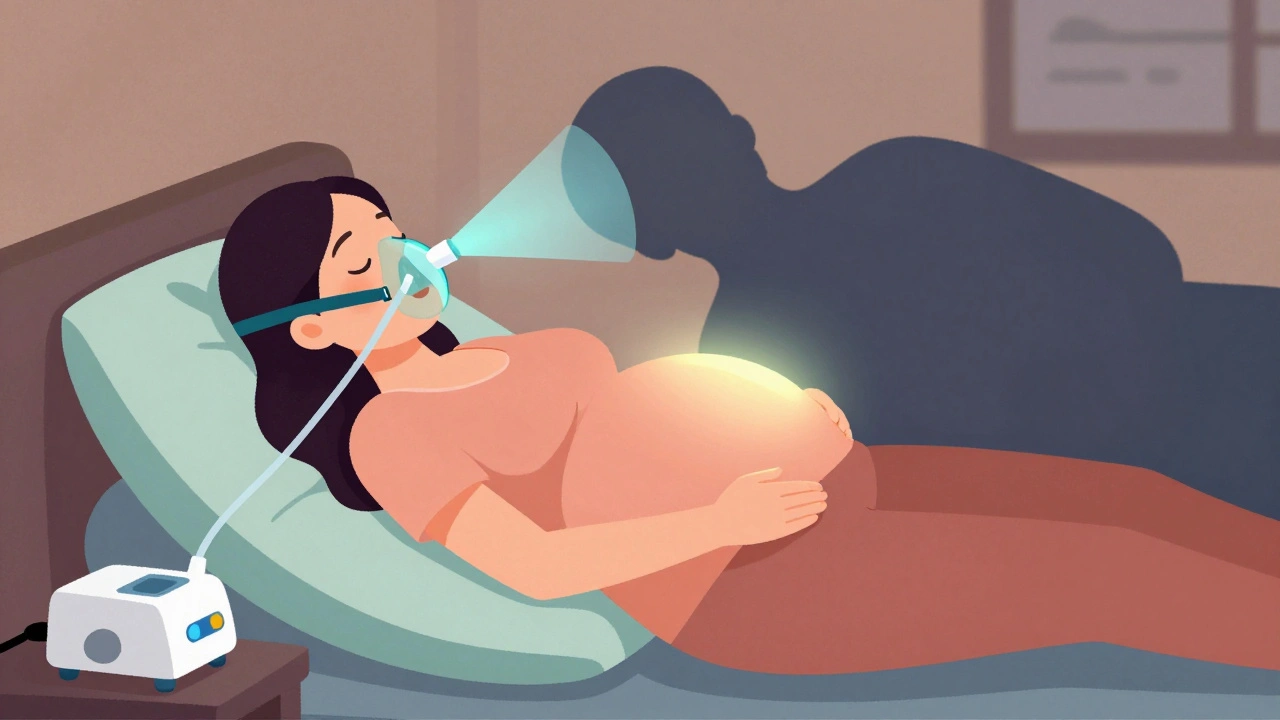
Why Sleep Gets So Hard During Pregnancy
By the third trimester, many pregnant women are exhausted-not just from late-night feedings or frequent bathroom trips, but because their bodies are fighting to breathe. Sleep apnea, acid reflux, and uncomfortable positioning aren’t just annoyances-they’re medical issues that can affect both mom and baby. If you’re snoring louder than usual, waking up gasping, or burning from heartburn every night, you’re not alone. About 1 in 10 pregnant women develop obstructive sleep apnea, and that number jumps to nearly 1 in 4 if you’re overweight. The good news? These problems can be managed-and often improved-with the right strategies.
What Is Sleep Apnea in Pregnancy, and Why Does It Happen?
Sleep apnea means your airway keeps closing briefly while you sleep, cutting off oxygen. You might not even realize it’s happening-you could just wake up feeling tired, with a dry mouth or headache. During pregnancy, hormones like progesterone relax the muscles in your throat, and extra fluid builds up in your neck and nasal passages. Your growing belly also pushes up on your diaphragm, making it harder to take deep breaths. By week 28, your risk of sleep apnea spikes. Left untreated, it’s linked to a 2.3 times higher chance of preeclampsia, a 1.7 times higher risk of gestational diabetes, and more cesarean deliveries.
How to Know If You Have Sleep Apnea (Not Just Snoring)
Not every snorer has sleep apnea. But if you notice these signs, talk to your provider:
- Waking up choking or gasping for air
- Extreme daytime fatigue, even after 8 hours in bed
- Morning headaches or brain fog
- Your partner says you stop breathing during sleep
- High blood pressure that started during pregnancy
The American College of Obstetricians and Gynecologists now recommends screening for sleep apnea at your first prenatal visit using a simple questionnaire called the Berlin Questionnaire. If you score high, you’ll likely be referred for a sleep study. Home sleep tests are now common and accurate enough for most pregnant women. Don’t wait until you’re miserable-early detection cuts your risk of complications.
CPAP Therapy: The Most Effective Treatment (And How to Make It Work)
Continuous Positive Airway Pressure (CPAP) is the gold standard for treating sleep apnea during pregnancy. It uses a gentle stream of air through a mask to keep your airway open. Studies show that starting CPAP between 24 and 28 weeks can reduce preeclampsia risk by up to 30% and lower blood pressure by 35%. But many women quit because the mask feels uncomfortable.
Here’s how to make it easier:
- Use nasal pillows instead of full-face masks-they’re less bulky and better for swollen faces
- Turn on the humidifier and set it to 37°C to prevent dry, stuffy nose
- Try the Boppy Noggin CPAP pillow-it cradles your head and keeps you on your side without squishing the mask
- Start with lower pressure (6-8 cm H₂O) and increase slowly
- Use auto-titrating machines like the ResMed AirSense 11 Pregnancy Mode, which adjusts pressure automatically as your body changes
Adherence is the biggest hurdle. Only about 62% of women stick with it past four weeks. But clinics that offer a 30-minute setup session with a sleep tech see adherence jump to 82%. Don’t give up after a few bad nights-it takes 7 to 14 days to adjust.
Positioning: The Simple Trick That Can Cut Apnea in Half
Sleeping on your back is the worst thing you can do during pregnancy-not just for apnea, but for blood flow to your baby. Lying flat compresses the major vein that returns blood to your heart. The best position? Left side. It keeps your uterus off your organs and opens up your airway.
But staying on your side all night? Nearly impossible without help. That’s where pregnancy pillows come in. A full-body pillow (like the Leachco Full Body Pillow Pro) wraps around you, supporting your belly, back, and knees. One study found that using this position reduced the number of breathing pauses by nearly 23% in women with mild sleep apnea.
Don’t just prop yourself up with regular pillows. That can bend your neck and make apnea worse. Instead, use a wedge pillow under your upper back to elevate your head 15-30 degrees. Keep your hips and knees slightly bent for comfort. This setup also helps with reflux-more on that next.
Managing Reflux: Why Your Nighttime Heartburn Isn’t Just ‘Normal’
Heartburn during pregnancy is common, but if it’s keeping you awake every night, it’s more than just spicy food. Hormones slow digestion, and your growing baby pushes your stomach upward. Acid flows back, burning your throat-and sometimes triggering coughing that wakes you up or worsens apnea.
Here’s what actually works:
- Elevate the head of your bed by 6-8 inches using blocks under the legs-not just pillows
- Avoid eating within 3 hours of bedtime
- Choose low-fat, non-spicy meals for dinner
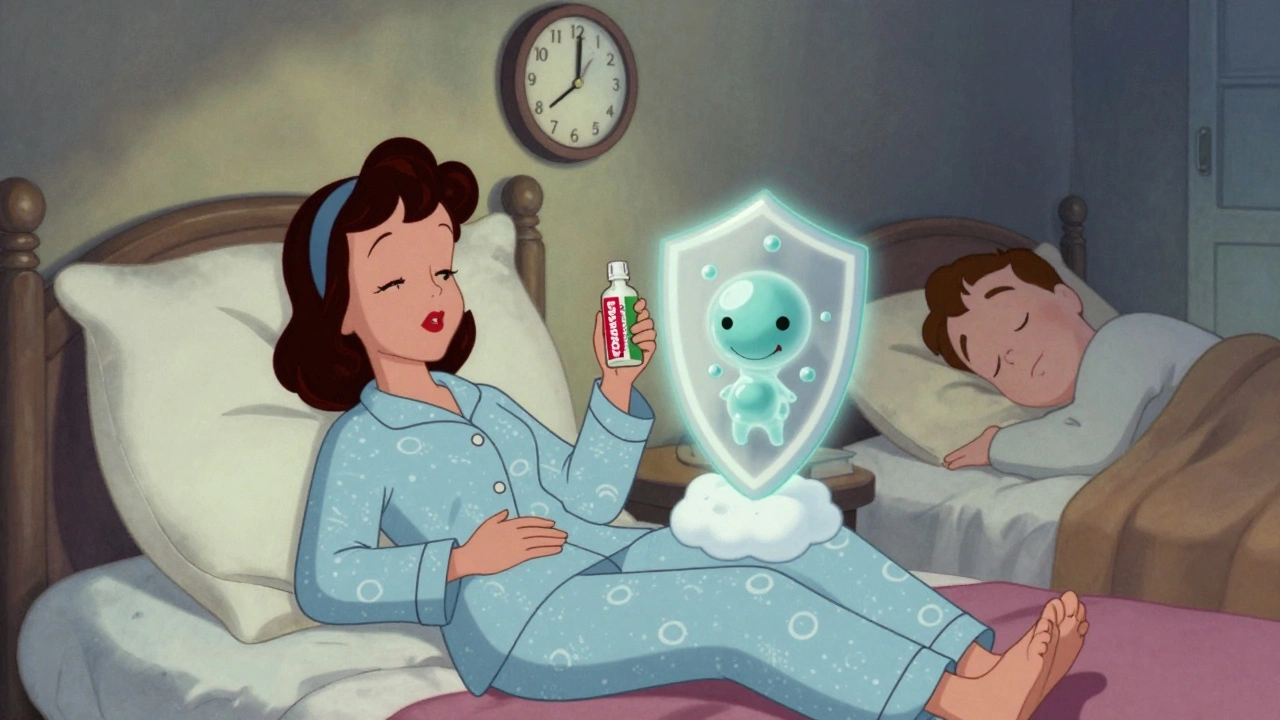
- Use Gaviscon Advance (alginate-based), which forms a foam barrier on top of stomach acid. It’s safe in pregnancy and doesn’t get absorbed into your bloodstream
- Wear loose pajamas-tight waistbands make reflux worse
One key point: elevating your head with pillows alone can actually make apnea worse by tilting your neck. A proper wedge pillow or bed risers are the only way to get the right angle without compromising your airway.
What Doesn’t Work (And Why)
Not every sleep hack is safe or effective during pregnancy.
- Mandibular advancement devices (mouth guards): These work for non-pregnant people with mild apnea, but pregnancy changes your jaw and TMJ. There’s no safety data, and experts advise against them.
- Weight loss: Don’t try to lose weight while pregnant. Instead, follow the Institute of Medicine’s guidelines-gain 11.5-16 kg if you’re normal weight, 5-9 kg if you’re overweight. Excessive weight gain increases apnea risk.
- Over-the-counter sleep aids: Melatonin, Benadryl, and other sedatives aren’t proven safe in pregnancy and can worsen apnea by relaxing airway muscles further.
- Just waiting it out: Many women assume sleep problems will disappear after birth. But 58% of women who had pregnancy-related apnea go on to develop chronic high blood pressure within 10 years. Treating it now protects your long-term health.
What to Expect After Baby Arrives
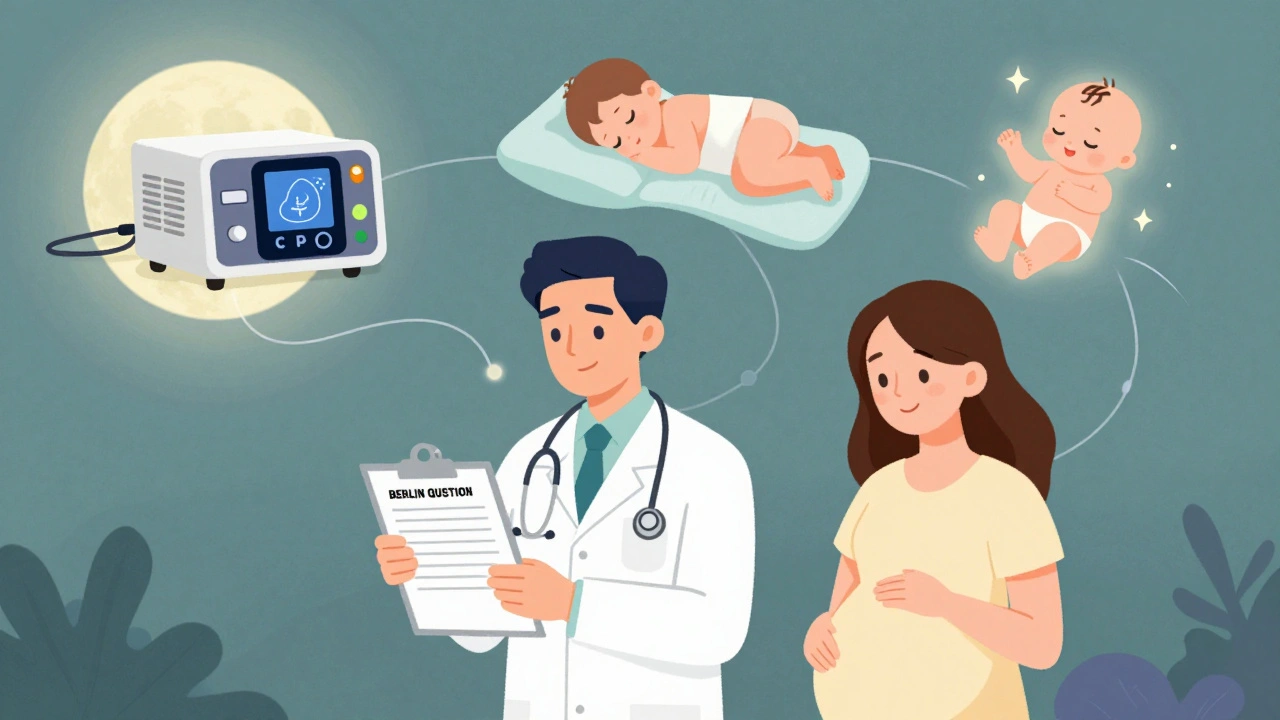
Most women see their sleep apnea improve after delivery, especially if they lost pregnancy weight. But not everyone. The Brown Health clinical protocol recommends a follow-up sleep study at 12 weeks postpartum if you were diagnosed during pregnancy. The NIH, however, says if symptoms are gone, you may not need testing. Talk to your doctor. If your apnea lingers, you’re at higher risk for heart disease later in life.
And don’t forget: your partner might be sleeping better too. One woman on Reddit said, “My husband finally slept through the night after I started CPAP. He didn’t even realize how loud I was.”
Real Stories, Real Results
‘ExpectingMom2023’ on Reddit shared: “I started CPAP at 26 weeks. My blood pressure dropped within two weeks. My headaches vanished. The mask leaks a little because my nose is swollen, but my sleep tech helped me switch to nasal pillows. Best decision I made.”
Another user on SleepAdvisor.org said: “I used to wake up 5 times a night with heartburn. After using a wedge pillow and Gaviscon, I slept 6 hours straight for the first time in months.”
And then there’s the data: 82% of women who got personalized support with CPAP stuck with it. Only 58% did without it. Support matters.
What’s Next for Pregnancy Sleep Care
The field is changing fast. The FDA just cleared the first CPAP machine with a pregnancy-specific algorithm that adjusts pressure based on your breathing patterns. Apple Watch Series 9 can now detect moderate to severe sleep apnea with 89% accuracy-meaning you might catch it before you even feel symptoms. And by 2027, most prenatal clinics will screen everyone for sleep apnea, not just those who seem “high-risk.”
The message is clear: sleep isn’t a luxury during pregnancy. It’s medicine. Treating apnea, reflux, and poor positioning isn’t about comfort-it’s about protecting your health and your baby’s.
Is it safe to use CPAP while pregnant?
Yes, CPAP is not only safe-it’s recommended if you have moderate to severe sleep apnea. Studies show it reduces risks of preeclampsia, gestational diabetes, and preterm birth. Use nasal pillows and humidification to manage nasal swelling. Auto-titrating machines adjust pressure as your body changes, making them ideal for pregnancy.
Can pregnancy pillows help with sleep apnea?
Yes, but only for mild cases. A full-body pillow that supports left-side sleeping can reduce breathing pauses by up to 23%. It won’t replace CPAP for moderate or severe apnea, but it’s a great first step if you’re not ready for a machine-or if your apnea is mild. Look for pillows designed to hold your belly and spine in alignment.
Why does my heartburn get worse at night during pregnancy?
Hormones relax the valve between your stomach and esophagus, and your growing uterus pushes stomach contents upward. Lying flat makes it easier for acid to flow back. Elevating your upper body by 6-8 inches with a wedge (not just pillows) and avoiding food 3 hours before bed helps. Gaviscon Advance is safe and forms a protective foam barrier.
Should I get tested for sleep apnea if I just snore?
Not everyone who snores has sleep apnea. But if you also wake up gasping, feel exhausted during the day, or have high blood pressure, you should be tested. Snoring alone isn’t enough to diagnose it. A simple questionnaire at your first prenatal visit can flag risk. If you’re high-risk (overweight, hypertensive, or have other symptoms), a sleep study is strongly recommended.
Will my sleep apnea go away after I have the baby?
Many women see improvement after delivery, especially if they lose pregnancy weight. But about 58% of women who developed sleep apnea during pregnancy go on to develop chronic high blood pressure within 10 years-even if their apnea seems gone. That’s why follow-up care matters. If symptoms persist beyond 12 weeks postpartum, get retested. Treating it now protects your long-term heart health.
What to Do Tomorrow
If you’re struggling with sleep right now, start here:
- Ask your OB or midwife for a sleep apnea screening at your next visit-even if you think it’s “just snoring.”
- Buy a wedge pillow (7-8 inches high) or use bed risers to elevate your upper body.
- Switch to left-side sleeping with a full-body pregnancy pillow.
- Avoid eating after 7 p.m. and skip spicy, fatty meals at night.
- If you’re using CPAP and it’s uncomfortable, call your sleep clinic. Don’t quit-ask for help adjusting the mask or pressure.
Good sleep isn’t a luxury in pregnancy. It’s part of your prenatal care. And you deserve to rest.






Comments (8)