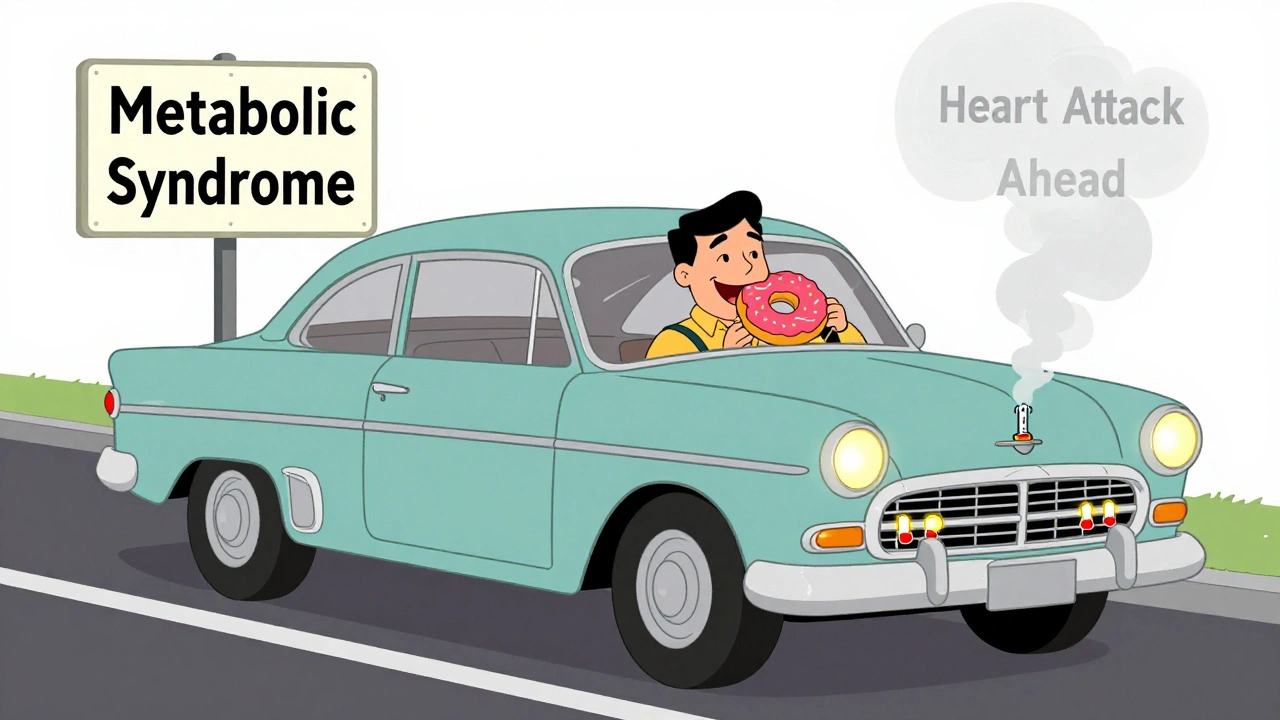
Metabolic Syndrome: What It Is, How It Affects You, and What You Can Do
When you hear metabolic syndrome, a cluster of conditions that increase your risk for heart disease, stroke, and type 2 diabetes. Also known as insulin resistance syndrome, it doesn't mean you have one big problem—it means several smaller ones are working together to put your health at risk. This isn’t just about being overweight. It’s about how your body handles sugar, fat, and blood pressure—and whether your cells are still listening to insulin’s signals.
Think of it like a chain reaction: insulin resistance, when your cells stop responding properly to insulin, causing blood sugar to climb starts the spiral. That pushes your liver to make more fat, which raises triglycerides, a type of fat in your blood that builds up when your body can’t process sugar efficiently. At the same time, your blood pressure creeps up because your blood vessels are under strain, and good cholesterol drops. These five signs—large waistline, high blood pressure, high fasting blood sugar, high triglycerides, low HDL—aren’t random. They’re your body’s warning lights.
You don’t need to be obese to have it. Even people who look normal can have metabolic syndrome if their fat is stored deep inside their abdomen. It’s more common after 40, but it’s showing up in younger people too—especially those with sedentary jobs, poor sleep, or diets full of processed carbs. The good news? It’s reversible. Lifestyle changes aren’t just helpful—they’re the main treatment. Moving more, eating real food, and losing even 5-10% of your body weight can reset your metabolism faster than most medications.
What you’ll find in these posts isn’t theory. It’s what people actually deal with: how metabolic syndrome connects to drug side effects like those from statins or birth control, how insulin resistance plays into thyroid issues after pregnancy, and why some OTC remedies for bloating or gas might mask deeper metabolic problems. You’ll see how formulary changes can impact your access to diabetes meds, how generic drug shortages affect people managing multiple conditions, and why checking your medication labels matters more than ever when your body’s already under stress. This isn’t about quick fixes. It’s about understanding the real connections between your metabolism, your meds, and your daily choices—and how to take back control, one step at a time.