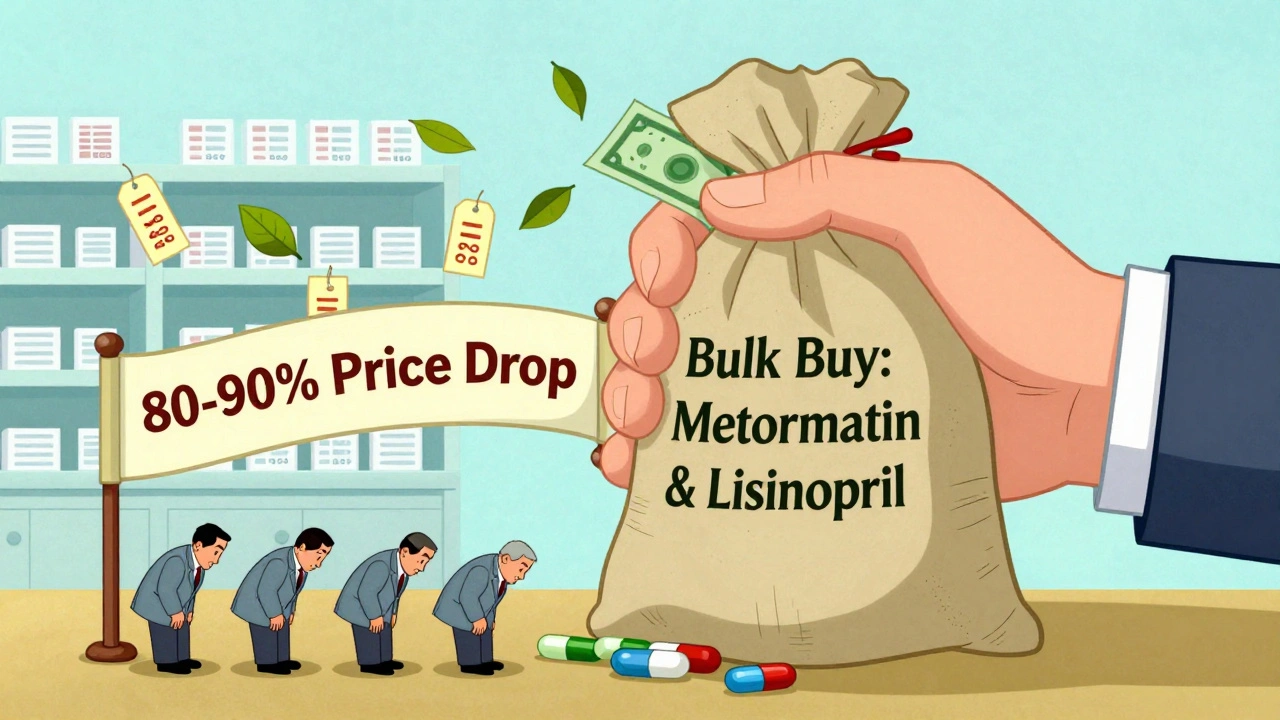
Generic Drug Pricing: What You Really Pay and Why It Matters
When you pick up a generic drug, a lower-cost version of a brand-name medication that meets the same FDA standards for safety and effectiveness. Also known as brand-equivalent medication, it's the backbone of affordable healthcare in the U.S. Most people assume generics are cheap because they’re simple copies. But the real story is more complex—and it’s tied to competition, manufacturing, and corporate tactics that don’t always put patients first.
Generic drug pricing, the cost consumers and insurers pay for non-brand-name medications doesn’t follow normal market rules. When multiple companies make the same drug, prices can drop by 80% or more. But when only one or two manufacturers are left—because others quit due to low profits—prices can jump overnight. That’s not supply and demand. That’s market failure. And it’s why a 30-day supply of a common antibiotic might cost $4 one month and $400 the next. The pharmaceutical competition, the battle between manufacturers to sell the same drug at the lowest price is supposed to keep costs down. But pay-for-delay deals, agreements where brand companies pay generics to stay off the market and antitrust laws, rules meant to block anti-competitive behavior in drug markets are often ignored or weakened.
It’s not just about big corporations. The system is fragile. Most generic drugs are made overseas, and if a single factory has a quality issue, it can trigger nationwide drug shortages, times when a medication isn’t available anywhere, even at high prices. That’s happened with antibiotics, heart meds, and even insulin. When supply breaks, prices rise. Patients delay treatment. Hospitals scramble. And the FDA, which approves every generic through the ANDA process, the streamlined pathway for generic approval without repeating full clinical trials, can’t fix broken supply chains.
What you pay isn’t just a number on a receipt. It’s the result of corporate decisions, regulatory gaps, and global manufacturing risks. Some generics are dirt cheap because competition is fierce. Others cost more than the brand because no one else is making them. And when a drug you rely on vanishes from shelves, it’s not an accident—it’s a system failure.
You’ll find real examples here: how a single manufacturer can control the price of a life-saving drug, why some generics disappear for months, and how the same pill can cost $5 at one pharmacy and $50 at another. You’ll also see how patients and pharmacists are fighting back—with appeals, alternatives, and reports to the FDA. This isn’t theoretical. It’s happening to someone you know. And it’s happening right now.