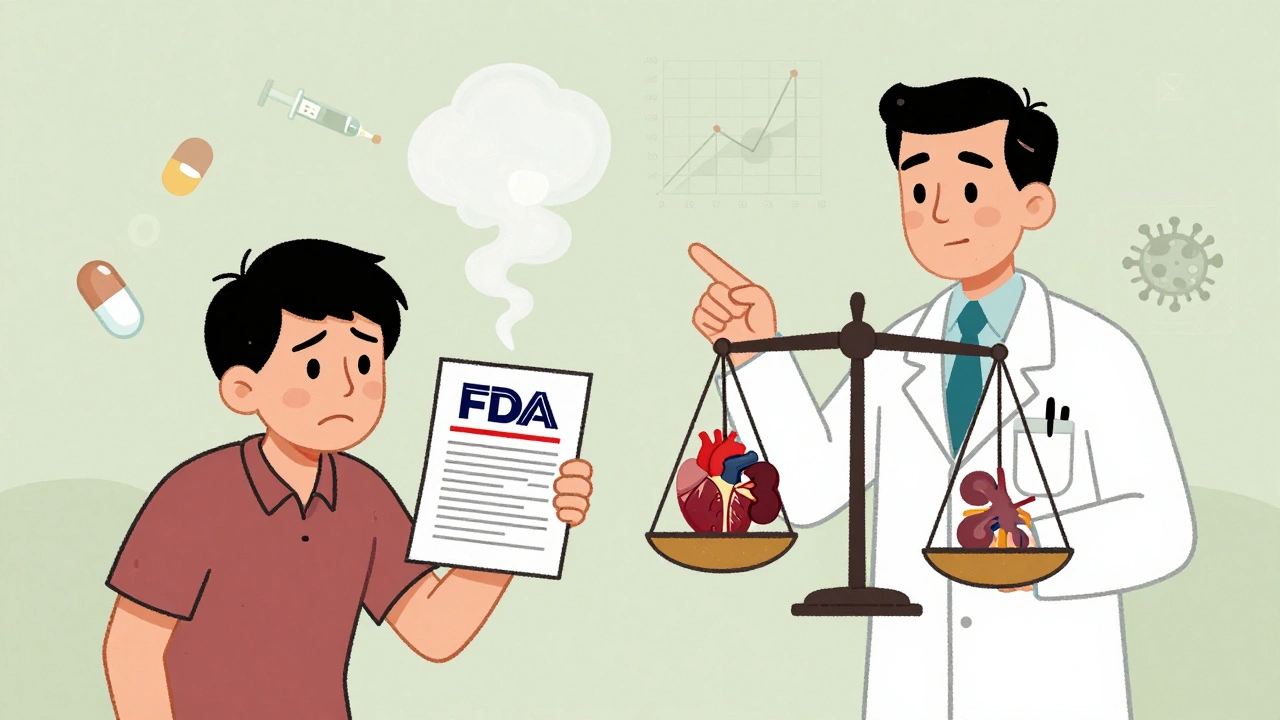
FDA Drug Safety Communication: What You Need to Know About Medication Risks and Reports
When the FDA Drug Safety Communication, official alerts issued by the U.S. Food and Drug Administration to warn about serious medication risks. Also known as FDA safety alerts, these notices are posted when new evidence shows a drug may cause unexpected harm—even if it’s been on the market for years. These aren’t just bureaucratic notices. They’re life-saving updates that change how doctors prescribe and how patients use their meds.
FDA Drug Safety Communications often tie into REMS programs, Risk Evaluation and Mitigation Strategies that require special controls for high-risk drugs like opioids or blood thinners. They also connect directly to MedWatch reporting, the system where patients and doctors submit details about dangerous side effects. If you’ve ever wondered why a drug label suddenly added a new warning, it’s likely because someone like you reported a problem. The FDA doesn’t just guess what’s dangerous—they rely on real-world data from people using these drugs every day.
These communications don’t just target brand-name drugs. They’re just as common for generic drugs, lower-cost versions of brand medications that must meet the same safety and effectiveness standards. A shortage of a generic antibiotic, a rare reaction to a generic antidepressant, or a problem with how a generic pill dissolves—all of these can trigger an FDA Drug Safety Communication. That’s why checking these alerts isn’t just for people on expensive meds. It’s for anyone taking pills, patches, or injections.
Some of these alerts come after years of use. Others pop up fast when a new study links a drug to a serious issue like liver damage, heart rhythm problems, or mental health changes. You’ll see them tied to real cases: a patient who had a seizure after starting a new generic, a batch of pills that didn’t dissolve properly, or a drug that interacted dangerously with a common herb like St. John’s Wort. These aren’t hypotheticals. They’re documented events that led to official warnings.
Knowing how to read these alerts matters. They don’t say "stop this drug." They say "here’s what to watch for, who’s at risk, and when to call your doctor." That’s why posts on this page cover how to spot contraindications on labels, when to report rare side effects, and how REMS programs affect your access to treatment. You’ll find guides on understanding boxed warnings, tracking digoxin levels, and recognizing the difference between a side effect and a true allergy—all tied back to how the FDA tracks and responds to real patient experiences.
Every time you double-check your prescription at the pharmacy, question a new warning on your bottle, or report a strange reaction to your doctor—you’re part of the system that keeps drugs safe. The FDA Drug Safety Communication isn’t a one-way broadcast. It’s a conversation, and your input is the missing piece. Below, you’ll find clear, practical guides on exactly how to stay informed, what to do when something feels off, and how to make sure your voice helps shape safer medicine for everyone.