
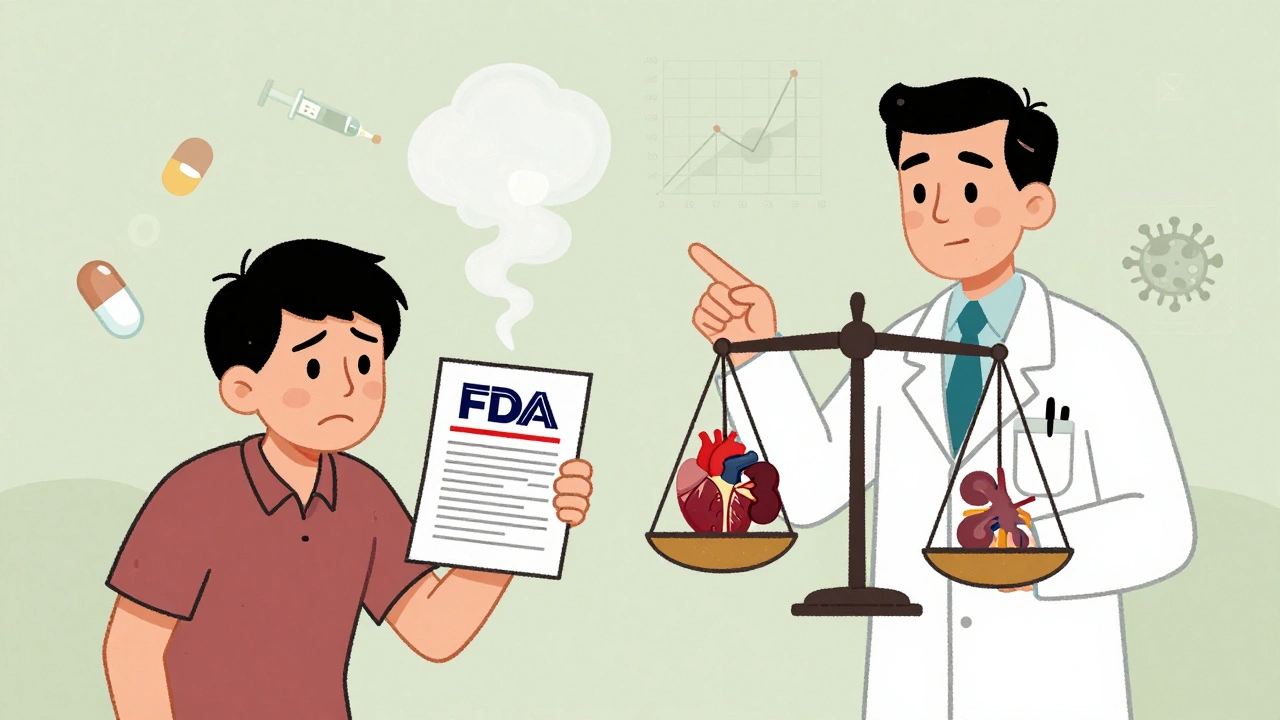
When you see an FDA safety alert about your medication, it’s easy to panic. You might think: ‘This drug is dangerous. I should stop taking it.’ But that’s not always the right move. The FDA doesn’t issue these alerts to scare you. They’re meant to help you and your doctor make smarter decisions - if you know how to read them.
Most people don’t realize that the FDA doesn’t wait for proof of harm before acting. They act on signals. A signal is a pattern in the data that suggests something might be wrong. It’s not a confirmed danger. It’s a red flag that needs more investigation. Think of it like smoke in your house. Smoke doesn’t mean there’s a fire - but you check anyway.
The FDA gets over 1.2 million reports of side effects every year through its MedWatch system. These come from doctors, pharmacists, patients, and drug companies. Most of these reports are incomplete. Some are wrong. Some are coincidences. A patient takes a drug, then gets sick a week later. That doesn’t mean the drug caused it. But when enough similar reports pile up, the FDA takes notice.
Understanding the Difference Between Adverse Events and Adverse Reactions
Not every bad thing that happens after taking a drug is caused by the drug. The FDA makes a clear distinction:
- An adverse event is any unwanted medical occurrence after taking a drug - whether it’s related or not. Headache. Dizziness. Nausea. Even a broken bone if it happened the same week.
- An adverse drug reaction is when there’s a reasonable chance the drug actually caused the problem. This requires analysis. Did more people on the drug get this side effect than people on a placebo? Is the timing consistent? Is it something the drug is known to cause?
For example, if 10 people taking a new blood pressure drug report dizziness, that’s 10 adverse events. But if 100 people on the drug report dizziness, and only 10 on the placebo do, that’s a potential adverse drug reaction. That’s when the FDA starts digging deeper.
What the FDA Actually Says - and What It Doesn’t Say
FDA Drug Safety Communications are often written in cautious, legal language. Here’s what they always say:
- “This is a potential signal.”
- “We are evaluating the data.”
- “This does not mean the drug causes this risk.”
- “Do not stop taking your medication unless your doctor tells you to.”
But here’s what they never say clearly:
- How big is the risk?
- How does it compare to the benefit?
- Is this risk new, or just newly noticed?
A 2022 study in the BMJ found that only 58% of FDA safety alerts clearly state whether the risk is confirmed or just suspected. That’s a problem. Patients hear “FDA warns of heart failure risk” and assume it’s proven. But the truth? The risk might be 1 in 10,000. Or it might be 1 in 100. The difference matters a lot.
Take the 2021 alert about menstrual changes after the COVID-19 vaccine. Thousands of women reported irregular periods. The FDA issued a safety notice. Panic followed. But later analysis showed no increased risk compared to the general population. The signal was real - the danger wasn’t.
How to Read an FDA Alert Like a Pro
Here’s how to cut through the noise in just five steps:
- Check the date. Is this a new finding, or a repeat of something already known? If the drug’s label already warns about this risk, the alert is likely just a reminder.
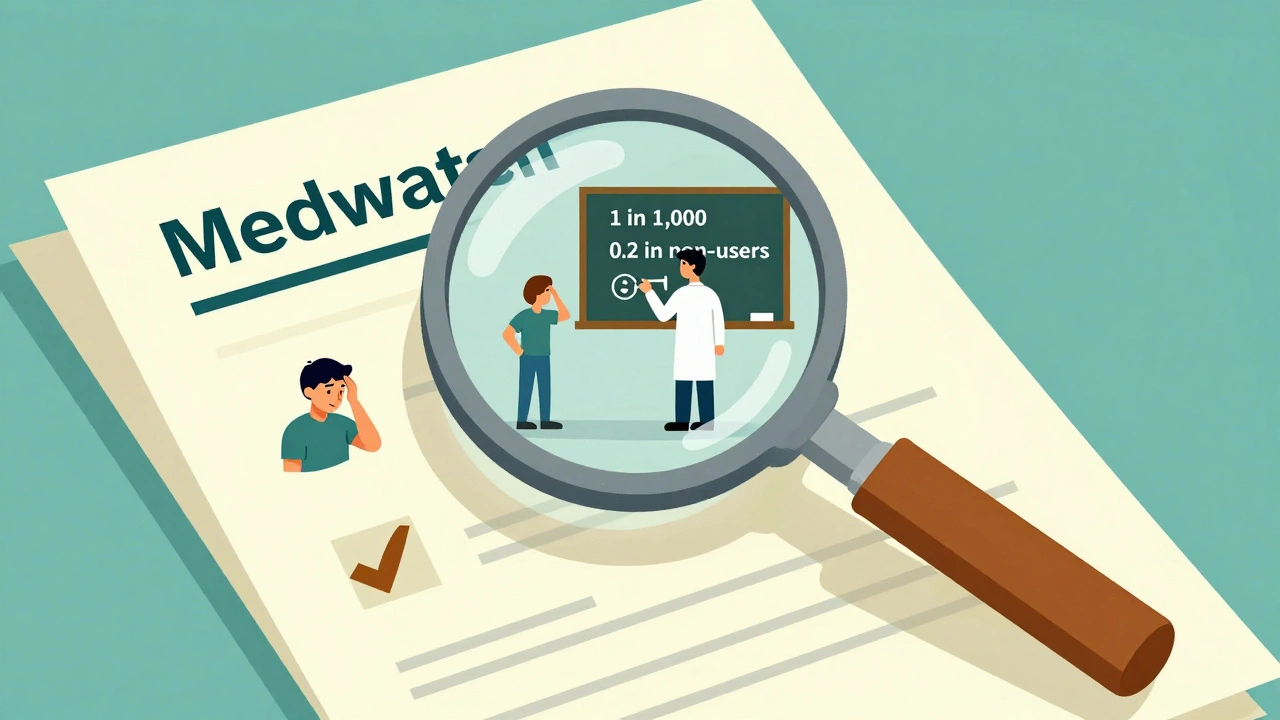
- Look for numbers. Does the alert say “risk increased by X%”? Or does it just say “possible link”? If there are no numbers, it’s a weak signal. Good alerts include rates - like “1 in 1,000 patients” or “0.2 cases per 1,000 patient-years.”
- Ask: Who is at risk? Is this a risk for everyone, or just people with kidney disease, older adults, or pregnant women? The benefit-risk balance changes depending on your health.
- Compare to alternatives. Is this drug the only option? If you have a life-threatening condition and no other treatments work, a higher risk might be acceptable. But if you’re taking it for mild symptoms, even a small risk might not be worth it.
- Don’t stop cold turkey. The FDA almost never tells you to quit immediately. If you stop a drug suddenly, you could face worse consequences - like a stroke, seizure, or rebound depression. Talk to your doctor first.
Real-World Examples That Show the Difference
Let’s look at two real FDA alerts:
Example 1: SGLT2 Inhibitors (like Farxiga, Jardiance)
In August 2022, the FDA warned about Fournier’s gangrene - a rare but deadly infection of the genitals. The alert said: “Estimated incidence: 0.2 cases per 1,000 patient-years. 0.06 in non-users.” That’s a 3x increase. But 0.2 per 1,000 means 99.8% of users won’t get it. The benefit? These drugs lower blood sugar, protect the heart, and reduce kidney damage in people with diabetes. For many, the benefit far outweighs the risk. The FDA didn’t pull the drug. They just added a warning to the label.
Example 2: SSRIs and Pregnancy
In 2023, an alert said SSRIs “may be associated with” birth defects. No numbers. No context. Just a vague warning. Doctors were flooded with anxious patients. But the actual risk? Studies show a 1-2% increase in heart defects - from a baseline of 1%. That’s a tiny rise. Meanwhile, untreated depression during pregnancy carries risks of preterm birth, low birth weight, and postpartum depression. The benefit of treating depression often outweighs the small risk. But without numbers, patients couldn’t weigh it.
What the FDA Is Doing to Fix This
The FDA knows these alerts can cause confusion. That’s why they’re changing.
In January 2024, they released a new framework called Benefit-Risk Assessment in Drug Regulatory Decision-Making. It forces them to use six clear factors:
- How serious is the condition being treated?
- Are there better alternatives?
- How strong is the benefit?
- How common and severe is the risk?
- Can we manage the risk?
- What do patients say?
By Q3 2025, they plan to require all safety alerts to include quantitative risk estimates. That means no more vague warnings. If there’s a risk, you’ll see numbers: “1 in 500,” “0.5% increase,” “compared to 0.2% in non-users.”
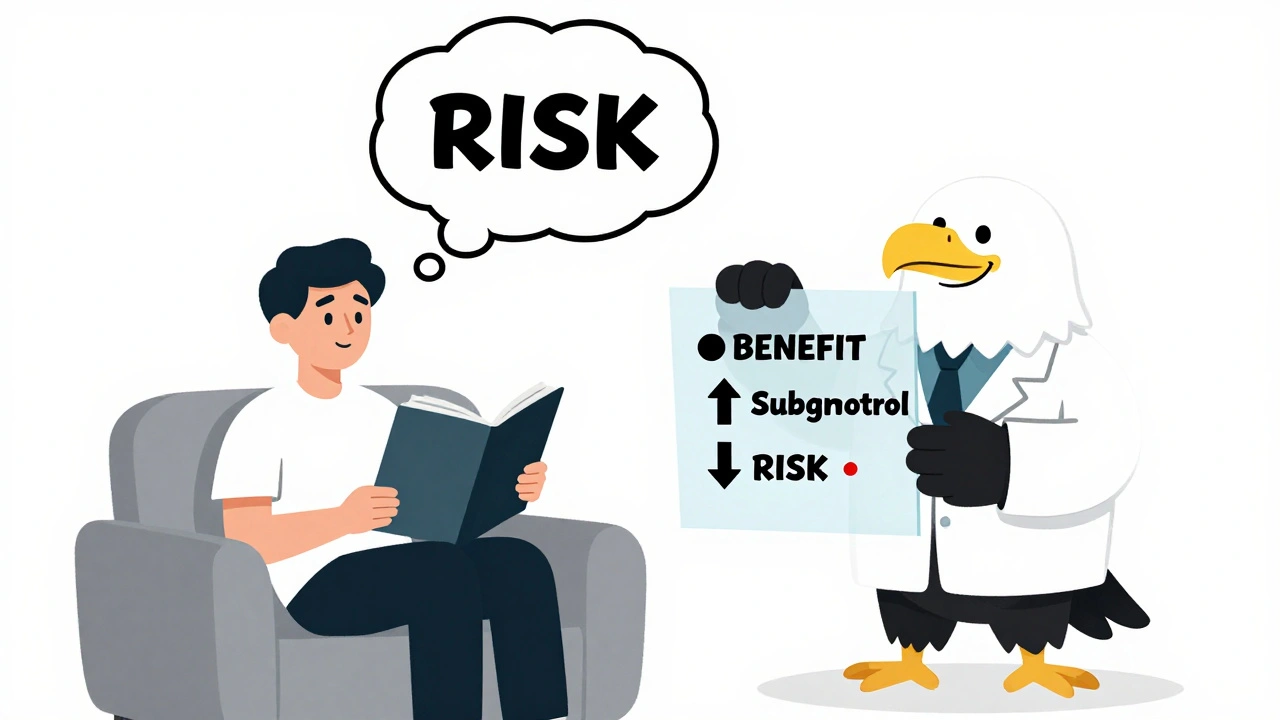
They’re also building a patient-facing tool to visualize risk vs. benefit - like a simple chart showing “If you take this drug, here’s what you gain and what you might lose.”
What You Should Do Right Now
You don’t need to be a doctor to understand these alerts. Here’s your action plan:
- Save the FDA’s Drug Safety Communications page in your bookmarks: fda.gov/drugs/drug-safety
- When you see an alert, ask your pharmacist or doctor: “Is this a confirmed risk or a signal? What’s the actual number?”
- If you’re on a chronic medication, review your list every 6 months. Ask: “Does the benefit still outweigh the risk?”
- Don’t trust headlines. Read the full alert. The FDA’s language is dry, but it’s precise.
The goal isn’t to avoid all risk. It’s to avoid unnecessary risk. Every medicine has trade-offs. The best ones give you more benefit than harm. The FDA’s job is to spot when that balance shifts. Your job is to understand it - so you don’t make decisions based on fear.
When to Call Your Doctor
Not every alert needs a visit. But call your doctor if:
- You’re experiencing a new, serious side effect (chest pain, severe rash, confusion, unexplained bleeding).
- You’re pregnant or planning to become pregnant.
- You have kidney, liver, or heart disease.
- You’re taking multiple drugs - interactions can change the risk.
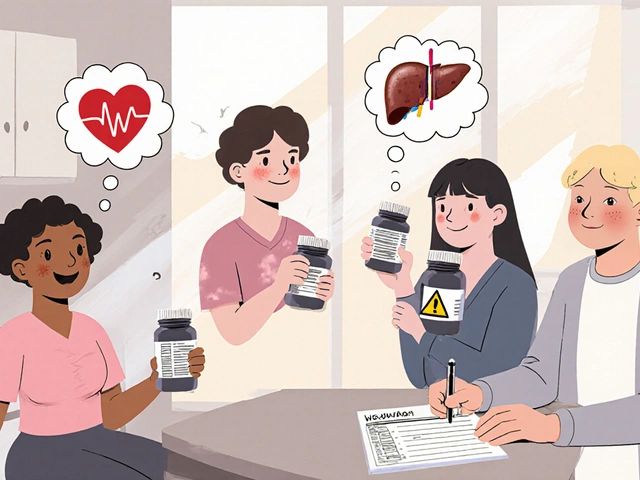
If you’re just worried after reading an alert? Send your doctor the link. Ask: “Does this apply to me?” Most will appreciate you being informed.
Do FDA safety alerts mean I should stop taking my medication?
No, not unless your doctor tells you to. FDA alerts are warnings, not orders. Most are about potential risks that need more study. Stopping a medication suddenly can be more dangerous than the risk itself. Always talk to your doctor before making any changes.
What’s the difference between a potential signal and a confirmed risk?
A potential signal means the FDA noticed a pattern in safety reports that could suggest a new risk - but it’s not proven. A confirmed risk means multiple studies, including controlled trials or large population analyses, show a clear link between the drug and the side effect. Only about 30% of signals become confirmed risks.
Why don’t FDA alerts always include numbers?
They should - but they don’t always. Historically, the FDA has been cautious about publishing numbers without absolute certainty. But starting in 2025, they’re required to include quantitative risk estimates in all new alerts. This change is meant to reduce panic and help patients make better decisions.
Are some drugs riskier than others?
Yes. Drugs for life-threatening conditions - like cancer or severe epilepsy - often carry higher risks because the benefit is so great. A drug that extends life by months might be worth a 5% risk of liver damage. But for a mild condition like occasional headaches, even a 1% risk might be too high. Risk is always judged against benefit.
How often does the FDA update its safety information?
The FDA reviews safety data continuously. They publish new Drug Safety Communications about 4-5 times per month. They also release quarterly reports of potential signals from the FAERS database. Drug manufacturers must report new safety data within 15 days of learning about it.
Can I report a side effect myself?
Yes. Anyone can report a side effect to the FDA through MedWatch at fda.gov/medwatch. Your report helps the FDA spot patterns. Even if you’re not sure the drug caused it, report it. The more data, the better the science.
Final Thought: Risk Is Part of Medicine
There’s no such thing as a risk-free drug. Even aspirin can cause bleeding. The question isn’t whether a drug is safe - it’s whether it’s right for you. The FDA’s job is to watch for changes in that balance. Your job is to understand it. Don’t let fear drive your choices. Use facts. Ask questions. Talk to your doctor. And remember: the goal isn’t to avoid all risk. It’s to live well - with the right medicine, at the right dose, for the right reason.




Comments (13)