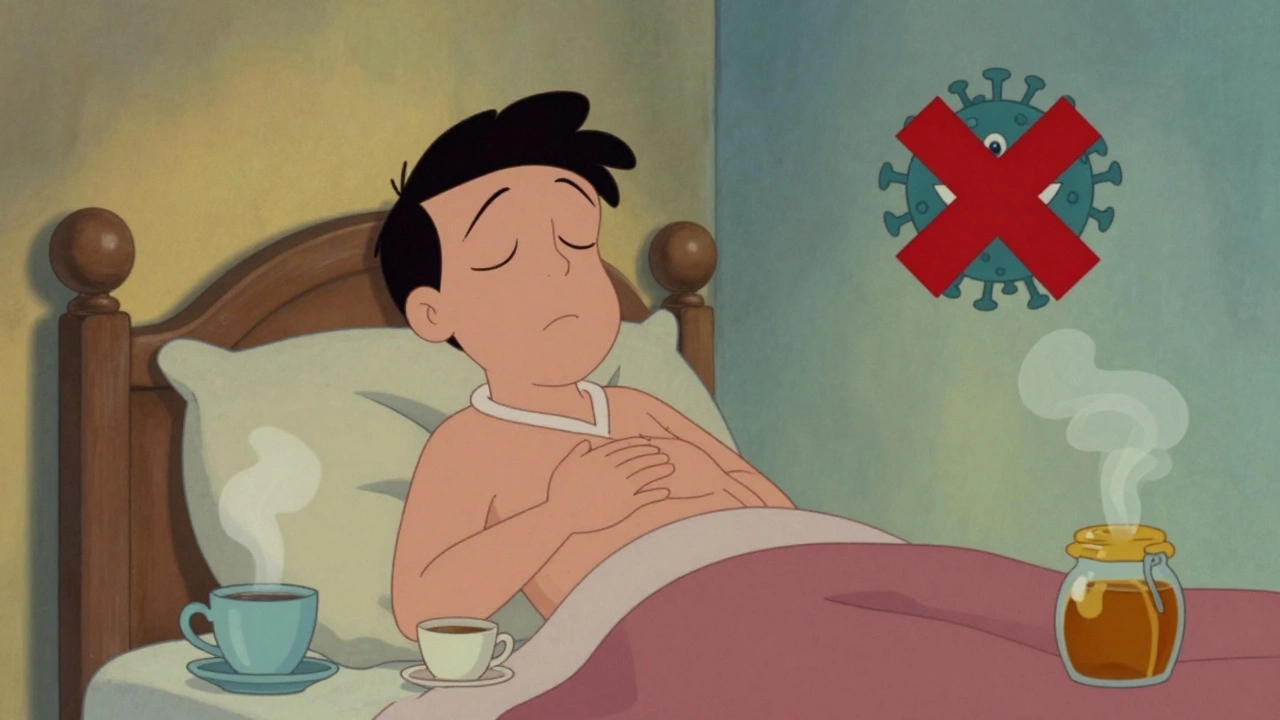
Cough Care: What Works, What Doesn't, and When to Worry
When you're dealing with a cough, a reflex that clears irritants from your airways. Also known as productive cough or dry cough, it's one of the most common reasons people visit a doctor or reach for an OTC bottle. Not every cough needs medicine. Sometimes it's your body doing its job—clearing mucus after a cold, reacting to dry air, or even signaling postnasal drip. But other times, it’s a sign something deeper is going on.
Understanding the difference between a dry cough, a tickle without mucus, often from irritation or allergies and a productive cough, one that brings up phlegm, usually from infection or bronchitis changes everything. Suppressing a productive cough with strong meds can trap mucus in your lungs, making things worse. On the flip side, ignoring a dry, persistent cough might mean missing early signs of asthma, acid reflux, or even a lingering infection. Cough care isn’t about quick fixes—it’s about matching the treatment to the cause.
Many people reach for cough syrups without knowing what’s in them. Dextromethorphan might calm a dry cough, but it won’t touch a chesty one. Guaifenesin helps thin mucus, but only if you’re actually producing it. And don’t forget about non-drug options—honey for nighttime coughs, steam for congestion, or staying hydrated to keep airways moist. These aren’t just home remedies—they’re backed by real evidence. Meanwhile, antibiotics? They don’t work on viral coughs, yet they’re still overprescribed. Knowing what not to do is just as important as knowing what to try.
What you’ll find in the posts below isn’t a list of cough syrups ranked by price. It’s a practical guide to understanding your cough, recognizing when it’s harmless versus when it needs attention, and avoiding common mistakes that make things worse. From how long a cough should last before you get worried, to why some OTC meds are riskier than they seem, to how drug interactions can turn a simple cough into a problem—this collection gives you the facts without the fluff. You’ll learn how to read labels, spot hidden dangers in combination products, and when to skip the pharmacy altogether and let your body heal.