Abdominal Obesity: What It Is, Why It Matters, and How to Take Control
When we talk about abdominal obesity, the dangerous buildup of fat around internal organs, not just under the skin. Also known as visceral fat, it's not just a cosmetic issue—it's a major driver of chronic disease. Unlike subcutaneous fat, which sits just under your skin, visceral fat wraps around your liver, pancreas, and intestines, pumping out hormones and chemicals that mess with your metabolism. This isn't about being "big"—it's about being unhealthy, even if your weight seems normal.
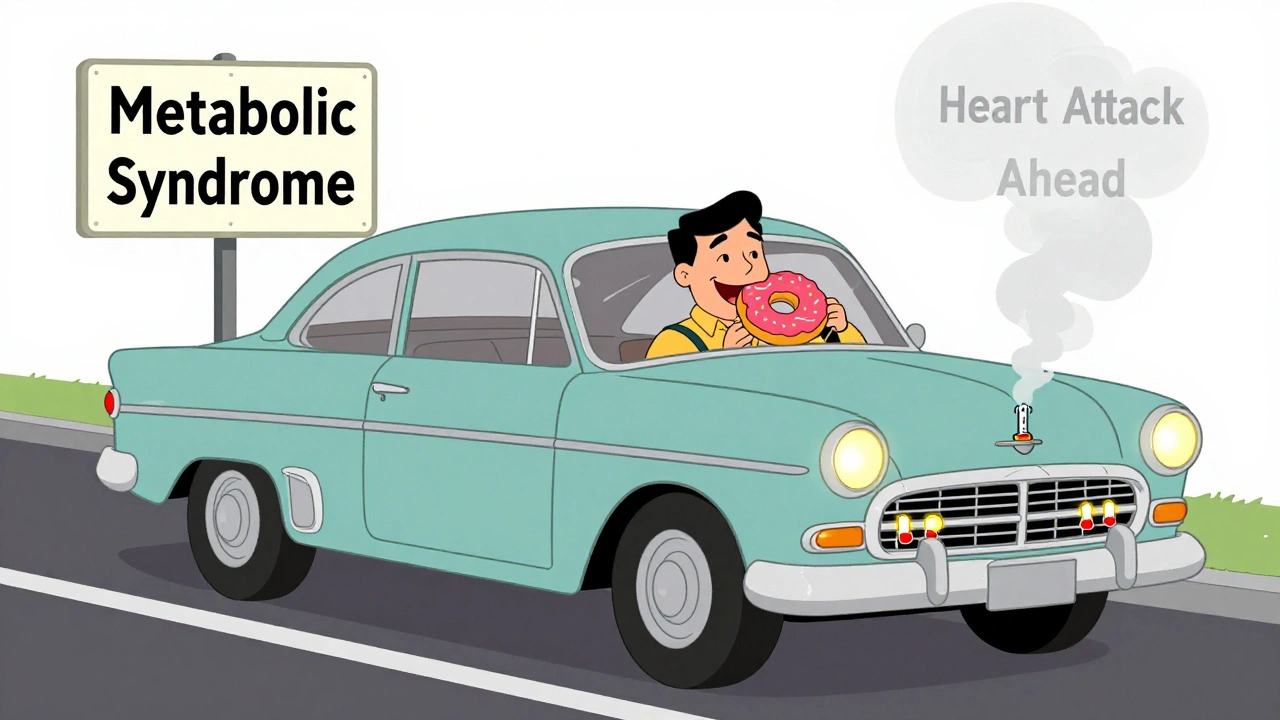
Abdominal obesity often shows up without warning. A waist size over 40 inches for men or 35 inches for women is a clear red flag, but even smaller increases can raise your risk. It’s linked directly to metabolic syndrome, a cluster of conditions including high blood pressure, insulin resistance, and abnormal cholesterol, which together make heart attacks and type 2 diabetes far more likely. And here’s the catch: you can have normal BMI but still carry dangerous levels of visceral fat. That’s why doctors now look at waist measurements, not just the scale.
What causes it? It’s not just eating too much. Chronic stress, lack of sleep, too much sugar, and inactivity all feed visceral fat. Even some medications—like certain steroids or antipsychotics—can make it worse. And unlike fat in other areas, abdominal fat doesn’t just sit there. It actively harms your body, increasing inflammation and making your cells less responsive to insulin. That’s why losing even 5-10% of your belly fat can slash your risk of diabetes and heart disease faster than losing weight elsewhere.
You won’t find magic pills or spot-reduction tricks that work. But you will find real, proven strategies in the posts below: how certain antibiotics might worsen gut health and fuel fat storage, why sleep and stress management matter more than you think, how over-the-counter remedies for bloating can mask deeper issues, and how drug interactions can quietly sabotage your efforts. You’ll also see how formulary changes or insurance rules can block access to the right tools, and why checking your medication labels could be the missing piece in your health plan.
Abdominal obesity isn’t about willpower. It’s about biology, environment, and the hidden impacts of everyday meds and lifestyle choices. The good news? You can reverse it. The posts here give you the facts—not fluff—to start making real progress, one step at a time.