
SSRI Side Effect Comparison Tool
Compare SSRI Side Effects
Select an SSRI to view its side effect profile based on clinical data.
Sexual Dysfunction
The most common serious side effect reported by users.
Management strategies:
- Consider dose reduction
- Add bupropion (Wellbutrin)
- Clinical trials show 67% improvement with sildenafil (Viagra)
Weight Gain
49% of users experience weight gain on SSRIs.
Management strategies:
- Track your food intake
- Focus on protein and fiber
- Regular exercise reduces weight gain by 3.2 kg
Serotonin Syndrome Warning
Medical emergency: Symptoms include fast heartbeat, sweating, tremors, agitation, high fever, confusion, seizures.
Caused by drug interactions with tramadol, certain painkillers, St. John's Wort, or cough syrups.
If you experience these symptoms, go to ER immediately. This occurs in less than 1% of users but can be fatal.
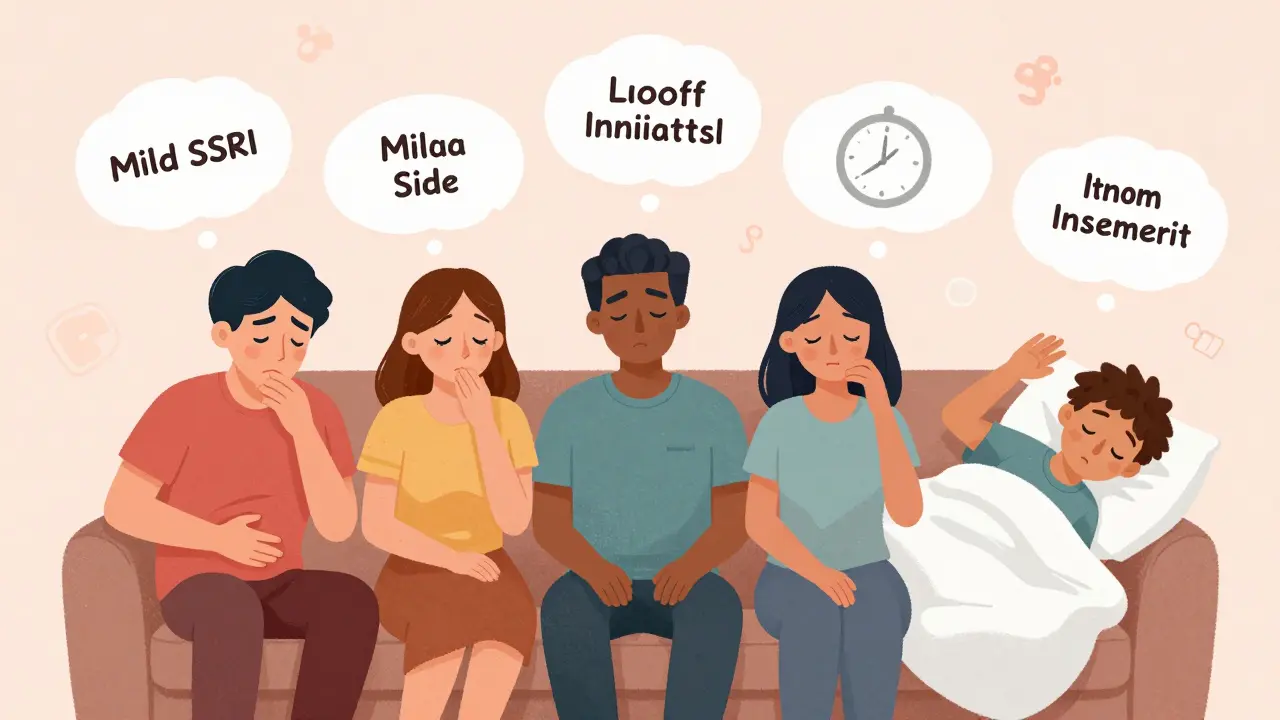
When you start taking an SSRI for depression or anxiety, you’re not just signing up for better mood - you’re signing up for a list of possible side effects. Some are mild, some are annoying, and a few can be serious. The truth? Almost 9 out of 10 people on SSRIs experience at least one side effect. And for more than half, those side effects are bad enough to make them question whether the medication is worth it.
What Are SSRIs, Really?
SSRIs - Selective Serotonin Reuptake Inhibitors - are the most common type of antidepressant in use today. They work by boosting serotonin, a brain chemical tied to mood, sleep, and emotional regulation. Fluoxetine (Prozac), the first SSRI approved in 1987, changed how we treat depression. Unlike older antidepressants, SSRIs don’t slam your heart or knock you out cold. But that doesn’t mean they’re clean. They’re just better at hiding their downsides.Today, sertraline (Zoloft), fluoxetine (Prozac), and escitalopram (Lexapro) lead the pack in prescriptions. In the U.S. alone, over 48 million SSRI prescriptions were filled in 2023. But here’s the catch: people aren’t sticking with them. About 31% quit within three months, mostly because of side effects - not because the drug didn’t work.
Mild Side Effects: The Everyday Annoyances
Most side effects show up in the first week. They’re not dangerous, but they can make life feel heavy.- Nausea - Hits 50% of users. Often worse on an empty stomach. Taking the pill with food cuts it by more than half.
- Drowsiness or insomnia - Some feel wiped out. Others can’t sleep. Timing matters: morning doses help with drowsiness; evening doses can worsen insomnia.
- Dry mouth - Affects 1 in 5. Easy fix: sip water, chew sugar-free gum.
- Headache - Common in the first 10 days. Usually fades on its own.
- Dizziness - Especially with escitalopram. Stand up slowly.
Here’s the good news: 78% of nausea cases vanish within three weeks. Most mild side effects fade as your body adjusts. If they don’t? Talk to your doctor. It’s not weakness - it’s data.
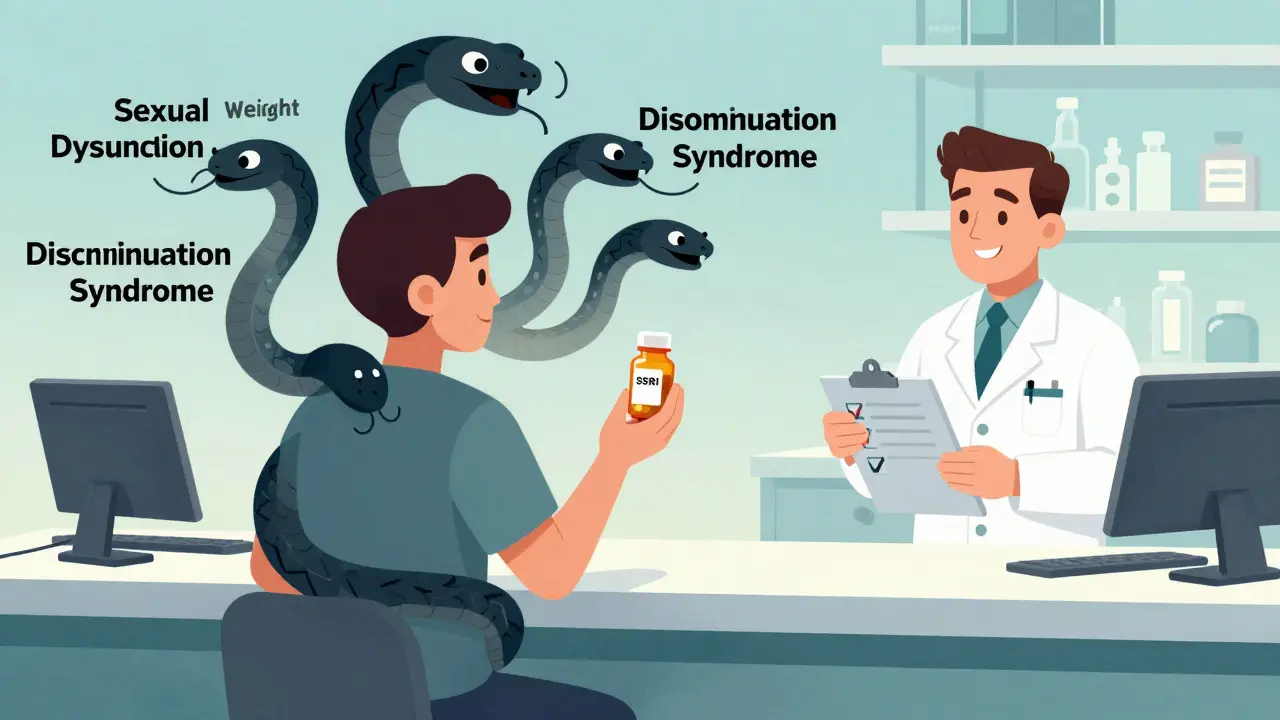
The Big One: Sexual Dysfunction
If you ask people on Reddit’s r/antidepressants what they hate most, the answer is unanimous: sexual side effects.- 56% of users report reduced libido
- 45% struggle with delayed or absent orgasm
- 30% of men report erectile issues
It’s not just temporary. A 2023 survey found 42% of users still had sexual problems after six months. Even after stopping the drug, some say it lingers - a condition called PSSD (Post-SSRI Sexual Dysfunction), though research is still early.
Why does this happen? SSRIs overstimulate certain serotonin receptors in the spinal cord, dampening sexual response. It’s not in your head - it’s in your chemistry.
What can you do?
- Dose reduction - Works for 40% of people. Sometimes less is more.
- Add bupropion (Wellbutrin) - A non-SSRI antidepressant that doesn’t kill libido. Used off-label for this exact reason.
- Sildenafil (Viagra) - In a clinical trial, 67% of men saw improvement.
- Medication holiday - Skipping doses on weekends. Risky. Not recommended without supervision.
Doctors are starting to ask about this upfront. In 2023, 78% of psychiatrists said they now discuss sexual side effects before prescribing. That’s progress.
Weight Gain: It’s Not Just in Your Head
You’re not lazy. You’re not failing. SSRIs can make you gain weight - and it’s not just from eating more.Studies show 49% of users gain weight on SSRIs. Paroxetine (Paxil) is the worst offender. Fluoxetine (Prozac) is better - but still causes gain in 37% of users over time.
Why? SSRIs affect appetite centers in the brain and may slow metabolism. A 2023 meta-analysis found that patients on SSRIs gained an average of 2.8 kg (6.2 lbs) in six months. But here’s the win: those who added structured diet and exercise gained 3.2 kg less than those who didn’t.
It’s not inevitable. Movement matters. Protein intake matters. Sleep matters. Don’t wait until you’ve gained 15 pounds to act.
Serotonin Syndrome: The Rare but Deadly Risk
This isn’t a side effect you ignore. It’s a medical emergency.Serotonin syndrome happens when too much serotonin builds up - usually when SSRIs mix with other drugs. Think: tramadol, certain painkillers, St. John’s Wort, or even some cough syrups.
Symptoms start fast:
- Fast heartbeat
- Sweating
- Tremors
- Agitation
- High fever
- Confusion
- Seizures (in severe cases)
It’s rare - less than 1% of users - but it kills. If you’re on an SSRI and start feeling this way, go to the ER. Now. No waiting. No “I’ll call tomorrow.”
Hyponatremia: Low Sodium, Big Danger
SSRIs are the #1 antidepressant linked to hyponatremia - dangerously low sodium in the blood.Who’s at risk?
- Older adults
- Women
- People with low body weight
- Those taking diuretics or other meds that lower sodium
Symptoms? Confusion, nausea, headache, muscle weakness. In severe cases, seizures or coma. Blood tests can catch it early. If you’re over 65 or on multiple meds, ask your doctor to check your sodium levels at 2 and 6 weeks after starting.
Discontinuation Syndrome: Quitting Too Fast
You feel better. You think, “I’m done.” Then you stop cold. Within days - maybe hours - you feel awful.That’s discontinuation syndrome. It’s not withdrawal like alcohol. It’s your brain adjusting to sudden serotonin loss.
Common symptoms:
- Dizziness
- Brain zaps (electric shock sensations)
- Nausea
- Anxiety
- Insomnia
It’s worst with paroxetine and fluvoxamine - the ones with short half-lives. They leave your system fast. That’s why tapering matters.
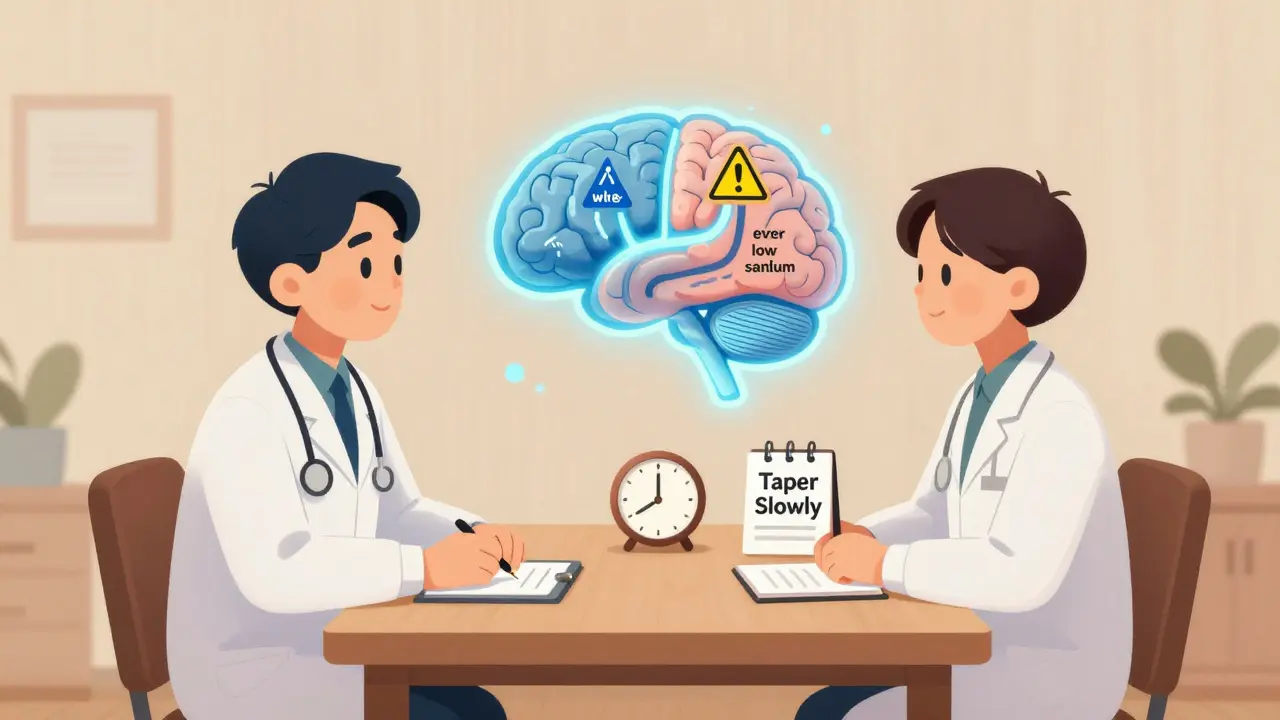
How to quit safely:
- Reduce dose by 10-25% every 2-4 weeks
- Stay on the lowest effective dose for at least 6 months before stopping
- Never quit without medical supervision
Other Rare but Real Risks
- Extrapyramidal symptoms - Muscle stiffness, tremors, restlessness (akathisia). More common in older adults or those with Parkinson’s.
- Metabolic changes - Long-term use may increase insulin resistance. The FDA updated SSRI labels in 2023 to warn about this. If you’re on SSRIs for years, get your blood sugar checked yearly.
- Severe skin reactions - Stevens-Johnson syndrome. Rare. But if you get a rash that spreads, blisters, or peels - go to the hospital.
What Works: Real-World Tips from People Who’ve Been There
A 2023 Psych Central survey of 2,000 SSRI users revealed practical tricks that actually help:- Take it with food - Cuts nausea by 63%.
- Dose in the morning - Prevents sleep disruption.
- Use loperamide (Imodium) - Helps 65% with persistent diarrhea.
- Track your mood and side effects - Apps or journals help you spot patterns. You’ll know if it’s the drug or life stress.
- Ask about pharmacogenetic testing - Some clinics test your genes to predict how you’ll respond. It’s not perfect, but it cuts trial-and-error.
The Bottom Line
SSRIs work. For millions, they’re life-changing. But they’re not magic. They come with trade-offs - some small, some huge.Don’t suffer in silence. If side effects are dragging you down, talk to your doctor. There are alternatives: SNRIs, bupropion, therapy, lifestyle changes. Switching isn’t failure. It’s strategy.
And if you’re just starting out? Ask these three questions before you take that first pill:
- What side effects am I most likely to get?
- How will I know if they’re getting worse?
- What’s the plan if I can’t tolerate this one?
Your mental health matters. So does your physical well-being. You deserve both.
Do all SSRIs cause the same side effects?
No. Each SSRI has a different profile. Paroxetine is more likely to cause weight gain and sexual dysfunction. Fluoxetine has a longer half-life, so withdrawal is milder. Escitalopram causes more dizziness and headaches. Sertraline is often better for appetite. Citalopram is generally the most tolerable. Your doctor can match the drug to your body.
How long do SSRI side effects last?
Most mild side effects - nausea, dizziness, headaches - fade within 2 to 6 weeks. Sexual dysfunction and weight gain can last as long as you’re on the drug. Discontinuation symptoms appear within days of stopping and usually resolve in 1-3 weeks. Some rare effects, like PSSD, may persist after stopping - but evidence is still emerging.
Can I switch from one SSRI to another to avoid side effects?
Yes - and it’s more common than you think. Many patients switch once or twice before finding one that fits. The key is to taper slowly off the first, then start the new one under supervision. It’s not a sign of failure - it’s how personalized treatment works.
Are there SSRIs with fewer side effects?
Citalopram and escitalopram are generally better tolerated. Fluoxetine has fewer sexual side effects than paroxetine. But “fewer” doesn’t mean “none.” Even the best-tolerated SSRI still causes side effects in 60-70% of users. The goal isn’t zero side effects - it’s manageable ones.
Is it safe to take SSRIs long-term?
For many, yes. SSRIs are safe for long-term use if monitored. But long-term use is linked to higher risks of weight gain, metabolic changes, and possibly bone density loss. Regular check-ups - blood sugar, weight, bone health - are essential. Don’t assume it’s fine just because you’ve been on it for years.




Comments (8)