
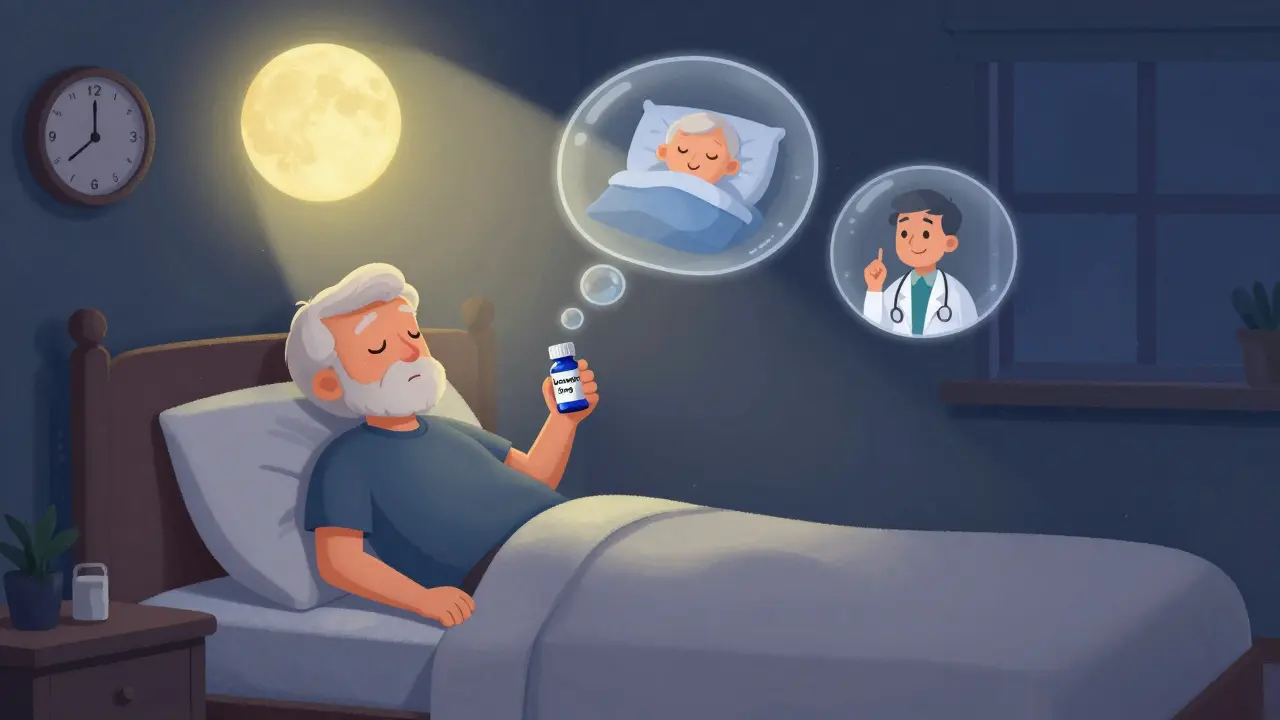
More than one in three adults over 65 struggles with insomnia. It’s not just about tossing and turning-it’s about waking up exhausted, forgetting where you put your keys, or falling in the bathroom because you got up too fast. And too often, doctors reach for pills that might make things worse. The truth? The safest sleep aids for older adults aren’t the ones you’ve heard advertised. They’re quieter, cheaper, and far less dangerous.
Why Older Adults Are at Higher Risk
As we age, our bodies change. Liver and kidney function slow down. That means medications stick around longer, building up in the system. A pill that’s fine for a 40-year-old can leave an 80-year-old groggy, unsteady, or confused the next day. Combine that with other medications-blood pressure pills, pain relievers, antidepressants-and you’ve got a dangerous mix. The American Geriatrics Society found that older adults on sleep meds are 50% more likely to break a hip from a fall. That’s not a small risk. It’s life-changing.The Old Ways Are Outdated
For decades, doctors prescribed benzodiazepines like lorazepam or z-drugs like zolpidem (Ambien) for insomnia. These drugs work fast. But they also carry heavy costs. Studies show they increase the risk of memory problems, confusion, and car crashes. One 2020 study tracked over 10,000 seniors and found that those taking zolpidem were twice as likely to be hospitalized for a fall compared to those who didn’t. And here’s the kicker: many patients didn’t even know these drugs were risky. A 2024 poll showed 63% of older adults prescribed sleep meds were never told about non-drug options.What Actually Works-Safely
The best sleep aid for older adults isn’t a pill at all. It’s Cognitive Behavioral Therapy for Insomnia, or CBT-I. It teaches you how to fix your sleep habits, quiet your mind, and reset your body clock. But if you need something stronger, here are the safest options-backed by data and guidelines.- Low-dose doxepin (3-6 mg): This is a surprise winner. At high doses, it’s an antidepressant. At 3 mg, it’s a gentle sleep maintainer. It doesn’t make you drowsy the next day. In fact, 58% of users report moderate improvement in staying asleep, and only 12% feel groggy. It’s been FDA-approved for sleep maintenance insomnia since 2010. And at $15 a month, it’s one of the most affordable options.
- Ramelteon (8 mg): This mimics your body’s natural melatonin signal. It helps you fall asleep faster but doesn’t keep you asleep. That’s fine-many older adults just need help getting to sleep. It has almost no risk of dependence, no next-day fog, and no fall risk. Studies show it reduces sleep onset time by about 10 minutes. Not flashy, but safe.
- Lemborexant (5-10 mg): This newer drug blocks orexin, the brain chemical that keeps you awake. It’s like turning down the volume on your brain’s alert system. Clinical trials in seniors show it adds over 40 minutes of sleep per night and cuts nighttime wake-ups by more than 20 minutes. Users report feeling more “natural” sleep-no hangover, no weird dreams. The downside? Cost. Without insurance, it’s around $750 a month.
What to Avoid
Some drugs still get prescribed-even though they shouldn’t. Here’s the short list:- Benzodiazepines (e.g., lorazepam, temazepam): High risk of falls, memory loss, and dependence. Avoid.
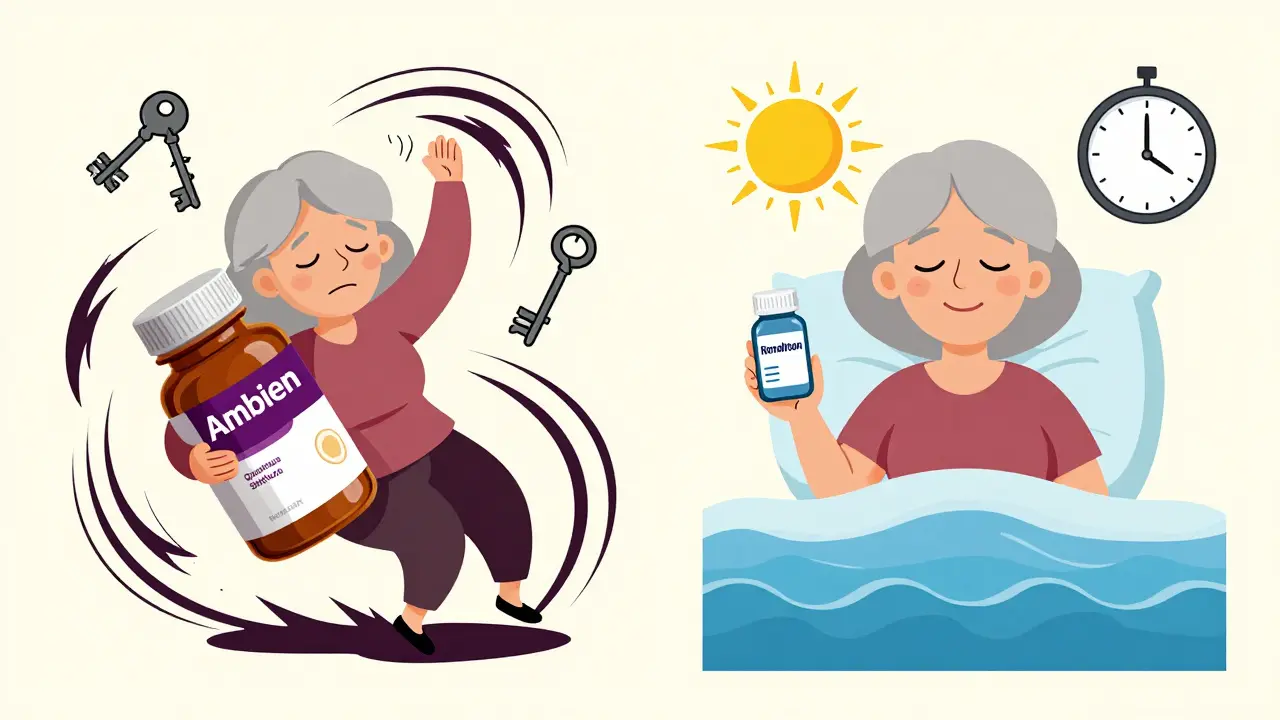
- Zolpidem, eszopiclone, zaleplon (Ambien, Lunesta, Sonata): These “z-drugs” are still widely used, but studies show they increase fall risk by 50% in older adults. Even low doses can cause sleepwalking or confusion.
- Antihistamines (e.g., diphenhydramine in Benadryl or sleep aids): These are sold as “natural” sleep aids, but they’re anticholinergic drugs. They block brain chemicals needed for memory and focus. Long-term use is linked to higher dementia risk.
Real Stories, Real Results
On Reddit, a 68-year-old man named u/Senior_Sleeper_65 wrote: “Doxepin 3mg gave me 5 extra hours of solid sleep without the hangover I got from Ambien-wish my doctor had tried this first.” That’s not an outlier. A 2023 review of 1,247 patient reports on Drugs.com found doxepin had a 7.2/10 average rating. Zolpidem? Only 5.8/10, with over a third reporting next-day drowsiness. Another user on PatientsLikeMe, 72, tried lemborexant after years of bad sleep. “First week, I got dizzy. Second week, it vanished. Now I sleep like I did in my 40s.” But she added, “I had to fight my insurance for coverage. They wanted me to try the cheap stuff first.” That’s common. Many insurers make you try doxepin or melatonin before approving newer, pricier drugs.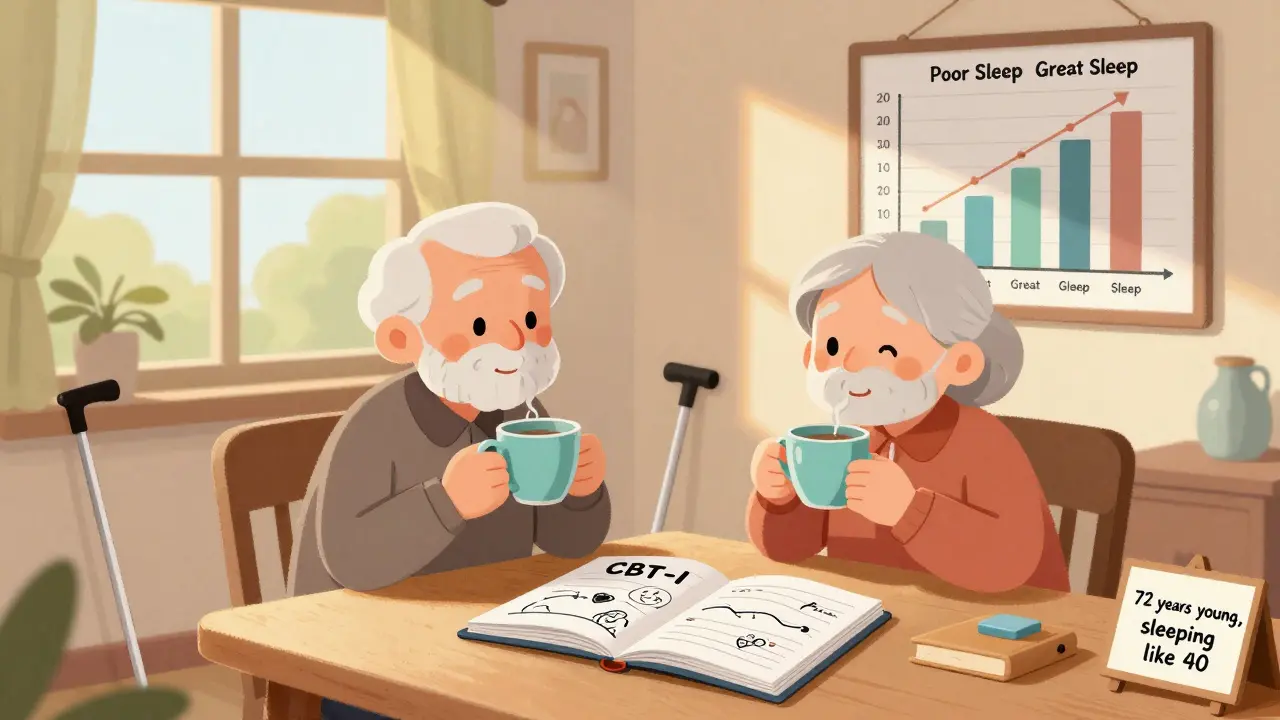
How to Talk to Your Doctor
If you’re on a sleep med right now, don’t stop suddenly. Talk to your doctor. Ask:- “Is this medication still right for me?”
- “Have you checked my fall risk?”
- “Can we try CBT-I or low-dose doxepin first?”
- “What’s the plan if this doesn’t work?”
What You Can Do Today
You don’t have to wait for a doctor’s appointment to start improving your sleep:- Get sunlight within 30 minutes of waking. It resets your internal clock.
- Avoid caffeine after 2 p.m.
- Keep your bedroom cool (around 65°F), dark, and quiet.
- Get up at the same time every day-even on weekends.
- If you can’t sleep after 20 minutes, get up. Read a book in dim light. Don’t lie there stressing.
The Bottom Line
Sleep matters. But not all sleep meds are created equal. For older adults, the goal isn’t to fall asleep faster-it’s to wake up safe. Low-dose doxepin and ramelteon offer real help with almost no risk. Lemborexant is powerful, but expensive. Benzodiazepines and z-drugs? Avoid them unless there’s no other option. The best treatment isn’t always the newest or the loudest. Sometimes, it’s the quietest one-the one that’s been around for years, priced like a generic, and quietly keeping seniors safe.What’s the safest sleep medication for older adults?
The safest options are low-dose doxepin (3-6 mg) and ramelteon (8 mg). Doxepin helps you stay asleep with minimal next-day drowsiness and a very low fall risk. Ramelteon helps you fall asleep faster without causing dependence or confusion. Both are approved by the American Geriatrics Society for use in older adults.
Why are benzodiazepines dangerous for seniors?
Benzodiazepines like lorazepam and temazepam increase the risk of falls, hip fractures, confusion, and memory loss in older adults. Studies show they raise fall risk by 50% and are linked to higher dementia rates over time. The American Geriatrics Society explicitly advises against them as first-line treatment for insomnia in seniors.
Can I take melatonin instead of a prescription?
Yes, but only use controlled-release melatonin (2 mg), not the high-dose versions sold over the counter. Regular melatonin supplements often contain much more than labeled-some have up to 10 times the dose. Controlled-release versions help you stay asleep longer and are safer than z-drugs or benzodiazepines. They’re not as strong as doxepin, but they’re very low risk.
Is CBT-I really better than pills?
Yes. The American Academy of Sleep Medicine recommends CBT-I as the first-line treatment for insomnia in older adults. It works as well as-or better than-medication in the long term, without side effects. It teaches you how to sleep naturally, so you don’t need pills forever. Many insurance plans now cover it.
How long should I take sleep medication?
Most sleep meds should be used for only 4-5 weeks at a time. Long-term use increases dependence and side effects. Low-dose doxepin is an exception-it can be used safely for months or even years under doctor supervision. Always have a plan to taper off, even if you feel better.
Why is lemborexant so expensive?
Lemborexant is a newer drug with patent protection, so it’s priced like a brand-name medication-around $750 a month without insurance. Generic alternatives like doxepin cost $15. Many insurers require you to try cheaper options first. Some patient assistance programs may help reduce the cost.
Can sleep meds cause dementia?
Long-term use of anticholinergic drugs-including diphenhydramine (Benadryl), some tricyclic antidepressants, and benzodiazepines-is linked to higher dementia risk. Doxepin and ramelteon are not anticholinergic and show no such link. Avoiding these risky drugs may protect your brain as you age.
What if my doctor won’t stop my current sleep med?
Ask for a referral to a sleep specialist or geriatrician. Many primary care doctors aren’t trained in the latest guidelines. You can also request a sleep diary review or a fall risk assessment. If you’re on a z-drug or benzodiazepine, ask for a gradual taper plan-never quit cold turkey. Safety comes first.



Comments (13)