

Rosacea isn't just a blush that won't go away. It's a persistent, often misunderstood skin condition that turns everyday moments-drinking coffee, walking outside, or feeling stressed-into triggers for burning redness, visible veins, and angry bumps. For millions, it’s not a cosmetic issue. It’s a daily battle with their own reflection. And while there’s no cure, effective treatment exists-especially when you understand how topical antibiotics work and what they can-and can’t-do.
What Rosacea Really Looks Like
Rosacea doesn’t show up overnight. It creeps in. First, it’s just occasional flushing after spicy food or a hot shower. Then, the redness lingers longer. Soon, tiny blood vessels become visible on the nose and cheeks. Then come the pimples-not acne, but papules and pustules that look like them but don’t respond to typical acne treatments. This is papulopustular rosacea, the most common inflammatory form, affecting about half of all rosacea patients. The face becomes the battlefield. The central zone-cheeks, nose, forehead, chin-gets the worst of it. The redness isn’t like a sunburn that fades. It’s deeper, more stubborn. Studies using standardized photography show this redness is 15-25% more intense than normal skin. And for 75% of people, facial flushing is the very first sign. It’s not emotional blushing. It’s triggered by heat, alcohol, UV light, even stress. Episodes can last minutes… or hours. And it’s not just skin. About half of those with rosacea also deal with eye symptoms: dryness, grittiness, light sensitivity. It’s called ocular rosacea. Many don’t connect the dots until their eye doctor mentions it.Why Topical Antibiotics? It’s Not About Bacteria
You might think antibiotics mean infection. But in rosacea, it’s not about killing germs. It’s about calming inflammation. The skin’s immune system goes haywire. Tiny mites called Demodex, which live harmlessly on most people’s skin, multiply in rosacea-prone skin and trigger an immune response. Blood vessels dilate too easily. Inflammatory chemicals flood the area. That’s where topical antibiotics come in. They don’t work like oral antibiotics for a throat infection. They’re applied directly to the skin, where they reduce inflammation, suppress immune overactivity, and help control Demodex mites. They’re not magic. But they’re one of the most proven tools we have for reducing bumps and pimples.The Top Three Topical Antibiotics-Compared
Not all topical treatments are the same. Three stand out, backed by decades of research and real-world use.| Treatment | Active Ingredient | Formulation | Time to Notice Improvement | Reduction in Lesions | Common Side Effects |
|---|---|---|---|---|---|
| Metronidazole | 0.75% gel | Gel, cream | 4-8 weeks | 60-70% | Burning (15-25%), dryness (10-20%) |
| Ivermectin | 1% cream | Cream | 4-6 weeks | 76% | Burning (18-22%), dryness (12-15%) |
| Azelaic Acid | 15% gel | Gel | 8-15 weeks | 68-73% | Burning (20-30%), stinging, redness |
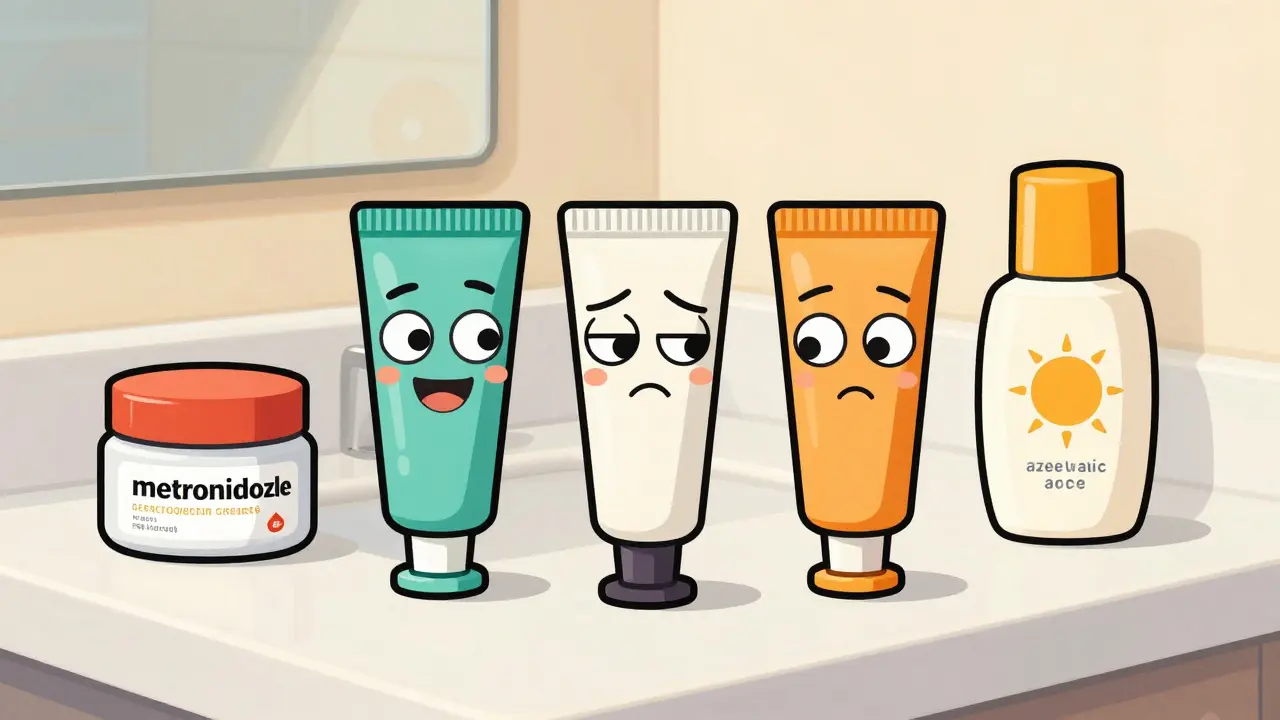
Metronidazole has been the go-to since the 1980s. It’s affordable, gentle, and works well for sensitive skin. But it’s slower. Ivermectin, approved in 2014, delivers faster, stronger results. In a major 2019 study, it outperformed metronidazole by 22% in lesion reduction. It also targets Demodex mites directly, which may explain why it works better for some. Azelaic acid isn’t an antibiotic, but it’s often grouped with them because it’s used for the same symptoms. It reduces redness and bumps without antibacterial action-instead, it calms inflammation and normalizes skin cell turnover.
Most dermatologists now recommend ivermectin as first-line for moderate to severe inflammatory rosacea. But if your skin is easily irritated, metronidazole might be the better starting point. Azelaic acid is a solid alternative, especially if you’re dealing with post-inflammatory dark spots too.
What These Treatments Won’t Fix
Here’s the hard truth: topical antibiotics don’t stop flushing. They don’t make persistent redness vanish. They don’t shrink visible blood vessels. That’s a different battle. If your main problem is redness that won’t fade, or if your face turns bright red at the slightest trigger, you’ll need more. Brimonidine gel (Mirvaso) temporarily tightens blood vessels to reduce redness for up to 12 hours. Oxymetazoline cream (Rhofade) does something similar. Neither treats bumps or pimples. But used together with topical antibiotics, they cover more ground. Think of it like this: antibiotics clean up the bumps. Redness reducers calm the background glow. Sunscreen prevents it from getting worse. You need all three.Real Results-And Real Challenges
People report real change. One Reddit user wrote: “After 8 weeks of ivermectin, my bumps dropped 80%. I finally feel like I can leave the house without makeup.” That’s not rare. In surveys, 68% of users say topical treatments help. But many quit. Why? Because results take time. Most don’t see improvement until 4-6 weeks. Some wait 12 weeks. And in the first few days? Skin can get worse. Burning. Flaking. Redness flaring up. That’s not failure-it’s adjustment. A 2023 study found only 40-50% of patients stick with treatment past three months. The rest give up before it works. Cost is another barrier. Without insurance, these creams can run $350 a year. And while some brands offer savings cards, not everyone knows to ask.How to Use Them Right
Getting results isn’t just about choosing the right cream. It’s about how you use it.- Use a pea-sized amount for your entire face. More doesn’t mean faster.
- Apply to clean, dry skin. Wait 15 minutes after washing your face.
- Don’t layer it under heavy moisturizers or makeup right away. Let it absorb.
- Start slow. If your skin is sensitive, try applying every other day for the first week.
- Always use sunscreen. Mineral sunscreens with zinc oxide (10-20%) are best. Chemical sunscreens can sting.
Many dermatologists recommend a patch test first. Apply a tiny bit to your jawline for three days. If no burning or rash appears, move to your whole face.

The Bigger Picture: Skincare and Triggers
Topical antibiotics won’t work if you keep triggering the flare-ups. That’s why treatment isn’t just about the cream.- Avoid hot drinks above 60°C (140°F). That includes coffee, tea, soup.
- Limit alcohol, especially red wine. Even one glass can trigger flushing.
- Wear broad-spectrum SPF 30+ every day. UV exposure is the #1 trigger.
- Use gentle, fragrance-free cleansers. Look for pH 5.5-7.0 formulas.
- Moisturize with ceramides. They repair your skin barrier and reduce irritation.
- Keep a trigger diary. Note what you ate, where you were, how you felt before each flare. Patterns emerge.
One patient tracked her flares for a month and realized every breakout happened after she used a new face wash. She switched brands-and saw immediate improvement.
What’s Next?
The rosacea market is growing fast. New treatments are on the horizon. Galderma, the maker of ivermectin, is testing a combo cream with ivermectin and hydrocortisone. Early results show 85% lesion reduction-better than either alone. But for now, the basics still win. Topical antibiotics are safe, effective, and well-studied. They’re not perfect. But they’re the best tool we have for clearing up the bumps and pimples that make rosacea so visible-and so distressing.If you’ve been struggling with redness and bumps, don’t assume it’s acne. Don’t wait for it to get worse. See a dermatologist. Get diagnosed. Start treatment. And remember: patience matters. Improvement doesn’t come in days. It comes in weeks. But when it does? It changes everything.
Can topical antibiotics cure rosacea?
No, topical antibiotics cannot cure rosacea. Rosacea is a chronic condition with no known cure. These treatments manage symptoms-especially inflammatory bumps and pimples-but they don’t eliminate the underlying causes like vascular sensitivity or immune overreaction. Most people need ongoing treatment to keep symptoms under control.
Why does my skin get worse before it gets better with topical antibiotics?
It’s common to experience initial irritation, burning, or increased redness in the first 1-2 weeks. This isn’t an allergic reaction-it’s your skin adjusting. The medication is calming inflammation, but in the process, it can temporarily disrupt the skin barrier. Most people see improvement after 3-4 weeks. If irritation is severe or lasts longer than 4 weeks, talk to your dermatologist about switching formulations or reducing frequency.
Can I use makeup while on topical antibiotics?
Yes, but wait at least 15 minutes after applying your medication before putting on makeup. Use mineral-based, non-comedogenic, fragrance-free products. Avoid heavy foundations or those with alcohol, menthol, or witch hazel-they can irritate rosacea-prone skin. Look for labels that say "hypoallergenic" and "dermatologist-tested."
Is ivermectin better than metronidazole?
For most people with moderate to severe inflammatory rosacea, yes. Ivermectin reduces lesions by 76% on average, compared to 60-70% with metronidazole. It also works faster and targets Demodex mites, which play a role in flare-ups. But metronidazole is gentler on sensitive skin and cheaper. If you’re new to treatment or have very reactive skin, starting with metronidazole is often recommended.
How long do I need to use topical antibiotics?
Most people use them long-term, even after symptoms improve. Stopping too soon often leads to a flare-up. Many dermatologists recommend continuing treatment indefinitely at a lower frequency-like every other day-once the skin is clear. Think of it like brushing your teeth: you don’t stop just because your gums aren’t bleeding anymore.
Next Steps
If you think you have rosacea:- See a board-certified dermatologist. Don’t rely on online advice or over-the-counter acne products.
- Ask about trigger tracking. Keep a simple journal for two weeks: what you ate, drank, did, and how your skin reacted.
- Start with gentle skincare: fragrance-free cleanser, ceramide moisturizer, mineral sunscreen.
- Don’t rush. Give any new treatment at least 8 weeks before judging its effectiveness.
- Ask about financial assistance programs. Many drugmakers offer coupons or patient support plans.
Rosacea doesn’t define you. But managing it takes knowledge, consistency, and the right tools. You’re not alone-and you don’t have to live with constant redness and embarrassment. The treatments work. You just have to stick with them.





Comments (11)