
Statin Rechallenge Success Calculator
How likely is your statin rechallenge to succeed?
This tool uses the evidence-based Statin-Associated Muscle Symptom Clinical Index (SAMS-CI) to predict your success rate. Based on a 2022 survey, 60-80% of patients who try rechallenge with a structured plan succeed. The key is identifying whether your symptoms are truly statin-related.
More than 1 in 4 people who stop statins because of muscle pain could safely take them again-if they follow the right steps. That’s not a guess. It’s what the data shows. Yet, most patients are never offered a second try. They’re told, “You’re intolerant,” and handed a prescription for something far more expensive, with less long-term proof it works. But statins are still the most powerful, proven tool we have to prevent heart attacks and strokes. If you’ve had muscle pain on a statin, you don’t have to give up on them forever. Here’s how to safely go back.
What Really Counts as Statin Myopathy?
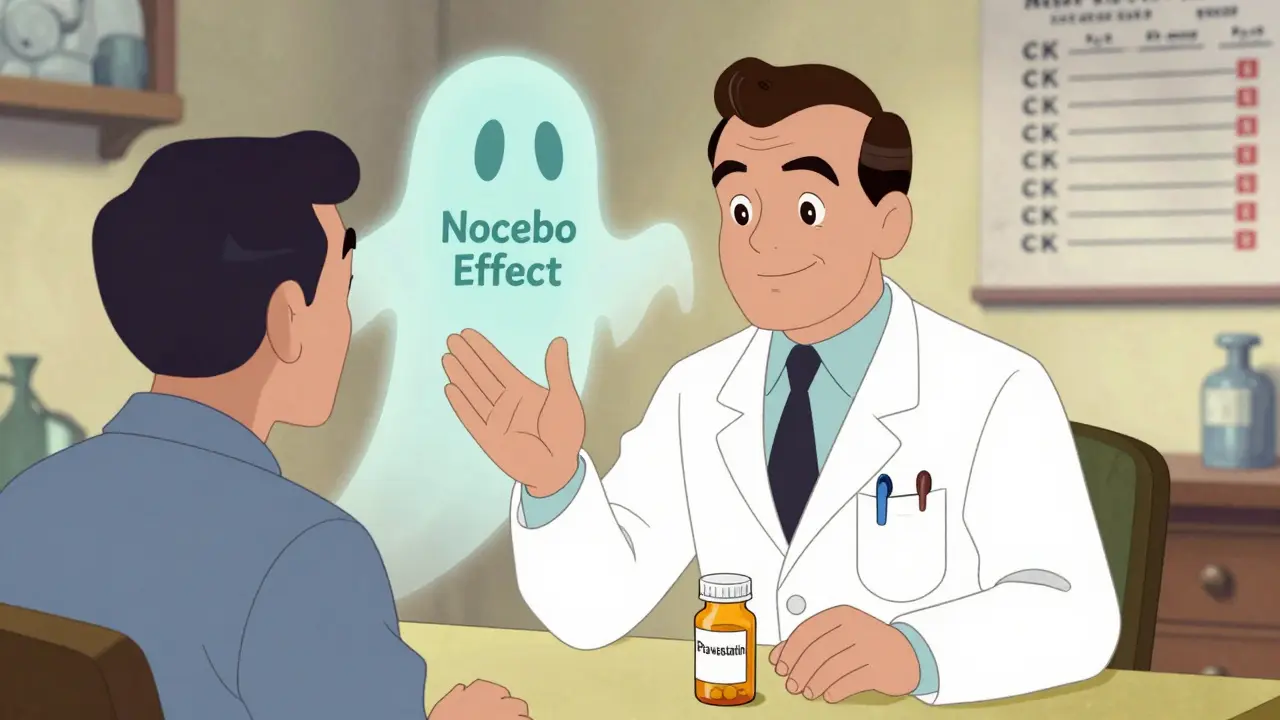
Not every ache or cramp is caused by statins. The term “statin-associated muscle symptoms” (SAMS) was created to describe muscle pain, weakness, or cramps that happen while taking a statin-but don’t always come from the drug itself. In fact, when researchers compared people taking statins to those taking dummy pills in large studies, the muscle pain rates were almost identical: about 5% in both groups. That means most people who think their pain is from the statin might be experiencing the nocebo effect-where expecting side effects makes you feel them, even if the drug isn’t the cause.
True statin myopathy is rare. Serious cases like rhabdomyolysis-where muscle breaks down so badly it can damage your kidneys-happen in fewer than 1 in 1,000 people. The real red flags are: muscle pain that’s severe, persistent, and comes with dark urine or a creatine kinase (CK) level more than 40 times above normal. If your CK is normal and your pain is mild, it’s unlikely the statin is to blame. But if your doctor doesn’t check your CK or ask about your symptoms in detail, you’re not getting the full picture.
When to Try Again
Don’t rush back. If you stopped a statin because of muscle pain, wait at least 2 to 4 weeks. That’s when most people’s symptoms naturally improve. Jumping back too soon makes it impossible to tell if the pain is from the drug or just lingering from before. Your doctor should check your CK level again before restarting-this isn’t optional. If it’s still high, wait longer. If it’s normal and your pain is gone, you’re ready to try again.
And don’t assume you have to go back to the same statin. Many people think if one statin hurt, they’re all the same. That’s not true. Statins vary widely in how likely they are to cause muscle problems. Simvastatin and atorvastatin at high doses are the biggest culprits. Pravastatin and fluvastatin? Much lower risk. Switching to one of those can make all the difference.
The MEDS Approach: A Proven Roadmap
The International Lipid Expert Panel created a simple, evidence-based plan called MEDS. It’s not fancy, but it works:
- Minimize time off statins: If you’re at high risk for heart disease-like if you’ve had a heart attack or have diabetes-staying off statins for months is dangerous. Plaque in your arteries can become unstable. Get back on as soon as it’s safe.
- Educate yourself: Understand the difference between true side effects and the nocebo effect. Many people feel better just knowing the pain might not be from the drug.
- Diet and supplements: Some people benefit from reducing their statin dose by using ezetimibe (a non-statin pill that lowers LDL) or taking coenzyme Q10, though evidence for CoQ10 is mixed. Still, combining a low-dose statin with ezetimibe can give you the same LDL-lowering power with less muscle risk.
- Systematic monitoring: Check your symptoms and CK level 2 to 4 weeks after restarting. If you feel fine and your CK is normal, keep going. If pain returns, stop and reassess.
Rechallenge Strategies That Work
Here are the top five proven ways to get back on a statin after muscle pain:
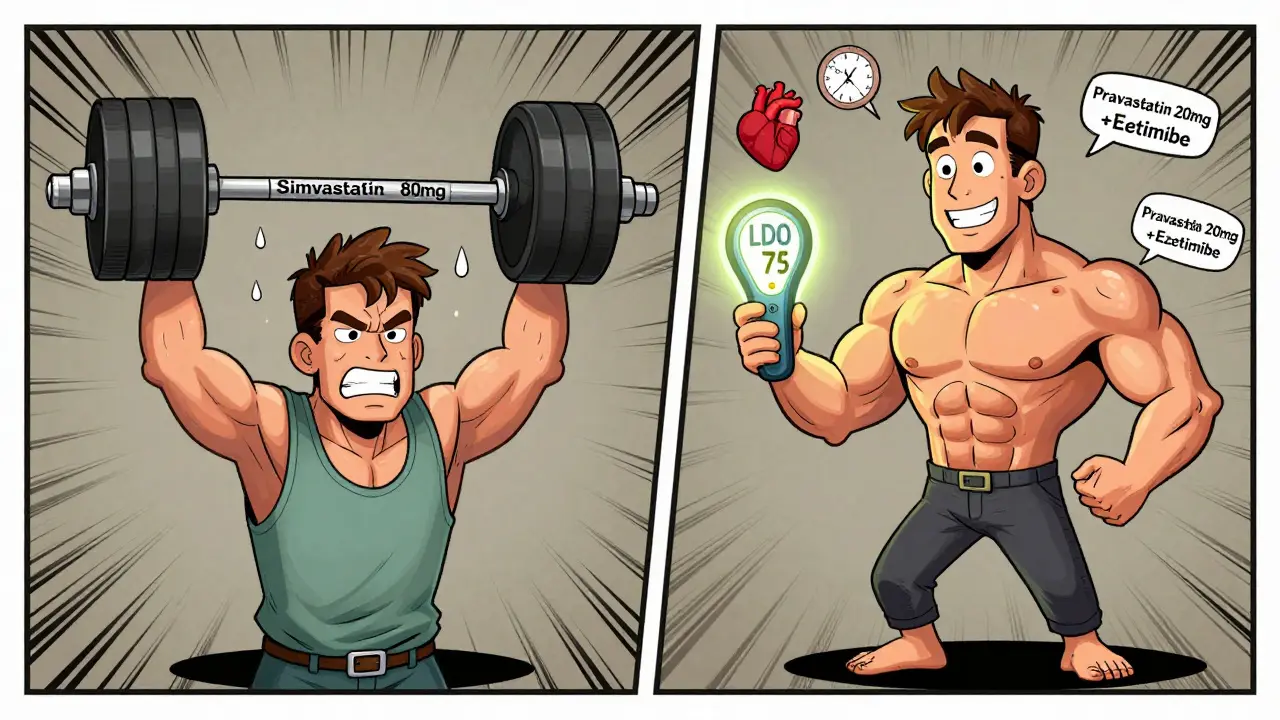
- Switch to a lower-risk statin: Go from simvastatin or atorvastatin to pravastatin or fluvastatin. One study showed 41% of people who switched successfully stayed on their new statin for over two years.
- Lower the dose: If you were on 40mg of atorvastatin, try 10mg. Muscle side effects are dose-dependent. Half the dose often means half the risk.
- Try every-other-day dosing: Take your statin every 48 hours instead of daily. Studies show this works for many people, especially with rosuvastatin or atorvastatin. It keeps LDL low while reducing muscle exposure.
- Use a low-intensity statin: Pitavastatin and low-dose rosuvastatin (5-10mg) are less likely to cause muscle issues than high-dose versions.
- Combine with ezetimibe: Take a low-dose statin plus ezetimibe. Together, they lower LDL as well as a high-dose statin alone-with less muscle risk.
One patient from Melbourne, 68, stopped simvastatin after severe leg cramps. He waited six weeks, switched to pravastatin 20mg every other day, and added ezetimibe 10mg daily. His CK was normal, his muscles felt fine, and his LDL dropped from 160 to 75. He’s been on it for three years.
When NOT to Rechallenge
There are two situations where you should never try a statin again:
- Rhabdomyolysis: If your CK was over 40 times the normal level, or you had dark urine and kidney trouble, stop statins for good. This is a medical emergency.
- Immune-mediated necrotizing myopathy: This is rare, but serious. If you test positive for anti-HMGCR antibodies, your body is attacking your own muscle tissue because of the statin. This is an autoimmune reaction. You need immunosuppressants-not another statin.
Doctors rarely test for anti-HMGCR antibodies unless muscle weakness is severe and persistent. If you’ve had unexplained muscle damage and statins were stopped, ask for this test. It changes everything.
What If You Still Can’t Tolerate Any Statin?
If you’ve tried everything and still get muscle pain, you’re not out of options. There are powerful non-statin drugs:
- PCSK9 inhibitors (evolocumab, alirocumab): Injected every 2-4 weeks, they lower LDL by 50-60%. They’ve been proven in large trials to reduce heart attacks and strokes. But they cost about $5,850 a month-unless your insurance covers them. Many do, especially if you’ve had a heart event or have familial hypercholesterolemia.
- Ezetimibe: A daily pill that lowers LDL by 15-20%. It’s cheap, safe, and works well with other drugs.
- Bempedoic acid: A newer oral pill that lowers LDL by 20-25% and may cause less muscle pain than statins. It’s not for everyone, but it’s an option if you’ve tried everything else.
Here’s the reality: statins cost $4-$10 a month. PCSK9 inhibitors cost 500 times more. That’s why rechallenge is worth trying-even if it takes a few tries.
Why Most Doctors Don’t Offer Rechallenge
A 2022 survey found only 43% of primary care doctors use the Statin-Associated Muscle Symptom Clinical Index (SAMS-CI)-a simple tool that predicts whether your muscle pain is likely to come back. It’s based on 8 questions: age, sex, thyroid function, CK levels, timing of symptoms, and more. A score below 6 means you have a 91% chance of tolerating a statin again. If your doctor didn’t use this tool, they didn’t give you a fair shot.
Also, many doctors don’t know how to explain the nocebo effect. They say, “It’s all in your head,” which makes patients feel dismissed. But it’s not about being weak-it’s about how your brain interprets pain signals. Once you understand it, the fear lessens. And that’s half the battle.
What You Can Do Right Now
If you’re off statins because of muscle pain, here’s your action plan:
- Ask for your last CK level. If you don’t have it, get it checked now.
- Ask if you’ve been tested for anti-HMGCR antibodies-especially if your pain was severe or lasted more than 3 months.
- Request the SAMS-CI score. If your doctor doesn’t know it, look it up online (it’s free and published by the American College of Cardiology).
- Ask to try a low-risk statin at half the dose, or every-other-day dosing.
- Ask about adding ezetimibe to reduce the statin dose needed.
- If you’re at high risk for heart disease, insist on getting back on therapy within 4 weeks.
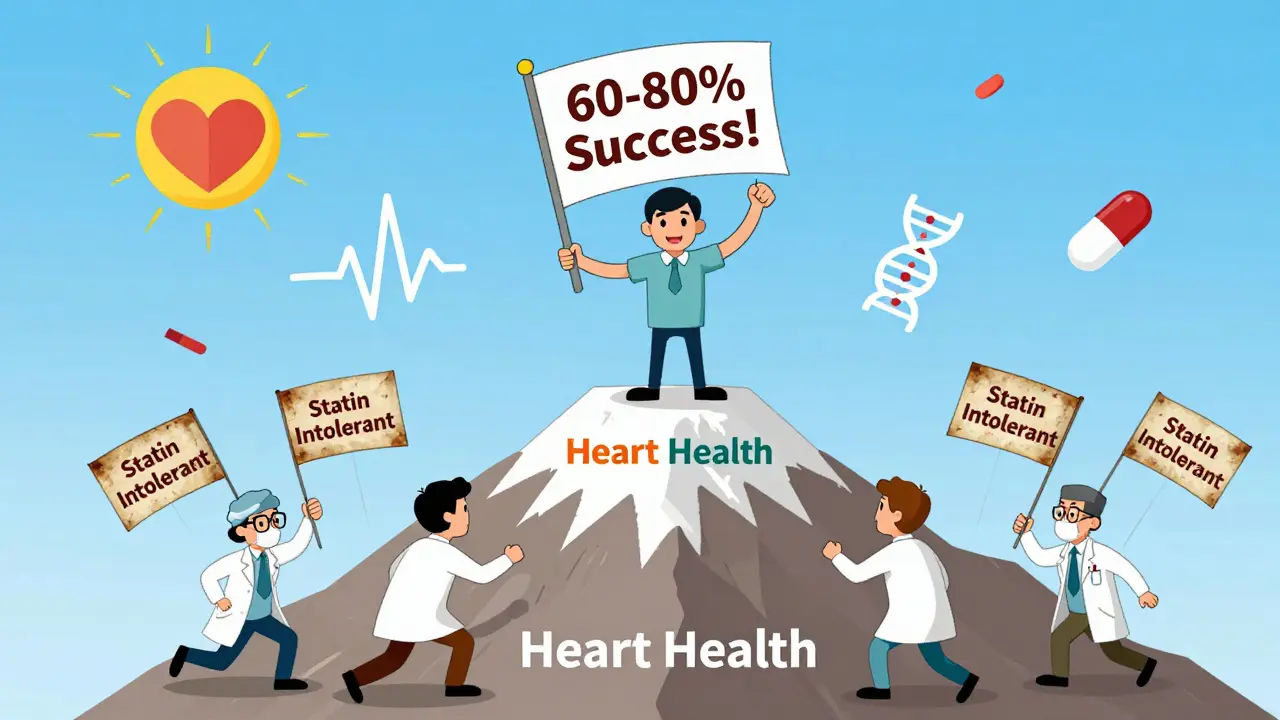
Don’t accept “you’re intolerant” as the final answer. It’s not. For 60-80% of people labeled statin-intolerant, a safe, structured rechallenge works.
Can statin muscle pain go away on its own?
Yes. Most people see muscle pain improve within 2 to 4 weeks after stopping a statin, even without treatment. This doesn’t mean the statin was safe-it just means your body is healing. The key is to wait until symptoms are fully gone before restarting. Jumping back too soon makes it hard to know if the pain is returning because of the drug or just lingering.
Is it safe to take statins again after rhabdomyolysis?
No. Rhabdomyolysis is a medical emergency. If your creatine kinase (CK) level was more than 40 times the upper limit of normal, or you had kidney damage from muscle breakdown, you should never take a statin again. The risk of recurrence is too high, and the consequences can be life-threatening.
Which statin has the lowest risk of muscle pain?
Pravastatin and fluvastatin have the lowest risk of muscle-related side effects. Rosuvastatin and pitavastatin at low doses (5-10mg) are also safer than high-dose simvastatin or atorvastatin. Avoid simvastatin 80mg entirely-it’s been linked to the highest rates of muscle injury.
Can I take CoQ10 to prevent statin muscle pain?
Some people report feeling better taking CoQ10, but large studies haven’t proven it prevents or reduces statin muscle pain. It’s not harmful, so it’s okay to try-but don’t rely on it as your main strategy. Switching statins, lowering the dose, or using every-other-day dosing are far more effective.
Why do some people have muscle pain on statins but not others?
Several factors increase risk: being over 70, female, having kidney disease, taking certain other drugs (like gemfibrozil), or having a genetic variant called SLCO1B1 *5. This gene affects how your body clears statins. People with two copies of this variant (one from each parent) have over 200% higher statin levels in their blood-making muscle pain much more likely. Genetic testing is now available and can help guide safer choices.
What’s the success rate for statin rechallenge?
About 60-80% of people who try rechallenge with a structured plan succeed. That means they can stay on a statin long-term without muscle pain. Success is highest when patients switch to a lower-risk statin, reduce the dose, or use intermittent dosing. People who try the same statin at the same dose? Only 20-30% succeed.
Final Thought: Don’t Let Fear Cost You Your Heart
Statin myopathy sounds scary. But it’s not the end of the road. For most people, it’s a detour. The real danger isn’t muscle pain-it’s staying off a drug that could save your life. With the right approach, you can get back on track. Talk to your doctor. Ask for the SAMS-CI. Try a different statin. Give it time. Your heart will thank you.



Comments (9)