
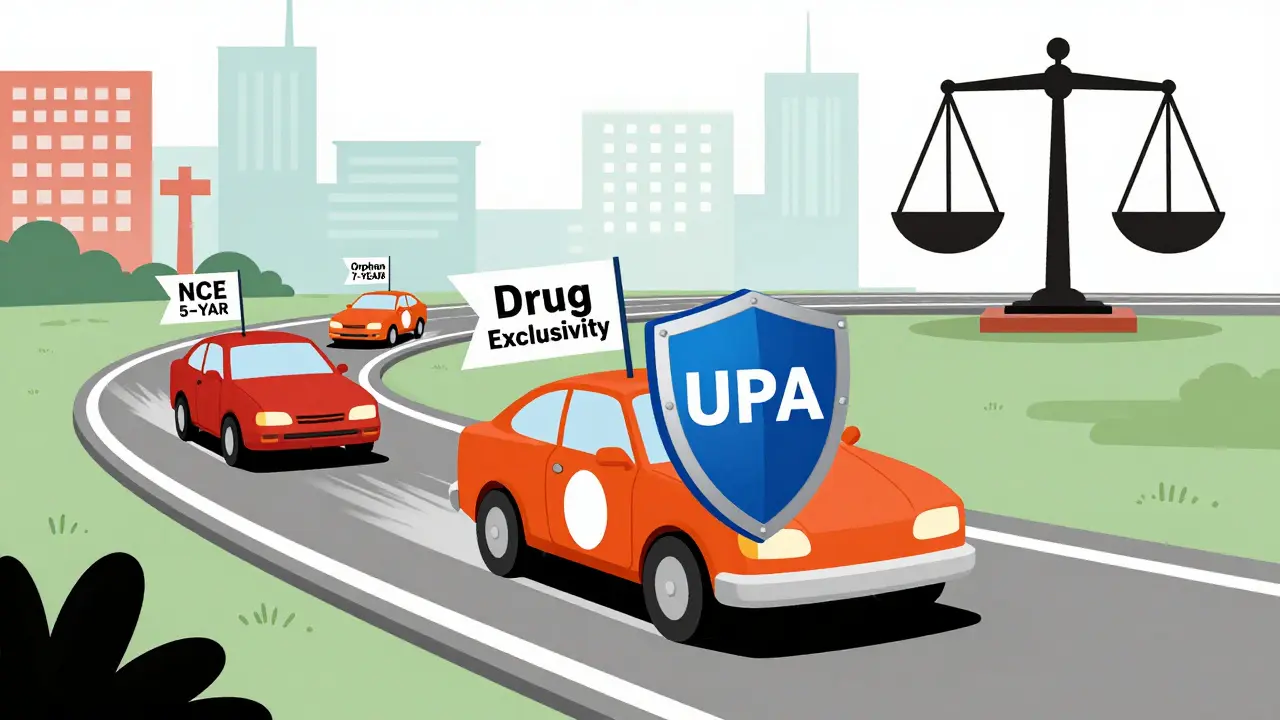
When a brand-name drug hits the market, it doesn’t stay alone for long. Behind the scenes, a complex legal race is already underway - one that determines when a cheaper generic version can finally appear on pharmacy shelves. This race isn’t decided by speed alone. It’s shaped by exclusivity periods - legal rules that vary wildly from country to country. And these rules directly impact how quickly patients get affordable medicines.
Why Exclusivity Periods Exist
Pharmaceutical companies spend an average of $2.3 billion and over a decade to bring a single new drug to market. That’s not just time and money - it’s thousands of failed attempts, clinical trials, and regulatory hurdles. To make that investment worth it, governments give them a temporary monopoly. That’s the patent. But patents alone don’t tell the full story. In the U.S., a patent lasts 20 years from the date it’s filed. But because drug development takes 10-12 years, by the time the drug is approved, only 6-10 years of real market protection remain. That’s where exclusivity periods come in. They’re extra layers of protection added by regulators, separate from patents, designed to give innovators more time to recoup costs before generics can enter.How the U.S. System Works
The U.S. has the most complex system in the world. It’s built on the Hatch-Waxman Act of 1984, which created a trade-off: innovators get extended protection, and generics get a fast track to market - if they’re willing to challenge patents. There are five main types of exclusivity in the U.S.:- New Chemical Entity (NCE) exclusivity: 5 years. No generic can even file an application during this time.
- Orphan Drug Exclusivity: 7 years for drugs treating rare diseases (under 200,000 patients in the U.S.).
- 3-year exclusivity: For drugs with new clinical studies - not new ingredients, but new uses or formulations.
- 6-month pediatric exclusivity: Added to any existing exclusivity if the company tests the drug in children.
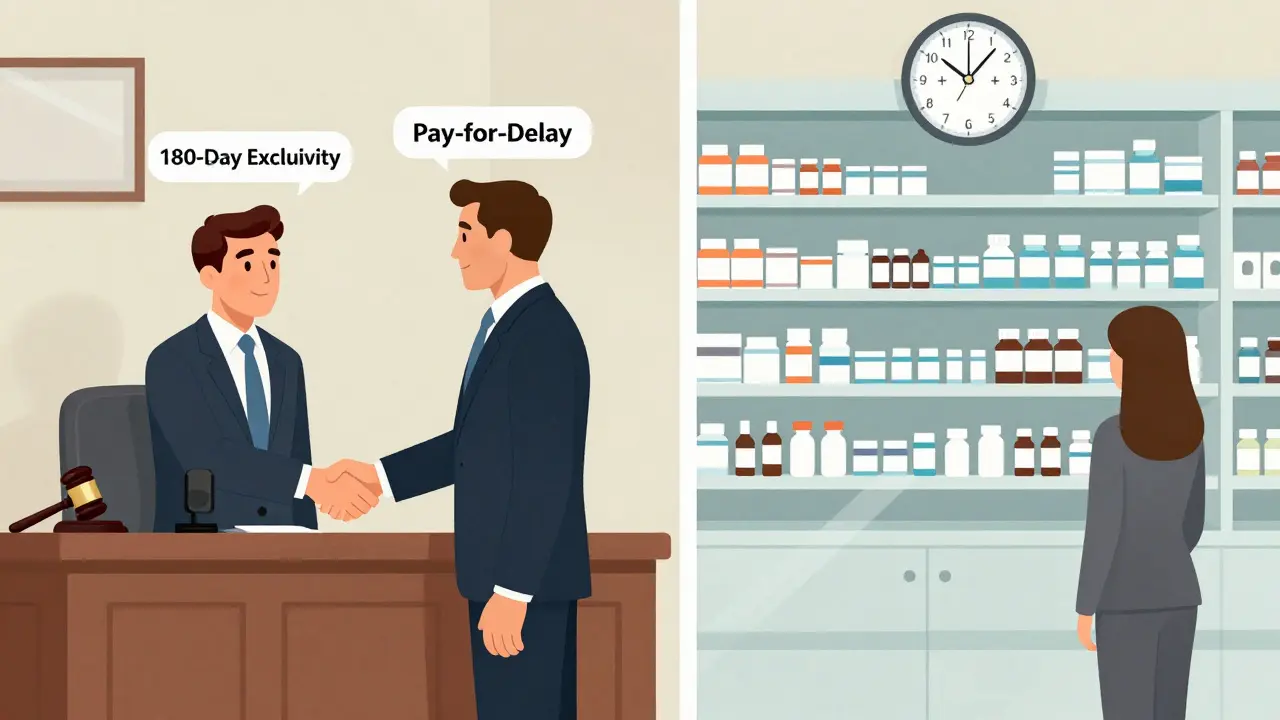
- 180-day generic exclusivity: The big one. The first generic company to successfully challenge a patent gets a 180-day head start - no other generics can enter during that time.
Europe’s 8+2+1 Rule
The EU takes a different approach. It doesn’t rely on patent challenges. Instead, it uses a fixed timeline called the “8+2+1” system.- 8 years of data exclusivity: Generic companies can’t use the brand’s clinical trial data to support their application.
- 2 years of market exclusivity: Even after the 8 years, generics can’t be sold - even if they’ve filed.
- 1-year extension: If the brand company adds new, significant clinical benefits during the first 8 years, they get an extra year.
Canada, Japan, and Other Countries
Canada’s rules are close to the EU’s: 8 years of data protection, then 2 years of market exclusivity. No patent challenges. No 180-day bonuses. Japan is stricter. It gives 8 years of data exclusivity and 4 years of market exclusivity for new chemical entities. That’s longer than the U.S. or EU for market protection alone. The Japanese regulatory agency, PMDA, is now trying to speed things up - announcing in late 2023 that it will simplify its patent linkage system to cut delays. China made a major shift in 2020, jumping from 6 to 12 years of data exclusivity. Brazil followed in 2021 with 10 years. These moves are partly driven by pressure from global trade deals and domestic pharma lobbying. But they’ve raised alarms among global health advocates.What This Means for Global Access
The differences in exclusivity rules aren’t just legal technicalities - they’re life-or-death for millions. In high-income countries, the average time from drug approval to generic entry is about 12.7 years. In low-income countries? Nearly 19.3 years. Why? Because many of these countries adopt the strictest data exclusivity rules from trade agreements - even when patents have expired. For example, HIV drugs approved in the U.S. in 2005 were still blocked from generic production in South Africa until 2016 - 11 years later - because of data exclusivity clauses in EU trade deals. That’s not a patent issue. That’s a policy choice. The World Health Organization has called for a rebalancing. They argue that for essential medicines - like insulin, antibiotics, or antivirals - exclusivity periods should be shorter. But pharmaceutical companies push back. They say without strong protections, innovation will dry up.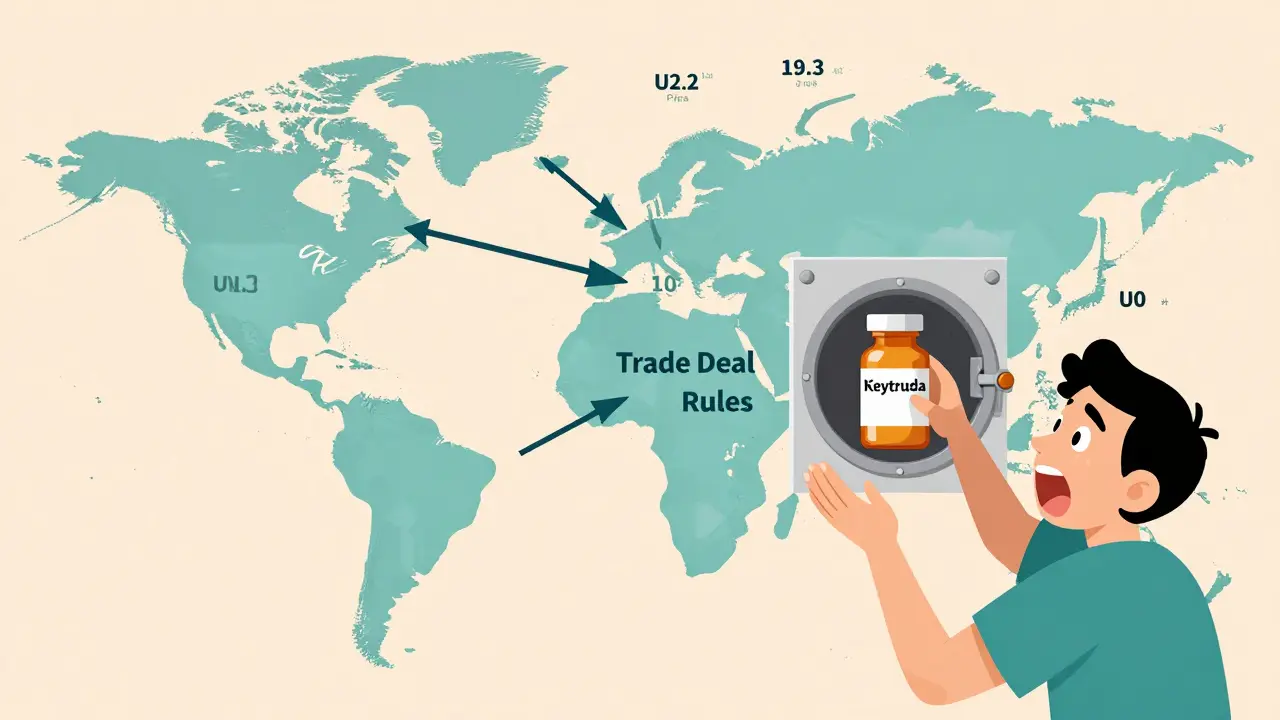
The Real Cost of Delay
When a drug loses exclusivity, prices drop fast. On average, within 12 months, the brand drug’s sales fall by 80-90%. That’s why originator companies fight so hard to extend protection. Take Keytruda, Merck’s cancer drug. Through patent stacking and exclusivity extensions, its effective market life went from 8.2 years to 12.7 years. That’s over four extra years of monopoly pricing. Meanwhile, generic manufacturers face a legal minefield. One company told analysts that the average brand drug now has 142 patents listed in the FDA’s Orange Book. Challenging them all costs $2-5 million per product. Most small generic firms can’t afford it. That’s why the top 10 generic makers now control 65% of the U.S. market.What’s Changing in 2025-2026?
The pressure is mounting. In the U.S., lawmakers are pushing the Preserve Access to Affordable Generics and Biosimilars Act - which would ban pay-for-delay deals by assuming they’re anti-competitive if payments exceed litigation costs. The EU is reviewing its 8+2+1 system. A 2023 proposal suggests cutting data exclusivity to 5 years for some drugs - but strengthening it for truly innovative ones. Japan’s reforms are already underway. And the WHO is urging countries to stop using trade deals to lock out generics. But the system isn’t collapsing. Over 97% of major drug companies still say current exclusivity rules are essential to fund future research.What Patients Should Know
If you’re waiting for a generic version of a brand drug, here’s what you need to understand:- Just because a patent expired doesn’t mean a generic is available. Data exclusivity might still be in effect.
- Even in the U.S., delays are common - not because of patents, but because of legal settlements between brands and generics.
- In many countries, you won’t get generics until years after the U.S. or EU.
- Ask your pharmacist: “Is there a generic available? If not, why?” Sometimes the answer isn’t about patents - it’s about regulatory delays or lack of manufacturer interest.
How long do generic drug patents last?
Patents themselves last 20 years from the filing date, as set by international law (TRIPS). But because drug development takes 10-12 years, the actual time a drug is protected before generics can enter is usually only 6-10 years. Additional exclusivity periods - like data protection or orphan drug status - can add years on top of that.
What’s the difference between a patent and exclusivity?
A patent is a legal right granted by a government to prevent others from making, using, or selling the invention. Exclusivity is a regulatory protection granted by health agencies like the FDA or EMA. You can have exclusivity without a patent, and vice versa. For example, a drug might lose its patent but still be protected by 5 years of data exclusivity - meaning no generic can use the original company’s clinical trial data to get approved.
Why do some countries block generics even after patents expire?
Many countries, especially in Africa and Latin America, adopt data exclusivity rules through trade agreements - even if they’re not required by their own laws. Data exclusivity prevents generic manufacturers from using the brand’s clinical trial data to prove their drug is safe and effective. This blocks generic entry even when patents have expired. It’s a major reason why essential medicines remain expensive in low-income countries.
What is the 180-day exclusivity period in the U.S.?
It’s a reward given to the first generic company that successfully challenges a patent on a brand drug. That company gets 180 days of exclusive rights to sell its generic version - no other generics can enter during that time. This incentive was meant to encourage patent challenges, but it’s often abused. Some brand companies pay the first generic to delay entry - a practice known as "pay-for-delay," which is now under legal scrutiny.
Do exclusivity periods affect drug prices?
Absolutely. When generics enter the market, prices typically drop by 80-90% within a year. Every extra year of exclusivity means patients pay more. In the U.S., the average drug loses 85% of its sales within 12 months of generic launch. That’s why originator companies spend millions extending exclusivity - and why patient advocates push to shorten it.



Comments (13)