
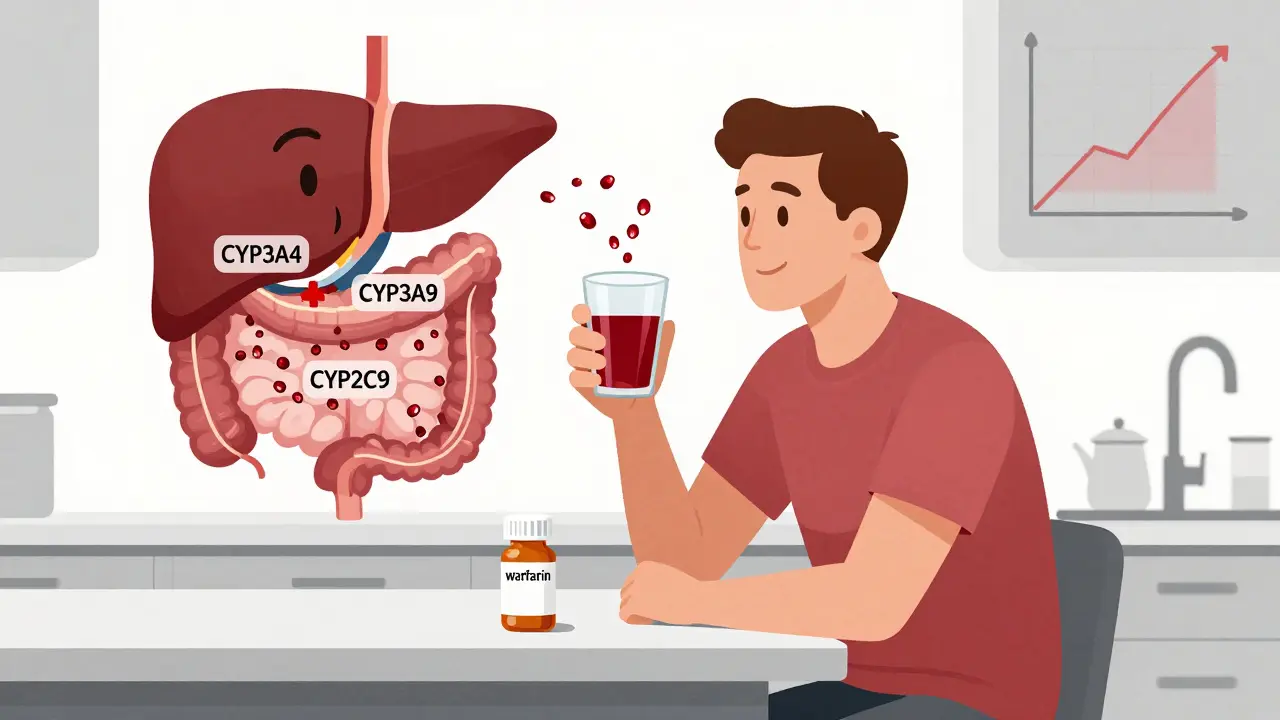
If you drink pomegranate juice for its antioxidants and rich flavor, you’re not alone. But if you’re also taking prescription meds-especially blood thinners, cholesterol drugs, or antidepressants-you might be risking more than just a tart taste. The truth? Pomegranate juice isn’t just a healthy drink. It can change how your body processes medication. And that’s not something to ignore.
How Pomegranate Juice Interacts With Your Medications
Pomegranate juice doesn’t just sit in your stomach and get digested. It hits your liver and intestines, where enzymes break down most of the drugs you take. Two key enzymes-CYP3A4 and CYP2C9-are especially sensitive to compounds in pomegranate juice. These enzymes are like the body’s cleanup crew for medications. When they’re slowed down, drugs stick around longer than they should. That can turn a safe dose into a dangerous one.
For example, warfarin (Coumadin), a common blood thinner, is mostly broken down by CYP2C9. If pomegranate juice blocks that enzyme, your INR-a measure of how long your blood takes to clot-can spike. One documented case showed a patient’s INR jumping from 2.4 to 4.7 after just three days of daily pomegranate juice. That’s above the safe range. Too high, and you risk internal bleeding. Too low, and you’re unprotected from clots.
Other medications affected include statins like atorvastatin (Lipitor), certain antidepressants like sertraline, and even some blood pressure drugs like lisinopril. The risk isn’t the same for everyone. Some people see no change. Others get hit hard. Why? It depends on your genes, your liver, how much juice you drink, and what else you’re taking.
Why Grapefruit Gets All the Attention (But Pomegranate Might Be Just as Risky)
You’ve probably heard about grapefruit and drug interactions. The FDA has clear warnings. But pomegranate juice? It’s quieter. And that’s dangerous.
Both fruits contain similar compounds that block CYP3A4. But grapefruit juice can boost statin levels by up to 15 times. Pomegranate juice? Studies show it might increase levels by 25-40% in lab settings. That’s less than grapefruit, but still enough to matter-especially for drugs with narrow therapeutic windows. Warfarin, for instance, has a tiny safety margin. A 15-25% change in metabolism can push you out of the safe zone.
Here’s the catch: the FDA hasn’t issued an official warning for pomegranate juice. Not because it’s safe, but because human studies are mixed. Some show clear effects. Others show nothing. That’s why your doctor might shrug when you ask. But that doesn’t mean you should ignore it.
The Real-World Evidence: What Patients Are Actually Experiencing
Lab studies don’t always match real life. That’s why patient reports matter.
On Reddit’s r/bloodthinners, 17 users reported INR spikes after starting pomegranate juice. One man had to cut his warfarin dose by 30% to get his numbers back under control. Another woman noticed bruising and nosebleeds after switching from orange juice to pomegranate juice.
But here’s the flip side: on PatientsLikeMe, 89% of 214 users said they drank pomegranate juice daily with no INR changes. A 2022 survey of 1,247 people on chronic meds found only 4.7% linked any side effects to pomegranate juice.
So what’s going on? The answer is variability. Some people’s enzymes are more sensitive. Others metabolize the juice faster. Genetics play a role. So do diet, alcohol, smoking, and even other supplements. One person’s risk factor is another person’s harmless habit.

What the Experts Actually Say (And What They Don’t)
Dr. David Mischoulon from Massachusetts General Hospital put it plainly: “Lab data doesn’t equal real-world risk.” He’s right. In vitro studies show strong enzyme inhibition. But when you test it in real people, the effect often disappears.
A 2014 study with 12 healthy volunteers found no change in midazolam levels after two weeks of daily pomegranate juice. Midazolam is a classic CYP3A4 marker. If it didn’t budge, why should warfarin?
But then you look at case reports. The UK’s Medicines and Healthcare products Regulatory Agency (MHRA) has documented cases where pomegranate juice raised INR by 0.5-1.5 units. That’s enough to require dose adjustments. The European Medicines Agency says the risk is “theoretical for most drugs, but possibly real for warfarin.”
Mayo Clinic and the American Heart Association don’t say “avoid.” They say “be consistent.” If you drink it every day, keep doing it. If you don’t, don’t start. Sudden changes are riskier than steady intake.
What Should You Do? A Simple Action Plan
You don’t need to quit pomegranate juice. But you do need to be smart about it.
- Check your meds. Look up your prescriptions on WebMD’s interaction checker or ask your pharmacist. If you’re on warfarin, statins, certain antidepressants, or calcium channel blockers, proceed with caution.
- Don’t start or stop suddenly. If you’ve been drinking pomegranate juice for months, keep going. If you’ve never tried it, don’t start without talking to your doctor.
- Limit the amount. Stick to 8 ounces (240 ml) or less per day. More doesn’t mean more health benefits-it just increases risk.
- Time it right. Take your medication at least two hours before or after drinking the juice. This gives your body time to process each separately.
- Monitor closely. If you’re on warfarin, get your INR checked more often when you start or stop drinking the juice. Even if you’ve been drinking it for years, a change in brand, concentration, or your health status can shift the balance.

When to Call Your Doctor
You don’t need to panic. But you should call if:
- You notice unusual bruising, bleeding gums, nosebleeds, or dark stools (signs of bleeding).
- You feel dizzy, lightheaded, or unusually tired after starting the juice.
- Your INR has changed without explanation.
- You’re considering switching from grapefruit juice to pomegranate juice thinking it’s safer.
Remember: your doctor doesn’t need to know everything you eat. But they do need to know if you’re drinking something daily that could interfere with your meds. That’s not overcaution-that’s smart care.
The Bottom Line
Pomegranate juice isn’t the enemy. It’s packed with antioxidants, vitamin C, and anti-inflammatory compounds. But it’s not harmless either. For most people, a small glass a day won’t cause problems. For those on warfarin, certain statins, or other high-risk meds, it’s a silent player in a high-stakes game.
Don’t rely on headlines. Don’t assume grapefruit warnings apply to everything. And don’t assume “natural” means “safe with meds.” The best tool you have? Communication. Talk to your pharmacist. Ask your doctor. Keep track of what you drink. And if something feels off-listen to your body.
Your health isn’t about avoiding healthy foods. It’s about understanding how they fit into your bigger picture. Pomegranate juice? Enjoy it. Just don’t let it sneak up on you.
Can pomegranate juice really affect my blood thinner?
Yes. Pomegranate juice can inhibit the CYP2C9 enzyme, which breaks down warfarin. This can raise your INR, increasing bleeding risk. Case reports show INR spikes of 0.5 to 2.8 units after regular consumption. If you’re on warfarin, monitor your INR closely when starting or stopping pomegranate juice.
Is pomegranate juice safer than grapefruit juice?
Not necessarily. Grapefruit juice can increase some drug levels by up to 15 times. Pomegranate juice typically causes smaller increases-around 25-40% in lab studies. But for drugs with narrow therapeutic windows like warfarin, even small changes matter. Neither is risk-free, and both should be approached with caution if you’re on affected medications.
Should I stop drinking pomegranate juice if I take statins?
It depends. Pomegranate juice may slightly increase levels of atorvastatin and simvastatin by inhibiting CYP3A4. Most studies show no major clinical effect in healthy people. But if you’re elderly, have liver issues, or take high doses, talk to your doctor. Limit intake to 8 oz/day and avoid drinking it right before your dose.
How long does it take for pomegranate juice to affect drug metabolism?
Enzyme inhibition can begin within hours of consumption. Effects may build over days of regular intake. In warfarin users, INR changes have been reported within 2-3 days. That’s why consistency matters-sudden changes are riskier than steady, moderate use.
Are pomegranate supplements safer than the juice?
No. Supplements often contain concentrated extracts of pomegranate, meaning higher levels of inhibitory compounds. There’s even less research on supplements than on juice. Many case reports of interactions involve supplements, not juice. If you’re on meds, avoid pomegranate capsules or extracts unless cleared by your doctor.
Can I drink pomegranate juice if I’m not on any medication?
Yes. If you’re not taking medications metabolized by CYP3A4 or CYP2C9, pomegranate juice is safe and beneficial. It’s rich in antioxidants and linked to lower blood pressure and improved heart health. The risk only arises when you combine it with specific drugs.
What if I accidentally drank a lot of pomegranate juice?
If you’re on warfarin or a statin and drank a large amount (more than 16 oz), monitor for signs of bleeding (bruising, nosebleeds, dark stools) or muscle pain (with statins). Contact your doctor or pharmacist. They may recommend an INR check or blood test. Don’t panic-but don’t wait.






Comments (11)