
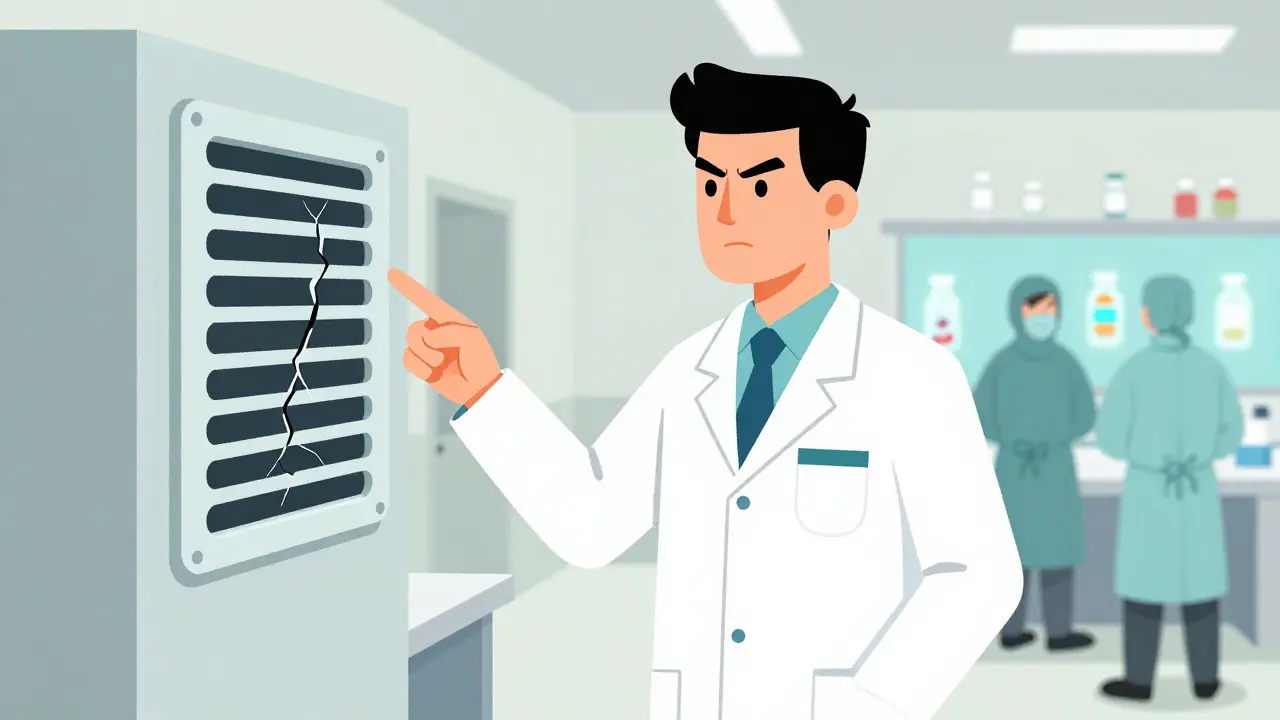
The U.S. Food and Drug Administration (FDA) doesn’t just check labels or inspect packaging. Every year, they send teams into manufacturing facilities around the world to dig into how drugs and medical devices are actually made. And what they find isn’t just paperwork errors-it’s manufacturing deficiencies that put patients at risk. In 2025, the FDA issued 32% more warning letters for quality system failures in medical devices than in 2024. That’s not a spike. It’s a signal.
Why These Deficiencies Matter
A broken seal on a pill bottle? That’s a problem. But a facility that doesn’t control its air quality during sterile drug production? That’s a death sentence waiting to happen. The FDA’s job isn’t to catch minor slip-ups. It’s to stop systemic failures before they reach your medicine cabinet. The 2007-2009 heparin contamination crisis, which killed 84 people, still echoes in every inspection report today. That’s why the FDA now focuses on what’s broken beneath the surface-not just what’s visible.Aseptic Processing: The Silent Killer
If you’re making injectable drugs, vaccines, or anything meant to go directly into the bloodstream, you need a sterile environment. Not just clean. Not just sanitized. Sterile. That’s where 47% of 2025 warning letters landed. Facilities were caught skipping media fill studies-tests that prove workers can handle sterile products without contaminating them. One company, Health and Natural Beauty USA Corp., got cited in July 2025 for letting staff handle vials without proper gowning or air flow controls. Another, Creative Essences, Inc., had unsealed doors during production. One breach. One contaminated batch. One patient could die.Data Integrity: When the Records Lie
You can’t fix what you don’t measure. And if you’re faking the measurements? That’s worse than no data at all. In 39% of 2025 warning letters, the FDA found data manipulation. Not just sloppy notes. Real fraud. One company used erasable markers on laminated production sheets-so records could be altered after the fact. Another didn’t turn on audit trails in their UV-Vis spectrometers, meaning no one could tell who changed a result or when. The FDA demands ALCOA+: data must be Attributable, Legible, Contemporaneous, Original, and Accurate-with plus signs for completeness, consistency, availability, and durability. Most facilities failed on at least three.Material Control: Dirty Ingredients, Dangerous Products
Glycerin and sorbitol sound harmless. They’re in toothpaste, cough syrup, even hand sanitizer. But if they’re contaminated with diethylene glycol (DEG), they kill. DEG doesn’t show up on basic tests. You need specific, sensitive methods. In 2025, the FDA found multiple facilities testing glycerin with outdated methods-or not testing at all. Health and Natural Beauty USA Corp. was warned for using supplier certificates without verifying them. Foshan Yiying Hygiene Products Co. didn’t even check raw materials before use. The FDA now requires testing to USP <1085> standards, detecting DEG at 0.1% w/w. That’s one part in a thousand. Too high. Too deadly.
Process Validation: Making It Work, Not Just Saying It Does
Just because a process worked once doesn’t mean it works every time. That’s the core of process validation. The FDA expects three consecutive successful batches under real production conditions-with strict in-process controls. Yet, 28% of warning letters in 2025 cited companies that skipped this entirely. One company made toothpaste without ever validating its mixing process. Another used analytical methods that weren’t scientifically proven to detect active ingredients. No validation. No proof. No safety net.Quality Culture: The Root Cause
Here’s the truth no one wants to say out loud: most of these failures aren’t about ignorance. They’re about culture. Dr. David Lim from Compliance Architects found that 78% of companies cited in 2025 had leadership that prioritized speed over safety. Production targets came first. Compliance was an afterthought. One facility’s response to an inspector’s question? “This site does not prepare batch production records for every batch of our listed drug.” That’s not a mistake. That’s a mindset. And it’s spreading. The FDA’s new Quality Management Maturity (QMM) program isn’t just checking boxes-it’s evaluating whether leadership actually cares about quality. Facilities with strong quality cultures see 63% fewer repeat violations.Global Patterns: Where the Problems Are
The FDA isn’t guessing where problems live. They’re targeting them. In 2025, 73% of warning letters went to manufacturers in China, India, and Malaysia. Chinese facilities most often failed analytical method validation. Indian companies struggled with data integrity. Malaysian sites had weak quality units with no real authority. Why? Because oversight at home is weak. India’s CDSCO inspects less than 2% of its own facilities annually. China’s regulators often rely on self-reported data. The FDA stepped in because no one else would.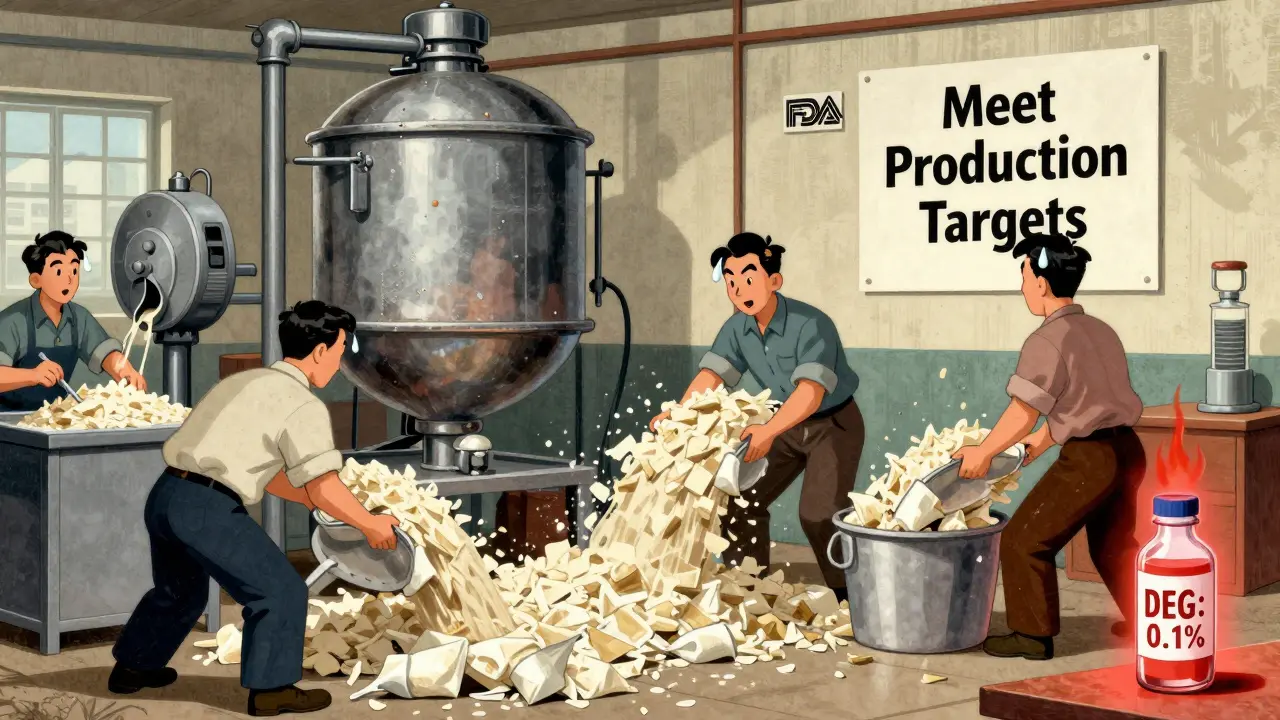
What Happens After a Warning Letter
Getting a warning letter isn’t the end. It’s the beginning of a long, expensive fix. The FDA requires 92% of companies to hire independent CGMP consultants. Remediation takes 6 to 18 months. For data integrity, you need validated audit trails with 180-day retention, user-specific logins, and sequential timestamps. For materials, you need new testing protocols. For processes, you need three clean batches. And you have to prove it all to the FDA before your products can enter the U.S. again.What’s Next? The FDA Is Getting Smarter
In 2026, the FDA plans to double unannounced inspections in the U.S. and keep pushing abroad. They’re now watching cloud-based quality systems, contract labs, and continuous manufacturing tech. Twelve warning letters in 2025 were for poor digital system controls. Eight were for outsourcing without oversight. Five were for new tech that wasn’t validated. The agency is shifting from checking if you follow rules-to checking if you care about the people who use your products.What Manufacturers Can Do Now
If you’re producing drugs or devices, here’s what you need to fix:- Run media fill studies every six months. Document every step.
- Turn on audit trails. Lock down access. Keep records for 180+ days.
- Test high-risk materials like glycerin for DEG using USP <1085> methods.
- Validate every process-three batches minimum, with real-time controls.
- Give your Quality Unit real authority. Let them stop production.
- Train staff daily-not once a year.
The FDA doesn’t want to shut you down. They want you to make safe products. But they’re done waiting. The cost of cutting corners isn’t just fines. It’s lives.
What are the most common FDA manufacturing deficiencies in 2025?
The top five deficiencies in 2025 were: aseptic processing failures (47% of warning letters), data integrity issues (39%), inadequate material controls (35%), lack of process validation (28%), and weak quality culture (78% of cited facilities). These aren’t random errors-they’re systemic breakdowns in how facilities manage safety.
Can a company recover after an FDA warning letter?
Yes, but it’s hard. Companies must hire an independent CGMP consultant, fix every cited issue, and submit a detailed remediation plan. The FDA then re-inspects. If they approve, the facility can resume shipping-but it’s under close watch for years. Facilities with strong quality cultures recover 41% faster than those that treat it as a paperwork exercise.
Why does the FDA focus so much on data integrity?
Because if you can’t trust the data, you can’t trust the product. Fake records hide contamination, failed tests, or process deviations. The FDA requires ALCOA+ compliance: data must be attributable, legible, contemporaneous, original, accurate, and complete. Audit trails must be enabled, user-specific, and tamper-proof. Without this, safety is just a guess.
Are U.S.-based manufacturers also being targeted?
Yes. In 2026, the FDA plans to conduct 1,200 unannounced inspections in the U.S.-up from 850 in 2025. Domestic facilities aren’t exempt. The agency is now looking at cloud-based quality systems, digital records, and how leadership enforces compliance. Location doesn’t matter. Culture does.
What’s the difference between a 483 and a warning letter?
A Form 483 is a list of observations made during an inspection-it’s a notice, not a penalty. A warning letter is a formal enforcement action. It means the FDA believes the violations are serious enough to threaten public health. Warning letters can lead to import bans, product seizures, or criminal charges. Most companies that get a 483 fix it quickly. Those who get a warning letter are already in crisis.




Comments (8)