
PAMORA Selection Tool
Select Your Treatment Preferences
Answer these questions to find the most appropriate PAMORA for your opioid-induced constipation.
When you're taking opioids for chronic pain or cancer-related discomfort, constipation isn't just an inconvenience-it can make life unbearable. Up to 80% of people on long-term opioids develop opioid-induced constipation (OIC), and many stop their pain meds because of it. Traditional laxatives often fail, leaving patients stuck between pain and discomfort. That’s where peripherally acting mu-opioid receptor antagonists (PAMORAs) come in. These drugs don’t touch your pain relief but fix the gut problem opioids cause.
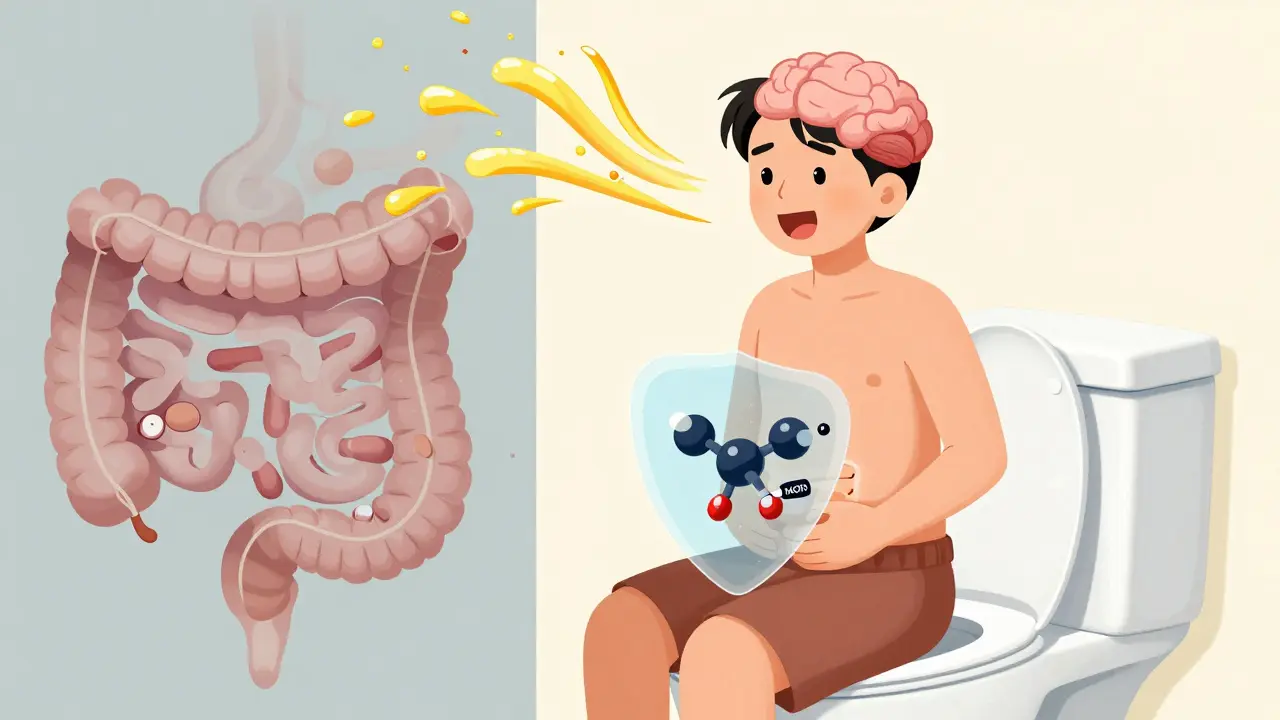
Why Opioids Cause Constipation
Opioids bind to mu receptors in your gut, slowing down the natural movement of food and waste. This isn’t just about dry stool. The gut absorbs more fluid, the muscles that push things along relax too much, and the nerves that signal the need to go get confused. The result? Bowel movements become rare, painful, or impossible. Unlike regular constipation, OIC doesn’t respond well to fiber, water, or over-the-counter laxatives. Studies show less than 30% of chronic opioid users get consistent relief from these methods.How PAMORAs Work Differently
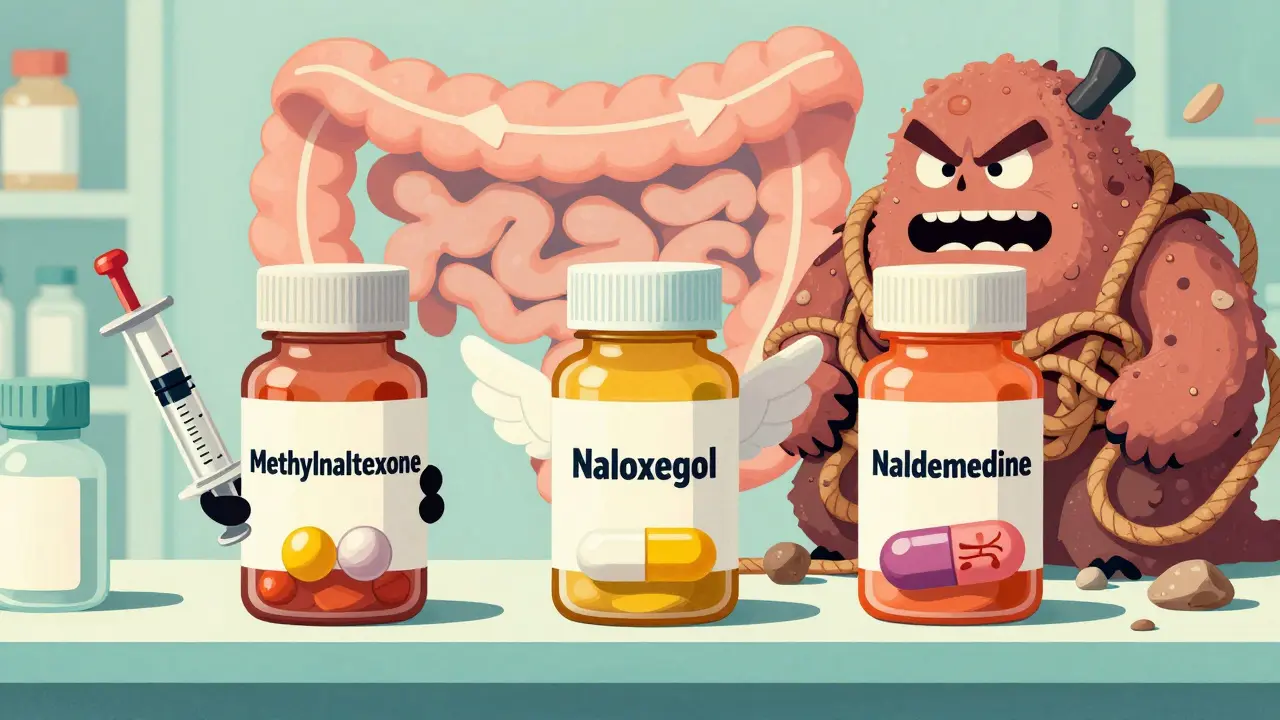
PAMORAs are designed to block opioid receptors only in the gut-not in the brain. That’s the key. Because they can’t cross the blood-brain barrier effectively, they leave your pain control untouched. Think of them like targeted repair tools: they fix the gut without touching the painkillers’ main job. The three main drugs in this class are methylnaltrexone, naloxegol, and naldemedine. Each has a slightly different chemical design to keep them out of the brain, but they all do the same thing: restore normal bowel movement.The Three Main PAMORAs Compared
| Drug (Brand) | Formulation | Dose | Onset of Action | Half-Life | Key Use Case |
|---|---|---|---|---|---|
| Methylnaltrexone (RELISTOR) | Subcutaneous injection or oral tablet | 0.15 mg/kg (injection) or 450 mg (oral) | 30 minutes to 4 hours | 1.8-2.5 hours | Cancer and noncancer pain patients |
| Naloxegol (MOVANTIK) | Oral tablet | 25 mg daily | 2-6 hours | 8-13 hours | Chronic noncancer pain |
| Naldemedine (SYMPROIC) | Oral tablet | 0.2 mg daily | 1-3 hours | 11-13 hours | Chronic noncancer pain |
Methylnaltrexone is the only one available as both a shot and a pill, making it flexible for hospital or home use. It’s also the only one approved for cancer patients in palliative care. Naloxegol and naldemedine are pills only, taken once a day. All three have been shown in clinical trials to help at least 45% of patients have a bowel movement within 24 hours-far better than placebo.
What the Studies Show
In the COMPOSE trials for naloxegol, 44.4% of patients had a spontaneous bowel movement after 12 weeks, compared to just 27% on placebo. Naldemedine showed a 47.6% response rate in similar trials. Methylnaltrexone’s injection form helped 52.4% of patients have a bowel movement within 4 hours-nearly double the placebo rate. These aren’t small improvements. For someone who hasn’t had a bowel movement in five days, this can mean the difference between staying on pain medication or quitting it.But results vary. Some patients respond quickly, others need dose adjustments. About 30% of people report abdominal cramping, especially early on. It’s not dangerous, but it’s uncomfortable. A 67-year-old patient on Healthgrades wrote that naloxegol worked for two weeks, then stopped. That’s not unusual. Some people develop tolerance, or their body adapts. Others find the cost too high-up to $5,000 a year without insurance.
Who Should Avoid PAMORAs
These drugs aren’t for everyone. If you have a blockage in your intestines-like from scar tissue, tumors, or severe adhesions-PAMORAs can cause dangerous swelling or rupture. That’s why all labels warn against use in mechanical bowel obstruction. People with severe kidney problems should also avoid naloxegol entirely. Methylnaltrexone needs a lower dose if your kidneys are working at less than 30% capacity. And while rare, some patients report increased pain after starting a PAMORA. This isn’t because the drug blocks brain pain relief-it’s because sudden gut movement can trigger nerve sensitivity in people with chronic pain.Cost and Access
PAMORAs are expensive. Even with insurance, copays can run $100-$300 a month. Without coverage, it’s often $450-$600. Many manufacturers offer coupons or patient assistance programs, especially for cancer patients. Methylnaltrexone has the largest market share-45% in 2022-because it’s used in both cancer and noncancer settings. Naloxegol and naldemedine are more common for chronic back pain or osteoarthritis. A 2022 survey of pain specialists found 78% prefer PAMORAs over other OIC treatments, but only 35-40% of eligible patients can afford them. That’s a huge gap.How to Use Them Right
Timing matters. The best results happen when you take the PAMORA about an hour before your opioid dose. That way, it’s already working in your gut when the opioid hits. For methylnaltrexone injections, the first dose is usually given by a nurse. After that, patients can self-administer if trained. Oral forms are simpler-just swallow daily. Don’t double up if you miss a dose. Wait until the next day. Most patients need 2-3 weeks to find the right rhythm. A 2022 survey of 250 pain doctors found that 78% initially underdosed their patients, thinking less would be safer. That’s a mistake. The full dose is needed to work.
What’s Next for PAMORAs
New versions are coming. In January 2023, a 300 mg tablet of methylnaltrexone was approved for patients who don’t respond to the standard 450 mg dose. Researchers are testing a combo drug that acts as both a PAMORA and a gut-stimulating agent-early results show 68% response rates. Biosimilars are also in development. The first methylnaltrexone biosimilar is in phase 3 trials in China, and U.S. approval could come by 2027. That could cut prices by 40-60%. For now, though, PAMORAs remain the only treatment that targets the real cause of opioid constipation-not just the symptoms.Real Patient Stories
On Reddit’s r/palliativecare, a 65-year-old with lung cancer said methylnaltrexone injections let her eat again and sleep through the night for the first time in months. “I didn’t realize how much I’d stopped living until I could go to the bathroom without crying,” she wrote. Another patient with spinal stenosis on naloxegol said, “I went from once a week to every other day. My doctor said it’s the best thing for me since my pain meds.” But on GoodRx, a 52-year-old with fibromyalgia wrote: “I spent $500 a month for three months. It worked for a while, then nothing. I’m back to senna and enemas.” These stories aren’t rare. Some people get relief for years. Others find it fades. It’s not failure-it’s biology.Bottom Line
If you’re on opioids and constipated, don’t just keep pushing laxatives. PAMORAs are the only class of drugs proven to fix the root problem without hurting your pain control. They’re not perfect-cost, side effects, and access are real barriers. But for many, they’re the only way to keep taking the pain meds they need. Talk to your doctor. Ask about methylnaltrexone, naloxegol, or naldemedine. If cost is an issue, ask about patient programs. This isn’t a last resort. It’s the smartest first step.Are PAMORAs safe for long-term use?
Yes, for most people. Methylnaltrexone and naloxegol have been studied for up to 12 months with no new safety signals. Naldemedine has data for 52 weeks. The main risks are abdominal cramping and diarrhea. Long-term use doesn’t reduce pain relief or cause addiction. The only exception is alvimopan, which is only approved for short-term hospital use due to heart risks.
Do PAMORAs interfere with pain relief?
No, not at therapeutic doses. Studies show they don’t reduce opioid effectiveness in the brain. A small number of patients report increased pain, but this is likely due to gut sensitivity, not loss of pain control. If pain worsens, talk to your doctor-it might mean the dose needs adjusting.
Can I take PAMORAs with other laxatives?
Yes, but it’s usually not needed. Most patients respond well to PAMORAs alone. If you’re still constipated after two weeks, your doctor might add a mild osmotic laxative like polyethylene glycol. Avoid stimulant laxatives like senna long-term-they can damage gut nerves.
Why do some people stop responding to PAMORAs?
The gut can adapt. Some patients develop tolerance over time, or their opioid dose increases, overwhelming the PAMORA. Others have underlying conditions like slow transit constipation that need different treatment. If a PAMORA stops working, your doctor might switch you to another one or adjust the dose.
Is there a cheaper alternative to PAMORAs?
Lubiprostone (Amitiza) is a non-opioid option that helps with stool consistency, but it’s less effective than PAMORAs for true OIC. Studies show only 25-30% response rates. Some patients use combinations-like a PAMORA plus a stool softener-but these still cost more than OTC laxatives. For now, PAMORAs remain the most effective option, even if they’re expensive.
Can I switch between PAMORAs if one doesn’t work?
Yes. If one PAMORA fails, switching to another often helps. About 40% of patients who don’t respond to naloxegol respond to naldemedine or methylnaltrexone. It’s not trial-and-error-it’s pharmacology. Each drug has a different chemical profile, so your body might respond better to one over the others.





Comments (10)