When you’ve had one kidney stone, you’re not done. You’re in a new phase - one where your body keeps trying to make more. About 30% to 50% of people who’ve had a kidney stone will get another within just three to five years. That’s not bad luck. It’s a chronic condition, and it demands daily habits, not quick fixes.
Most stones are made of calcium oxalate - about 80% of them. But here’s the twist: cutting out calcium won’t help. In fact, it makes things worse. The real enemy isn’t calcium. It’s not drinking enough water. It’s eating too much salt. And it’s thinking this is a one-time problem.
Fluids Are Your First Line of Defense
If you do nothing else, drink more water. Not a little more. A lot more.
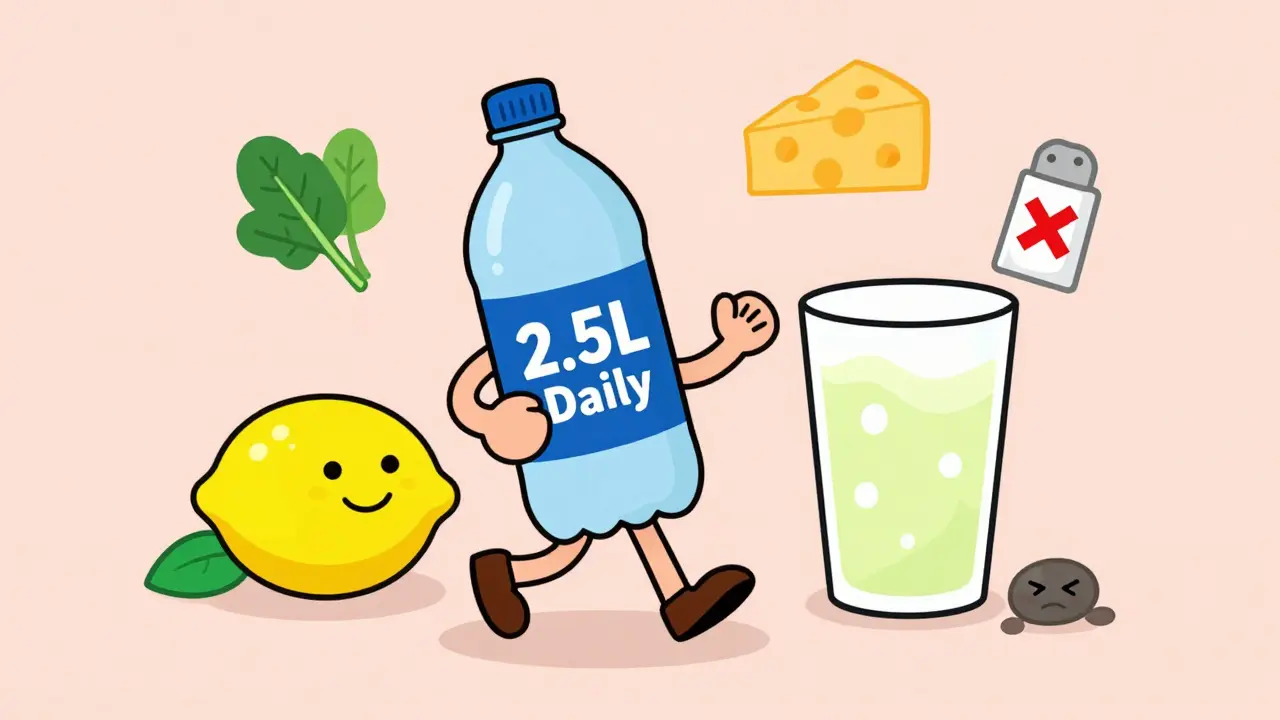
Doctors don’t just say this because it sounds nice. They say it because the data is rock solid. To stop stones from forming, you need to make at least 2.5 liters of urine per day. That means drinking 2.5 to 3 liters of fluid daily - even more if it’s hot, you’re exercising, or you’re sweating.
Water is the best choice. But tea, coffee, and even soda (in moderation) count toward your total. The National Kidney Foundation says these beverages are fine - as long as you’re not replacing all your water with sugary drinks. Lemonade and orange juice? Even better. They contain citrate, a natural blocker that stops crystals from sticking together.
Don’t wait until you’re thirsty. By then, you’re already behind. Your body doesn’t signal dehydration until it’s too late. Use a marked water bottle. Track your intake. If you’re not peeing every 2 to 3 hours and your urine is dark yellow, you’re not drinking enough.
Stop Thinking Calcium Is the Problem
For years, people were told to avoid dairy to prevent stones. That advice is outdated - and dangerous.
When you eat calcium-rich foods like milk, yogurt, or cheese with meals, the calcium binds to oxalate in your gut. That means less oxalate gets absorbed into your bloodstream and ends up in your urine, where it can form stones. Skip the calcium, and your body absorbs more oxalate from spinach, nuts, and beets - and your stone risk goes up.
Don’t cut out dairy. Don’t avoid calcium supplements unless your doctor says so. Aim for about 1,000 to 1,200 mg of calcium daily from food. That’s about three servings: one cup of milk, one yogurt, and a slice of cheese.
Salt Is the Silent Stone-Maker
Here’s the most overlooked culprit: sodium.
Too much salt makes your kidneys dump more calcium into your urine. That’s a recipe for stones. The goal? No more than 2 grams of sodium per day - that’s about 5 grams of salt, or one teaspoon.
But here’s the catch: 75% of the sodium we eat comes from packaged, processed, and restaurant food. It’s in bread, soup, canned veggies, deli meats, and even breakfast cereal. You won’t taste it, but it’s there.
Read labels. Choose low-sodium versions. Cook at home more often. Rinse canned beans. Swap salt for herbs, lemon, or black pepper. If you’re not tracking your sodium, you’re probably eating double what you think.
Oxalate: Don’t Fear It - Manage It
Oxalate is found in spinach, nuts, beets, sweet potatoes, and chocolate. It’s a common villain. But you don’t need to cut these foods out completely.
What matters is pairing them with calcium-rich foods at the same meal. Eat your spinach salad with cheese or yogurt. Have almonds with milk. That way, oxalate and calcium bind in your gut - not in your kidneys.
And here’s the surprise: people who eat more plant foods - fruits, vegetables, whole grains, legumes - actually have fewer stones. The National Kidney Foundation calls this the DASH diet. It’s not just for blood pressure. It’s one of the most effective stone-prevention plans out there, cutting risk by 40% to 50%.

What to Drink - and What to Avoid
Water. Lemon water. Herbal teas. Sparkling water without added sugar. These are your friends.
What to skip:
- Sugary sodas - especially colas. They contain phosphoric acid and high fructose corn syrup, both linked to higher stone risk.
- Energy drinks - packed with sugar and caffeine, they dehydrate you.
- Excessive fruit juice - even orange juice, if you’re drinking a liter a day. Too much fructose can increase oxalate.
The NHS specifically warns against fizzy drinks. It’s not just about sugar. The carbonation and additives may interfere with how your body handles minerals.
Try adding half a lemon to a glass of water. Lemon juice is rich in citrate - the natural inhibitor your body uses to block stone formation. It’s cheap, easy, and backed by growing evidence.
Protein: Less Is More
Animal protein - red meat, chicken, fish, eggs - increases uric acid and lowers citrate in your urine. Both make stones more likely.
Limit animal protein to about 8 ounces per day - that’s the size of a deck of cards. Replace some of it with plant proteins: beans, lentils, tofu, edamame. These don’t raise uric acid and come with fiber and antioxidants that help your kidneys.
And don’t overdo protein supplements. If you’re lifting weights or trying to build muscle, you might be consuming way more than your body needs. That extra protein gets broken down into waste your kidneys have to flush out - and that can trigger stones.
Monitoring Progress - It’s Not a One-Time Thing
Kidney stones are not a one-and-done event. They’re a chronic condition. That means you need to monitor your habits over time.
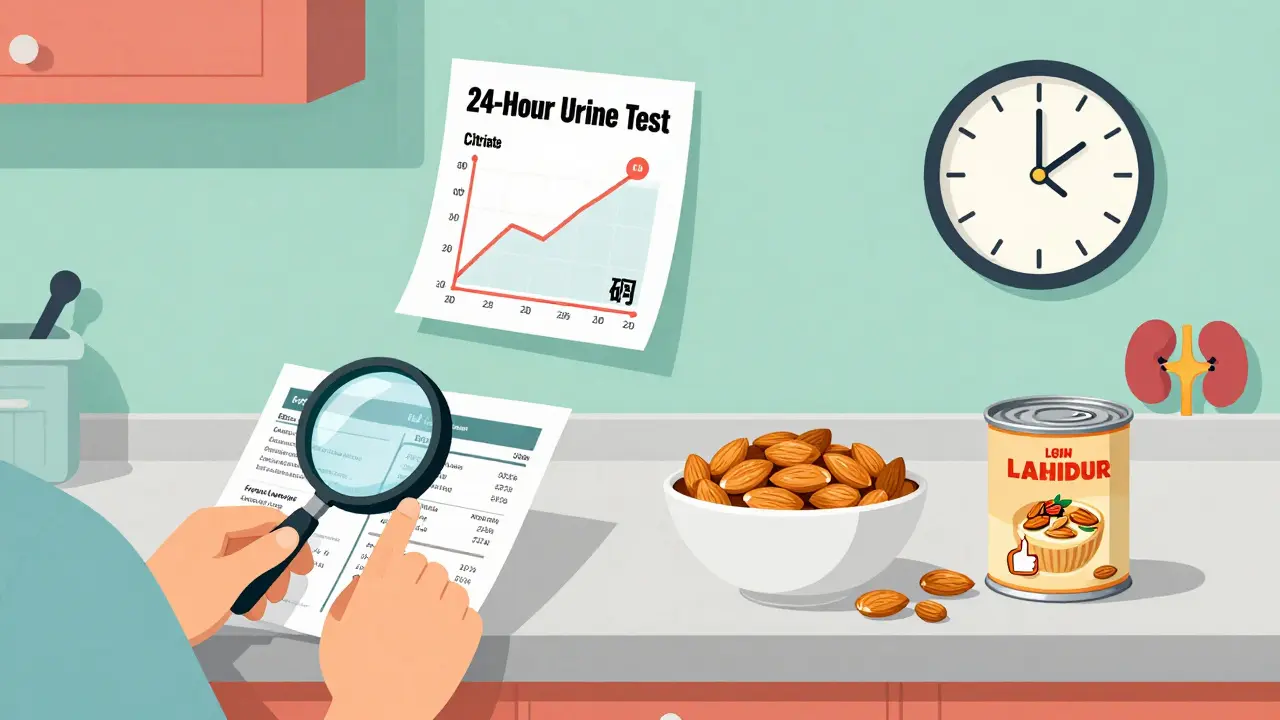
After starting dietary changes, your doctor may ask for a 24-hour urine test. This isn’t just a formality. It shows exactly what’s in your urine: calcium, oxalate, citrate, sodium, pH. You can’t guess these numbers. You have to measure them.
Follow-up tests are usually done 8 to 12 weeks after you start making changes. That’s when you’ll see if your diet and fluids are working. If your citrate is still low or your sodium is too high, you adjust.
Some people need medication - like potassium citrate or thiazide diuretics. But even if you’re on meds, diet still matters. Medication doesn’t replace habits. It supports them.
Why This Matters Beyond the Pain
It’s not just about avoiding the next stone. Recurrent stones can damage your kidneys over time. One study found that 19% of people with recurring stones develop chronic kidney disease.
Every stone you pass puts stress on your urinary tract. Repeated infections, blockages, and inflammation can slowly wear down kidney function. That’s why doctors now call kidney stones a metabolic disorder - like diabetes or high blood pressure. It’s not just a physical event. It’s a sign your body’s chemistry is out of balance.
And the cost? In the U.S. alone, kidney stones cost over $10 billion a year in emergency visits, surgeries, and lost work. Each ER trip runs $1,500 to $2,500. Surgery can hit $10,000. Prevention isn’t just healthy. It’s economical.
Real-Life Tips That Actually Work
- Start your day with a large glass of water - even before coffee.
- Keep a water bottle at your desk, in your car, and by your bed.
- At every meal, include a calcium-rich food (dairy, fortified plant milk, tofu).
- Use a salt shaker with a lid. Measure your salt instead of pinching.
- Swap one sugary drink a day for lemon water.
- Write down your fluid intake for a week. You’ll be surprised how little you’re drinking.
There’s no magic pill. No quick cleanse. No detox. Just consistent, simple choices - every day.
What Happens If You Don’t Change?
Without changes, your risk keeps climbing:
- 14% chance of another stone within one year
- 35% within five years
- 52% within ten years
That’s not fate. That’s a pattern. And patterns can be broken.
The people who succeed aren’t the ones who go on extreme diets. They’re the ones who drink water with meals. Who read labels. Who eat yogurt with their spinach. Who choose grilled chicken over bacon. Who don’t wait until they’re in pain to act.
This isn’t about perfection. It’s about progress. One glass of water at a time. One less salted snack. One more vegetable on your plate.
Can I still drink coffee if I have kidney stones?
Yes, coffee counts toward your daily fluid intake. Moderate coffee consumption doesn’t increase stone risk and may even lower it slightly due to its diuretic effect and antioxidants. Just avoid adding sugar or creamers high in oxalate, like chocolate-flavored ones.
Is it true that lemon juice prevents kidney stones?
Yes. Lemon juice is rich in natural citrate, which binds to calcium in urine and stops crystals from forming. Adding half a lemon to a glass of water daily can help raise citrate levels. It’s not a cure, but it’s a simple, low-cost tool backed by growing evidence.
Should I avoid spinach and nuts because they’re high in oxalate?
No. You don’t need to avoid them. Eat them with calcium-rich foods at the same meal - like spinach with cheese or almonds with yogurt. This helps oxalate bind in your gut instead of your kidneys. Cutting out healthy plant foods can actually increase your risk.
Do I need to take supplements like magnesium or vitamin B6?
Only if your doctor recommends it. Some studies suggest magnesium and B6 may help reduce oxalate in people with specific metabolic issues, but they’re not for everyone. Don’t self-prescribe. A 24-hour urine test will show if you’re deficient.
How long do I need to follow this diet?
For life. Kidney stone disease is chronic. Stopping your habits means restarting the cycle. Even if you haven’t had a stone in years, your body still has the same tendency. Consistent fluid intake, low sodium, and balanced meals are lifelong habits - not temporary fixes.
Can I still eat meat?
Yes, but limit it to about 8 ounces per day - roughly the size of a deck of cards. Choose lean cuts and balance meat meals with plant-based proteins like beans or tofu. Too much animal protein raises uric acid and lowers citrate, both of which promote stone formation.
Is there a test to know what kind of stones I’ll form?
Yes. A 24-hour urine test measures the levels of calcium, oxalate, citrate, sodium, and pH in your urine. It’s the gold standard for personalizing prevention. If you’ve had more than one stone, ask your doctor for this test. It tells you exactly what to change.
What to Do Next
Start today. Not tomorrow. Not after your next stone.
Grab a water bottle. Fill it with 1 liter. Mark it with tape or a sticker. Drink it before lunch. Add lemon juice. Swap one salty snack for a piece of fruit. Eat your dinner with a side of yogurt.
Then, call your doctor. Ask for a 24-hour urine test. Ask if you’re a candidate for potassium citrate. Ask for a referral to a dietitian who specializes in kidney health.
You’ve already survived one stone. Now, make sure you don’t survive another. Your kidneys will thank you - for decades to come.