
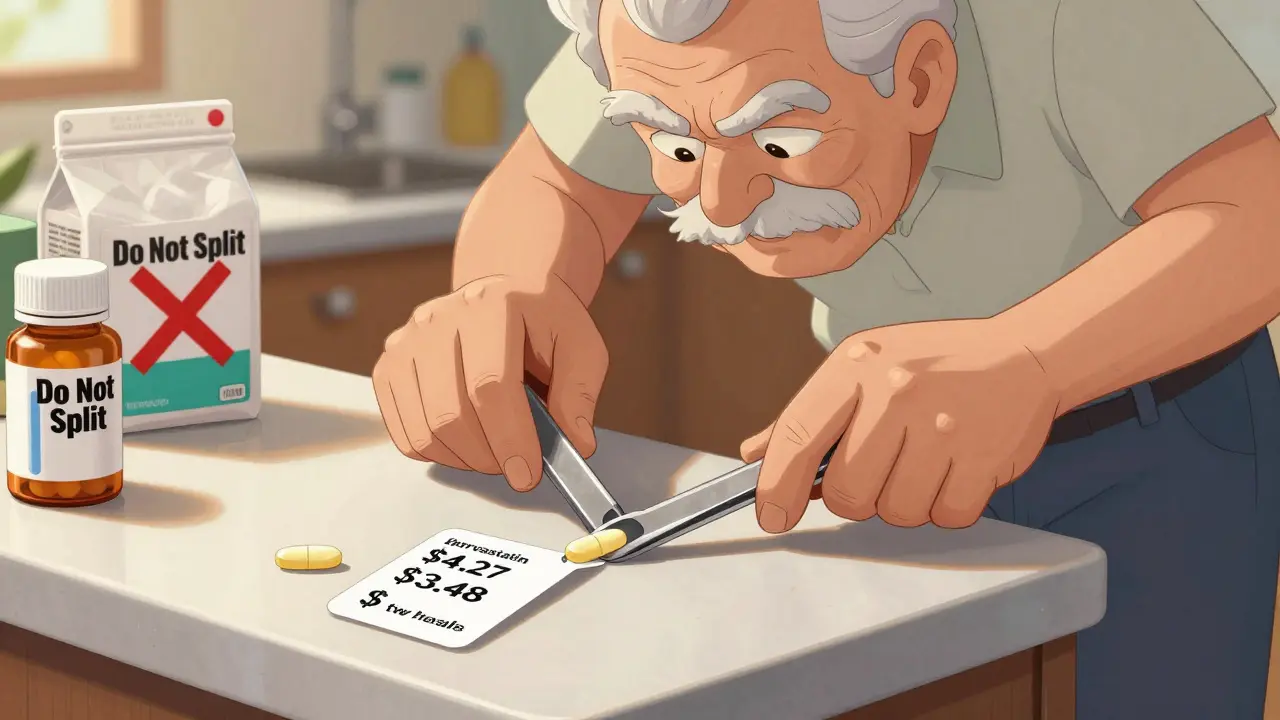
Buying medication can feel like paying for gold. A 40mg tablet of atorvastatin might cost $4.27, but two 20mg pills? That’s $3.48 total. Splitting the higher-dose tablet saves you nearly 40%. For people on fixed incomes, this isn’t a trick-it’s survival. But here’s the catch: not all pills can be split, and doing it wrong can land you in the hospital.
Why Pill Splitting Saves Money
Pharmaceutical companies don’t price pills by the milligram. A 40mg tablet often costs almost the same as a 20mg one, even though it contains twice the drug. That means splitting it gives you two doses for the price of one. It’s not magic-it’s math. The same applies to lisinopril, metoprolol, and simvastatin. According to GoodRx data from 2023, splitting these can cut your monthly cost by 25% to 50%.Medicare Part D beneficiaries save an average of $1,200 a year by splitting pills, according to user reports on Drugs.com. For some, that’s the difference between taking their meds or skipping doses. But savings only happen if you do it right.
Which Pills Can You Split?
Not every pill is safe to split. The FDA says you must check the package insert. If it doesn’t say splitting is okay, don’t do it.Safe to split:
- Scored tablets (with a visible line down the middle)
- Atorvastatin (Lipitor)
- Lisinopril (Zestril)
- Metoprolol (Lopressor)
- Simvastatin (Zocor)
- Fluoxetine (Prozac)
Never split:
- Extended-release pills (metformin ER, Adderall XR)
- Enteric-coated pills (omeprazole, aspirin EC)
- Capsules or gel caps
- Drugs with narrow therapeutic windows: warfarin, digoxin, levothyroxine, tacrolimus
Why? Extended-release pills are designed to release medicine slowly. Splitting them dumps the full dose all at once. Enteric coatings protect your stomach-or the drug from stomach acid. Break the coating, and the drug either irritates your gut or gets destroyed before it works. And with drugs like levothyroxine, a 10% dose change can throw your thyroid into chaos. One Reddit user split their Synthroid and ended up in the ER with a TSH level of 18. Normal is 0.4 to 4.0.
How to Split Pills Correctly
Using a knife, scissors, or your fingers? That’s how people get hurt. A 2010 study in PMC found knife-splitting leads to dose variations of 25% to 72%. That’s not a half-dose-that’s a gamble.Here’s the only safe way:
- Buy a pill splitter. They cost $3 to $10 at CVS, Walgreens, or Amazon. Look for one with a V-shaped holder and a sharp, retractable blade.
- Wash your hands and the splitter before each use. Dust or residue can contaminate the pill.
- Only split pills immediately before taking them. Split pills exposed to air, heat, or moisture lose potency within 24-48 hours.
- Check the split halves. If one side is crumbled or uneven, toss it. Don’t eat the smaller piece hoping it’ll balance out.
- Store the unsplit half in its original container, away from humidity.
Most people need 3 to 5 tries to get consistent splits. A 2019 study found 78% of users mastered the technique after one week of practice. But mastery means accuracy-not speed.
The Hidden Risks
Even with the right tools, pill splitting isn’t risk-free. A 2010 study with 94 volunteers splitting 25mg hydrochlorothiazide tablets found 41% of halves varied by more than 10% in weight. Twelve percent were off by over 20%. That’s not a typo. That’s dangerous.Why? Pills aren’t perfectly uniform. The active ingredient can settle unevenly during manufacturing. That’s why splitting un-scored pills is especially risky. Even scored pills can break unevenly if the tablet is brittle or old.
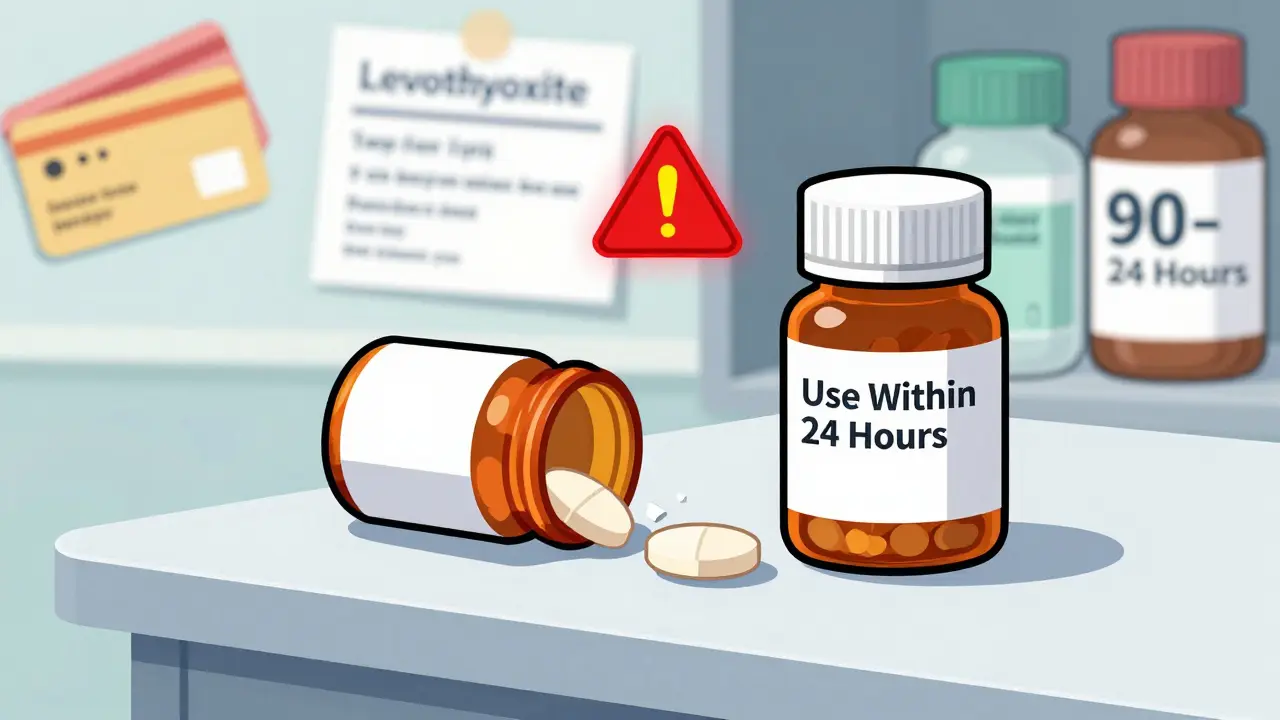
And storage matters. If you split a pill and leave it on the counter, humidity can break down the active ingredient. This is especially true for medications like levothyroxine or certain antidepressants. Banner Health’s 2022 guidelines say split tablets should be used within 24 hours.
The FDA has documented 127 adverse events linked to improper pill splitting between 2018 and 2023. That includes heart rhythm problems, strokes, and hospitalizations. One user on Reddit split a time-release amlodipine tablet and ended up in the ER with dangerously low blood pressure.
What Your Pharmacist Can Do
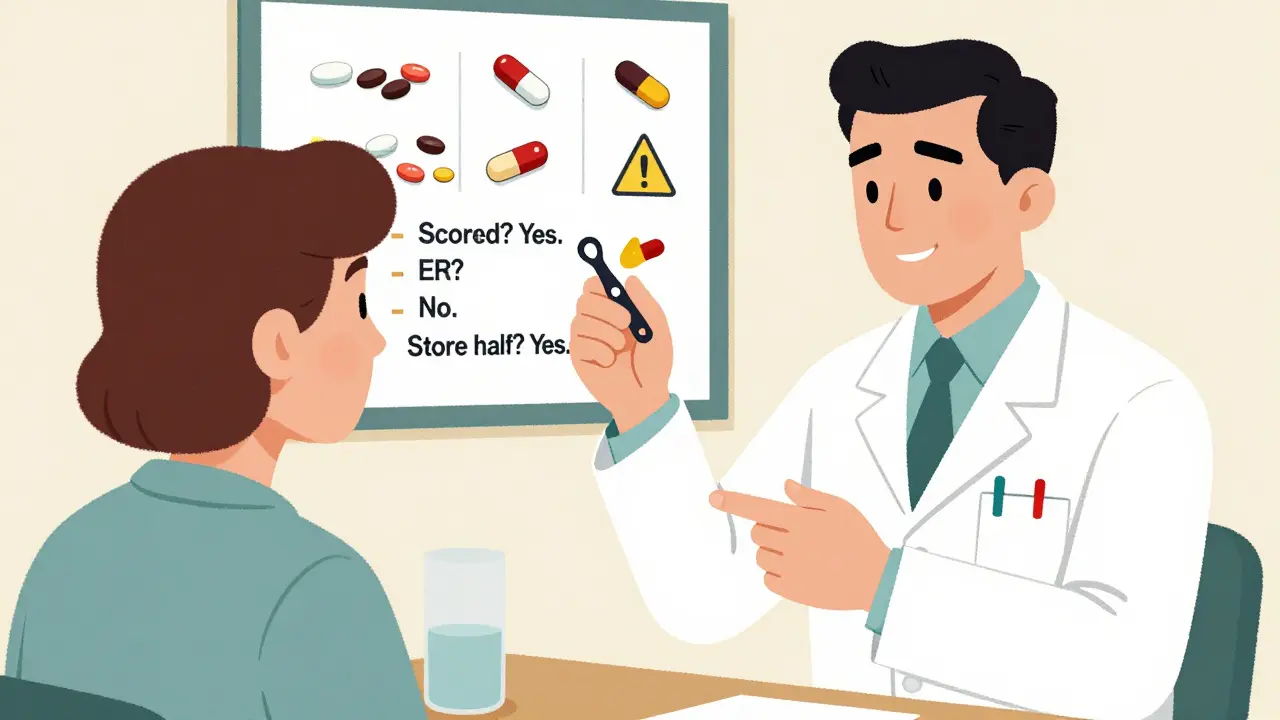
You don’t have to figure this out alone. Pharmacists are trained to advise on pill splitting. Ask them:- Is this medication approved for splitting?
- Does the package insert say it’s safe?
- Can you give me a pill splitter?
- Are there cheaper alternatives?
Many pharmacies now offer free pill splitters. Some even have certified staff who can demonstrate the technique. The American Pharmacists Association launched a “Split Safely” certification program in 2022 to train pharmacists on this exact issue.
Don’t be shy. If your pharmacist says, “We don’t do that,” ask why. Chances are they’re just not trained on it. Push for help.
Alternatives to Pill Splitting
Pill splitting isn’t the only way to save. In fact, it’s often the last resort.Try these first:
- Patient assistance programs: Drugmakers like Pfizer, Merck, and AbbVie offer free or discounted meds to low-income patients. You can apply online in minutes.
- Pharmacy discount cards: GoodRx, SingleCare, and RxSaver often cut prices by 30% to 60% without insurance.
- Generic equivalents: Make sure you’re on the generic version. Brand-name drugs cost 3-10x more.
- 90-day supplies: Many insurers charge less per pill for a 3-month supply. That’s two refills for the price of one.
- Ask for lower-strength pills: If your doctor prescribes 40mg, ask if 20mg is available and cheaper. Sometimes it is.
For example, sertraline 100mg tablets cost $0.12 each, while 50mg pills cost $0.08. Splitting doesn’t save you anything here. Buying the lower dose is cheaper.
When to Stop Splitting
If you notice any of these, stop immediately and call your doctor:- Your meds don’t seem to be working anymore
- You feel dizzy, shaky, or unusually tired
- Your blood pressure or blood sugar levels are erratic
- You’ve had to take a split pill more than once and it crumbled
These aren’t side effects. They’re warning signs. Dose inaccuracy can cause toxicity or treatment failure. It’s not worth the risk.
What’s Changing in 2025
The FDA is pushing for all new oral pills to be tested for splitability before approval. That means in the next few years, more medications will come with clear labels: “Can be split” or “Do not split.”Also, more manufacturers are offering multiple strengths. In 2015, only 19% of new drugs came in multiple doses. By 2023, that number jumped to 32%. That’s good news. It means fewer people will need to split pills in the future.
But until pricing reforms happen, millions will keep splitting pills. The Kaiser Family Foundation found 14.9% of Medicare beneficiaries do it. Among those earning under 200% of the federal poverty level, the rate hits 31.7%.
It’s not a sign of laziness. It’s a sign of broken pricing. Pill splitting is a workaround for a system that makes medicine unaffordable.
But you can do it safely. Just don’t guess. Ask. Check. Use the right tool. And never split a pill you’re not sure about.
Can I split any pill with a score line?
No. A score line only means the tablet was designed to be split-it doesn’t mean it’s safe. Always check the package insert or ask your pharmacist. Some scored pills, like extended-release versions, can’t be split without risking overdose.
Is it safe to split pills ahead of time?
No. Split pills should be used immediately. Exposure to air, heat, or moisture can cause the medication to break down. Pills like levothyroxine or certain antidepressants lose potency within 24-48 hours after splitting. Store unsplit pills properly, and split them right before you take them.
What’s the best pill splitter to buy?
Look for a simple, sturdy pill splitter with a V-shaped holder and a sharp, retractable blade. Brands like Performance Health and Medline are commonly used in pharmacies. Avoid cheap, flimsy models. A good one costs $3-$10 and lasts years. Many pharmacies give them away for free.
Can I split capsules or time-release pills?
Never. Capsules, extended-release tablets (ER, XR, SR), and enteric-coated pills are designed to release medicine slowly. Splitting them releases the full dose at once, which can cause serious side effects like low blood pressure, heart rhythm problems, or overdose. Examples include Adderall XR, metformin ER, and omeprazole.
I split my pill and it crumbled. What do I do?
Throw it away. Don’t eat the smaller piece. Dose inaccuracy is dangerous. If this happens often, you might be using the wrong tool, the pill might be too brittle, or the medication isn’t meant to be split. Talk to your pharmacist. They can suggest alternatives or switch you to a lower-dose version.
Are there safer ways to save on meds than splitting pills?
Yes. Use pharmacy discount cards like GoodRx or SingleCare. Apply for patient assistance programs from drug manufacturers. Ask your doctor if a lower-strength generic is available. Buy 90-day supplies to get lower per-pill prices. These options are safer and often just as cheap.




Comments (8)