
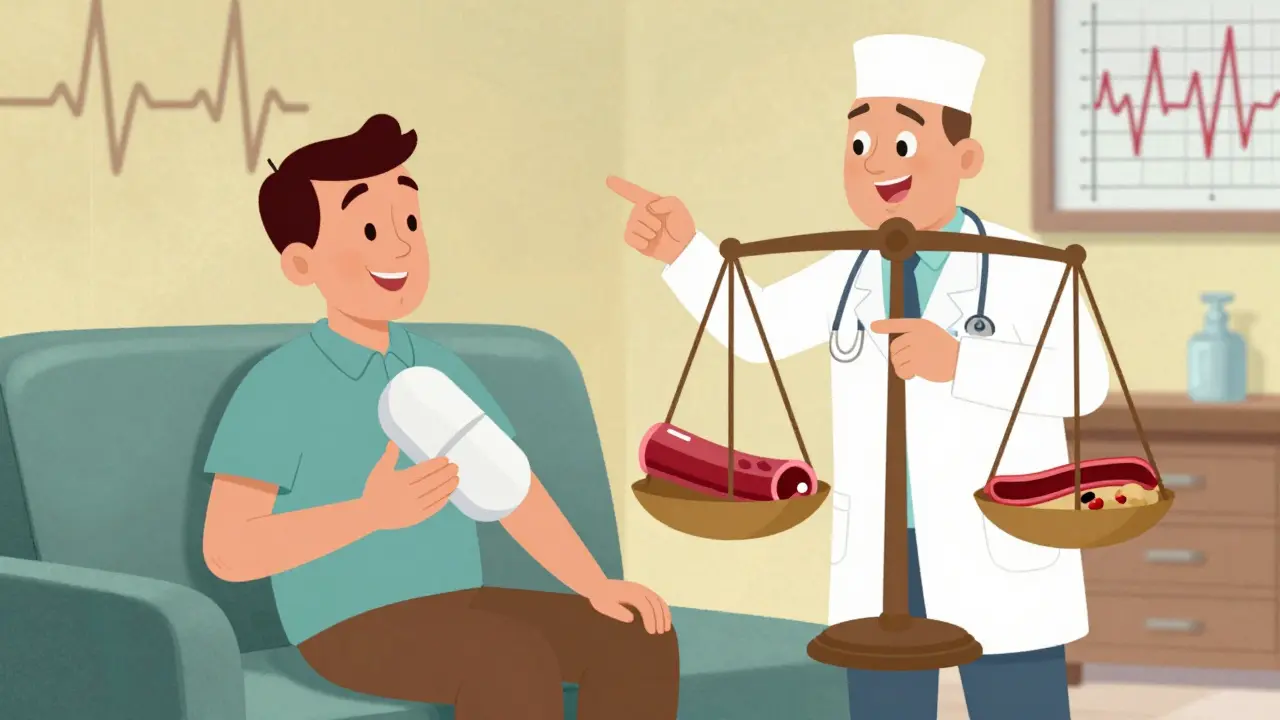
Statin Risk-Benefit Calculator After Stroke
Personalized Risk Assessment
This tool helps you understand if high-dose statins are likely beneficial versus risky for your specific situation after stroke. Based on SPARCL trial data and current guidelines.
Personalized Risk-Benefit Analysis
Stroke Recurrence Reduction
0% reduction in stroke recurrence risk
Bleeding Risk
0% increase in hemorrhagic stroke risk
Your personalized recommendation
Key considerations
After a stroke, your body doesn’t just need time to heal-it needs the right medicine to keep another one from happening. One of the most common-and controversial-choices doctors make is prescribing high-dose statins. For many, it’s a life-saving decision. For others, it’s a gamble with side effects that can be hard to ignore. So what’s the real story? Is it worth the risk? Let’s break it down, plainly and without fluff.
Why High-Dose Statins After a Stroke?
Statins aren’t just for lowering cholesterol. After a stroke, especially an ischemic one (caused by a blood clot), they’re used to stop another one from happening. The most studied high-dose statin is atorvastatin 80 mg a high-intensity statin used for aggressive LDL cholesterol reduction after stroke. This dose isn’t chosen lightly. It’s based on solid evidence from the SPARCL trial a landmark 2006 clinical trial testing atorvastatin 80 mg in stroke survivors, which followed over 4,700 people who’d recently had a stroke or TIA.
The results? A 16% drop in the chance of having another stroke over nearly five years. That might sound small, but in real numbers, it meant 2.2 fewer strokes per 100 people. For someone who’s already had one stroke, that’s a big deal. The goal isn’t just to lower cholesterol-it’s to slash it hard. High-dose statins can drop LDL (the "bad" cholesterol) by 50% or more. That’s far more than moderate doses, which typically lower it by 25-40%.
But here’s the catch: statins don’t just affect cholesterol. They also reduce inflammation, improve blood vessel function, and stabilize plaque in arteries. These "pleiotropic" effects are why they work so well for stroke prevention-especially in people with atherosclerosis (hardened arteries).
The Dark Side: What Can Go Wrong?
Every benefit comes with a cost. And with high-dose statins, the cost isn’t just a headache or a stomach ache. It can be serious.
The biggest concern? hemorrhagic stroke a type of stroke caused by bleeding in the brain, a rare but dangerous side effect of high-dose statins. The SPARCL trial found that people on atorvastatin 80 mg had twice the risk of bleeding in the brain compared to those on placebo (2.3% vs. 1.4%). That might sound rare, but for someone who already had a stroke-especially if they had a hemorrhagic stroke before-it’s a red flag.
Other side effects are more common but still disruptive:
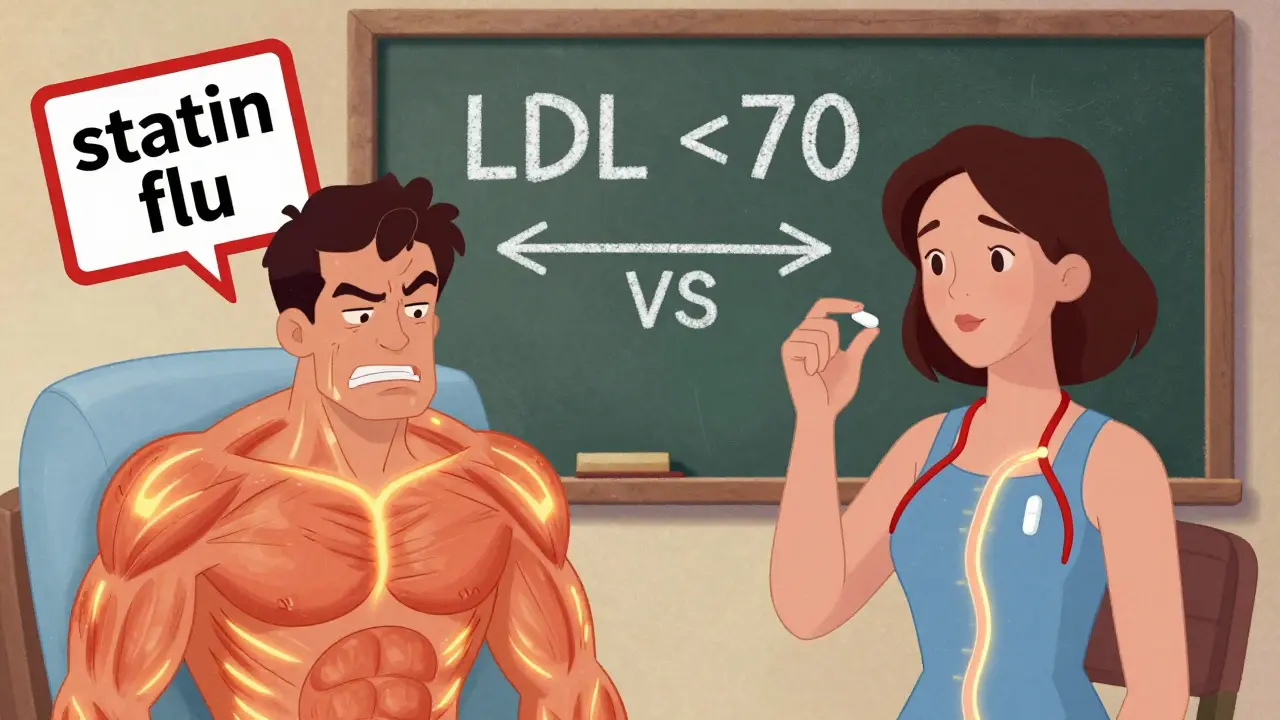
- Muscle pain or weakness-reported by 5-10% of users. Some call it "statin flu." It’s not just soreness-it can make walking or climbing stairs hard.
- Liver enzyme spikes-seen in about 1-2% of patients. Usually harmless, but needs monitoring.
- Digestive issues-nausea, gas, or diarrhea. Mild, but enough to make people quit.
- Mental fuzziness-some report memory lapses or confusion. Studies are mixed, but it’s real enough that patients complain about it.
And then there’s simvastatin 80 mg a high-dose statin with FDA warnings due to increased risk of severe muscle damage. The FDA warned in 2011 that this dose, especially when taken with certain blood pressure meds, can cause a dangerous muscle condition called rhabdomyolysis. Many doctors now avoid it entirely after stroke.
Who Benefits Most-and Who Should Avoid It?
Not all strokes are the same. And not everyone benefits from high-dose statins.
Best candidates? People with atherosclerotic stroke a stroke caused by plaque buildup in arteries, the subtype that responds best to statins. These are the ones where fatty deposits clog brain arteries. For them, statins can cut recurrent stroke risk by 20-30%.
But if your stroke was caused by a heart problem-like atrial fibrillation-statins offer little to no protection. In fact, some studies suggest they might even raise the risk of bleeding in these cases.
Who should skip it?
- People with a history of hemorrhagic stroke a previous brain bleed, a strong contraindication for high-dose statins
- Those with active liver disease
- Pregnant women or those planning to get pregnant
- People taking drugs like cyclosporine an immunosuppressant that dangerously interacts with statins, amiodarone a heart rhythm drug that increases statin toxicity risk, or strong antifungals
And here’s something most don’t talk about: PCSK9 inhibitors a newer class of cholesterol-lowering drugs that don’t increase hemorrhagic stroke risk. These injectable drugs (like evolocumab or alirocumab) lower LDL even more than statins-without the bleeding risk. They’re expensive, but for someone with a history of brain bleeding, they might be the safer bet.
Real-World Problems: Why People Stop Taking Them
Here’s the ugly truth: most people stop taking high-dose statins within six months.
A 2023 study found only 48.7% of stroke patients were even prescribed statins at discharge. Of those who were, nearly one in three quit within six months. Why? Muscle pain. Digestive issues. Fear of side effects. Or just plain forgetfulness.
And the cost? Devastating. The same study showed people who quit had a 42% higher risk of having another stroke. That’s not just a number-it’s a life-or-death gap.
Here’s what works better than quitting:
- Switching to a different statin (like rosuvastatin or pravastatin)
- Reducing the dose (e.g., from 80 mg to 40 mg of atorvastatin)
- Taking it every other day instead of daily
- Adding coenzyme Q10 (though evidence is weak, many patients swear by it)
Mayo Clinic says it plainly: "Don’t stop on your own. Talk to your doctor. There’s almost always a better way."
What the Guidelines Really Say
The American Heart Association and American Stroke Association updated their guidelines in 2021. They don’t say "take 80 mg of atorvastatin." They say: "Use statin therapy with intensive lipid-lowering effects."
That’s intentional. It’s not about the pill-it’s about the result. If you can get your LDL below 70 mg/dL with 40 mg of atorvastatin, that’s fine. If you need 80 mg, fine. But if you can’t tolerate it? Switch. Lower the dose. Try something else.
What’s clear? Any statin is better than none. Even moderate doses cut stroke risk by 20% on average. The goal isn’t perfection-it’s persistence.
The Future: What’s Coming Next?
Research is shifting from "one-size-fits-all" to "right-dose-for-you."
The STROKE-STATIN trial a current clinical trial testing immediate vs. delayed intensive statin therapy after stroke, which started in 2021, is now nearing completion. It’s not just asking if statins work-it’s asking: When should we start them? How fast? And who benefits most?
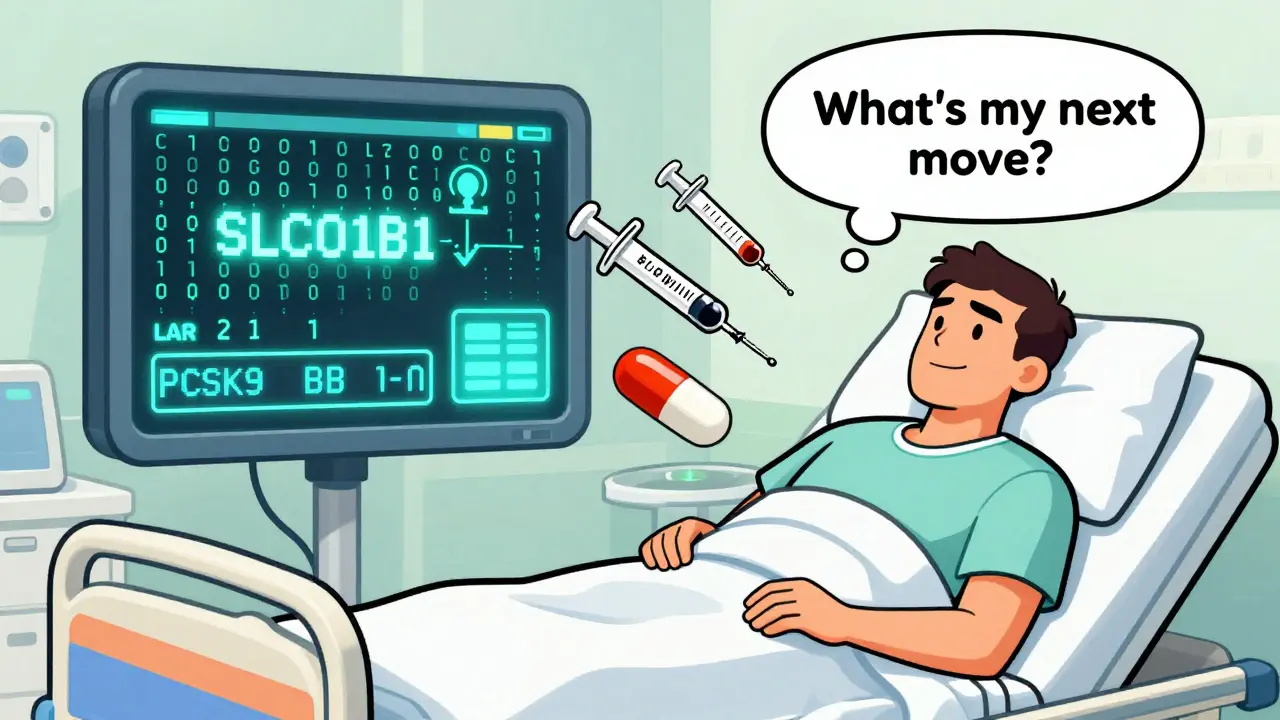
Meanwhile, genetic testing is becoming more common. Some people carry a gene variant (SLCO1B1 a gene variant that increases risk of statin-induced muscle damage) that makes them far more likely to get muscle pain. Testing for it could help avoid side effects before they start.
And then there’s the rise of non-statin options. PCSK9 inhibitors, ezetimibe, and even newer drugs in development may soon give us more choices-especially for those who can’t tolerate statins.
Bottom Line: What Should You Do?
If you’ve had a stroke:
- Don’t assume statins are right for you-or wrong for you. It depends on your type of stroke, your health, and your tolerance.
- Don’t stop taking them because you’re scared of side effects. Talk to your doctor first.
- Ask: "What’s my LDL target?" and "Can we try a lower dose or different statin?"
- If you’ve had a brain bleed before, ask about alternatives like PCSK9 inhibitors.
- Stick with it. The biggest risk isn’t the statin-it’s stopping it.
High-dose statins after stroke aren’t magic. But for most people with atherosclerotic stroke, they’re one of the best tools we have. The key isn’t taking the highest dose possible-it’s finding the dose that works without breaking you.



Comments (9)