
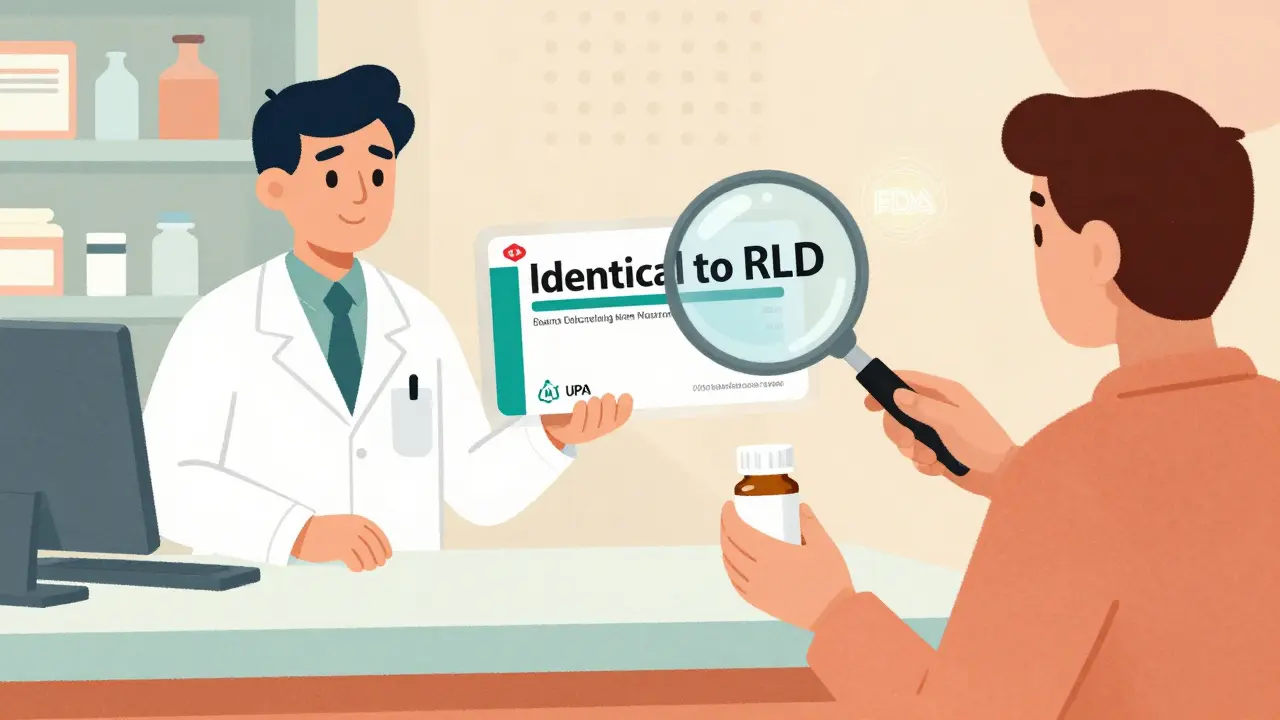
When you pick up a generic pill at the pharmacy, you expect it to work just like the brand-name version. But what you don’t see-what’s printed on the label-can make a huge difference in how safely and effectively that drug is used. The FDA doesn’t just approve generic drugs based on how well they work in the body. They also demand that the labeling matches the brand-name drug exactly-down to the wording, structure, and warnings. This isn’t just bureaucracy. It’s a safety rule with real consequences.
Why Generic Drug Labels Must Match the Brand
The FDA requires that every generic drug’s labeling be identical to its Reference Listed Drug (RLD). That means the same indications, dosage instructions, contraindications, warnings, and adverse reactions. This rule isn’t optional. It’s written into federal law under Section 505(j)(2)(A)(v) of the Federal Food, Drug, and Cosmetic Act and enforced through 21 CFR 314.94(a)(8). The goal? Consistency. If a doctor prescribes a drug based on the brand’s label, the generic must say the same thing-so patients, pharmacists, and providers aren’t confused or misled.There are only three exceptions allowed: the manufacturer’s name and address, the National Drug Code (NDC) number, and minor formatting changes required by packaging machines. Everything else? Non-negotiable. Even a single word change-like swapping "may" for "can"-can trigger a complete response letter from the FDA, delaying approval for months.
The Physician Labeling Rule (PLR): What’s Required
Since 2006, all prescription drug labels in the U.S. must follow the Physician Labeling Rule (PLR). This isn’t just a style guide-it’s a strict format. The PLR breaks labeling into 24 standardized sections. For generic drugs, this means:- Boxed Warning (the most serious safety alert)
- Recent Major Changes
- Indications and Usage
- Dosage and Administration
- Contraindications
- Warnings and Precautions
- Adverse Reactions
- Drug Interactions
- Use in Specific Populations (pregnancy, elderly, kidney impairment)
- Clinical Pharmacology
- Nonclinical Toxicology
- References
Generic manufacturers must update their labels to match the RLD’s PLR format whenever the brand updates theirs. If the brand switches from an old-style label to the PLR format, the generic must follow-even if the generic was approved years earlier. This happened with drugs like metformin and lisinopril, where manufacturers had to completely restructure their labels to comply.
How Generic Manufacturers Track Label Changes
Unlike brand-name companies, generic manufacturers can’t update their labels independently. They have to wait for the RLD to change first. That means staying glued to Drugs@FDA, the FDA’s official database of approved labeling documents. As of January 2025, there are 2,850 RLDs listed there, updated weekly on Tuesdays.Leading generic companies assign 3 to 5 full-time regulatory staff to monitor labeling changes for every 50 products. Many subscribe to CDER’s email alerts, which notify them when labeling updates occur in specific therapeutic areas-like anticoagulants or diabetes drugs. But even with these tools, 68% of regulatory affairs professionals surveyed in late 2024 said tracking changes across multiple drug classes is still a major headache.
One common trap? Inconsistencies between Drugs@FDA and the FDA’s Orange Book. A 2024 audit found that 17% of RLD entries had temporary mismatches during transitions. That means manufacturers can’t rely on just one source-they have to cross-check with FDA guidance documents, press releases, and even direct calls to the Division of Labeling Review.
The Dangerous Delay: Why Generic Labels Lag Behind
Here’s the biggest flaw in the system: generic manufacturers can’t act until the brand does. If a brand-name drug gets a new boxed warning for liver damage, the generic can’t update its label until the FDA approves the brand’s change-and then only after the generic submits a supplement. That process can take 6 to 12 months.A 2024 study in JAMA Internal Medicine found this delay affects 9,400 generic drugs-89% of all prescriptions filled in the U.S. That means millions of patients are using drugs with outdated safety info. The 2022 valsartan recall is a chilling example. Contamination risks were identified in the brand product, but generic manufacturers couldn’t update their labels until months later-even though their pills had the same flaw.
Brand manufacturers can file a "Changes Being Effected" (CBE) supplement and update their labels immediately, notifying the FDA afterward. Generics? They can’t. They’re stuck in a waiting game.
What’s Changing in 2025 and Beyond
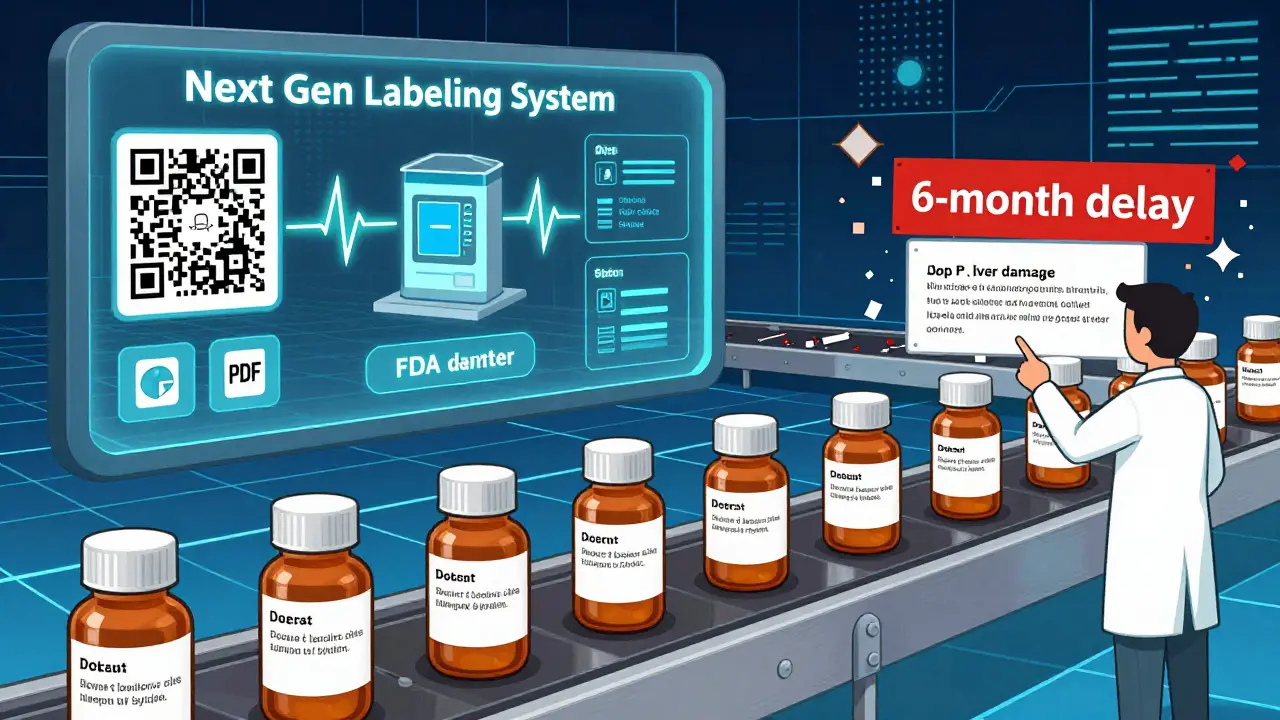
The FDA knows this gap is dangerous. In 2020, the MODERN Labeling Act gave the agency tools to fix outdated labels when the RLD is no longer on the market. That’s critical-over 1,200 RLDs have been discontinued, leaving 3,500 generic products without a living reference. The FDA released draft guidance in January 2025 to help manufacturers update those labels using alternative sources like published studies or FDA review documents.Even bigger changes are coming. In April 2025, the FDA will begin beta testing its Next Generation Generic Drug Labeling System. This AI-powered tool will automatically scan Drugs@FDA for labeling updates and send alerts to manufacturers, flagging mismatches before they become violations. It’s designed to cut the time between RLD updates and generic label revisions from months to days.
The FDA is also pushing for electronic labeling. As of 2025, medication guides must include a URL or QR code linking directly to the current FDA-approved label in PDF format. The link must use HTTPS and be kept up to date. This is a big shift from paper inserts, especially for patients who use smartphones daily.
Compliance Costs and Who’s Affected
Labeling compliance isn’t cheap. For small generic manufacturers, it costs an average of $147,500 per product annually. Large companies with scale spend closer to $89,200. That’s 18-22% of total ANDA maintenance costs. Teva, Viatris, and Sandoz-top players in the generic market-each have dedicated labeling teams of 50 to 120 people.Between January 2023 and December 2024, the FDA issued 47 warning letters specifically for labeling discrepancies. That’s not just fines-it’s product recalls, delayed approvals, and reputational damage. One manufacturer lost a $20 million contract after their label didn’t include a newly added contraindication for patients with severe renal impairment.
What Pharmacists and Patients Need to Know
If you’re a pharmacist, always check the label against the most current version on Drugs@FDA before dispensing-especially for high-risk drugs like anticoagulants, insulin, or seizure medications. If the label looks outdated, contact the manufacturer. Don’t assume the generic is up to date just because it’s approved.As a patient, if you notice your generic drug’s label has changed or seems different from last time, ask your pharmacist. You have a right to know about new risks or dosage changes. The FDA’s website lets you download the official label anytime-no prescription needed.
What’s Next for Generic Drug Labeling
The FDA plans to require real-time labeling updates by 2027. That means manufacturers will need systems that sync with FDA databases automatically. The industry is expected to invest $2.8 billion in labeling technology by 2029. The goal? No more delays. No more outdated warnings. Just accurate, timely information on every pill, no matter the brand.For now, the system still favors consistency over speed. But with new tools, new rules, and growing pressure from clinicians and patients, that’s starting to change.
Can a generic drug have different labeling than the brand-name version?
No, not legally. Generic drugs must have labeling that is identical to the Reference Listed Drug (RLD), except for the manufacturer’s name, address, and National Drug Code (NDC). Any other differences-like wording, warnings, dosage instructions, or contraindications-violate FDA regulations and can result in enforcement actions, including warning letters or product recalls.
Why can’t generic manufacturers update their labels faster when new safety info comes out?
Because FDA rules require generic manufacturers to wait for the brand-name drug’s label to be updated first. Brand manufacturers can submit a "Changes Being Effected" supplement and update their label immediately, while generics must wait for FDA approval of the RLD’s change before submitting their own. This creates delays of 6-12 months, which has been criticized as a patient safety risk.
How do I find the most current FDA-approved label for a generic drug?
Go to Drugs@FDA on the FDA’s website. Search by the drug’s brand name or active ingredient. Click on the approved labeling document under the "Labeling" section. The document you see is the official, up-to-date version that all generic versions must match. Labels are updated weekly, usually on Tuesdays.
What happens if a generic drug’s label doesn’t match the brand’s?
The FDA considers this a serious compliance issue. It can lead to a Complete Response Letter (CRL), delaying approval or market launch. For already-approved drugs, the FDA may issue a warning letter, demand a recall, or even withdraw approval. Between 2023 and 2024, 47 warning letters were issued specifically for labeling mismatches. The risk isn’t just regulatory-it’s clinical. Outdated labels can lead to medication errors and harm.
Do over-the-counter (OTC) generic drugs have the same labeling rules?
Not exactly. OTC generics follow the FDA’s Monograph system, not the Prescription Labeling Rule (PLR). But they still must match the labeling of the reference OTC product. The FDA recently delayed the ACNU Final Rule until March 2025, which affects how certain OTC generics can update their labels for new indications or warnings. Manufacturers must still ensure consistency with the approved OTC monograph or reference product.
Is electronic labeling required for generic drugs now?
Yes, for medication guides. As of 2025, every generic drug that requires a medication guide must include a URL or QR code that links directly to the current FDA-approved label in PDF format. The link must use HTTPS and must be maintained and updated whenever the label changes. This replaces older paper-only requirements and improves patient access to accurate safety information.




Comments (11)