
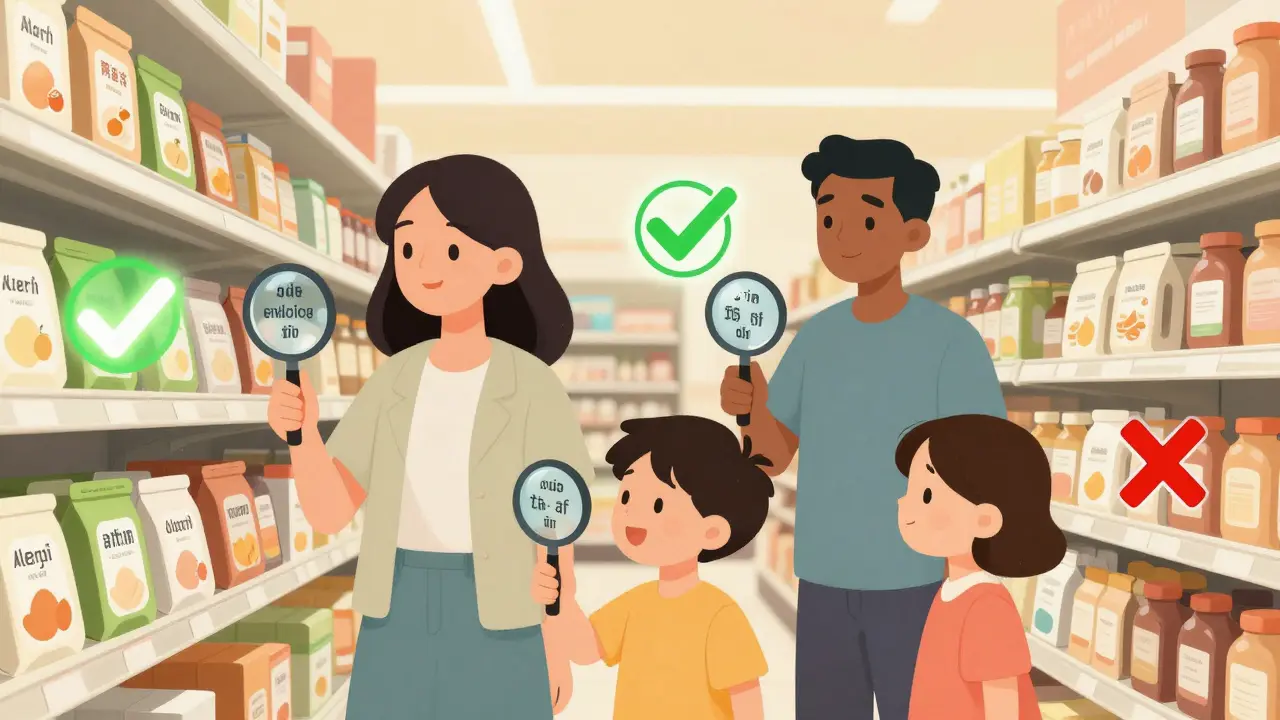
Every time you pick up a packaged food item, you’re making a decision that could mean the difference between a safe meal and a life-threatening reaction. For the 32 million Americans with food allergies - including 5.6 million children - reading labels isn’t just a habit. It’s a survival skill. And in 2025, the rules have changed. What used to be vague warnings like “may contain nuts” or “processed in a facility with milk” are now being replaced by precise, science-backed labeling requirements. The U.S. Food and Drug Administration (FDA) released its latest guidance on January 6, 2025, and it’s the most significant update to food allergen labeling in over two decades. This isn’t just paperwork. It’s about preventing allergic reactions before they happen.
What’s New on Food Labels in 2025?
The biggest shift? Specificity. No longer can a label just say “milk” or “egg.” If the product contains goat milk, it must say “goat milk.” If it uses duck eggs, it must say “duck egg.” This change was made because many people aren’t allergic to all forms of milk or eggs - just one type. Someone might react to cow’s milk but safely drink goat’s milk. Before this rule, they had to call the manufacturer, email customer service, or guess. Now, the information is right on the package. Same goes for fish. Instead of just saying “fish,” labels must now specify whether it’s trout (a bony fish), shark (a cartilaginous fish), or lamprey (a jawless fish). This level of detail matters because allergies are often species-specific.
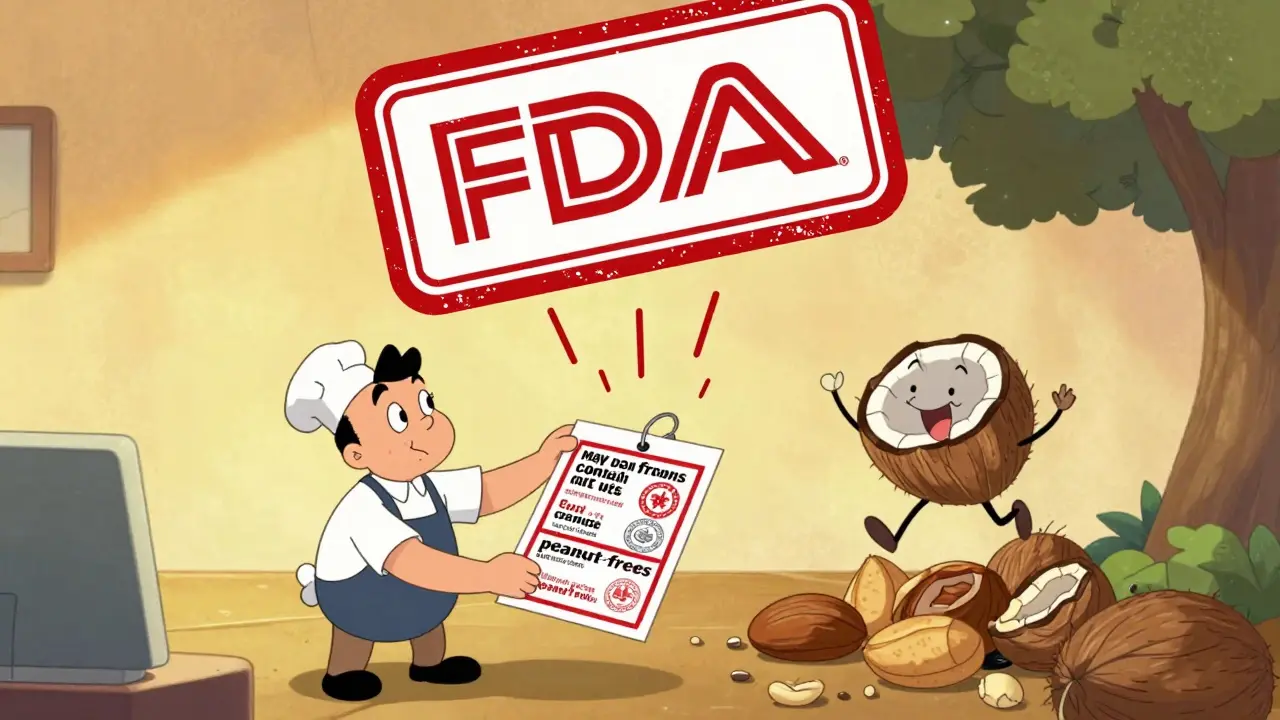
Another major change: coconut is no longer considered a tree nut under federal labeling rules. That’s right. Coconut was removed from the list of major allergens in 2025. For years, people with tree nut allergies avoided coconut out of caution - even though it’s botanically a fruit, not a nut. The FDA’s decision reflects current scientific understanding: allergic reactions to coconut are rare, and most people with tree nut allergies can eat coconut safely. This change reduces unnecessary fear and helps people expand their food choices without risking their health.
Shellfish Just Got More Confusing
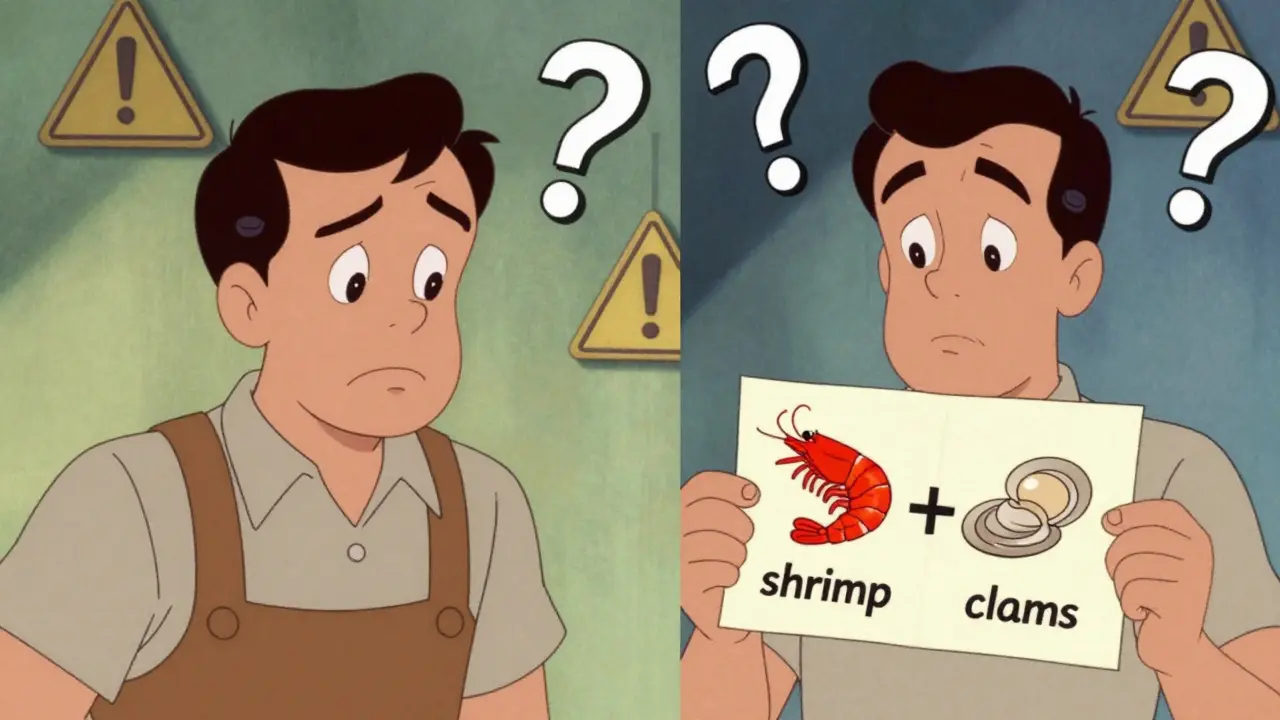
But not every change is a win. The FDA narrowed the definition of shellfish to include only crustaceans - shrimp, crab, and lobster. Mollusks like oysters, clams, scallops, and mussels are no longer covered under the same labeling rule. That’s a problem. About 1.5 million Americans are allergic to mollusks, and many of them assumed they were protected under “shellfish” warnings. Now, if a product contains clams, it doesn’t have to say so unless the manufacturer chooses to. This creates a dangerous gap. A person with a clam allergy might buy a soup labeled “free from shellfish” and never realize it contains clams. Consumer groups like Food Allergy Research & Education (FARE) have raised alarms, and social media groups like r/foodallergies are full of worried parents and adults asking: “How do I know what’s really in this?”
“Free From” vs. “May Contain” - No More Mixed Messages
One of the most confusing parts of food labels for years has been the contradiction between “free from” claims and precautionary statements. You’d see a product labeled “milk-free” - great! - but then right below it: “May contain milk.” Which is it? The 2025 guidance now says: you can’t have both. If a product claims to be free of an allergen, it must be genuinely free. That means no cross-contact. No accidental traces. No “may contain” disclaimers. This is huge. It gives people with allergies real confidence when they see “gluten-free,” “peanut-free,” or “soy-free.” Manufacturers can’t use “may contain” as a legal shield anymore. If they say it’s free, they have to prove it. This rule alone could prevent hundreds of reactions every year.
What About Cross-Contact?
Cross-contact happens when a tiny bit of an allergen gets into a food that wasn’t meant to have it. A spoon used for peanut butter gets wiped off and then used in a nut-free cookie dough. A shared conveyor belt carries both wheat bread and gluten-free crackers. These aren’t always avoidable - but they must be controlled. The FDA still doesn’t require manufacturers to label for cross-contact. So statements like “made in a facility with tree nuts” are still voluntary. But here’s the catch: if they do use them, they have to be truthful. You can’t say “may contain peanuts” if your factory has never touched peanuts. The FDA is cracking down on misleading claims. And if a company says “peanut-free,” they must have strict cleaning protocols, testing, and documentation to back it up. This puts the burden on manufacturers to be more responsible - and gives consumers more trust in the labels they read.
Who’s Affected? Real Stories Behind the Rules
These changes aren’t theoretical. They’re personal. Take Sarah, a mom in Chicago whose 4-year-old is allergic to cow’s milk but tolerates goat’s milk. Before 2025, every yogurt label said “milk.” She’d call the company, wait days for a reply, and sometimes still got it wrong. Now, she can look at a label and instantly know: “Goat milk - safe. Cow milk - avoid.” That’s peace of mind. Then there’s Marcus, who has a severe shellfish allergy to clams. He used to avoid all seafood because “shellfish” was listed. Now, he’s terrified. He reads every label, but he can’t trust the word “shellfish” anymore. He’s started avoiding seafood altogether - not because he’s allergic to shrimp, but because he doesn’t know what’s hidden in the broth or seasoning.
And then there’s the coconut effect. Before the change, families avoided almond butter, granola bars, and even some oatmeals just because coconut was listed under tree nuts. Now, many of those products are safe again. One dad on Reddit said, “I bought a trail mix with coconut last week. My son ate it without a reaction. I cried.”
What’s Not Covered - And Why It Matters
Not everything is included. The FDA’s rules only apply to foods it regulates: packaged snacks, cereals, dairy, beverages, infant formula, and dietary supplements. Meat, poultry, catfish, and processed egg products fall under the USDA - and those labels haven’t changed yet. So if you’re buying a deli turkey sandwich or a frozen chicken pot pie, the allergen labeling might still be outdated. That’s a blind spot. People with allergies need to be extra careful with these products. Also, alcohol beverages - like wine, beer, and spirits - are regulated by the Alcohol and Tobacco Tax and Trade Bureau (TTB). They’re not required to list allergens at all. A wine might be fined with egg whites (used in clarification) and never say so. That’s a risk.
Small Businesses Are Struggling
These new rules are expensive. For a small bakery or craft snack company, updating labels, retraining staff, testing ingredients, and retooling production lines can cost between $5,000 and $15,000 per product line. Many don’t have the budget. Some are waiting to see if the FDA makes these rules mandatory. Others are just hoping consumers won’t notice the difference. But here’s the truth: people with allergies notice. They read every line. They notice when “goat milk” disappears from a label. They notice when “may contain” comes back after a “free from” claim. And they stop buying. For small businesses, the cost of compliance isn’t just financial - it’s reputational. Get it wrong, and you lose trust. Get it right, and you earn loyalty.
What You Can Do Right Now
Even with better rules, you still need to be your own advocate. Here’s what to do:
- Read the full ingredient list - not just the “Contains” box. Allergens can hide in flavorings, natural extracts, or processing aids.
- Check for specific sources - Is it cow’s milk or goat’s milk? Is it shrimp or scallop? Don’t assume.
- Trust “free from” only if there’s no “may contain” - The 2025 rule makes this clear. If both are there, the product isn’t safe.
- When in doubt, contact the manufacturer - Call or email. Ask: “Is this product made on shared equipment with [allergen]?” Get their answer in writing.
- Stay alert for mollusks - If you’re allergic to clams, oysters, or scallops, assume they’re in anything savory unless confirmed otherwise.
The FDA’s 2025 guidance is a step forward - but it’s not a safety net. It’s a tool. And tools only work if you know how to use them.
What’s Next?
The FDA is already studying other potential allergens - like mustard, celery, and lupin - to see if they should be added to the list. By 2027, experts predict 75% of major U.S. food brands will fully adopt the new labeling standards. But enforcement is still weak. The FDA inspects only about 10% of food plants each year. That means compliance isn’t guaranteed. That’s why consumer education is just as important as regulation. Organizations like FARE are working hard to teach families how to read labels, ask the right questions, and stay safe. And they’re pushing for mandatory labeling across all food categories - including meat and alcohol.
For now, the best protection isn’t just on the label. It’s in your hands. Know your allergens. Ask questions. Don’t trust assumptions. And never stop reading the fine print - because someone’s life might depend on it.
Is coconut still considered a tree nut on food labels in 2025?
No. As of January 2025, the FDA removed coconut from the list of major tree nut allergens. Foods containing coconut no longer need to list it under “tree nuts” on labels. This change reflects scientific evidence that most people with tree nut allergies can safely eat coconut, since it’s botanically a fruit. However, manufacturers can still choose to list coconut voluntarily if they want to help consumers avoid it.
Why are mollusks like clams and oysters no longer labeled as shellfish?
The FDA updated its definition of “shellfish” to include only crustaceans - shrimp, crab, and lobster. Mollusks like clams, oysters, scallops, and mussels are now excluded from mandatory allergen labeling. This change was made based on biological classification, not safety. But it creates a real risk: people with mollusk allergies may not realize these foods are still dangerous. If you’re allergic to clams or oysters, you must read ingredient lists carefully and contact manufacturers directly - because “shellfish” on a label no longer means what it used to.
Can a product say “milk-free” and also say “may contain milk”?
No. Under the FDA’s 2025 guidance, a product cannot use both a “free from” claim and a precautionary “may contain” statement for the same allergen. If a label says “milk-free,” it must be genuinely free of milk, including any trace amounts from cross-contact. The “may contain” warning is no longer allowed in that case. This rule was created to stop misleading labels and give people with allergies real confidence in “free from” claims.
Do meat and poultry products have to follow the new allergen labeling rules?
No. Meat, poultry, catfish, and processed egg products are regulated by the USDA, not the FDA. The USDA has not adopted the 2025 FDA labeling changes. So a frozen chicken dinner or deli turkey might still list “egg” or “milk” without specifying the source (like duck egg or goat milk). Always read ingredient lists carefully on these products - and don’t assume the new rules apply.
How can I tell if a product is truly safe for my child’s milk allergy?
Look for the exact source of milk. If your child is allergic to cow’s milk but can tolerate goat’s milk, only buy products that clearly say “goat milk” in the ingredient list - not just “milk.” Also, make sure there’s no “may contain milk” statement. If you see both “goat milk” and “may contain milk,” avoid it. Contact the manufacturer to ask about shared equipment. And if you’re unsure, choose products certified by trusted allergy organizations or labeled as “verified allergen-free.”
Food allergy safety isn’t just about what’s on the label - it’s about understanding what’s not there, too. Stay informed. Stay vigilant. And never stop asking questions.




Comments (16)