
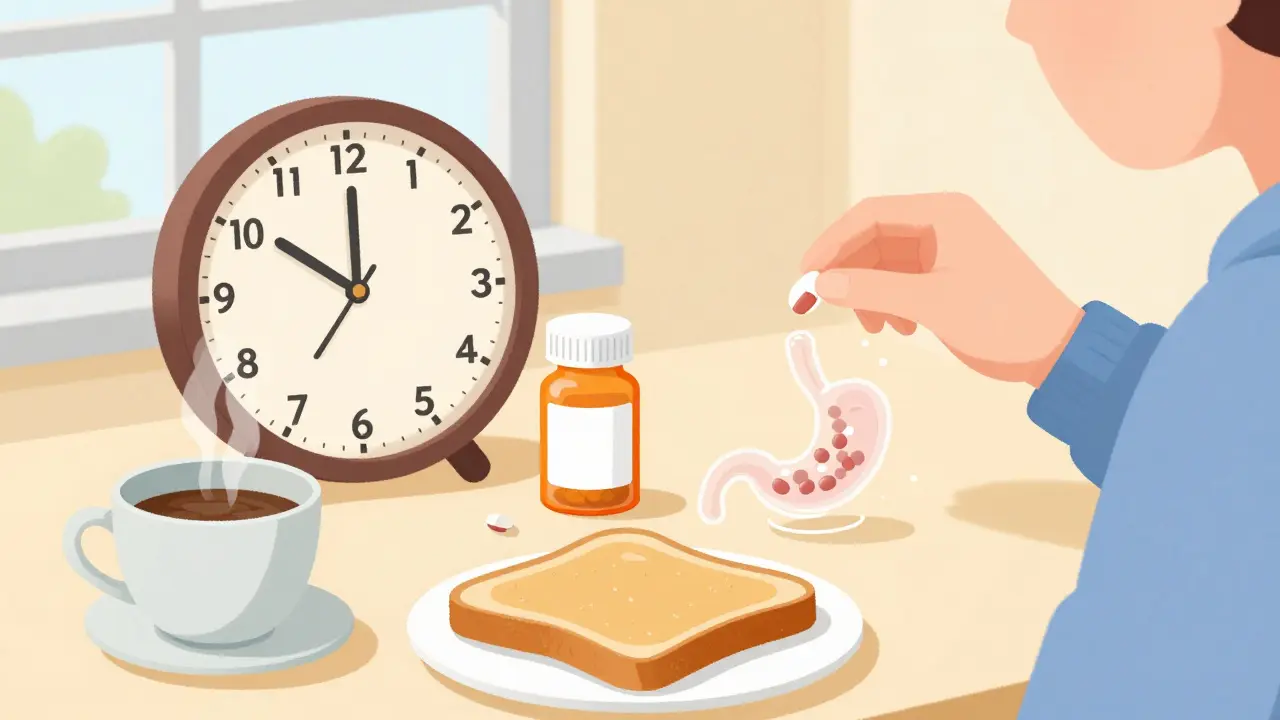
For millions of people taking extended-release medications, especially for ADHD, the question isn’t just when to take the pill-it’s how and with what. A simple change like eating breakfast before or after your dose can make the difference between a focused day and a crash by mid-morning. This isn’t speculation. It’s science. And it’s something most doctors don’t take enough time to explain.
Why Breakfast Timing Isn’t Just About Hunger
Extended-release medications are designed to release their active ingredients slowly over 8 to 12 hours. But that slow release doesn’t mean they’re immune to what’s happening in your gut. Food-especially a high-fat breakfast-can dramatically alter how quickly and how much of the drug gets into your bloodstream. For some medications, this means your dose might as well be half as strong. Take ADDERALL XR, for example. A 2002 study published in the Journal of Clinical Pharmacology showed that when people took this amphetamine-based extended-release pill after a high-fat breakfast, their early drug exposure dropped by 30% to 40%. That’s not a small fluctuation. It’s enough to cause a noticeable dip in focus, motivation, and impulse control during the most critical hours of the day-school, work, or meetings. The reason? ADDERALL XR uses tiny beads coated to dissolve gradually. Food slows gastric emptying and changes stomach pH, which interferes with how those beads release their payload.CONCERTA Doesn’t Play by the Same Rules
Now compare that to CONCERTA, a methylphenidate-based extended-release tablet. The same study found that whether people took it on an empty stomach or after a full breakfast, their drug levels stayed nearly identical. Why? Because CONCERTA doesn’t rely on beads. It uses an osmotic pump system called OROS. Think of it like a tiny water-powered timer inside the pill. Water seeps in through the pill’s outer shell, building pressure that pushes the medication out steadily-no matter what’s in your stomach. That’s why people who switch from ADDERALL XR to CONCERTA often report more stable results, especially on school days when breakfast timing varies. This isn’t just about ADHD meds. Levothyroxine, used for hypothyroidism, loses up to 50% of its absorption if taken with food. GLP-1 drugs like semaglutide (Wegovy, Ozempic) require you to wait at least 30 minutes before eating. Even some statins behave differently: simvastatin works better at night because your liver makes most cholesterol while you sleep. But atorvastatin? It’s consistent no matter when you take it. The takeaway? Not all extended-release pills are created equal.Real People, Real Consequences
Reddit threads and patient reviews tell the real story. One user on r/ADHD wrote: “I thought I was going crazy. My focus was perfect on weekends when I skipped breakfast, but by 10 a.m. on school days, I was zoning out. My doctor said it was ‘just ADHD.’ It wasn’t. It was the food.” Another, a teacher, said: “I take CONCERTA with my coffee and toast. If I skip it, I’m useless by lunch. I need that consistency.” On Drugs.com, 62% of CONCERTA users report consistent daily effects. Only 48% of ADDERALL XR users say the same. That’s a huge gap in real-world experience. And it’s not because one drug is “better.” It’s because one is more forgiving of daily life.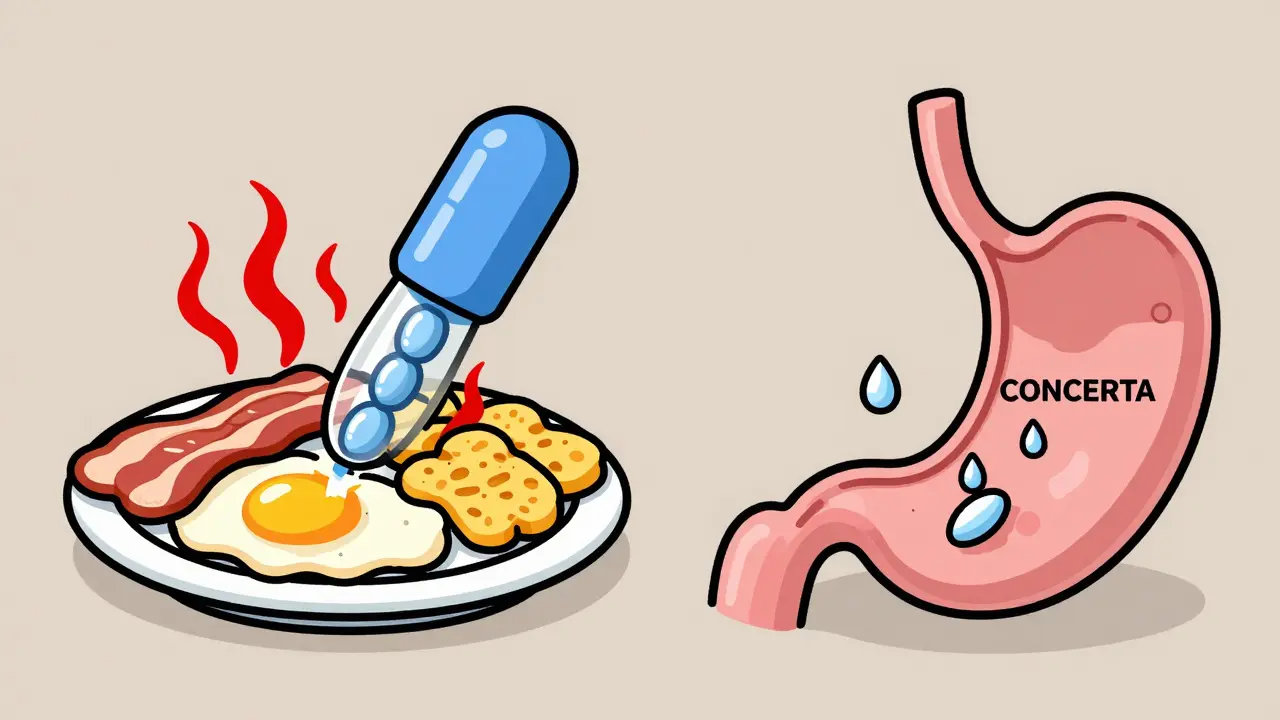
What You Should Do
If you’re on an extended-release medication, here’s what to do next:- Find out if your medication is affected by food. Check the prescribing information or ask your pharmacist. If it’s an amphetamine-based extended-release drug (like ADDERALL XR, MYDAYIS, or DEXEDRINE SPANSULES), food matters.
- Choose one routine and stick to it. Either always take it 30 to 60 minutes before breakfast, or always take it with a light, low-fat meal. Don’t switch back and forth.
- If you’re on ADDERALL XR and eating breakfast causes your symptoms to fade, try taking it on an empty stomach. A small snack like a banana or a handful of almonds 20 minutes after the pill can help with nausea without disrupting absorption.
- If you’re on CONCERTA or another OROS-based drug, you have more flexibility. But consistency still matters. Your body learns your rhythm. Changing it daily makes your brain work harder to adjust.
- Track your symptoms. Use a simple scale: 1 = barely functional, 5 = fully focused. Do this for a week with your current routine, then try the alternative. Compare.
Why Doctors Don’t Always Mention This
Many prescribers assume patients will read the medication guide. But most people don’t. Or they skim it. Or they forget by the time they get home. And even if they do, they don’t know what “food effect” means. The American Psychiatric Association says that spending just 15 to 20 minutes on timing education during the first visit cuts non-adherence by 37%. That’s huge. Yet, in a 2023 survey, only 31% of ADHD patients reported being given clear instructions on food timing. It’s not that doctors are negligent. It’s that the system doesn’t reward time spent on this kind of detail. But you can take control. Bring this up at your next appointment. Say: “I’ve noticed my medication works better on weekends. Could food timing be affecting it?”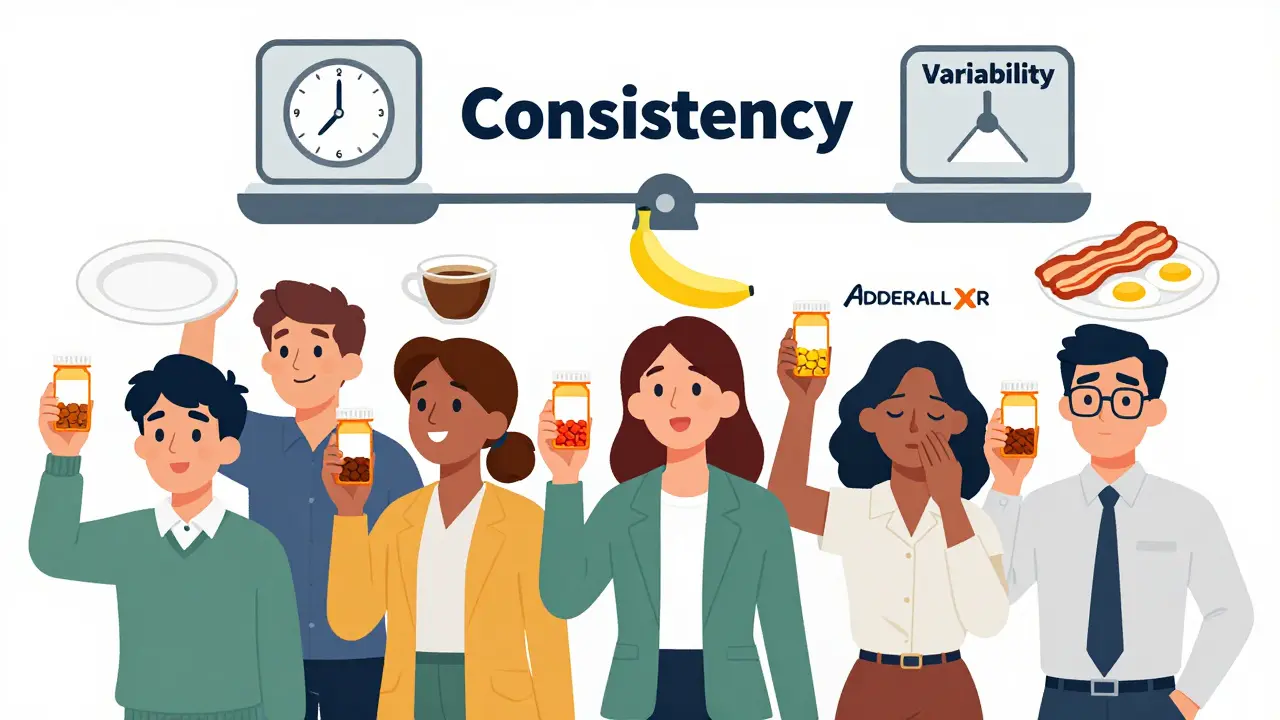
The Bigger Picture
The pharmaceutical industry is waking up to this. New extended-release drugs now must prove they work the same whether taken with or without food. In 2022, 92% of new CNS extended-release medications submitted to the FDA included food-effect data. That’s up from 47% a decade ago. Companies know that if your drug’s performance depends on whether you ate oatmeal or skipped breakfast, you’ll switch to something more reliable. That’s why CONCERTA’s market share in pediatric ADHD jumped to 62% in 2022, while ADDERALL XR fell to 38%. It’s not just branding. It’s science. It’s consistency. It’s patients finally getting a tool that works in the real world-not just in a clinical trial.What’s Next?
Researchers are now using wearable EEGs and glucose monitors to see how your body’s daily rhythms affect drug absorption. Early data suggests your metabolism, sleep patterns, and even gut bacteria may influence how well your medication works. By 2026, we may see personalized timing recommendations based on your genes, not just your doctor’s best guess. Until then, the best advice is simple: pick a time, pick a routine, and stick to it. Your brain doesn’t need to guess what’s coming. It needs predictability. And consistency is the most powerful, underused tool in your medication regimen.Does eating breakfast affect all extended-release medications?
No. Only certain formulations are affected. Amphetamine-based drugs like ADDERALL XR and DEXEDRINE SPANSULES are highly sensitive to food, especially high-fat meals. Methylphenidate formulations using OROS technology, like CONCERTA, are designed to be food-insensitive. Other medications like levothyroxine and semaglutide also require fasting, while statins vary by type. Always check the prescribing information for your specific drug.
Can I take my medication with just coffee and a muffin?
It depends. A light, low-fat snack like a banana, toast with peanut butter, or yogurt is usually fine for most extended-release stimulants. But a high-fat breakfast-think bacon, eggs, hash browns, or pastries-can significantly reduce absorption for drugs like ADDERALL XR. If you’re unsure, stick to a small, simple snack and avoid greasy or fried foods until you know how your body reacts.
Why does my medication work better on weekends?
This is common with food-sensitive medications like ADDERALL XR. On weekends, you might skip breakfast, sleep in, or eat later. That means you’re taking the pill on an empty stomach, which gives you full absorption. On school or work days, eating breakfast right before or after your dose can blunt the effect. Tracking your meals and symptoms for a week can confirm this pattern.
Should I take my ADHD medication before or after breakfast?
For ADDERALL XR and similar amphetamine-based extended-release drugs, taking it 30 to 60 minutes before breakfast usually gives the most consistent results. For CONCERTA, timing is more flexible-you can take it with or without food. The key is consistency. Don’t switch between methods. Pick one and stick with it every day.
What if I get nauseous taking my medication on an empty stomach?
Try a small, low-fat snack-like a slice of toast, a few crackers, or an apple-about 20 minutes after your pill. Avoid heavy, greasy, or sugary foods. If nausea continues, talk to your doctor. You might benefit from switching to a food-insensitive formulation like CONCERTA, or adjusting your timing. Don’t skip doses because of nausea-there are solutions.
Is there a test to find out if my body absorbs medication differently with food?
There’s no routine blood test for this in clinical practice. But the science is clear: if you notice your medication works inconsistently-stronger on weekends, weaker on school days-it’s likely due to food timing. Track your meals and symptoms for a week. If you see a pattern, bring it to your doctor. They can help you test a new routine or consider switching medications.




Comments (9)