
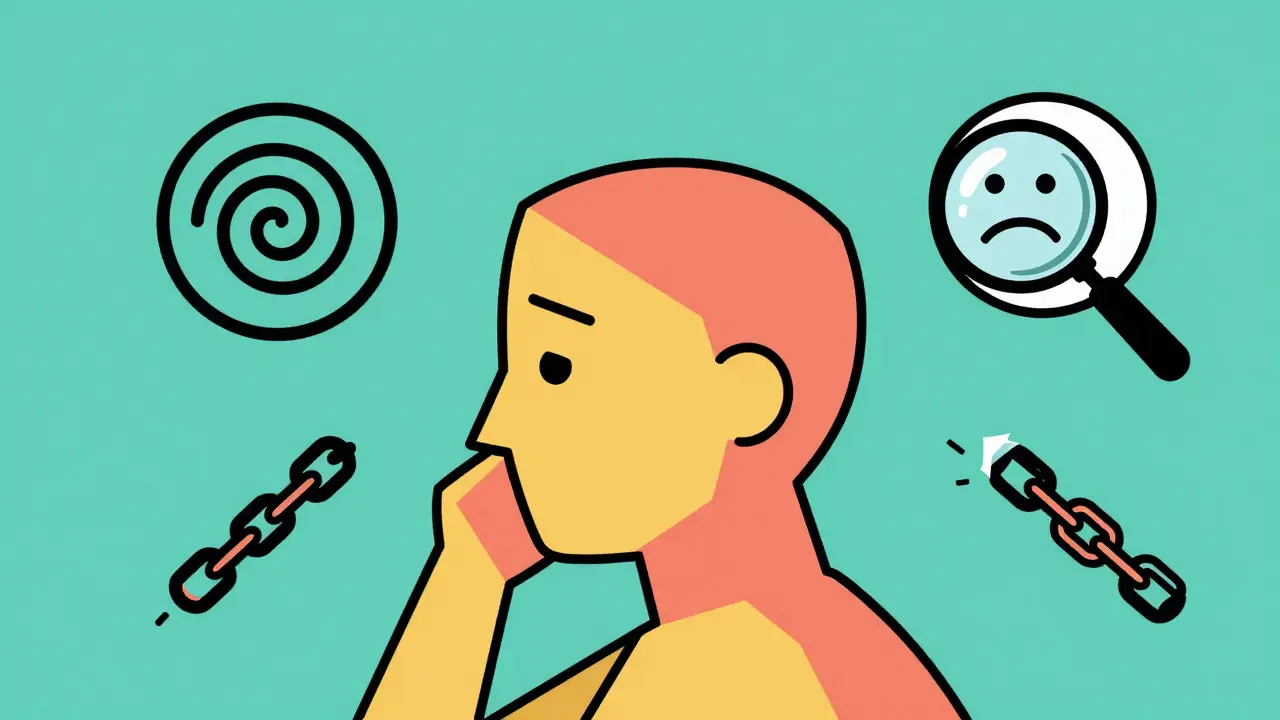
When pain feels overwhelming, your thoughts can make it worse. pain catastrophizing isn't just in your head; it physically amplifies pain. But CBT offers proven tools to break this cycle.
What is pain catastrophizing?
Pain Catastrophizing is a psychological process where individuals experience exaggerated negative thoughts about pain, leading to increased distress. It includes three key components: rumination (repetitive focus on pain), magnification (exaggerating the threat), and helplessness (feeling unable to cope).
Imagine you have a bad backache. Instead of thinking "This is uncomfortable but I can handle it," you might think "I'll never get better. I can't do anything." That's catastrophizing. It's not just sadness-it's a mental spiral that makes pain feel worse. Research shows this pattern physically increases pain signals in the brain. The Pain Catastrophizing Scale (PCS) measures this, with scores above 30 indicating clinically significant issues.
How Cognitive Behavioral Therapy (CBT) addresses pain catastrophizing
Cognitive Behavioral Therapy (CBT) is a structured psychological treatment that helps individuals identify and change thought patterns and behaviors that contribute to distress.
CBT doesn't erase pain, but it changes how you respond to it. Studies show reducing catastrophizing leads to less pain and better function. A 2024 Nature Scientific Reports study found CBT "unravels" the connection between physical pain and catastrophic thoughts. The Veterans Health Administration reports 92% patient satisfaction with CBT for pain catastrophizing. Most programs run 8-12 weeks with weekly 60-minute sessions.
Practical CBT tools for everyday use
Here are four actionable techniques you can start today:
- Spotting catastrophic thoughts: When pain hits, pause and write down what you're thinking. Notice if it's "this is unbearable" or "I can't handle this." For example, a 45-year-old with fibromyalgia wrote "My pain will never end" during a flare-up.
- Challenging those thoughts: Ask yourself: "Is this thought true? What evidence do I have?" Replace it with "This pain is tough, but I've handled it before." In the fibromyalgia case study, replacing "I can't work" with "I'll try 10 minutes of light activity" reduced avoidance.
- Behavioral activation: Start with tiny steps. If walking is hard, try 2 minutes. Gradually increase. This breaks the cycle of avoiding activity because of fear. VA data shows patients who walked 5 minutes daily saw 20% less pain intensity in 4 weeks.
- Mindfulness practice: Focus on the present. Notice the pain without judgment. Say "this is just pain right now" instead of "this will never end." A 2023 study found 10 minutes of daily mindfulness cut catastrophizing by 37% in chronic pain patients.

Real-world success stories
A 45-year-old woman with fibromyalgia reduced her PCS score from 42 to 18 over 12 weeks of CBT. This led to a 50% reduction in pain intensity and allowed her to return to part-time work. Veterans Affairs reports that 78% of users see significant distress reduction after 8-12 weeks of CBT. One veteran wrote: "CBT helped me recognize when I'm catastrophizing and gave me tools to stop the thought spiral."
Common challenges and how to overcome them
When pain is severe, it's hard to focus on CBT exercises. Solution: start with tiny steps. One deep breath counts. Use reminders like a phone alarm for check-ins. Also, if you're struggling, a therapist can help tailor the approach to your needs. A PainForum.org survey found 35% of users had trouble during high-pain episodes, but those who used "micro-mindfulness" (10-second breathing exercises) saw 25% better results.

When to seek professional help
Self-help works for many, but if you're not improving after 4-6 weeks, find a therapist trained in CBT for pain. The Veterans Health Administration offers free CBT for chronic pain, and most major hospitals now screen for pain catastrophizing during pain management visits. If you have severe depression or anxiety alongside pain, a specialist may need to address those first before focusing on catastrophizing.
Frequently Asked Questions
Is pain catastrophizing the same as depression?
No. Depression is a broader mood disorder, while pain catastrophizing specifically relates to negative thoughts about pain. However, catastrophizing can worsen depression symptoms. CBT targets catastrophizing directly, which often helps with depression too.
How long until CBT works for pain catastrophizing?
Most people see improvement in 8-12 weeks. It takes 3-4 weeks to recognize thought patterns, then 6-8 weeks to build new habits. VA data shows 60% of patients report reduced distress within 4 weeks of starting CBT.
Can I do CBT for pain catastrophizing on my own?
Yes, but working with a therapist increases success rates. Apps like Curable and PainScale offer guided CBT exercises, but they work best when combined with professional support. A 2023 study found self-guided CBT had a 22% dropout rate, while therapist-supported programs kept 85% of patients engaged.
What if CBT doesn't work for me?
CBT is effective for 70-80% of people with pain catastrophizing. If it doesn't help, alternatives like Acceptance and Commitment Therapy (ACT) or pain neuroscience education may work better. A 2024 systematic review found ACT reduced catastrophizing by 30% for those who didn't respond to CBT.




Comments (13)