
Bisphosphonate-Calcium Timing Calculator
Calculate Safe Timing
Follow FDA guidelines: Take bisphosphonate first with water, wait 30 minutes before eating or taking calcium supplements.
Enter your medication times to check if they're safe.
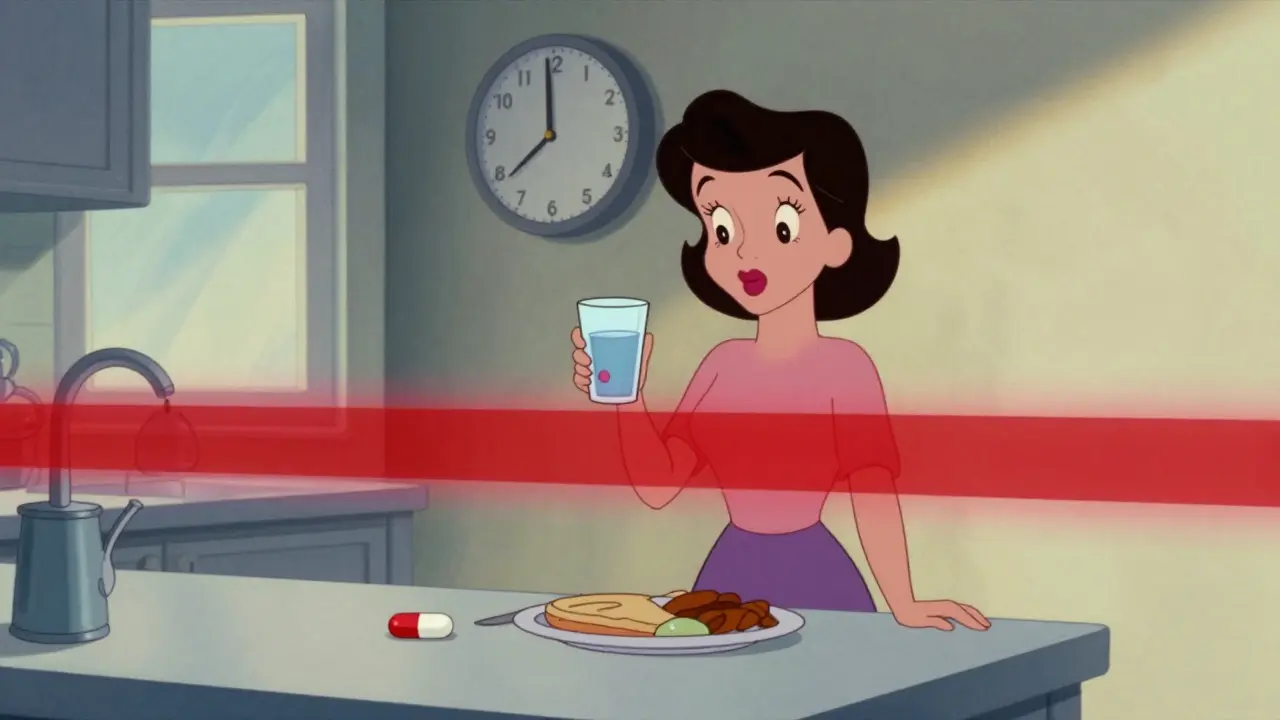
Take your bisphosphonate at 7 a.m. with a full glass of water. Wait 30 minutes. Then eat breakfast. Now take your calcium pill. Sounds simple? It’s not. Millions of people with osteoporosis struggle with this routine every single day. And if you get it wrong, your medication might as well be a placebo.
The science is clear: bisphosphonates and calcium supplements don’t mix. Not even a little. When taken together, they bind like magnets and form a useless sludge in your gut. Your body can’t absorb the bisphosphonate. That means your bone density doesn’t improve. Your fracture risk stays high. And all that effort? Wasted.
Why Bisphosphonates Are So Picky
Bisphosphonates aren’t like regular pills. They’re designed to stick to bone - specifically, to the calcium-rich parts of your skeleton where bone is being broken down and rebuilt. That’s why they work. But that same chemistry that makes them effective also makes them incredibly sensitive to what’s in your stomach.
These drugs have a chemical structure that clings tightly to calcium ions. So when you swallow a calcium pill, a glass of fortified milk, or even an antacid with magnesium or iron, the bisphosphonate grabs onto it before it ever reaches your bloodstream. The result? Absorption drops by 90% to nearly 100%. That’s not a small drop. That’s total failure.
Studies show that under perfect conditions - an empty stomach, plain water, no food for 30 to 60 minutes - oral bisphosphonates absorb at less than 1%. That’s already tiny. Add calcium? It drops to 0.1% or less. You’re not just reducing effectiveness. You’re making the drug useless.
The Rules: No Exceptions
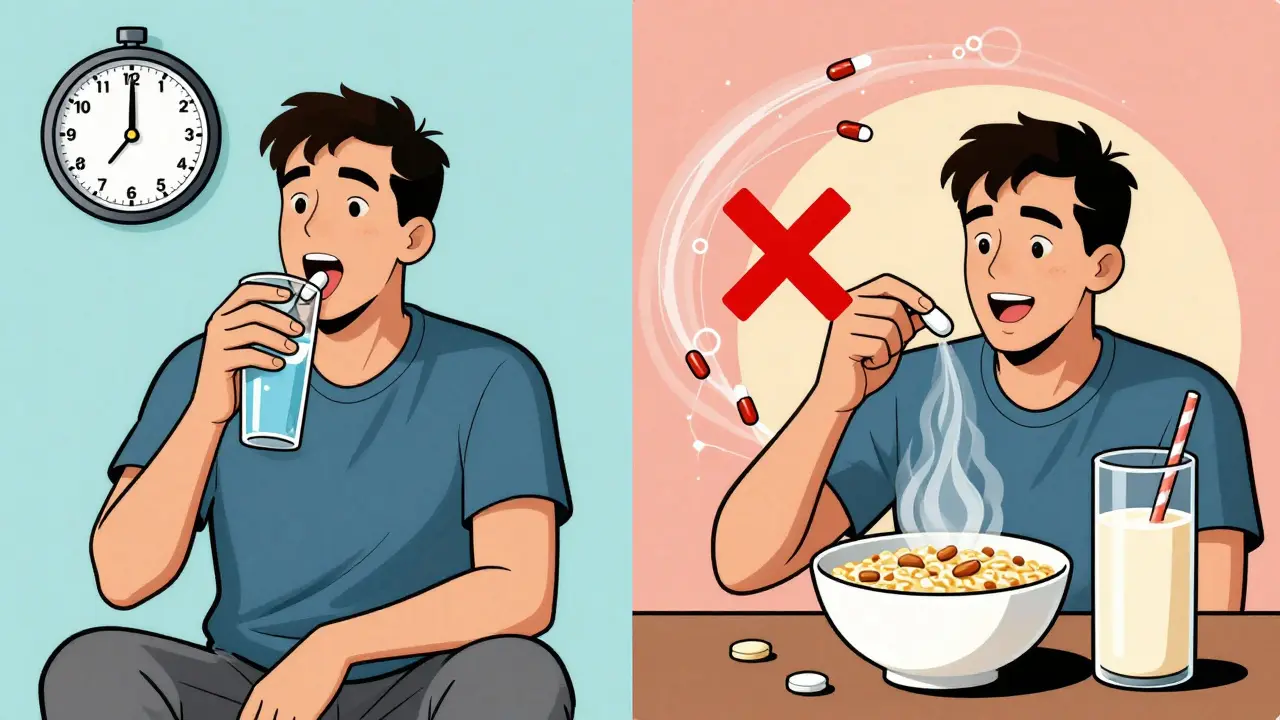
If you’re on an oral bisphosphonate like alendronate (Fosamax), risedronate (Actonel), or ibandronate (Boniva), you have one job: follow the timing rules exactly. Here’s what the FDA and clinical guidelines say:
- Take it first thing in the morning, after at least 8 hours of fasting.
- Use only plain water - no coffee, tea, juice, or soda.
- Stay upright (standing or sitting) for 30 to 60 minutes after swallowing.
- Don’t eat, drink, or take any other medication - including vitamins, antacids, or iron - during that time.
- Wait at least 30 minutes after taking the bisphosphonate before taking calcium or any other supplement.
That’s not a suggestion. That’s the minimum required to even have a chance of the drug working. Skipping one step - like taking your calcium 15 minutes after your pill - cuts absorption by more than half. And most people don’t even realize they’re doing it.
Calcium Supplements: Not All Are Equal
You might think, “Well, I’ll just take calcium at night instead.” That’s smart - and it’s the right move. But not all calcium is created equal.
Calcium carbonate is the cheapest and most common. But it needs stomach acid to dissolve. If you take it on an empty stomach - or if you’re on acid-reducing meds like omeprazole - it barely absorbs at all.
Calcium citrate doesn’t need acid. It absorbs better, especially if you take it with food. But here’s the catch: it still blocks bisphosphonates just as badly as carbonate. The type doesn’t matter. The calcium ion does. Whether it’s citrate, carbonate, gluconate, or lactate - if it has calcium in it, it will bind to your bisphosphonate and ruin absorption.
So, no matter which form you use, the rule stays the same: separate them by at least 30 minutes. Better yet? Wait 2 hours. That’s what the National Osteoporosis Foundation recommends for patients who struggle with timing.
What About IV Bisphosphonates?
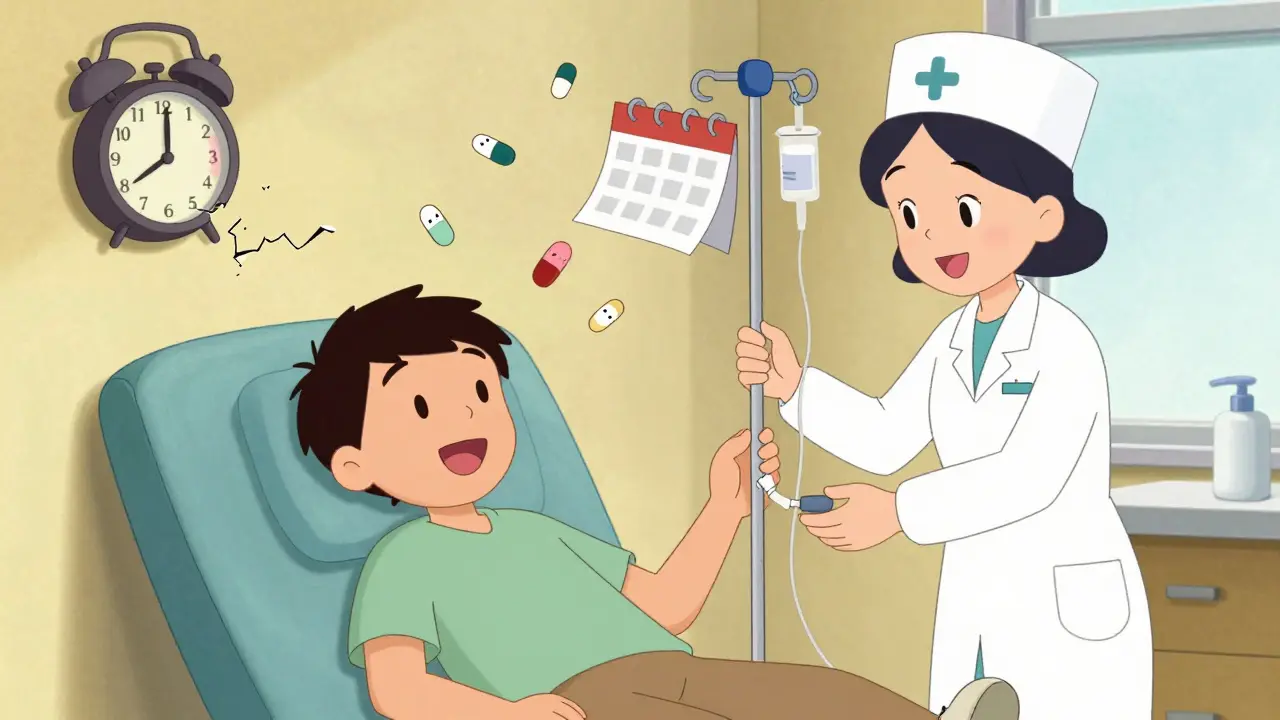
If you’re tired of the daily routine, there’s a simpler option: zoledronic acid (Reclast). It’s given as a once-a-year IV infusion. No fasting. No timing. No calcium conflicts.
Since it goes straight into your bloodstream, it bypasses the gut entirely. That means 100% bioavailability. No interference. No guesswork.
Studies show patients on yearly IV zoledronic acid have a 78% adherence rate. Compare that to 52% for daily oral alendronate. The difference isn’t just convenience - it’s effectiveness. More people stick with it. More people get the benefit.
It’s not perfect. The infusion takes 15 minutes. You might feel flu-like symptoms the next day. But if you’ve tried and failed with pills, this might be your best shot.
Real People, Real Mistakes
Patients aren’t being careless. They’re overwhelmed.
A 2023 survey of 1,247 people on bone meds found 68% had accidentally taken calcium within hours of their bisphosphonate. Many didn’t even know it was a problem. One woman in her 70s told her pharmacist she took her alendronate with her morning coffee and a calcium tablet - because “they’re both morning pills.” Another man took his risedronate at 6 a.m., then ate oatmeal with fortified almond milk at 6:20. He thought he was being “good to his bones.” He wasn’t.
Reddit threads like “The 30-Minute Rule: How I Finally Got It Right” have over 1,400 upvotes. People share tricks: alarms, pill organizers, writing notes on their fridge. Some take their bisphosphonate at 5 a.m. and calcium at 6:30 a.m. Others take it on weekends only and save calcium for weekdays. There’s no one-size-fits-all - but there is one rule: don’t let them touch.
What Your Doctor Should Tell You
Most doctors don’t have time to explain this in detail. But they should.
According to the American Academy of Family Physicians, a proper counseling session should take 12 to 15 minutes. That includes:
- Showing you the exact timing schedule
- Letting you practice swallowing the pill with water
- Asking you to repeat the instructions back
- Discussing alternatives if the routine is too hard
Pharmacists can help too. Medication therapy management sessions focused on timing have been shown to boost adherence by 37%. Don’t be shy - ask for it.
And if you’re over 65? Be upfront. Smartphone reminders? Many older adults stop using them within months. Paper calendars, alarm clocks, or a simple note taped to the bathroom mirror work better.
Don’t Forget Vitamin D
Here’s another hidden trap: low vitamin D.
Bisphosphonates work by slowing bone breakdown. But if your body doesn’t have enough vitamin D, it can’t absorb calcium from food - even if you’re taking supplements. That can trigger a dangerous drop in blood calcium levels, known as hypocalcemia. Symptoms? Muscle cramps, tingling in fingers, fatigue.
The Endocrine Society requires serum 25-hydroxyvitamin D levels to be at least 30 ng/mL before starting bisphosphonates. If yours is below that, you’ll need to fix it first. No point in taking the pill if your body can’t use the calcium.
What’s Next? Better Formulations
The future of bisphosphonates might not involve fasting at all.
Researchers are testing new versions - like RAY121, an oral zoledronate with a special enhancer that temporarily opens up the gut lining to let more drug through. In early trials, it boosted absorption by over 1,500% compared to current pills.
Other teams are working on pills that separate the bisphosphonate and calcium into two layers, releasing them at different times. Imagine one pill that does both - without the 30-minute wait.
But until then? Stick to the rules. Your bones aren’t just counting on the medicine. They’re counting on you to take it right.
Can I take calcium and bisphosphonates in the same day?
Yes, but not at the same time. You must separate them by at least 30 minutes - and ideally 2 hours. Take your bisphosphonate first, on an empty stomach with plain water. Wait the full time before eating, drinking, or taking any supplement. Then take your calcium later, preferably with a meal.
What happens if I take calcium with my bisphosphonate by accident?
If you take them together once, you likely won’t feel anything. But you’ve probably reduced the effectiveness of your bisphosphonate by 90% or more. It doesn’t cause harm, but it defeats the purpose. Don’t panic - just reset. Skip your next dose if you’re unsure, and reset your routine. If it keeps happening, talk to your doctor about switching to an IV option.
Is it okay to take calcium at night and bisphosphonates in the morning?
Yes, that’s one of the best strategies. Taking bisphosphonates first thing in the morning (after fasting) and calcium at night avoids overlap entirely. This timing minimizes the risk of interference and matches natural calcium rhythms in the body. Many patients find this schedule easier to stick to long-term.
Do I need to stop calcium supplements if I’m on bisphosphonates?
No. Calcium is still essential for bone health. The problem isn’t calcium - it’s timing. Stopping calcium can actually hurt you. Without enough calcium, your body pulls it from your bones, weakening them. The key is to take them at different times. Your doctor should check your vitamin D level too - both are needed to build strong bones.
Why do some people say bisphosphonates don’t work for them?
In many cases, it’s not that the drug doesn’t work - it’s that they’re not taking it correctly. Studies show about half of patients fail to respond because of poor timing, especially mixing calcium with the pill. Other reasons include not staying upright after taking it, taking it with food or drinks, or skipping doses. If you think it’s not working, check your routine first. If everything’s right, talk to your doctor about switching to an IV option or a different class of drug.




Comments (15)