
Vitamin K Consistency Calculator
How to Use This Calculator
Enter the amounts of vitamin K-rich foods you eat today to calculate your daily intake. Keep your intake between 90-120 µg daily for consistent INR control.
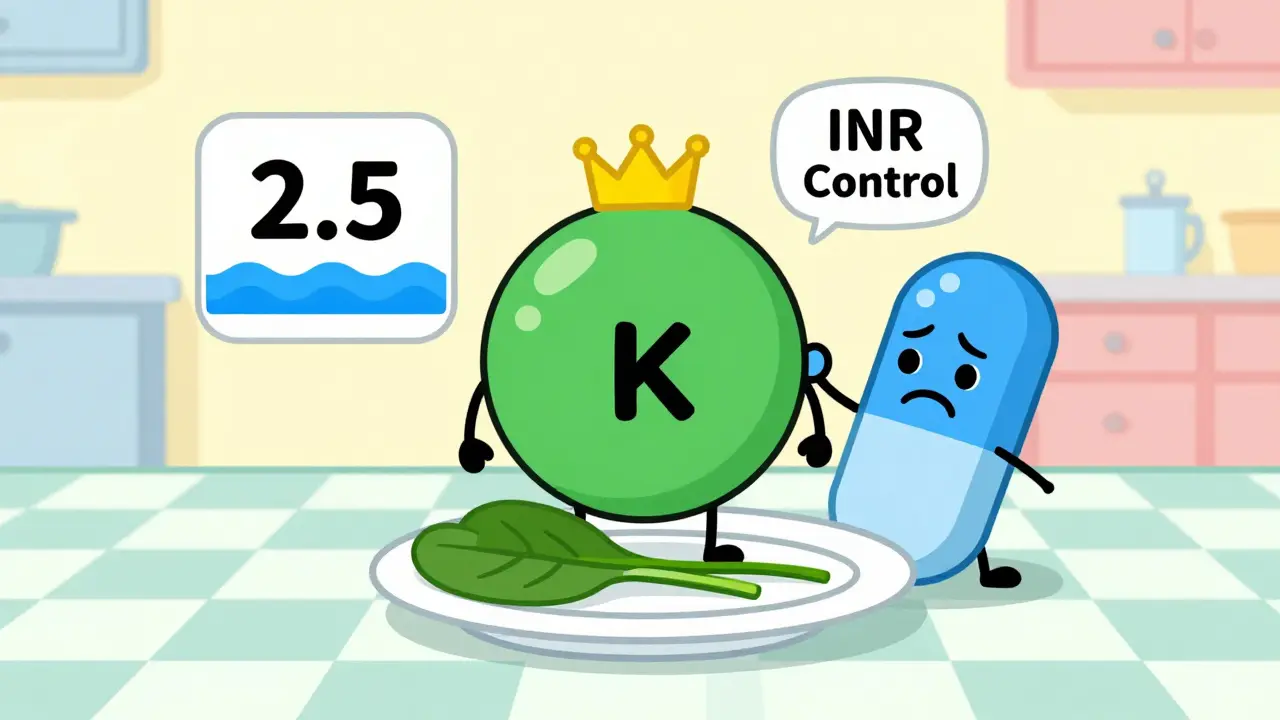
When you're on warfarin, your blood takes longer to clot. That’s the whole point - it keeps dangerous clots from forming in your heart, legs, or lungs. But here’s the catch: vitamin K fights back. It’s not evil. It’s not bad. It’s just doing its job - helping your body make the proteins that make blood clot. And when your vitamin K intake jumps around, your INR (that number your doctor checks) goes wild. Too high? You risk bleeding. Too low? You risk a stroke or clot. The answer isn’t to avoid vitamin K. It’s to keep it steady.
Why Vitamin K Matters So Much on Warfarin
Warfarin doesn’t thin your blood. It blocks vitamin K from doing its job. Specifically, it stops your liver from recycling vitamin K so it can activate clotting factors. Think of it like turning off a light switch. Vitamin K is the bulb. Warfarin is the switch. If you flip the switch on and off all day, the light flickers. That’s what happens to your INR when you eat a huge salad one day and no greens the next.Studies show that patients who change their vitamin K intake by more than 50% from one day to the next are twice as likely to have dangerous INR swings. A 2019 analysis of over 1,200 warfarin users found that those with consistent vitamin K intake spent 75-80% of their time in the safe INR range (2.0-3.0). Those who ate inconsistently? Only 55-65%. That’s not a small difference. It’s the difference between staying out of the hospital and ending up in one.
Which Foods Have the Most Vitamin K?
Not all greens are created equal. Some are loaded. Others are barely there. Here’s what you need to know:- High vitamin K (over 500 µg per cup cooked): Cooked spinach (889 µg), kale (547 µg), collard greens (772 µg), Swiss chard (570 µg), and turnip greens (529 µg). One cup of cooked spinach has more vitamin K than your entire daily recommended intake.
- Moderate vitamin K (100-300 µg per cup): Broccoli (220 µg), Brussels sprouts (219 µg), cabbage (109 µg), and asparagus (70 µg per half-cup).
- Low vitamin K (under 20 µg per serving): Green beans (14 µg per half-cup), cucumbers (9 µg per cup), carrots (10 µg per cup), onions, potatoes, and most fruits.
Here’s the thing: cooking changes everything. Raw spinach has about 145 µg per cup. Cook it? It shrinks, concentrates, and jumps to nearly 900 µg. That’s why eating a big salad one day and a stir-fry the next can throw your INR off. It’s not just what you eat - it’s how you prepare it.
Consistency Over Restriction - The Only Rule That Works
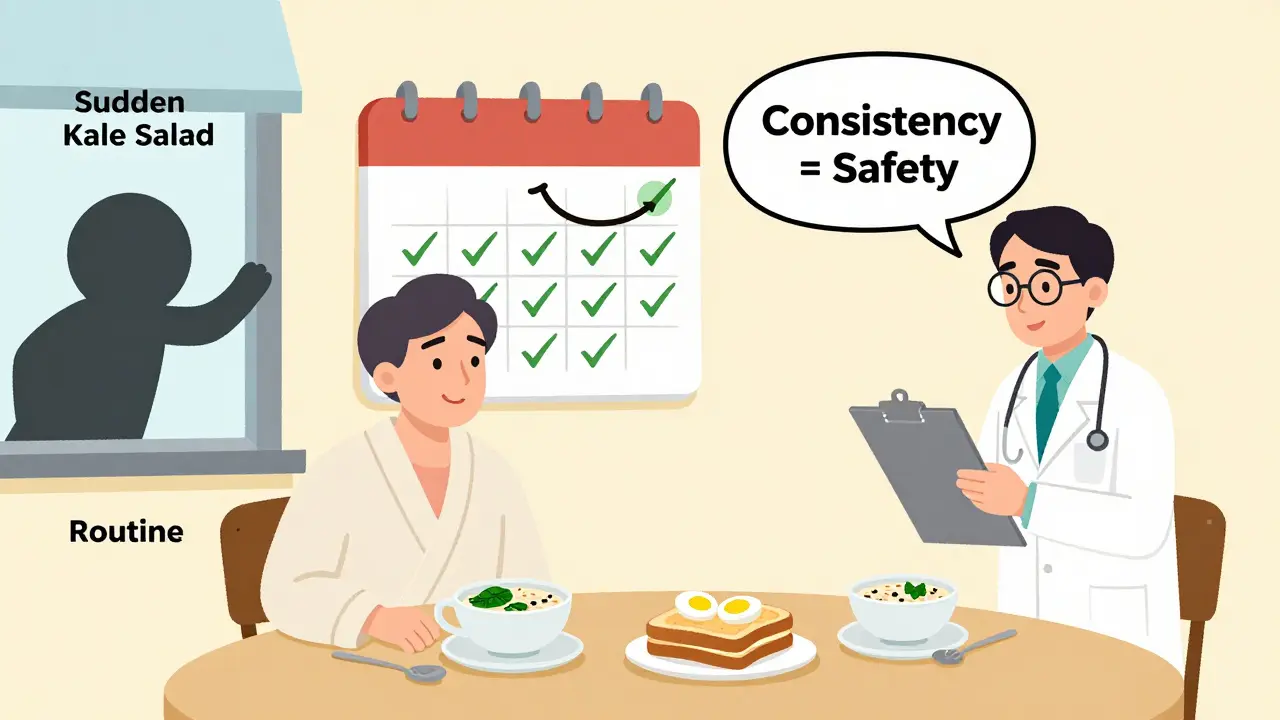
For years, doctors told people on warfarin to avoid green vegetables. “Don’t eat spinach.” “Stay away from kale.” “No broccoli.” That advice is outdated. And dangerous.A 2023 review by the American Heart Association and American College of Cardiology says flat-out: Do not restrict vitamin K. Instead, eat a consistent amount every day. Why? Because your body adapts. If you eat 90 µg of vitamin K every day, your liver learns to work around it. Your INR stabilizes. But if you go from 50 µg one day to 800 µg the next? Your body doesn’t have time to adjust. Your INR drops. Fast.
One patient from the American Heart Association’s support network said she started eating exactly one cup of baby spinach (about 90 µg) every morning with her oatmeal. In six months, her time in therapeutic range jumped from 52% to 81%. That’s not luck. That’s science.
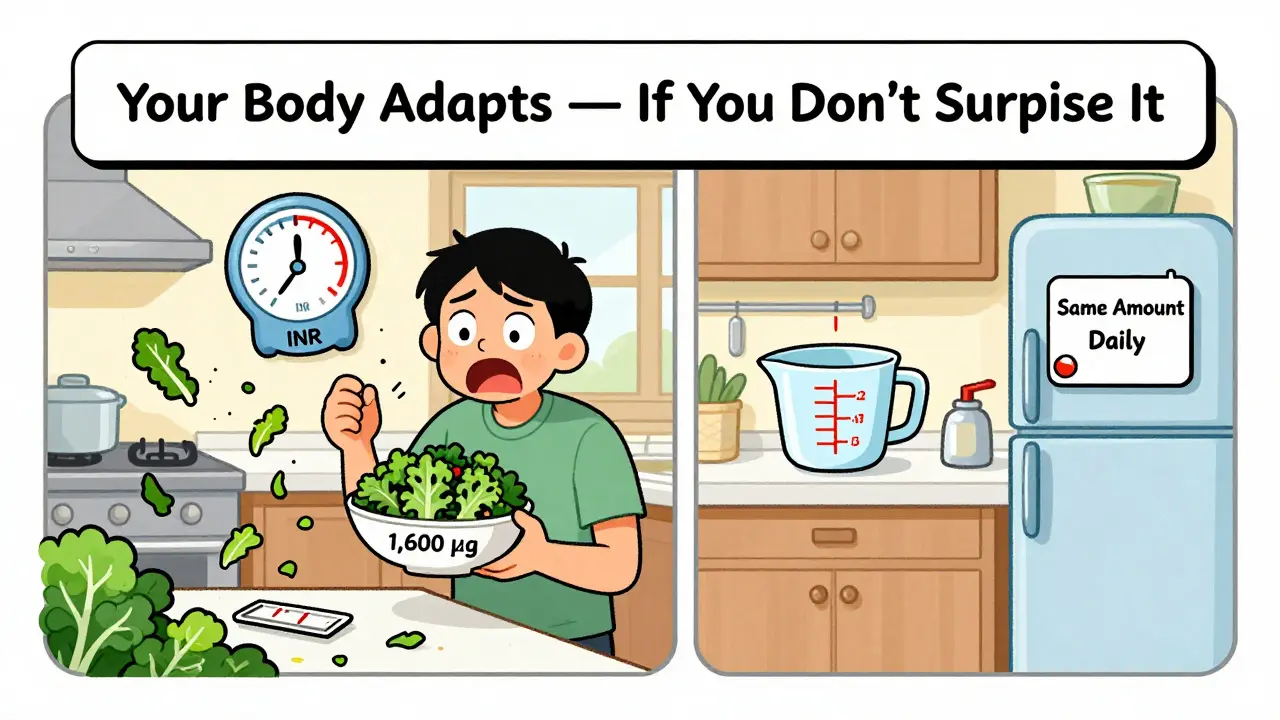
On the flip side, Reddit user u/WarfarinWarrior ate three large kale salads in one day - totaling over 1,600 µg of vitamin K - after normally eating almost none. His INR crashed from 2.5 to 1.8 overnight. He needed an emergency dose change. He wasn’t careless. He just didn’t know.
What About Other Sources of Vitamin K?
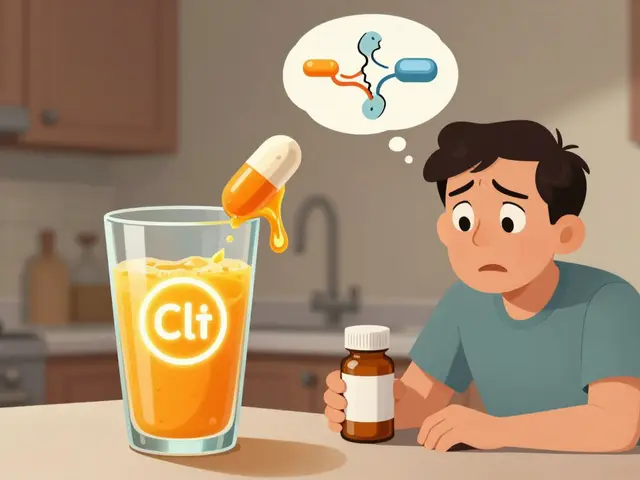
Vitamin K isn’t just in greens. It’s also made by bacteria in your gut - that’s vitamin K2. And antibiotics? They wipe out those good bacteria. A 2021 study found antibiotic use can drop your gut-synthesized vitamin K by up to 70%. That means even if you eat the same food every day, if you take an antibiotic for a sinus infection, your INR might rise. Talk to your doctor before starting any new meds.Also watch out for supplements. Many protein shakes (like Ensure® and Boost®) have 50-55 µg of vitamin K per serving. Multivitamins? Some have 50-100 µg. Don’t assume they’re safe. Check the label. If you’re taking a supplement, tell your anticoagulation clinic. Consistency applies here too - if you start taking one, keep taking it every day. Don’t skip.
How to Build a Consistent Routine
You don’t need to become a nutritionist. But you do need a simple plan. Here’s how:- Choose one high-vitamin-K food - like spinach, kale, or broccoli - and eat the same portion every day. One cup cooked? Fine. Half a cup? Fine. Just be consistent.
- Keep other days low - eat fruits, eggs, meat, grains, and low-K veggies on other meals. No need to eliminate greens entirely. Just don’t vary them.
- Use a food diary or app - MyFitnessPal has a reliable vitamin K database. The CoumaDiet app (used by over 20,000 people) tracks it even better. Log what you eat for a week. You’ll see patterns.
- Plan meals weekly - if you know you’re having stir-fry on Tuesday, don’t have kale salad on Wednesday. Stick to your plan.
- Don’t panic over small changes - if you eat a little extra broccoli one day, don’t skip it the next. Just go back to your normal amount. One slip-up won’t ruin you.
Patients who follow this routine see their INR stability improve by about 5% every month. That means fewer blood tests, fewer dose changes, and fewer hospital visits.
What to Avoid - And Why
Some things you might not think about can mess with your INR:- Alcohol - more than two drinks a day can raise your INR. It interferes with how your liver breaks down warfarin.
- Herbal supplements - ginkgo, garlic, ginger, green tea, and St. John’s wort can all increase bleeding risk. Even if they’re “natural,” they’re not safe on warfarin.
- Big changes in diet - going vegan, starting a juice cleanse, or suddenly eating a lot of leafy greens? These are red flags. Talk to your doctor before making big changes.
- Skipping meals - if you’re sick and eat less, your vitamin K intake drops. That can raise your INR. Keep eating, even if it’s just toast and eggs.
One patient in the 2020 WARFARIN-ILLNESS trial had his INR jump 0.6 units in just 48 hours after a stomach bug kept him from eating. He didn’t change his diet. He just ate less. That’s enough to matter.
Why Older Patients Are at Higher Risk
Over 70% of warfarin users are over 65. And here’s the sad truth: many of them still get outdated advice. A 2023 survey found that 72% of elderly patients were told to avoid greens entirely. Meanwhile, younger patients (under 65) were more likely to get the right advice: Be consistent.That mismatch explains why older adults have 15% lower time in therapeutic range. They’re not noncompliant. They’re misinformed. If you’re caring for an older relative on warfarin, ask their doctor: “Are they being told to eat the same amount of vitamin K every day?” If the answer is “avoid greens,” it’s time to speak up.
What’s Changing in 2026?
The field is moving fast. In 2022, the FDA required all warfarin packaging to include instructions about consistent intake - not restriction. In 2023, the Anticoagulation Forum launched a certification program for dietitians so they all teach the same thing. And in 2024, the European Society of Cardiology will officially recommend smartphone apps for tracking vitamin K - because data shows they improve INR stability by over 12%.Even new warfarin formulations are being tested. CoumaSmart™, currently in final trials, is designed to be less sensitive to vitamin K swings. But until it’s widely available, consistency is still your best tool.
Final Takeaway: It’s Not About What You Eat - It’s About How You Eat
You don’t need to give up your greens. You don’t need to become a perfect eater. You just need to be predictable. Eat the same amount of vitamin K every day. No big swings. No surprises. No extremes. And your body - and your INR - will thank you.Remember: warfarin works. But only if you help it work. Consistency isn’t a chore. It’s your safety net.
Can I eat spinach on warfarin?
Yes - but only if you eat the same amount every day. One cup of cooked spinach has nearly 900 µg of vitamin K. If you eat that daily, your body adjusts and your INR stays stable. If you eat it one day and skip it the next, your INR will swing dangerously. Consistency matters more than avoidance.
Should I avoid all green vegetables on warfarin?
No. Avoiding all greens is outdated advice. The American Heart Association, American College of Cardiology, and American Society of Hematology all say the opposite: maintain consistent intake. You can eat kale, spinach, broccoli - as long as it’s the same amount every day. Restriction increases risk, not reduces it.
How much vitamin K should I eat daily on warfarin?
Aim for 90-120 µg per day - the same as the general recommended intake. That’s roughly one cup of cooked spinach, or two cups of raw spinach, or a mix of broccoli and cabbage. The key isn’t the exact number - it’s keeping it the same every day. Most stable patients hit this range without counting.
Can I take a vitamin K supplement?
Only if you’re already taking one - and even then, be careful. Supplements can contain 50-150 µg of vitamin K. If you start taking one, you must take it every day. If you stop suddenly, your INR can spike. Talk to your anticoagulation clinic before starting or stopping any supplement.
Why does my INR change when I get sick?
When you’re sick, you often eat less - which means less vitamin K. That can raise your INR by 0.3-0.6 units in just 48 hours. Antibiotics can also lower your body’s natural vitamin K production. If you’re ill, keep eating simple meals and tell your doctor. You may need an INR check sooner than usual.
Is warfarin being replaced by newer drugs?
Yes - but not for everyone. Newer drugs like apixaban and rivaroxaban don’t need dietary tracking, but they cost 20-30 times more. Many people stay on warfarin because it’s affordable. Plus, warfarin can be reversed quickly with vitamin K or blood products if bleeding happens. For those who can manage the diet, it’s still a solid choice.
If you’ve been told to avoid greens, ask your doctor for the latest guidelines. You’re not alone - millions of people are learning this the hard way. But with consistency, you can live well on warfarin - no restrictions needed.




Comments (12)