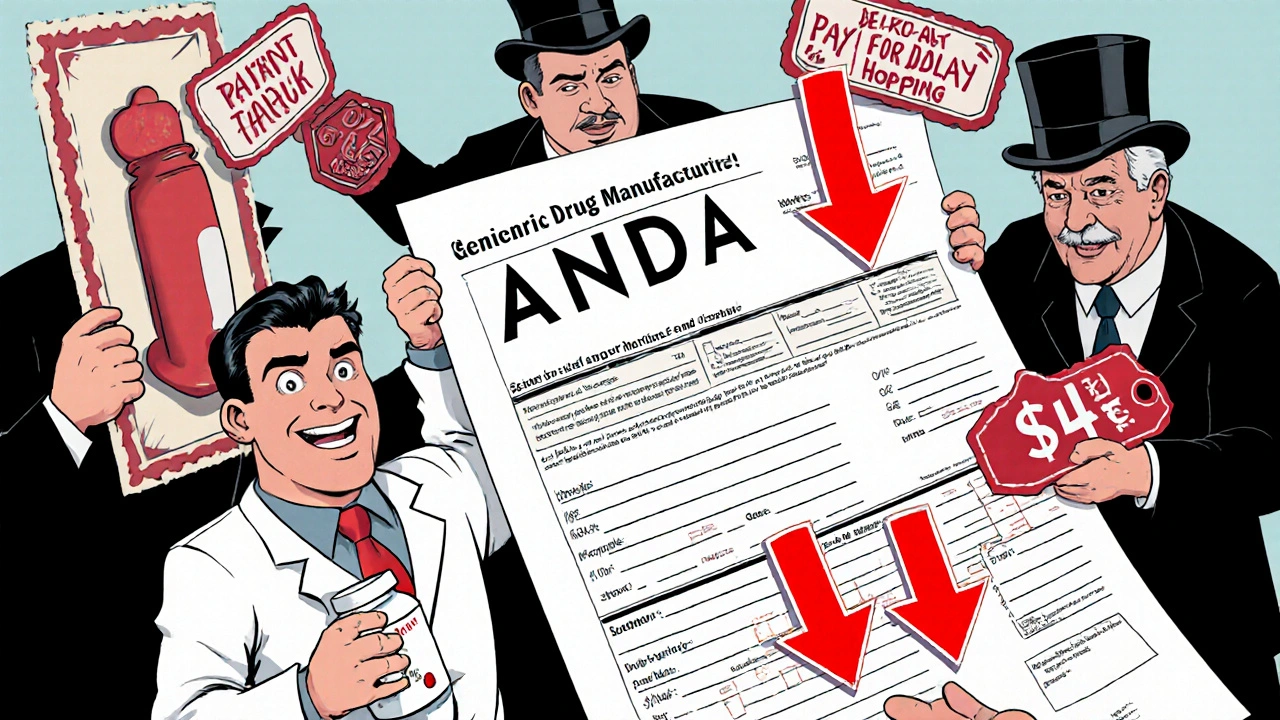
Pharmaceutical Competition: How Generic Drugs, Regulations, and Market Forces Shape Your Medications
When you pick up a generic pill at the pharmacy, you’re seeing the result of pharmaceutical competition, the market-driven push for lower-cost alternatives to brand-name drugs. Also known as drug market rivalry, it’s what keeps prices down and makes life-saving medicines accessible to millions. But this competition isn’t just about companies fighting for sales—it’s a complex system shaped by rules, supply chains, and real-world limits.
Behind every generic drug is the FDA regulatory authority, the agency that ensures generics are just as safe and effective as brand-name versions. Also known as generic drug approval system, it runs through the ANDA process, where companies prove their version matches the original in strength, purity, and how the body absorbs it. Without this strict oversight, generics wouldn’t be trusted. But even with it, problems arise. Low profit margins mean manufacturers quit making certain drugs. When that happens, you get drug shortages, when essential medications like antibiotics or heart drugs disappear from shelves. Also known as medication supply gaps, these aren’t accidents—they’re the result of a system that rewards volume over reliability. In 2025, over 270 generic drugs were in short supply in the U.S., forcing doctors to switch treatments, patients to pay more, and pharmacies to scramble.
Meanwhile, companies are finding new ways to compete. generic combinations, medicines that blend two or more drugs into one pill. Also known as fixed-dose combinations, they improve adherence and cut costs—think a single tablet for high blood pressure that includes a diuretic and an ACE inhibitor. These aren’t just convenient—they’re strategic. By bundling drugs, companies extend market life and block competitors from entering with single-agent generics. But they also need FDA approval, and that’s where things get messy. Deficiency letters, manufacturing flaws, and bioequivalence issues can delay approval for months, if not years.
So when you wonder why your prescription suddenly changed, or why a drug you’ve used for years is now hard to find, it’s not random. It’s the outcome of pharmaceutical competition playing out under tight rules, financial pressure, and global supply chains. The posts below dig into exactly how this works—from how the FDA catches flawed generic applications to why some drugs vanish while others thrive. You’ll find real stories about what happens when supply breaks, how companies fight for market share, and what you can do when your medicine isn’t available. This isn’t theory. It’s what’s happening in your local pharmacy right now.