Hatch-Waxman Act: How It Shaped Generic Drugs and Drug Access
When you pick up a generic pill at the pharmacy, you’re benefiting from the Hatch-Waxman Act, a 1984 U.S. law that created a legal path for generic drugs to enter the market without repeating expensive clinical trials. Also known as the Drug Price Competition and Patent Term Restoration Act, it’s the reason you pay less for the same medicine your doctor prescribed. Before this law, brand-name companies could block generics by holding onto patents indefinitely. The Hatch-Waxman Act changed that by letting generic makers prove their drugs were bioequivalent — meaning they work the same way — without redoing all the safety studies.
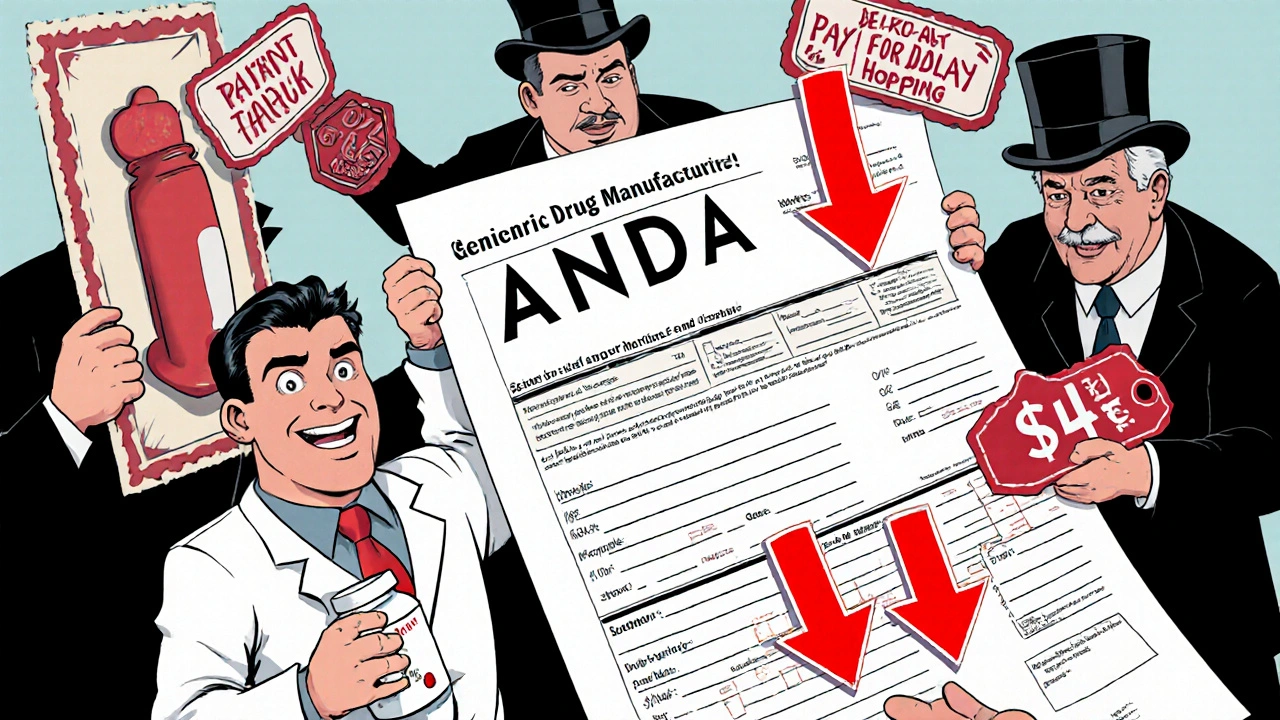
This law didn’t just help patients save money. It also created a system that balances two big goals: protecting innovation and ensuring access. The ANDA process, the abbreviated new drug application route the FDA uses to approve generics, was born from this law. Generic companies now file an ANDA with data on how their drug dissolves, how much of it enters the bloodstream, and whether it’s made under the same strict standards as the brand. Meanwhile, the law lets brand-name makers extend their patents by up to five years to make up for time lost during FDA review — a trade-off to keep new drugs being developed.
The FDA approval, the regulatory gateway for all drugs, including generics, became faster and more predictable because of Hatch-Waxman. But it also opened the door to legal battles over patents, especially when generic makers challenged weak or overly broad patents. These challenges, called Paragraph IV certifications, have led to some of the biggest drug price drops in history — and some of the most heated courtroom fights.
Today, nearly 90% of prescriptions in the U.S. are filled with generics. That’s not an accident. It’s the direct result of this law. But it’s also why drug shortages hurt so much — when a single factory making a generic can’t keep up, there’s often no backup. And when companies stop making low-profit generics, it’s not because they’re lazy. It’s because the system, built on low prices and thin margins, doesn’t reward them for staying in the game.
You’ll find posts here that dig into how the Hatch-Waxman Act still shapes everything from FDA deficiency letters to generic drug shortages. You’ll see how bioequivalence studies, patent cliffs, and REMS programs are all connected to this one law. Whether you’re a patient wondering why your pill looks different, a pharmacist seeing supply issues, or someone tracking drug policy, this collection shows how a 40-year-old law still runs the show.