
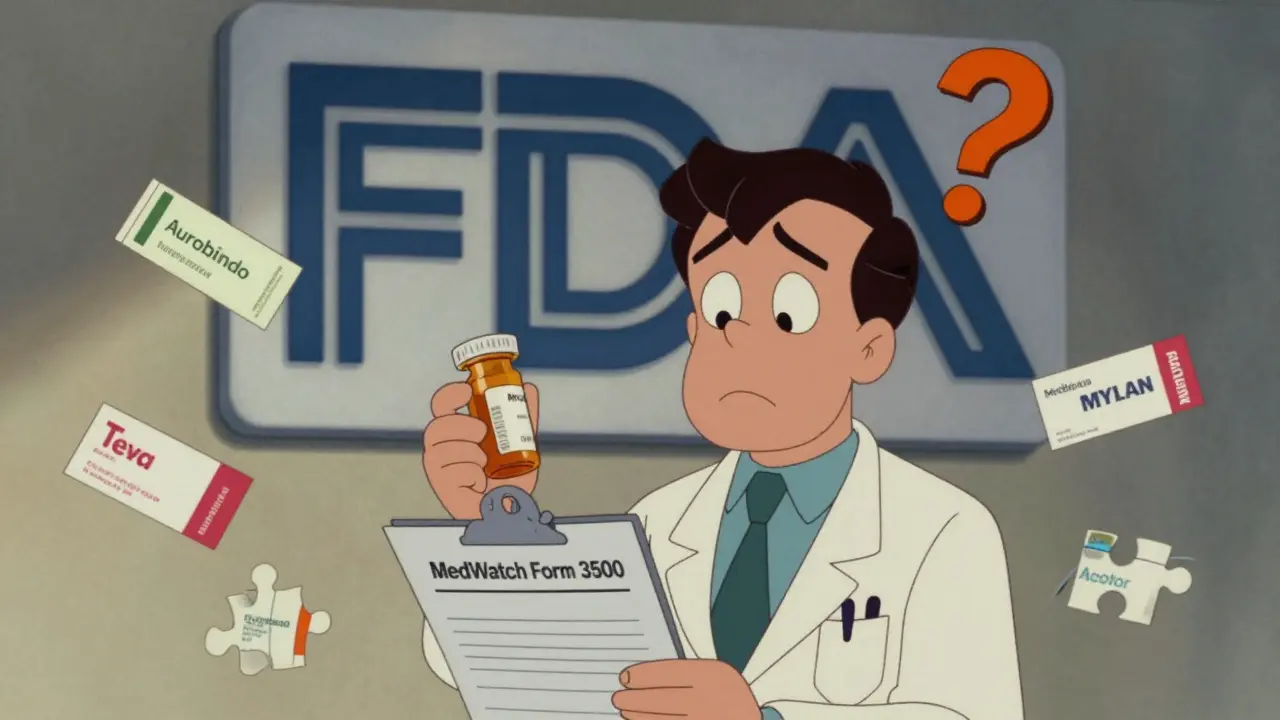
When a patient has a bad reaction to a generic drug, who reports it? And does anyone even notice?
The short answer: it’s supposed to be reported. But in practice, it often isn’t. Despite identical legal requirements for brand-name and generic drugs, serious adverse events (SAEs) from generics are dramatically underreported. This isn’t a glitch-it’s a systemic blind spot in drug safety, and it’s putting patients at risk.
What Counts as a Serious Adverse Event?
A serious adverse event isn’t just a headache or a rash. The FDA defines it as any reaction that’s life-threatening, causes hospitalization, leads to permanent disability, results in congenital defects, or requires medical intervention to prevent lasting harm. This includes heart attacks, liver failure, severe allergic reactions, or suicidal behavior linked to a drug. The rule applies to every drug on the market-whether it’s branded Lipitor or its generic version, atorvastatin.
But here’s the catch: while the rules are the same, the outcomes aren’t. Brand-name drug companies have full pharmacovigilance teams, dedicated hotlines, and internal systems to track every report. Generic manufacturers? Many don’t. And even when they do, the system makes it harder for doctors and pharmacists to report them correctly.
How Reporting Is Supposed to Work
Under FDA regulations (21 CFR 312.64 and 21 CFR 310.305), any manufacturer-brand or generic-must report serious and unexpected adverse events to the FDA within 15 days of learning about them. These reports go into the FDA Adverse Event Reporting System (FAERS), a database that’s been tracking drug safety since 1969. The process uses MedWatch Form 3500, either paper or online.
For generics, there’s an extra step: you must identify the specific manufacturer. Not just the drug name-like “metoprolol”-but the company that made it: Teva, Mylan, Sandoz, or a smaller regional producer. The FDA requires this because even though the active ingredient is the same, differences in fillers, coatings, or manufacturing processes can affect how the drug behaves in the body.
The European Medicines Agency (EMA) has similar rules, but with tighter deadlines: fatal or life-threatening events must be reported within 7 days, with full details within 8 more days. Both agencies follow the ICH E2D guidelines, which demand detailed descriptions of the reaction, timing, severity, and patient history.
The Reporting Gap: Brand vs. Generic
Here’s where things break down. In the U.S., generics make up about 90% of all prescriptions filled. Yet, according to a 2018 NIH study analyzing FAERS data from 2004 to 2015, brand-name drugs generated nearly 70% of all serious adverse event reports-even after generics entered the market.
Take losartan, a common blood pressure drug. After generic versions became available, the number of reports for the brand-name version didn’t drop. It stayed high. Meanwhile, reports for generic versions barely moved. The same pattern showed up with amlodipine, simvastatin, and metoprolol. Statistically, this isn’t random. It’s a gap.
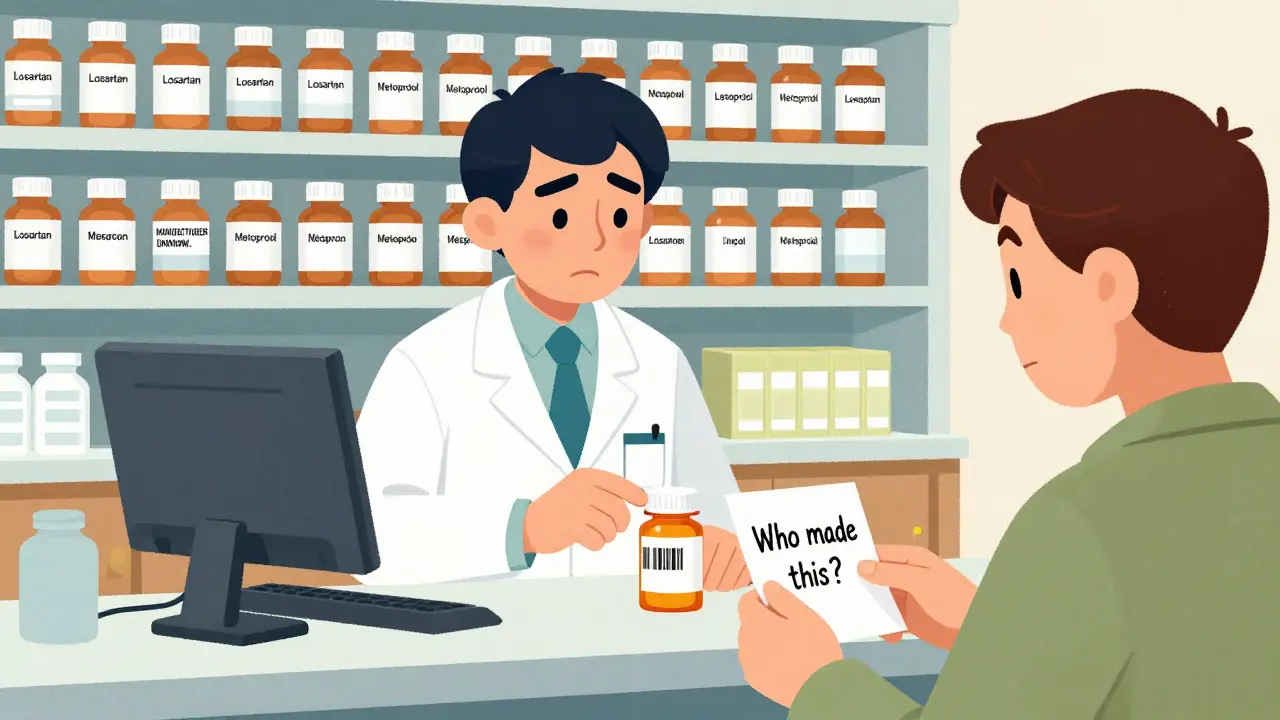
Why? Because the people who see the reactions-doctors, nurses, pharmacists-don’t know which company made the generic drug their patient took. Pharmacies switch suppliers all the time. One week, it’s Teva. The next, it’s Aurobindo. The label might say “losartan 50 mg,” but the manufacturer’s name is printed in tiny font, if it’s there at all.
Why Healthcare Providers Give Up
A 2020 survey by the Institute for Safe Medication Practices found that 68% of healthcare providers struggled to identify the generic manufacturer when reporting an adverse event. Only 12% had the same trouble with brand-name drugs. That’s not a coincidence-it’s a design flaw.
One doctor on Doximity shared this story: a patient had a severe reaction to generic levothyroxine. The bottle didn’t list the maker. The pharmacy couldn’t tell him. He ended up reporting it under the brand name, Synthroid, because it was the only name he could be sure of. That means the real culprit-the actual manufacturer-never got flagged. The FDA never saw it. The patient’s reaction got lost in the noise.
The FDA’s own 2019 MedWatch usability study showed that 42% of healthcare providers abandoned generic drug reports because they couldn’t find the manufacturer. For brand-name drugs, that number was just 9%. That’s more than four times as many reports being dropped.
What’s Being Done to Fix It
The FDA knows this is a problem. In 2023, they launched FAERS 2.0, a new system that tracks reports by National Drug Code (NDC)-a unique 11-digit number assigned to each drug, including the manufacturer. This means, in theory, if a pharmacist scans the barcode on the bottle, the system can auto-fill the manufacturer name.
They also issued draft guidance in June 2023 asking pharmacies to print the manufacturer name clearly on all prescription labels. That’s a big deal. Right now, many labels only show the drug name and dosage. No maker. No batch number. Nothing to help a reporter.
Some hospitals are already ahead of the curve. The American Society of Health-System Pharmacists (ASHP) recommends barcode scanning at the point of administration. In 12 hospital pilot programs, this boosted accurate generic AE reporting by 63%. That’s not just a number-it’s lives saved.
The Generic Drug User Fee Amendments (GDUFA III), running from 2023 to 2027, allocated $15 million specifically to improve generic drug safety monitoring. That’s a start. But only 42% of generic manufacturers have dedicated pharmacovigilance teams, compared to 98% of brand-name companies. Smaller manufacturers often outsource reporting to third parties, leading to delays, errors, and missed signals.

What You Can Do
If you’re a patient: check the label. Look for the manufacturer name on the bottle or box. If you can’t find it, call the pharmacy. Write it down. If you have a serious reaction, include it in your report.
If you’re a healthcare provider: don’t guess. Don’t default to the brand name. Use DailyMed, the National Library of Medicine’s database, to look up the NDC number on the bottle. That will tell you the manufacturer. It adds 10 minutes to your report-but it’s the difference between a signal and a silence.
If you’re a pharmacist: make sure your pharmacy’s system captures the NDC at dispensing. If you don’t have barcode scanning, push for it. It’s not just good practice-it’s a safety tool.
The Bigger Picture
Generic drugs save the U.S. healthcare system over $300 billion a year. They’re essential. But safety can’t be an afterthought. If we don’t fix how we track adverse events for generics, we risk missing early warnings of dangerous reactions. The FDA’s own 2018 Drug Safety Newsletter admitted they lack sufficient data to know if generics are truly underreported. That’s not confidence-it’s a warning.
The Congressional Budget Office projected that, without intervention, 15 to 20 generic drugs could have undetected safety signals each year by 2030. That’s not a future scenario. It’s a countdown.
It’s not about blame. It’s about systems. The rules are there. The tools exist. What’s missing is consistency, clarity, and commitment-from manufacturers, pharmacies, providers, and regulators alike.
Until every bottle says who made it, and every report knows where it came from, we’re flying blind on the safety of the drugs millions rely on every day.
Do generic drugs have to report adverse events the same way as brand-name drugs?
Yes. Under FDA regulations, both brand-name and generic drug manufacturers are legally required to report serious and unexpected adverse events using the same timelines and forms. The rules don’t distinguish between them. However, in practice, brand-name companies report far more often due to better resources and clearer product identification.
Why are generic drug adverse events underreported?
The main reason is uncertainty about the manufacturer. Generic drugs are made by dozens of companies, and pharmacies switch suppliers frequently. The manufacturer’s name is often not clearly labeled on the bottle, and patients rarely know who made their pill. Healthcare providers then default to reporting the brand name, or skip the report entirely. Smaller generic manufacturers also lack dedicated safety teams, making reporting inconsistent.
What is MedWatch, and how do I use it for generic drugs?
MedWatch is the FDA’s official system for reporting adverse events. To report a serious reaction to a generic drug, go to the MedWatch website and select the appropriate form. You must specify the generic drug name and the manufacturer. If you don’t know the manufacturer, check the prescription label for the name or use the National Drug Code (NDC) to look it up in the DailyMed database. Always include the reaction details, onset date, and patient outcome.
Can a patient report a serious adverse event themselves?
Yes. Patients can and should report serious reactions directly to the FDA using MedWatch Form 3500, either online or by mail. While healthcare providers are more likely to report, patient reports are critical-especially when the provider doesn’t know the manufacturer. Include as much detail as possible: drug name, dose, manufacturer (if known), date of reaction, and symptoms.
What’s being done to improve reporting for generic drugs?
The FDA launched FAERS 2.0 to track reports by NDC code, which links adverse events to specific manufacturers. Draft guidance now requires pharmacies to print the manufacturer name on prescription labels. Hospitals using barcode scanning at dispensing have seen a 63% increase in accurate reporting. The GDUFA III program also funds $15 million for better safety monitoring of generics, and pharmacy chains are piloting automated data capture systems to reduce reporting errors.




Comments (11)