

It’s 3 a.m. You’re scratching. Not just a little. Enough to wake up your partner, enough to leave red marks, enough to make you wonder if you’re losing your mind. Your child won’t stop rubbing their scalp. Your partner’s hands are raw. You’ve washed everything. Changed sheets. Vacuumed. Nothing works. This isn’t just a rash. It’s not allergies. It’s scabies or lice-and you’re not alone.
Every year, over 200 million people worldwide get scabies. In the U.S. alone, 6 to 12 million kids get head lice. These aren’t rare oddities. They’re common, contagious, and often misunderstood. The good news? They’re treatable. The catch? You have to do it right-or you’ll be stuck in a loop of itching, embarrassment, and failed treatments.
What Exactly Is Scabies?
Scabies isn’t dirt. It’s not poor hygiene. It’s caused by a tiny mite-Sarcoptes scabiei var. hominis-so small you need a microscope to see it. This mite burrows into the top layer of your skin, lays eggs, and triggers an allergic reaction. That’s why the itch is so intense, especially at night. You’ll notice thin, wavy lines on your skin: these are the mite tunnels. Common spots? Between fingers, on wrists, around the waist, underarms, genitals, and the soles of the feet. In babies, it can show up on the scalp, face, and palms.
It spreads fast. Skin-to-skin contact for as little as 15 minutes is enough. That’s why it rips through households, nursing homes, and schools. You don’t need to be “dirty” to get it. Even a hug or sharing a bed can do it. And here’s the kicker: you can spread it before you even feel itchy. Symptoms can take 2 to 6 weeks to show up in first-time cases. If you’ve had it before, it can flare up in just 1 to 4 days.
What About Lice?
Lice are different. Three types exist: head lice, body lice, and pubic lice. Head lice are the most common, especially in kids aged 3 to 11. They cling to hair shafts, feed on blood, and lay eggs (nits) close to the scalp. Unlike scabies, lice don’t burrow. They crawl. And they’re not a sign of uncleanliness-anyone can get them.
Body lice live in clothing and only move to the skin to feed. They’re rare in developed countries but linked to homelessness and overcrowding. Pubic lice (crabs) are usually spread through sexual contact. All three cause itching, but the location tells you which one you’re dealing with.
How Do You Treat Scabies?
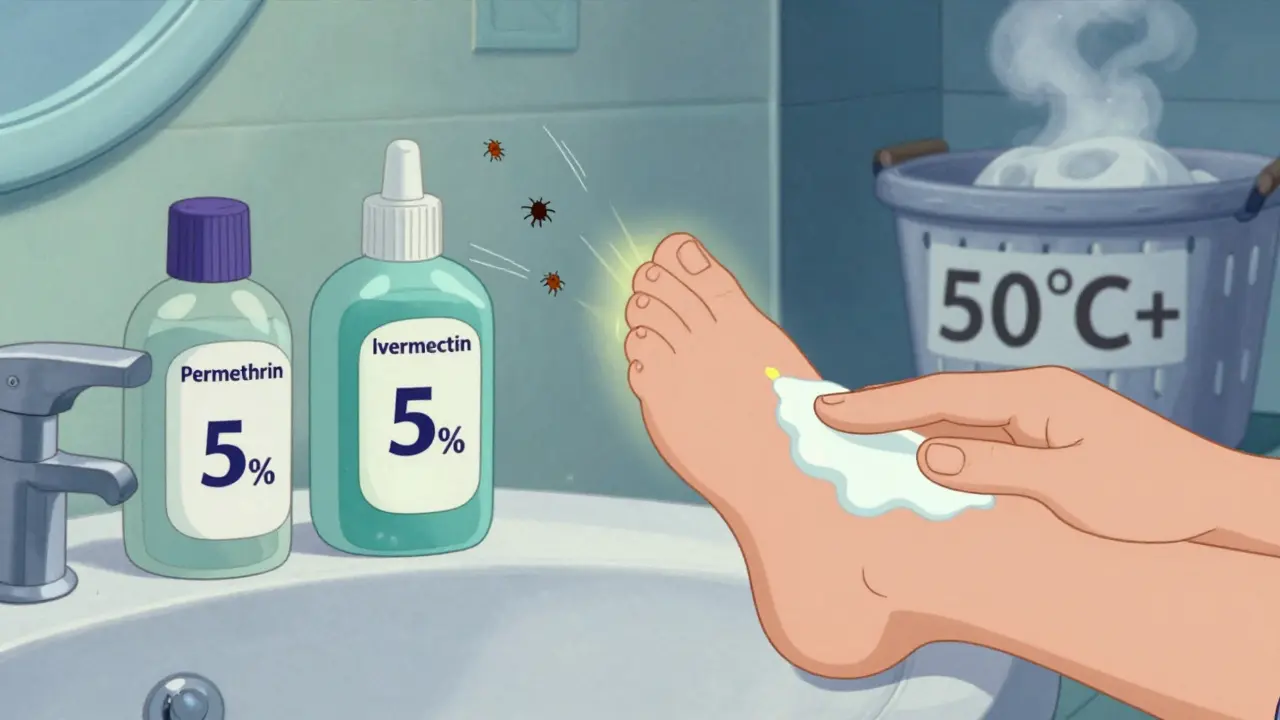
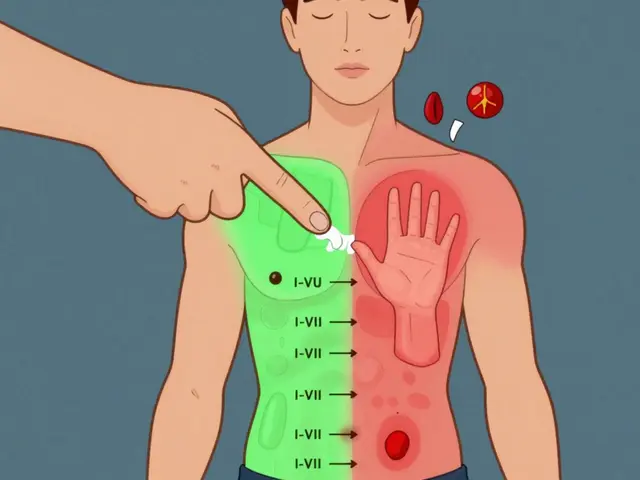
The gold standard is permethrin 5% cream. It’s applied from the neck down to the soles of the feet. You leave it on for 8 to 14 hours, then wash it off. Most people need a second application 7 days later. Why? Because permethrin kills adult mites and nymphs-but not eggs. Those hatch in about 3 to 4 days. If you don’t reapply, the cycle starts again.
Another option is oral ivermectin. It’s not FDA-approved for scabies, but doctors use it all the time. You take two doses, 7 to 14 days apart, with food. It’s especially useful for people who can’t apply cream-like the elderly, disabled, or those with crusted scabies (a severe form where thousands of mites pile up). Studies show 85.9% cure rate after one dose, jumping to 100% with a second dose. It’s also handy in outbreaks. A 2022 nursing home study treated 147 residents with ivermectin and hit a 98.7% success rate.
There’s also topical ivermectin 1% cream. A 2023 study found it just as effective as permethrin, with 92.5% cure rates after two applications. And for kids as young as 4, there’s spinosad 0.9% liquid. It’s newer, less messy, and approved for scabies in children.
How Do You Treat Lice?
Permethrin lotion (1%) is still first-line for head lice. But resistance is growing. In some U.S. areas, up to 30% of lice don’t respond to it anymore. That’s why alternatives matter.
Ivermectin (oral or topical) works well here too. A single oral dose clears lice in most cases. Topical spinosad is also FDA-approved for head lice and kills both bugs and eggs in one application. That’s huge-no need to comb or retreat.
Other options include pyrethrins (natural extracts), malathion (a stronger pesticide), and even suffocation methods like olive oil or mayonnaise. But none of these have the clinical backing of spinosad or ivermectin.
Why Do Treatments Fail?
Most failures aren’t because the medicine doesn’t work. They’re because of mistakes.
- Not applying enough cream. People skip under nails, between fingers, or behind the ears. That’s where mites hide.
- Washing off too soon. Permethrin needs at least 8 hours. Most people wash it off after 2 or 3.
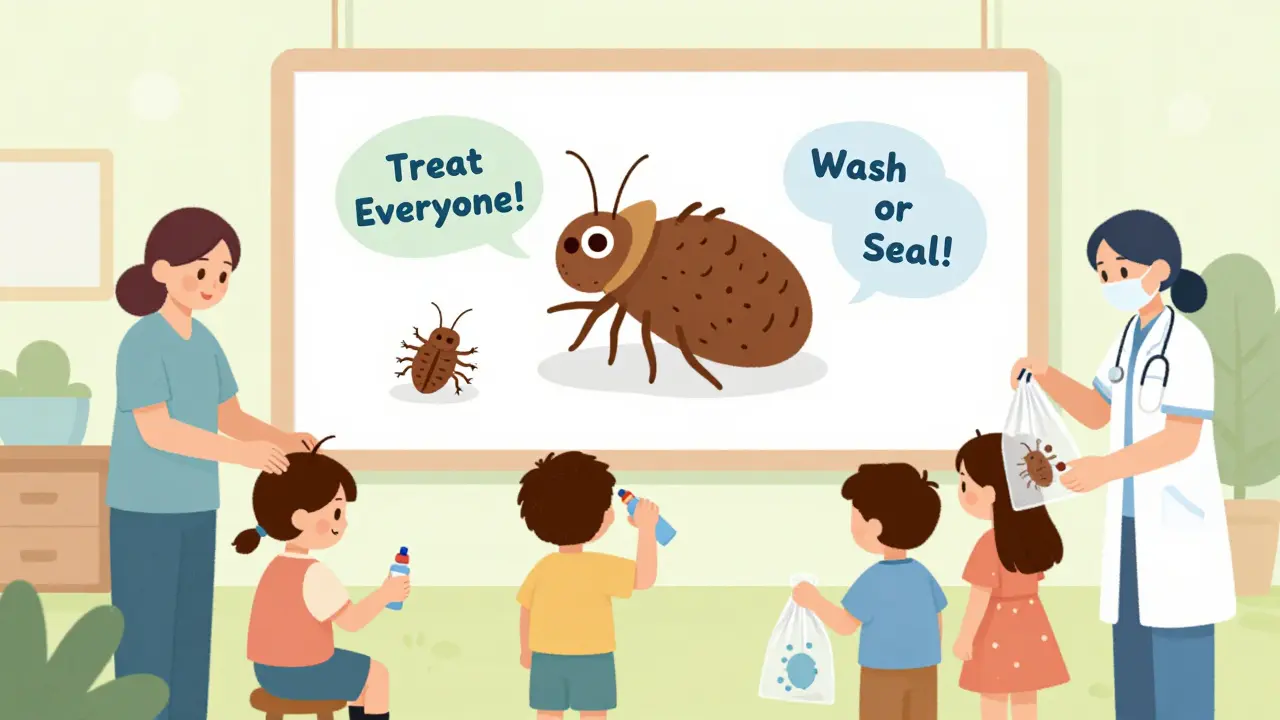
- Not treating everyone. If one person in the house has scabies, everyone else needs treatment-even if they’re not itchy. Asymptomatic carriers spread it.
- Reinfesting from clothes or bedding. Mites can survive up to 72 hours off the body. Wash everything in hot water (at least 50°C) and dry on high heat. Items you can’t wash? Seal them in plastic for 7 days.
A 2022 audit from a California dermatology clinic found 12.3% of treatment failures came from improper application. Another 7.8% were from washing off too early. You can have the best drug in the world-but if you don’t use it right, it won’t work.
What About Side Effects?
Permethrin is safe for most people. Some feel a mild burning or stinging, especially if skin is broken. About 18% of users report this, based on a 2022 survey.
Ivermectin is generally well-tolerated. Common side effects? Nausea (8.3% of users), dizziness, or headache. But it’s not approved for kids under 15 kg or pregnant women. Use it only under medical supervision.
Lindane, once common, is now banned in many places. It’s neurotoxic. Even the CDC says it’s not first-line anymore.
What’s New in Treatment?
Research is moving fast. Scientists are testing new drugs that kill mite eggs-something current treatments can’t do. Three compounds are in Phase II trials as of late 2023.
Mass treatment programs are changing outcomes. In the Solomon Islands, giving ivermectin and azithromycin together to entire communities cut scabies rates by over 95%. It also helped with trachoma, another neglected disease. This approach is now being copied in other high-risk areas.
And there’s a new tool: the porcine scabies model. It lets researchers test drugs on live mites in a way that mimics human infection. This could speed up the development of better treatments.
When to See a Doctor
You don’t need to panic. But if:
- After treatment, itching lasts more than 2 weeks
- You see thick, crusted skin (sign of crusted scabies)
- There’s pus, swelling, or fever (sign of infection)
- You’re pregnant, nursing, or treating a child under 2
Then see a dermatologist. You might need combination therapy or a different approach.
Prevention Tips
Scabies and lice aren’t about cleanliness. But you can reduce risk:
- Don’t share hats, combs, towels, or bedding.
- If someone in your home has it, treat everyone at the same time.
- Wash clothes and bedding in hot water (50°C+) and dry on high heat.
- For lice, avoid head-to-head contact in crowded places like schools.
- Check kids’ heads weekly if they’re in daycare or elementary school.
There’s no magic bullet. But with the right treatment and discipline, you can break the cycle.
Can scabies go away on its own?
No. Scabies won’t resolve without treatment. The mites keep reproducing. Left untreated, it can last for months or even years. The itching and rash will get worse, and you’ll keep spreading it to others. Treatment is necessary to break the life cycle.
Is permethrin safe for babies?
Yes, permethrin 5% cream is approved for infants over 2 months old. Apply it carefully, avoiding the face and eyes. For babies under 2 months, consult a doctor-ivermectin isn’t recommended, and other options like sulfur ointment may be used.
Why do I still itch after treatment?
Itching can last for weeks after the mites are dead. That’s because your body is still reacting to the mite debris and eggs left in your skin. It doesn’t mean the treatment failed. Use moisturizers and over-the-counter antihistamines to ease the itch. If it lasts more than 4 weeks, see a doctor-reinfestation or infection might be the cause.
Can I use lice shampoo for scabies?
No. Lice shampoos (like permethrin 1%) are not strong enough for scabies. Scabies requires permethrin 5% cream or oral ivermectin. Using the wrong product can delay healing and worsen the infestation.
How do I clean my house after scabies?
Wash all clothing, bedding, and towels used in the last 3 days in hot water (50°C+) and dry on high heat. Items that can’t be washed-like stuffed animals or shoes-should be sealed in plastic bags for 7 days. Vacuum carpets and furniture, then discard the vacuum bag. Mites can’t survive more than 72 hours off the body.
Is ivermectin available over the counter?
No. In Australia and the U.S., ivermectin is a prescription-only medication for scabies and lice. Do not use veterinary ivermectin-it’s not formulated for humans and can be dangerous. Always get it from a licensed pharmacy with a doctor’s prescription.



Comments (14)