

Feeling bloated after a meal? That tight, uncomfortable pressure in your stomach isn’t just annoying-it can make you feel like you’ve swallowed a balloon. You’re not alone. Millions reach for an OTC gas remedy every day, but not all of them work the same way. Two main types of over-the-counter solutions exist: simethicone and enzyme products. Knowing the difference isn’t just helpful-it can save you money, time, and frustration.
How Simethicone Actually Works (It’s Not What You Think)
Simethicone doesn’t stop gas from forming. That’s the biggest misconception. Instead, it changes how gas behaves inside your gut. Think of it like adding dish soap to a sink full of bubbles. The tiny, stubborn bubbles stick together, form bigger ones, and pop more easily-either as a burp or a flatulence. This reduces pressure and bloating fast.
It’s a silicone-based compound that doesn’t get absorbed into your bloodstream. That’s why it’s safe for babies, pregnant women, and people on multiple medications. You can take it after eating, before bed, or even mid-bloating episode. No waiting. No prep. Just pop a tablet, chew it, and wait 15 to 30 minutes. Studies show around 73% of users feel relief within that window.
Brands like Gas-X, Mylicon, and Phazyme all contain simethicone. The dose varies: 40mg, 80mg, or 125mg per unit. The maximum daily dose is 500mg. Most people find 125mg after meals works well. It’s not a cure. It’s a pressure release valve.
Enzyme Products: Stop Gas Before It Starts
Enzymes work differently. They don’t touch existing gas. They break down the food that causes gas in the first place. Two common enzymes are lactase and alpha-galactosidase.
Lactase (found in Lactaid, Dairy Digest) helps digest lactose-the sugar in milk and dairy. If you get bloated after ice cream or cheese, you might be lactose intolerant. Taking lactase right before eating dairy can prevent symptoms in up to 85% of cases. It’s not magic, but it’s reliable if your trigger is dairy.
Alpha-galactosidase (sold as Beano) breaks down complex carbs in beans, broccoli, cabbage, and lentils. These carbs can’t be digested by your body, so gut bacteria feast on them and produce gas. Beano needs to be taken 5 to 10 minutes before eating those foods. If you wait until after, it won’t help. That timing matters.
But here’s the catch: enzyme effectiveness varies. Beano works great for some, barely at all for others. Your gut bacteria, the exact food you ate, and even how well you chew can change the outcome. Studies show its success rate ranges from 45% to 78%. It’s not a one-size-fits-all fix.
Simethicone vs Enzymes: When to Use Which
Here’s the simple breakdown:
- Use simethicone when you’re already bloated, gassy, or uncomfortable-no matter the cause. It’s your emergency button. Great for airplane travel, after a big meal, or sudden bloating from unknown triggers.
- Use enzymes when you know what’s coming. Planning to eat beans? Take Beano before. Having pizza? Take lactase before the cheese. Enzymes are preventive, not reactive.
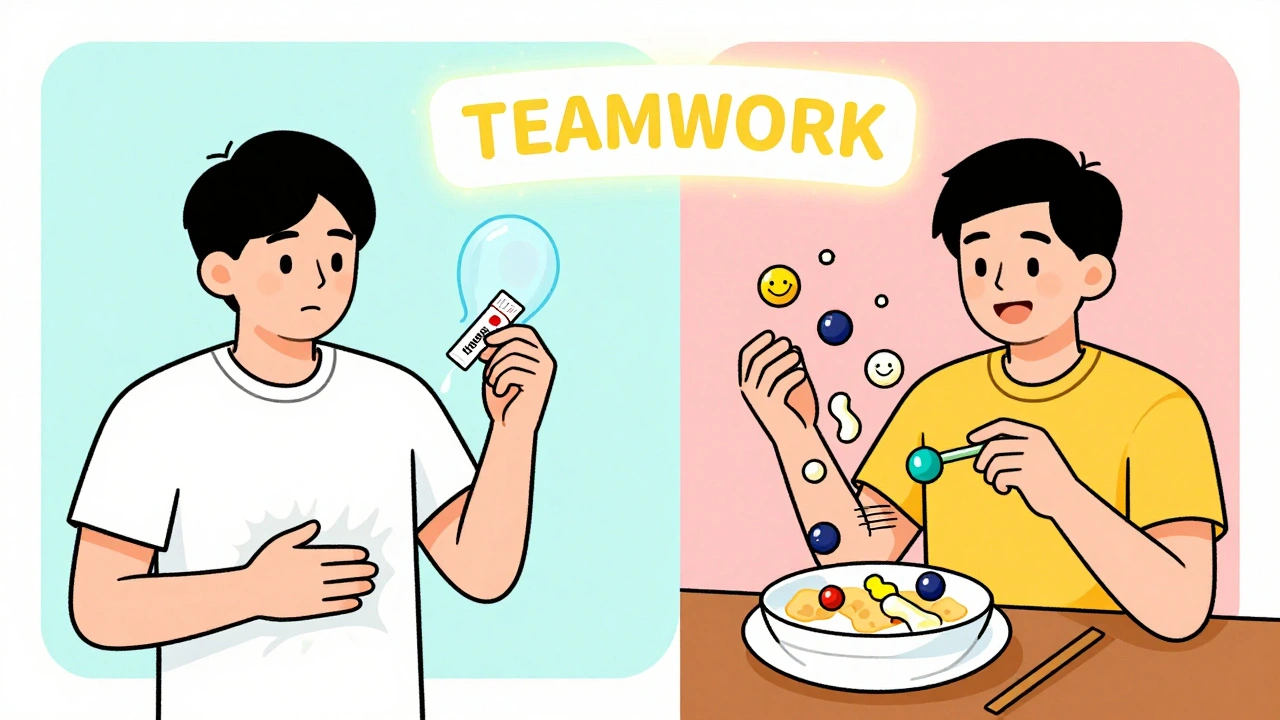
They’re not competitors-they’re teammates. Many people use both. Simethicone for immediate relief, enzymes to cut down on future episodes. A Reddit user put it well: “Simethicone is my emergency button for gas pain, but I use Beano preventatively when I know I’ll be eating problematic foods-they work best as a team.”

What the Experts Say
Doctors agree: simethicone is the gold standard for quick relief. The National Institute of Diabetes and Digestive and Kidney Diseases (NIDDK) gives it a “Recommended” rating with strong evidence. Mayo Clinic experts call it unmatched for safety and speed.
But they’re also clear: it doesn’t reduce gas volume. It just makes it easier to get rid of. Marketing claims like “prevents gas” on simethicone bottles? Those are misleading-and against FDA rules as of April 2023.
For enzymes, the advice is more cautious. Lactase gets a “Strongly Recommended” rating for confirmed lactose intolerance. But alpha-galactosidase? Only “Conditionally Recommended.” Why? Because it doesn’t work for everyone. If you’ve tried Beano and it didn’t help, you’re not alone. It’s not a failure-it’s biology.
Real-World Results: What Users Actually Experience
On Amazon, Gas-X has over 18,000 reviews and a 4.5-star rating. Most 5-star reviews say: “Worked in minutes,” “Saved my trip,” “No side effects.” But the 1-star reviews? “Didn’t help at all.” That’s usually because they expected it to prevent gas-not relieve it.
Beano has a 4.2-star rating. Positive reviews say: “Essential for my chili nights.” Negative ones say: “Didn’t work for my beans,” or “Too expensive.” At CVS, a 100-count bottle of Beano costs $18.99. A 200-count pack of Gas-X? $12.49. If you’re using it daily, the cost adds up.
WebMD user reviews show 82% of people find simethicone helpful for occasional gas. But only 37% say it helps with chronic bloating. That’s a clue. If you’re bloated every day, no OTC pill is going to fix it. You might need to look at your diet, stress levels, or underlying conditions like IBS.
How to Use Them Right
Here’s how to get the most out of each:
- For simethicone: Take 40-125mg after meals and at bedtime. Chewable tablets must be chewed fully. Don’t swallow them whole. You can take it up to four times a day. Max 500mg per day.
- For lactase: Take it right before eating dairy. Some products need to be taken within 5 minutes. Check the label.
- For alpha-galactosidase (Beano): Take 5-10 minutes before eating beans, broccoli, or lentils. If you forget, it’s too late.
- Don’t mix and match timing. Taking Beano after your beans? Waste of money. Taking simethicone before a meal? You’re not helping.
Also, don’t expect miracles. These are OTC remedies, not cures. If bloating is constant, painful, or paired with diarrhea, weight loss, or vomiting-see a doctor. You might have something deeper going on.
What’s New in Gas Relief?
The market is changing. Combination products-simethicone plus enzymes-are growing fast. Gas-Zyme, for example, sold 18.7% more last quarter. These are great for people who want both prevention and relief in one pill.
Also, personalized gut testing is starting to enter the scene. Companies like Viome now offer microbiome tests that recommend specific enzyme types based on your gut bacteria. It’s still expensive and not covered by insurance, but it’s a glimpse of the future.
Meanwhile, new simethicone formulations are in trials. One company is testing microencapsulated versions that last up to 8 hours instead of 2-3. That could be a game-changer for people with chronic bloating.
Final Thoughts: Choose Based on Your Need
Gas and bloating are common. OTC remedies are safe, widely available, and often effective. But they’re not interchangeable.
Need relief now? Simethicone is your best bet. Fast, safe, no guesswork.
Want to avoid gas before it starts? Enzymes make sense-if you know your trigger foods and can time them right.
And if you’re using these every day? Maybe it’s time to look beyond the pill. Diet changes, slower eating, reducing carbonated drinks, or cutting back on artificial sweeteners can do more long-term good than any OTC bottle.
But for occasional discomfort? Keep both on hand. Simethicone for the emergency, enzymes for the planning. Together, they cover most bases.
Does simethicone stop gas from forming?
No, simethicone does not stop gas from forming. It only helps existing gas bubbles combine into larger ones so they can be expelled more easily through burping or flatulence. It treats the symptom, not the cause.
When should I take Beano?
Take Beano 5 to 10 minutes before eating foods that cause gas, like beans, broccoli, cabbage, or lentils. If you take it after eating, it won’t be effective because the enzymes need to act on the food before it reaches your gut bacteria.
Can I take simethicone and Beano together?
Yes, you can safely take simethicone and Beano together. In fact, many people use them as a team: Beano to prevent gas from forming, and simethicone to relieve bloating if it still occurs. There are even combination products on the market that include both.
Is simethicone safe for daily use?
Yes, simethicone is safe for daily use at recommended doses (up to 500mg per day). It’s not absorbed by the body, so it doesn’t interact with other medications or cause systemic side effects. However, if you need it daily for more than a few weeks, it’s worth checking with a doctor to rule out an underlying digestive issue.
Why doesn’t Beano work for me?
Beano’s effectiveness varies from person to person because it depends on your gut bacteria, the exact food you ate, and how well you chew. Some people have bacteria that produce gas from other sources not affected by alpha-galactosidase. It may also be that you’re taking it too late or not enough. Try taking it 10 minutes before the meal, and make sure you’re chewing thoroughly.
Are enzyme supplements better than simethicone?
Neither is better overall-they serve different purposes. Enzymes prevent gas if taken correctly before eating trigger foods. Simethicone relieves bloating fast, no matter the cause. If you know your triggers, enzymes are more preventative. If you’re dealing with unpredictable bloating, simethicone is more reliable. Many people benefit from using both.
Troubleshooting: What If It Doesn’t Work?
If simethicone doesn’t help your bloating, ask yourself:
- Are you taking it after meals-or just randomly? Timing matters.
- Are you chewing chewable tablets fully? Swallowing them whole reduces effectiveness.
- Are you using it for chronic bloating? If you’re bloated daily, this isn’t a long-term fix.
If Beano doesn’t help:
- Did you take it before eating? After? It won’t work if you wait.
- Are you sure beans or cruciferous veggies are your trigger? Try eliminating them for a week and see if symptoms change.
- Are you eating other gas-producing foods? Carbonated drinks, artificial sweeteners, or high-FODMAP foods might be the real culprits.
If neither works and bloating is frequent or painful, see a healthcare provider. You might have lactose intolerance, fructose malabsorption, IBS, or another condition that needs a different approach.





Comments (13)