
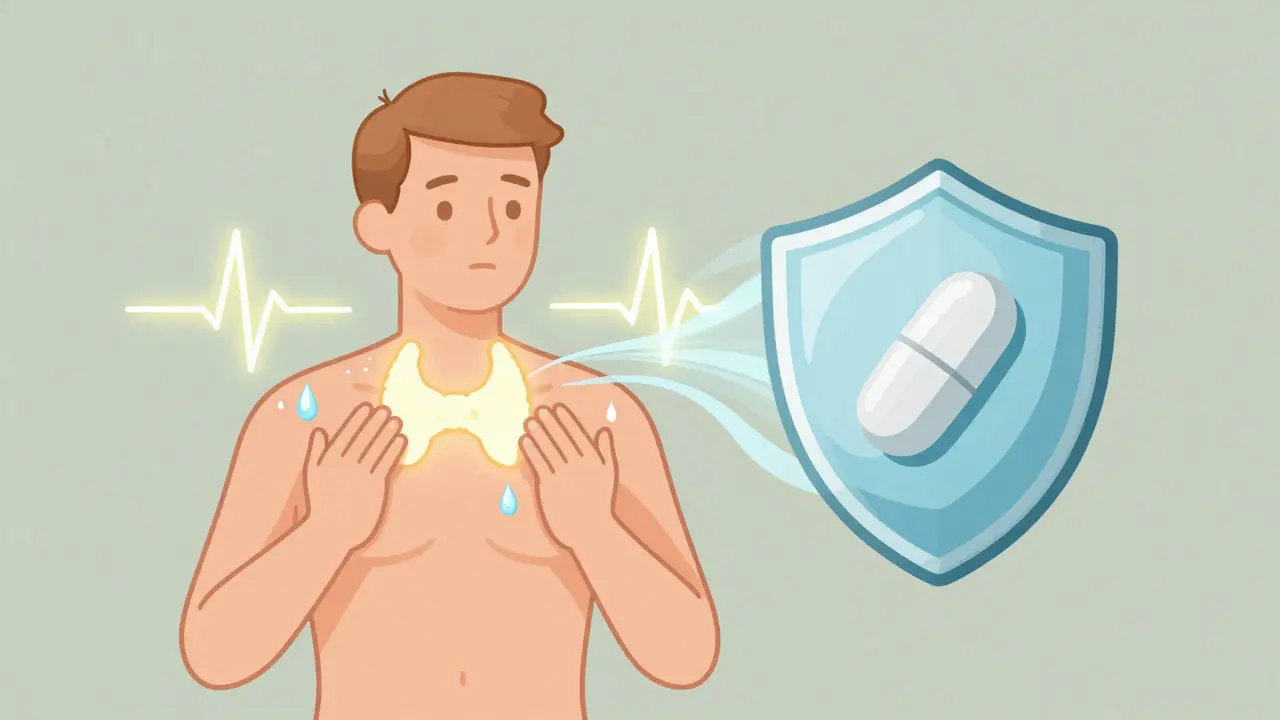
When your thyroid goes into overdrive, it doesn’t just make you feel a little off-it turns your whole body into a high-speed engine with no off switch. Heart racing. Hands shaking. Sweating through your clothes even in a cool room. Insomnia. Weight loss despite eating more. These aren’t just stress symptoms. They’re signs of hyperthyroidism, a condition where your thyroid gland pumps out too much hormone. And while fixing the root cause takes weeks, beta-blockers can bring relief in hours.
What Exactly Is Hyperthyroidism?
Hyperthyroidism happens when your thyroid gland-located at the base of your neck-produces too much of the hormones T3 and T4. These hormones control your metabolism, so when they’re in excess, your body burns energy too fast. About 1.2% of adults in the U.S. have this condition, and women are five to ten times more likely to get it than men. The most common cause? Graves’ disease. It’s an autoimmune disorder where your immune system mistakenly attacks your thyroid, tricking it into overproducing hormones. Other causes include toxic nodules or an enlarged thyroid with multiple overactive spots.Left untreated, hyperthyroidism can lead to serious problems: heart rhythm issues, bone thinning, muscle weakness, and even thyroid storm-a rare but life-threatening surge of hormones that can trigger fever, confusion, and heart failure. That’s why getting diagnosed and treated quickly matters.
Why Beta-Blockers Are the First Line of Symptom Control
Antithyroid drugs like methimazole or radioactive iodine therapy are the long-term solutions. But they take weeks to work. Meanwhile, your heart is pounding, your nerves are frayed, and you’re exhausted. That’s where beta-blockers come in.Beta-blockers don’t lower thyroid hormone levels. They don’t fix the root problem. But they do something just as important: they block the effects of those excess hormones on your body. Think of them as a circuit breaker for your overactive nervous system.
They calm your heart rate, reduce palpitations, ease tremors, and help with anxiety and sweating. For many people, the difference is immediate. Within a few hours of taking the first dose, they can breathe easier, sleep better, and stop feeling like they’re about to jump out of their skin.
Propranolol: The Gold Standard for Hyperthyroidism
Not all beta-blockers are created equal when it comes to hyperthyroidism. The 2016 American Thyroid Association Guidelines recommend non-selective beta-blockers like propranolol over selective ones like atenolol or metoprolol. Why? Because propranolol does more than just block heart receptors-it also helps reduce the conversion of T4 (the less active hormone) into T3 (the powerful, active form) in your liver and other tissues. That’s a bonus effect you won’t get with other beta-blockers.Typical starting doses range from 10 to 20 mg every six hours. Some patients need up to 40 mg four times a day, and in severe cases, doses can go as high as 480 mg daily under medical supervision. It’s not a one-size-fits-all. Your doctor will start low and adjust based on your heart rate, symptoms, and how you respond.
Nadolol is another option. It’s longer-acting, so you only need to take it once a day. That helps with adherence, especially if you’re already managing multiple medications. But propranolol remains the most widely used and studied for this purpose.
When Beta-Blockers Aren’t Safe
Beta-blockers are powerful, but they’re not for everyone. If you have asthma or severe COPD, blocking beta-2 receptors in your lungs can trigger bronchospasm-tightening your airways and making breathing harder. That’s why doctors avoid them in these cases.Other red flags include:
- Second- or third-degree heart block
- Severe heart failure that hasn’t been stabilized
- Very low blood pressure
For patients with asthma or chronic lung disease, calcium channel blockers like verapamil or diltiazem are often used instead. They don’t affect the lungs and still help slow the heart rate. In 2022, the Endocrine Society added atenolol as a safer alternative for respiratory patients, since it’s more selective for the heart-but it doesn’t block T4-to-T3 conversion like propranolol does.
Older adults need extra care too. Their hearts are more sensitive. A dose that works for a 30-year-old might cause dangerous bradycardia in someone over 65. Doctors start low-maybe 10 mg twice a day-and move slowly.

Beta-Blockers in Thyroid Storm
Thyroid storm is a medical emergency. It’s rare-less than 1% of hyperthyroid cases-but it kills up to 30% of people if not treated immediately. Symptoms include fever over 104°F, rapid heart rate (often over 140 bpm), confusion, vomiting, and even coma.In the ICU, intravenous esmolol is the go-to beta-blocker. It’s ultra-short-acting, so doctors can titrate it precisely-starting at 50 to 100 micrograms per kilogram per minute. If the patient’s heart rate drops too low, the drip can be turned down or stopped within minutes. This level of control is impossible with oral medications.
Alongside esmolol, patients get high-dose antithyroid drugs, steroids, and iodine to block hormone release. But without beta-blockers to control the adrenaline surge, the body can’t stabilize.
How Long Do You Take Beta-Blockers?
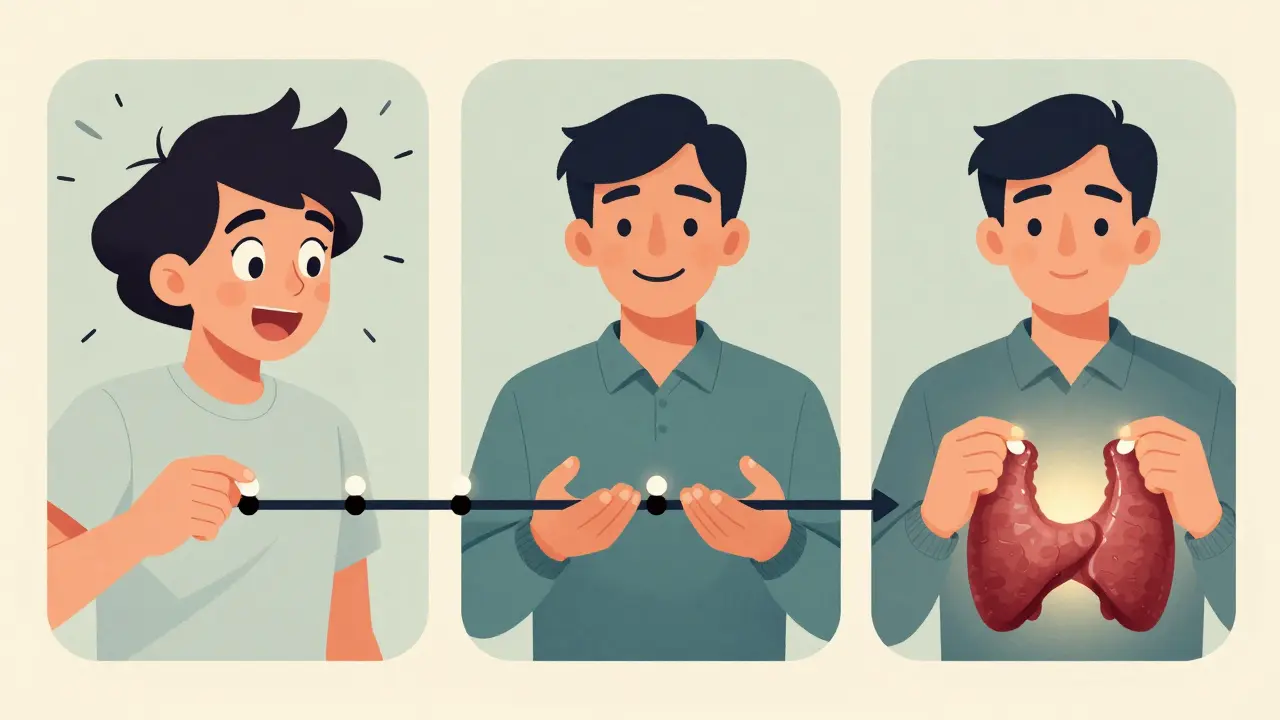
This is a common question. You don’t take beta-blockers forever. They’re a bridge, not a destination.Once your antithyroid drugs (like methimazole) start working-usually after 3 to 6 weeks-you’ll begin to feel better naturally. Your thyroid hormone levels will drop. At that point, your doctor will slowly taper off the beta-blocker. Most people stop them within 4 to 8 weeks.
If you’re getting radioactive iodine treatment, you’ll keep taking beta-blockers until your thyroid function normalizes. That can take 3 to 6 months. During this time, your thyroid is slowly being destroyed by radiation, and hormone levels fluctuate. Beta-blockers keep you stable while you wait.
Never stop beta-blockers suddenly, especially if you’ve been on them for more than a week. Stopping abruptly can cause rebound tachycardia, high blood pressure, or even a heart attack. Always taper under medical supervision.
Beta-Blockers vs. Antithyroid Drugs: What’s the Difference?
It’s easy to confuse these two types of treatment. Here’s the key distinction:- Beta-blockers: Treat symptoms. Fast-acting. No effect on hormone production.
- Antithyroid drugs (methimazole, PTU): Treat the cause. Slow-acting. Reduce hormone production at the source.
Methimazole is usually the first choice for Graves’ disease-10 to 20 mg daily. It takes 3 to 6 weeks to bring T3 and T4 levels down to normal. Beta-blockers give you relief while you wait. They’re not competing treatments. They’re teammates.
Studies show that starting beta-blockers within 24 hours of diagnosis reduces emergency visits by 37%. That’s not just comfort-it’s prevention. Early symptom control means fewer hospitalizations, fewer complications, and better quality of life during treatment.
Monitoring and Follow-Up
You’ll need regular blood tests. Thyroid function tests (TSH, free T4, free T3) are checked at 6 weeks, then every 3 months until stable. Your doctor will also monitor your heart rate and blood pressure, especially when adjusting beta-blocker doses.If you’re on methimazole, you’ll also watch for rare side effects like liver damage or low white blood cell counts. But beta-blockers themselves are generally safe for short-term use. The biggest risk? Forgetting you’re on them. Some people feel better and stop taking them too soon. That’s when symptoms come roaring back.
What’s New in 2026?
Guidelines haven’t changed much since 2016, but research is moving. A 2023 study in the Journal of Clinical Endocrinology & Metabolism looked at whether newer beta-blockers with better lung selectivity could replace propranolol. The answer? Not yet. Propranolol’s dual action-blocking both heart receptors and T4-to-T3 conversion-still makes it the most effective.One emerging trend is using beta-blockers in combination with newer thyroid-blocking agents, like thyrotropin receptor antagonists, still in clinical trials. But for now, the standard remains: propranolol for most, calcium channel blockers for those with lung disease, and IV esmolol for emergencies.
What’s clear is that beta-blockers aren’t just a Band-Aid. They’re a critical tool that makes the entire treatment process safer and more tolerable. Without them, hyperthyroidism would be far more dangerous and disruptive.
Can beta-blockers cure hyperthyroidism?
No. Beta-blockers only manage symptoms like rapid heartbeat, tremors, and anxiety. They don’t reduce thyroid hormone production. You still need antithyroid drugs, radioactive iodine, or surgery to treat the root cause. Beta-blockers are a bridge to that treatment-not the destination.
Is propranolol better than atenolol for hyperthyroidism?
Yes, for most people. Propranolol is non-selective, meaning it blocks both beta-1 and beta-2 receptors. This gives it an extra benefit: it helps block the conversion of T4 to the more active T3 hormone in the liver. Atenolol only blocks heart receptors and doesn’t affect hormone conversion. Propranolol is the preferred choice unless you have asthma or lung disease, where atenolol may be safer.
How quickly do beta-blockers work for hyperthyroid symptoms?
Within hours. Heart rate and tremors often improve within 1 to 2 hours of taking the first dose. Anxiety and sweating may take a bit longer-usually by the end of the first day. This is much faster than antithyroid drugs, which take 3 to 6 weeks to normalize hormone levels.
Can I take beta-blockers if I have asthma?
Generally, no. Beta-blockers can worsen asthma by tightening airways. If you have asthma or COPD, your doctor will likely avoid them. Alternatives include calcium channel blockers like verapamil or diltiazem. In some cases, atenolol may be used cautiously under close monitoring because it’s more heart-selective-but it’s not ideal.
Do beta-blockers cause weight gain?
Not directly. But hyperthyroidism causes weight loss because your metabolism is sped up. When beta-blockers slow your heart and reduce anxiety, you might start eating more normally again-and gain back some weight. That’s not a side effect of the drug; it’s your body returning to normal. Weight gain from beta-blockers alone is rare and usually minimal.
What happens if I stop beta-blockers too soon?
Stopping suddenly can cause rebound symptoms: your heart rate may spike, blood pressure can rise, and you might feel palpitations or chest tightness. In rare cases, this can trigger a heart attack. Always taper off beta-blockers under your doctor’s guidance, even if you feel fine.
Are there natural alternatives to beta-blockers for hyperthyroid symptoms?
No proven natural alternatives exist that match the effectiveness of beta-blockers for controlling rapid heart rate and tremors in hyperthyroidism. Some people try magnesium, omega-3s, or adaptogens like ashwagandha for anxiety, but none have been shown to reliably reduce heart rate or block thyroid hormone effects. Relying on supplements instead of prescribed beta-blockers can be dangerous.
What to Do Next
If you’ve been diagnosed with hyperthyroidism, talk to your doctor about starting a beta-blocker. Don’t wait for symptoms to get worse. Early use reduces complications and improves your quality of life during treatment. If you’re already on one, make sure you understand why you’re taking it and how long you’ll need it. Keep your follow-up appointments. And never stop the medication on your own.Hyperthyroidism is manageable. Beta-blockers make the journey bearable. They’re not the cure-but they’re the reason you can get through it without feeling like you’re falling apart.






Comments (10)