Key Takeaways
- CBT helps break the cycle of emotional eating by restructuring negative thought patterns.
- Self-monitoring and stimulus control are core behavioral tools that increase success rates.
- Combining CBT with Motivational Interviewing leads to better long-term weight maintenance.
- Human-led therapy generally outperforms AI-driven apps for sustainable BMI reduction.
- Cognitive strategies are essential even when using weight-loss medications to prevent regain.
The Engine Behind the Change: How CBT Works
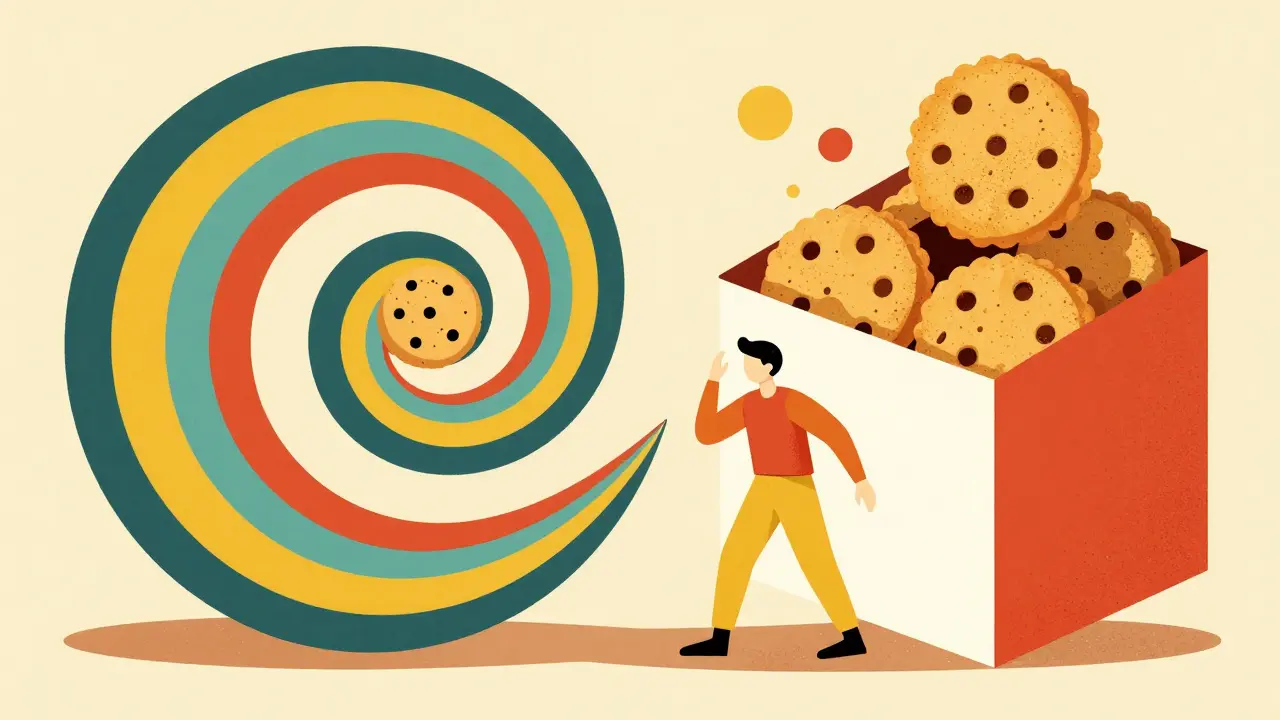
At its core, Cognitive Behavioral Therapy (or CBT) is based on the idea that our thoughts, feelings, and behaviors are all connected. If you think, "I've already ruined my diet with one cookie, so I might as well eat the whole box," that thought creates a feeling of hopelessness, which leads to the behavior of overeating.
Unlike a standard diet plan that tells you to eat more broccoli, Behavioral Weight Loss Therapy teaches you to catch that "all-or-nothing" thought in real-time. By challenging the logic of that internal dialogue, you can stop the spiral before it starts. Research shows this isn't just a feel-good exercise; it's clinically effective. In a systematic review by the University of Turin, people using CBT saw a mean BMI drop of 1.6 points, while those in control groups saw almost no change. It's the difference between fighting your willpower and actually retraining your brain.
Cognitive Strategies That Actually Move the Needle
You don't just sit on a couch and talk about your childhood in this therapy. It's highly structured and skill-based. There are several heavy-hitting strategies that clinicians use to create lasting change.
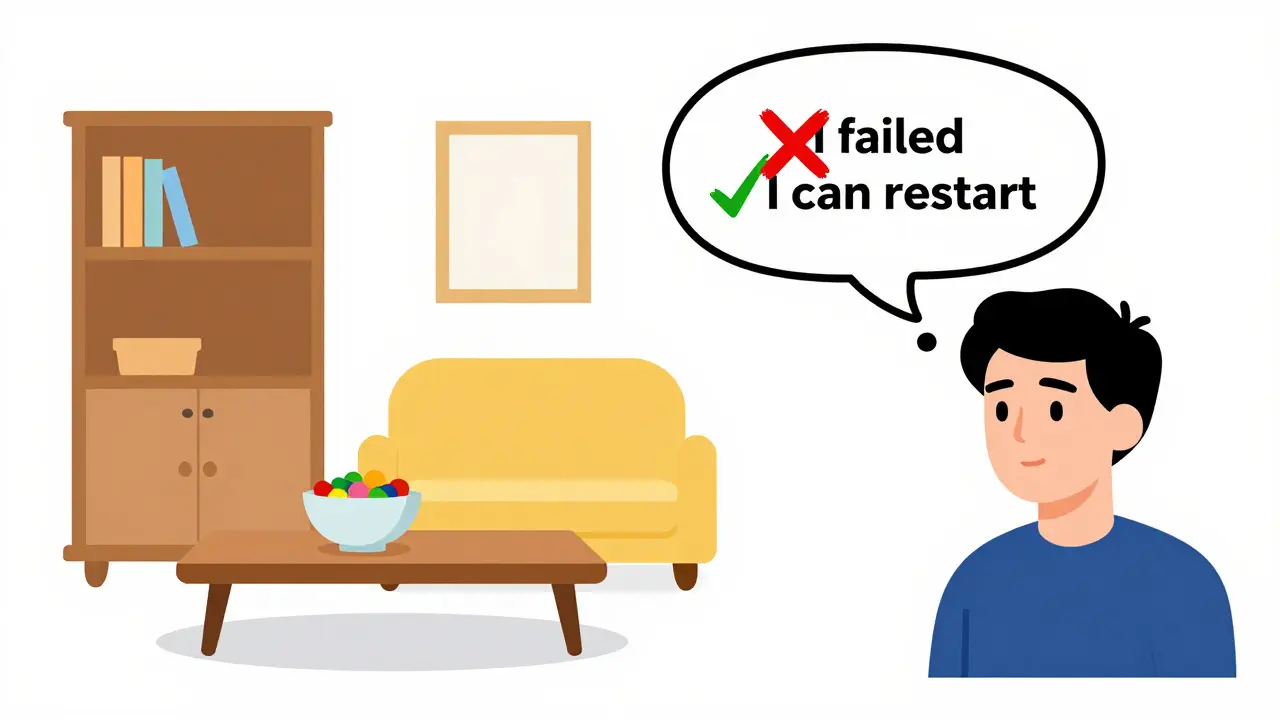
First is Cognitive Restructuring. This is the process of identifying and dismantling "cognitive distortions." Common ones include deprivation thoughts ("I can never eat chocolate again") or disappointment triggers ("One slip means I've failed"). When you learn to replace these with balanced thoughts-like "One cookie doesn't ruin my progress; I can make a healthy choice at my next meal"-emotional eating episodes can drop by as much as 63%.
Then there is the behavioral side. Self-monitoring is the gold standard here. This isn't just about counting calories; it's about tracking triggers. When people maintain high adherence to food and activity journals, they often see 5-10% more weight loss than those who don't. Similarly, Stimulus Control involves changing your environment. If you're prone to mindless snacking while watching TV, stimulus control might mean keeping snacks in a high cabinet or removing the "trigger" foods from the house entirely.
| Strategy | What it Does | Real-World Example |
|---|---|---|
| Cognitive Restructuring | Challenges distorted thoughts | Changing "I'm a failure" to "I had a tough day, I'll restart tomorrow." |
| Self-Monitoring | Tracks patterns and triggers | Using a journal to realize stress at 4 PM leads to sugar cravings. |
| Stimulus Control | Modifies environment | Moving the candy bowl away from the work desk. |
| SMART Goal Setting | Creates concrete targets | "Walk 20 minutes 3 days a week" instead of "Exercise more." |
Why Some Methods Work Better Than Others
Not all CBT is delivered the same way, and the format matters. You might be tempted to use a cheap app, but there's a catch. While digital platforms like Noom use CBT-lite principles, they often yield lower results than human-led therapy. A review in JAMA Internal Medicine found that therapist-led CBT resulted in a 6.8% mean weight loss, compared to just 3.2% for app users. The "human element"-the therapeutic alliance-provides accountability and emotional support that an algorithm simply can't replicate.
Furthermore, combining CBT with Motivational Interviewing (MI) is a game-changer. MI is a non-judgmental communication style that helps people find their own internal motivation to change. When you mix the tools of CBT with the motivation of MI, weight loss is significantly more sustainable. One study documented a 12.7% mean weight loss at 18 months for the combined approach, compared to only 7.3% for CBT alone. It also helps keep people in the program; dropout rates are nearly 16% lower when MI is involved because patients feel heard and autonomous rather than lectured.
Addressing the Binge-Eating Cycle
For many, weight management isn't just about discipline; it's about Binge Eating Disorder (BED). This is where behavioral therapy truly shines. Traditional diets often make BED worse by creating a cycle of restriction and bingeing. CBT breaks this by removing the restrictive "forbidden food" mentality and replacing it with mindful eating and emotional regulation.
The long-term data here is impressive. Some research shows that more than half of patients diagnosed with BED who undergo CBT are no longer diagnosable five years after treatment. Beyond the scale, this approach often clears up other mental health hurdles, leading to a 40% reduction in symptoms of anxiety and depression. When your mind is stable, your eating habits usually follow.
The Reality Check: Limitations and Pitfalls
We have to be honest: CBT isn't a magic pill. One of the hardest parts is the learning curve. It takes most people 8 to 12 weeks just to get comfortable with the basic skills of cognitive restructuring. In fact, less than half of participants in some studies achieve proficiency in these skills by their sixth session. It's a mental muscle that needs training, and some people find the process exhausting.
There's also the issue of weight regain. Even with the best therapy, a significant number of people regain 30-35% of their lost weight within the first year. This highlights a critical point: CBT is a tool for management, not a one-time cure. The most successful individuals are those who treat these cognitive strategies as a lifelong practice rather than a 12-week course.
CBT in the Age of Modern Medicine
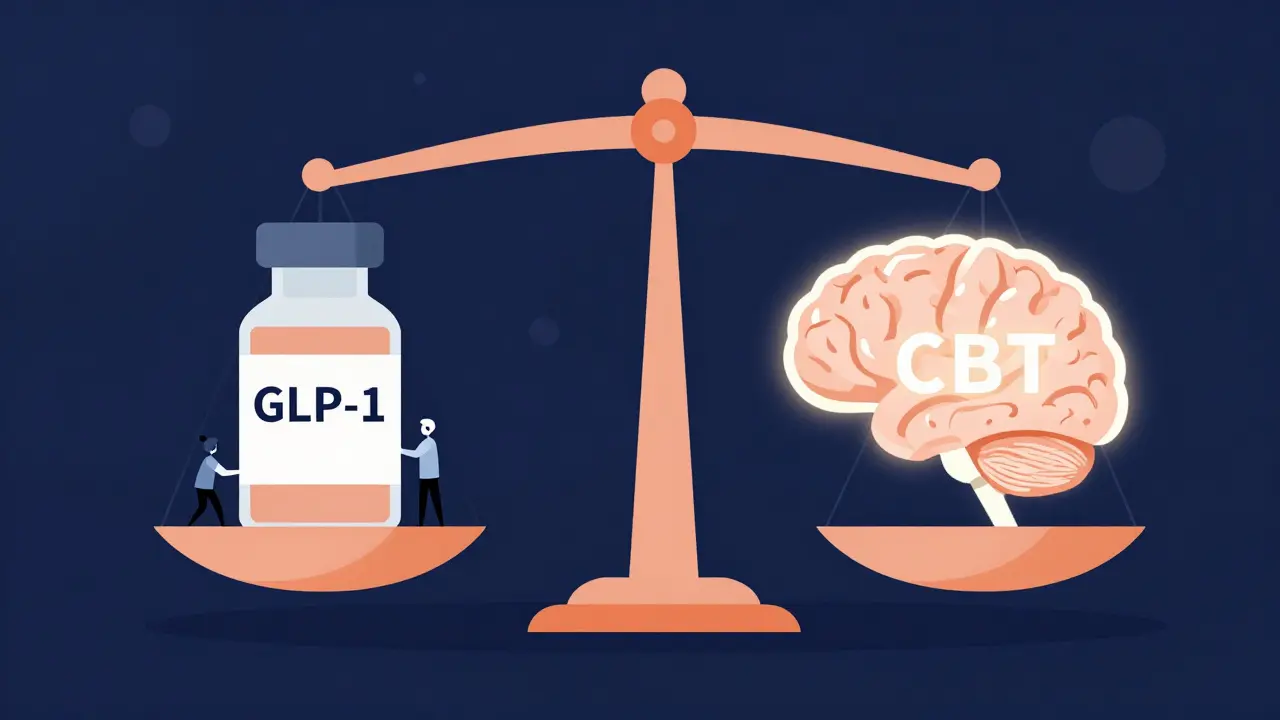
We are currently seeing a massive surge in the use of GLP-1 Agonists (like semaglutide). These medications are incredibly powerful for suppressing appetite, but they don't teach you how to handle a stressful day at work or a holiday feast. This has led to a new integrated model of care.
The National Institutes of Health is investing millions into studying how CBT can augment medication. The logic is simple: the drug handles the biological hunger, while the CBT handles the psychological drivers of eating. Without the cognitive work, patients risk regaining the weight as soon as the medication is tapered or if they develop a tolerance. The future of weight loss isn't "meds vs. therapy"-it's using both to cover all the bases.
How long does it take to see results with behavioral weight loss therapy?
While some people notice a shift in their relationship with food immediately, the cognitive skills typically take 8-12 weeks to master. Most clinical protocols run for 12-26 weekly sessions to ensure the new habits are deeply ingrained and the patient can handle high-risk situations independently.
Can I do CBT for weight loss on my own using an app?
Yes, you can use apps that incorporate CBT principles, and they are better than doing nothing. However, research shows that human-led therapy is significantly more effective, often resulting in double the weight loss (6.8% vs 3.2%) because of the accountability and personalized support a therapist provides.
What is the difference between CBT and a standard diet plan?
A standard diet plan focuses on the "what" (calories, macros, food lists). CBT focuses on the "why" (emotional triggers, distorted thoughts, and environmental cues). CBT provides a toolkit to handle the psychological barriers that usually cause people to quit a standard diet.
Does CBT help with binge eating?
Absolutely. CBT is one of the most effective treatments for Binge Eating Disorder (BED). It helps patients stop the restrictive-binge cycle by addressing the emotional triggers and removing the "all-or-nothing" mentality toward food.
Is CBT still necessary if I'm taking weight-loss medication?
Yes. While medications like GLP-1 agonists manage biological hunger, they don't change the mental habits that lead to overeating. CBT is essential to prevent weight regain after medication ends and to manage the psychological drivers of obesity.
Next Steps for Getting Started
If you're tired of the yo-yo cycle, the first step is to find a provider who specializes in obesity-focused CBT. Look for therapists who mention "cognitive restructuring" and "behavioral activation" in their practice. If a private therapist is too expensive, look for group CBT sessions, which have been shown to be nearly as effective as individual therapy at a fraction of the cost.
For those starting today, try a simple exercise: the next time you feel an intense urge to eat when you aren't hungry, stop and write down the exact thought in your head. Is it "I deserve this because I'm stressed"? Is it "I've already failed today"? Once you name the thought, you can start to challenge it. That small gap between the thought and the action is where the real weight loss begins.